
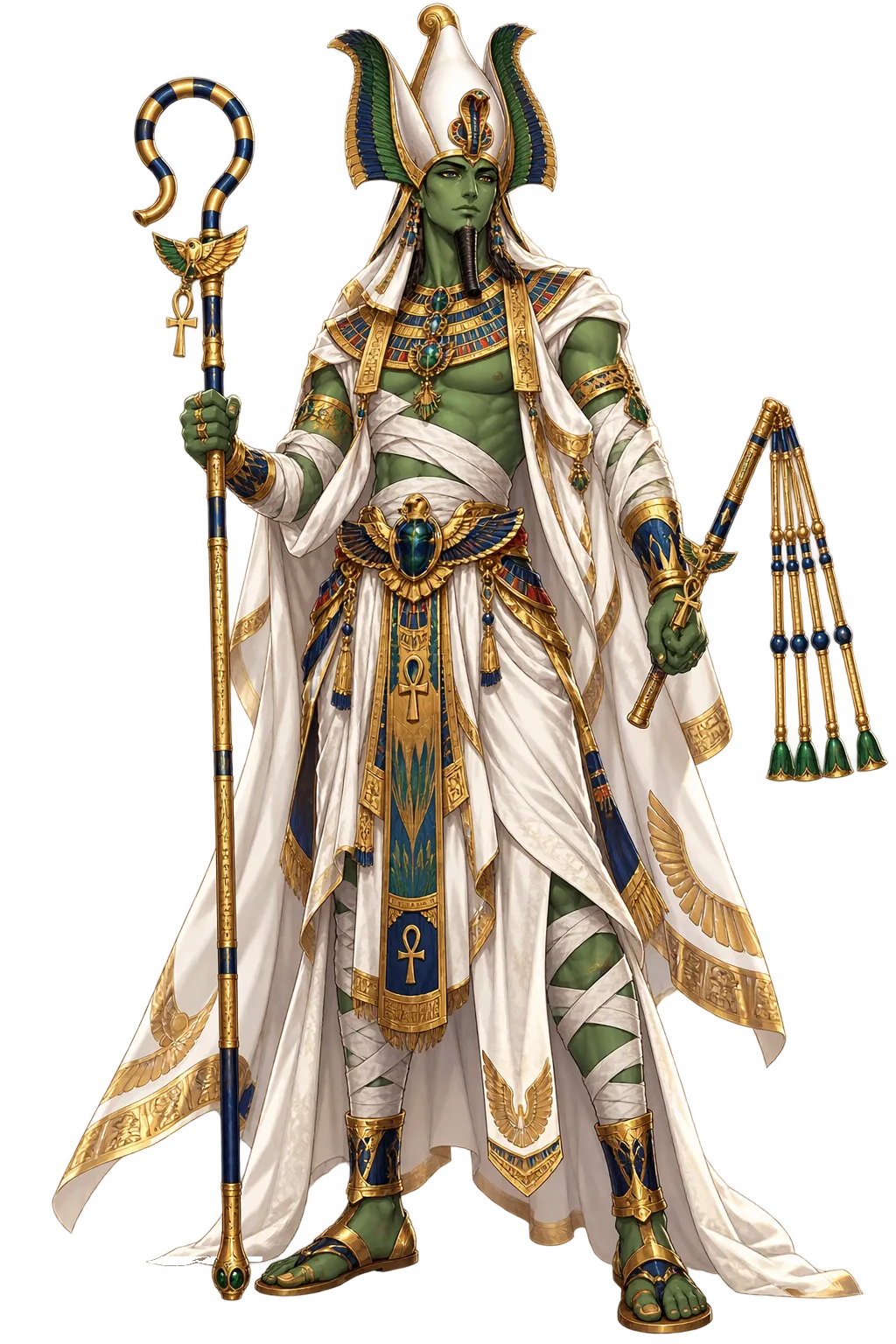
Why Wsjr is spelled that way — and what it costs to get it right
There is a version of this name the early internet had to settle for: osiris. This is the file on how Wsjr replaced it.
The Osiris cycle is the best-preserved Egyptian myth, known from the Pyramid Texts onward: the good king murdered by his brother, the faithful wife who recovers him, the son who avenges him. It is simultaneously a story about kingship, about the flood that dies and returns, and about every human being who hoped to be judged worthy.
At a Glance
- Restored name: Wsjr
- ASCII form: osiris
- Meaning: "Mighty One (Egyptian wsjr)"
- Domain of influence: Afterlife, Resurrection, Vegetation
- Pantheon: Egyptian
- Restoration: ASCII-equivalent form
- Original script: 𓁥
- Series: The Restoration Files, No. 405 of 597
The Name Before the Marks
Spoken, the name runs `/ˈwɛzɪər/ (conventional)` — “WES-ir” — the form the Greeks heard as Ὄσιρις (Ósiris)
The Temple That Stands Now
The restored name is not a plaque; it is an address. The temple of Wsjr lives at /osiris/, with its mythology in the lore halls, its peer-reviewed record in the Scholarly Edition, and its place in the pattern atlas on the patterns floor.
aSCII-equivalent form
Where the Name Stood First
The Osireion at Abydos, excavated by Naville and Frankfort, is a cenotaph-temple flooded symbolically with groundwater; the Dynasty XIX temples of Seti I preserve the finest Osiris chapels and the Abydos King List. Fourteen supposed relic-sites of his body were listed by the Abydos and Mendes traditions, giving a physical geography to the dismemberment myth. The temple on the web is the newest of these addresses — the first one that fits in a pocket.
The Archetype at Work
The pattern atlas seats this temple in 4 industries, each match argued and weighted: Agriculture, Food & Harvest (the green god of the Nile's return: his resurrection is the flood that fertilises the field — agriculture's founding myth.); Funerary & Memorial Services (the weighing of the heart and the first mummy are the canonical warrant for every funerary rite after them — Osiris IS the judged dead.); History, Archives & Records (the Book of the Dead's judge — the archive of deeds, read aloud at the scales.). The Resonance File reads those seats through the myths themselves.
In the Sacred Texts
The Egyptian tradition is not a vibe; it is a library. The Sacred Texts collection holds The Book of the Dead — the primary sources the temple's scholarship is built on. The temple is the argument; the texts are the evidence.
The File Continues
The temple's founding dispatch tells the name's story; its Resonance File reads the myths into the industries; the blog index holds the whole archive.
Continue the series — previous file: Ọṣun (read it here) · next file: Ouranía (read it here).
The Restoration Files are written from the same canonical record as the temples themselves: the lexicon, the lore catalog, the pattern atlas, and the cited scholarly sources. If a file ever disagrees with its temple, the temple is right — tell us, and the file will be corrected.