
ART OF Ōkuninushi
Every visual thread of Ōkuninushi in one room — the temple's curated historical gallery, the house's Commons studies, and the Creatives marketplace as it opens.

Temple Gallery
Ōnamuchi no Mikoto — Aoki Shigeru's great Meiji canvas (Ishibashi Museum of Art, Kurume)
commons.wikimedia.org · Public domain

Temple Gallery
Prince Okuni and a Hare — Yashima Gakutei, surimono, probably 1819 (Metropolitan Museum of Art)
commons.wikimedia.org · CC0

Temple Gallery
Ōnamuchi from the Shinbutsu-zue — Edo-period woodblock compendium of the kami and buddhas
commons.wikimedia.org · Public domain

Temple Gallery
Bronze of Ōkuninushi and the White Rabbit — Jishu Shrine, Kyoto's famed shrine of love-matches
commons.wikimedia.org · CC BY-SA 4.0

Temple Gallery
Ōkuninushi and the Field Mouse — Meiji-era book illustration, 1911
commons.wikimedia.org · Public domain

Temple Gallery
Ōkuninushi asks the toad — illustration from Izumo Shinwa, 1938
commons.wikimedia.org · Public domain

Temple Gallery
The Kōjindani bronze cache — Shimane Museum of Ancient Izumo
commons.wikimedia.org · Public domain
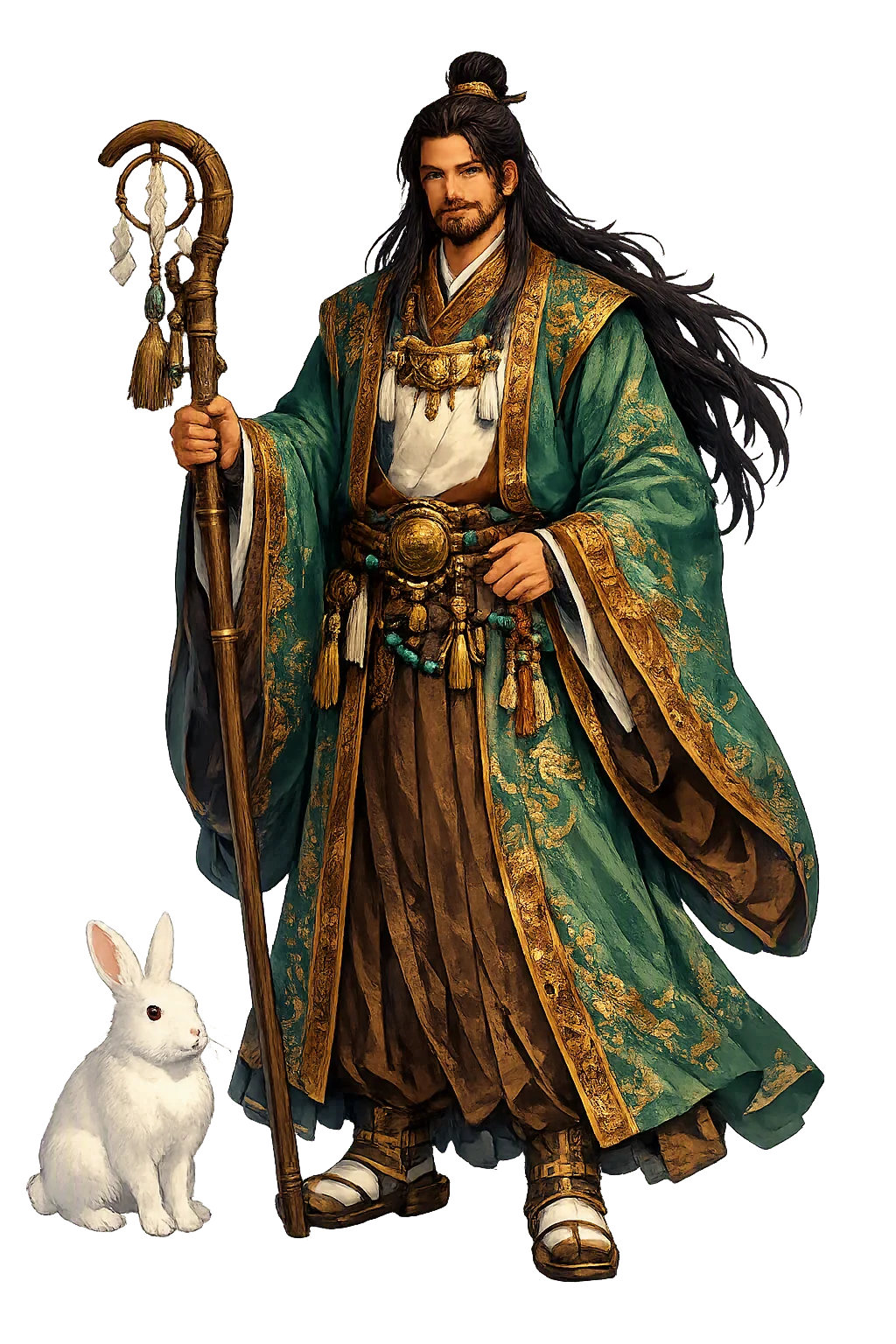
The Commons · current
Ōkuninushi — current mascot
CC BY 4.0 · attribution required
Temple Gallery
Ōnamuchi no Mikoto — Aoki Shigeru's great Meiji canvas (Ishibashi Museum of Art, Kurume)
commons.wikimedia.org · Public domain
Temple Gallery
Prince Okuni and a Hare — Yashima Gakutei, surimono, probably 1819 (Metropolitan Museum of Art)
commons.wikimedia.org · CC0
Temple Gallery
Ōnamuchi from the Shinbutsu-zue — Edo-period woodblock compendium of the kami and buddhas
commons.wikimedia.org · Public domain
Temple Gallery
Bronze of Ōkuninushi and the White Rabbit — Jishu Shrine, Kyoto's famed shrine of love-matches
commons.wikimedia.org · CC BY-SA 4.0
Temple Gallery
Ōkuninushi and the Field Mouse — Meiji-era book illustration, 1911
commons.wikimedia.org · Public domain
Temple Gallery
Ōkuninushi asks the toad — illustration from Izumo Shinwa, 1938
commons.wikimedia.org · Public domain
Temple Gallery
The Kōjindani bronze cache — Shimane Museum of Ancient Izumo
commons.wikimedia.org · Public domain
✦
The Creatives room for Ōkuninushi is being gathered.
Student and independent artists will license mythological work here — credited always, paid properly.
Open to university creators first: the university door →
The Commons · current
Ōkuninushi — current mascot
CC BY 4.0 · attribution required