
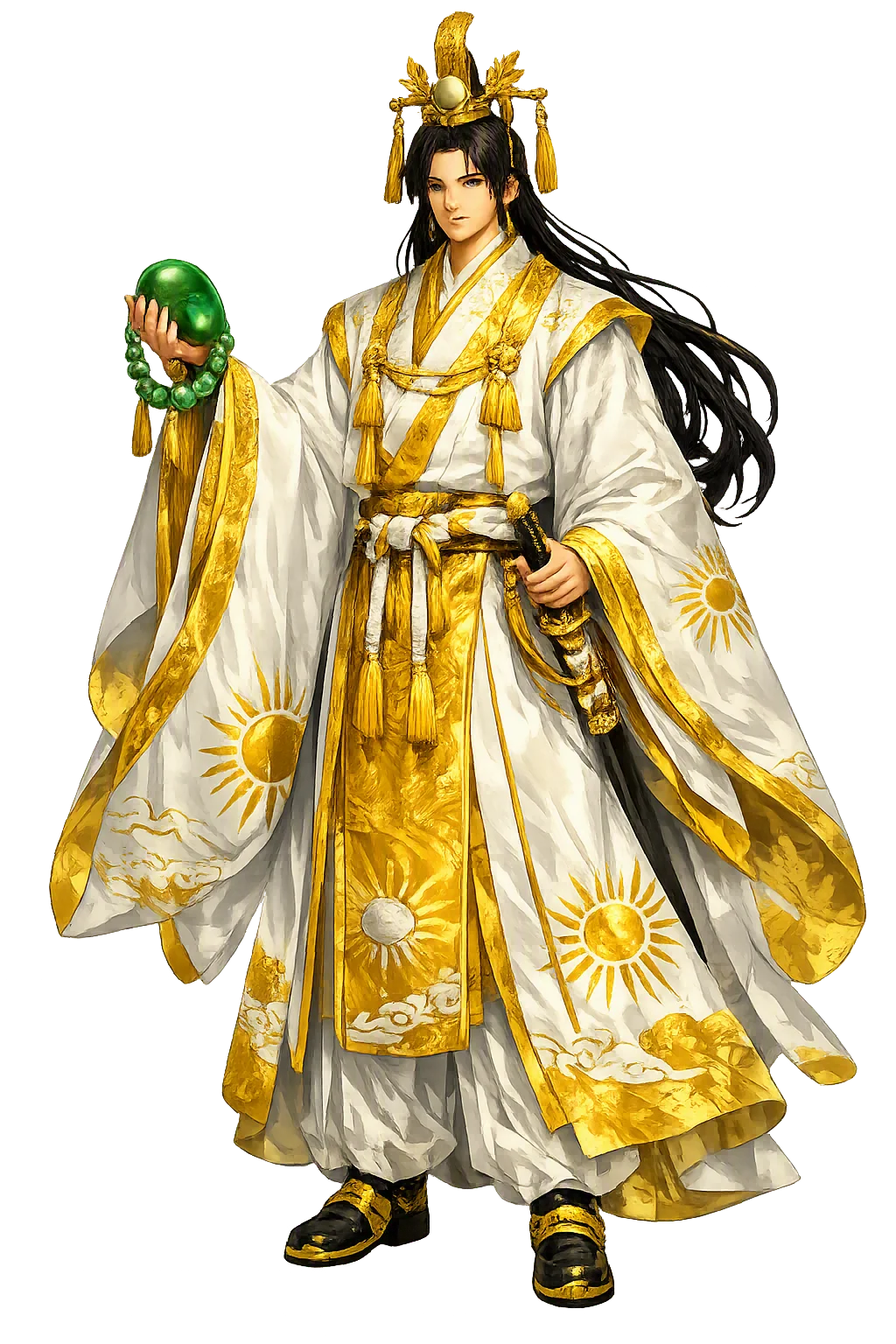
Evidence dossier: Ninigi
Evidence dossier 341 — Ninigi. Every exhibit catalogued, every ruling stated with its grounds.
At a Glance
- Canonical form: Ninigi
- Original script: 邇邇芸命
- Pantheon: Japanese
- Convention: Hepburn with macrons — ō and ū marked, never collapsed to o/u or rewritten ou
- False forms on record: 0
- Contested forms: none attested
- Series: The Canonical Register, No. 341 of 548
The Evidence
Exhibit 1 — the attestation. The name is attested as 邇邇芸命, on the evidence Kojiki, Book I (descent, Ōkuninushi's withdrawal, the ordeal of fire) and Nihon Shoki, Books I–III (parallel and variant accounts) set down. On the evidence, it means "The august rice spirit". The canonical transliteration is Ninigi.
Exhibit 2 — the flattened form. The plain form ninigi differs from the canonical Ninigi only by convention of display — case, not content. It is acceptable everywhere: in legacy systems, in plain-text citation, in the DNS itself. What is not acceptable is what follows in the register: respellings that change the letters, not just their case.
Exhibit 3 — the physical record. No artifact can be tied to Ninigi himself, but the geography of his myth is mapped in standing shrines. Takachiho in Miyazaki Prefecture keeps the sites of the descent — the Ama-no-Iwato ('Cave of Heaven') shrine and the sheer gorge where, by tradition, he first set foot on earth. Izumo Ōyashiro in Shimane, rebuilt in its monumental ancient form, marks the sanctuary Ōkuninushi demanded as the price of withdrawing; excavations in 2000 uncovered pillar bases suggesting an ancient structure of unprecedented height. Kashihara Jingū in Nara stands at the foot of Unebi-yama, the traditional accession site of Jimmu, Ninigi's great-grandson. The regalia he carried are kept at Ise (the mirror), Atsuta (the sword), and the palace (the jewel) — none ever displayed or archaeologically examined. Ninigi's material record is thus a landscape of shrines rather than a museum of objects.
Exhibit 4 — the continuing record. Ninigi's legacy is carried by objects and places rather than temples. The Three Sacred Regalia he bore — mirror, sword, jewel — remain the symbols of imperial legitimacy, presented at each accession though never publicly displayed.
The Convention's Own History
Every tradition in this register has its own scholarly transliteration standard, built by its own specialists over decades or centuries, and the register follows each on its own terms: Hepburn with macrons — ō and ū marked, never collapsed to o/u or rewritten ou. The principle that unifies them is the one the whole project stands on: a name is evidence, and evidence is not negotiable — not for keyboards, not for convenience, not for anyone.
The Protocol's Position
Can the canonical form live in the address bar? Almost always, yes. IDNA 2008 admits every mark this register defends — the DNS stores them as `xn--` punycode and modern browsers render them natively. The real frictions are practical, not legal: some registrars stock only part of the IDN space, so a theoretically valid name can be temporarily unbuyable; and stacked combinations (an acute riding a macron) remain awkward to type on mobile keyboards even where the protocol accepts them.
The project's answer is a ranked ladder, not a compromise: the full restoration first, then attested fallbacks in descending order of completeness. The ladder's lowest rung, plain ASCII, is a vehicle for legacy systems — sanctioned, but never presented as the scholarly form.
The Verdict
Case closed on Ninigi: canonical, cited, and defended. The keyboard form ninigi is the same name in another register of display — always acceptable. The register's files remain open: if a source surfaces that changes any line of this entry, the entry changes. Until then, the temple at /ninigi/ holds the canonical form.
The docket for this ruling: no false forms on the docket; no contested forms attested; the attestation rests on 4 cited sources — Kojiki, Book I (descent, Ōkuninushi's withdrawal, the ordeal of fire), Nihon Shoki, Books I–III (parallel and variant accounts), Philippi, Kojiki (translation).
The Register Continues
Entry 341 of 548 in the Canonical Register. Around it: the temple's founding dispatch, the Restoration File on the marks themselves, the Resonance File on the archetype at work, and the Rulebook behind all of it.
Continue the register — previous entry: Nikkō (read it) · next entry: Ninlil (read it).
The Canonical Register is written from the same canonical record as the lexicon itself. If a false form is missing from this page, it is because the evidence does not support calling it false — or because we have not seen it yet. Show us, with a citation, and the register will answer.