
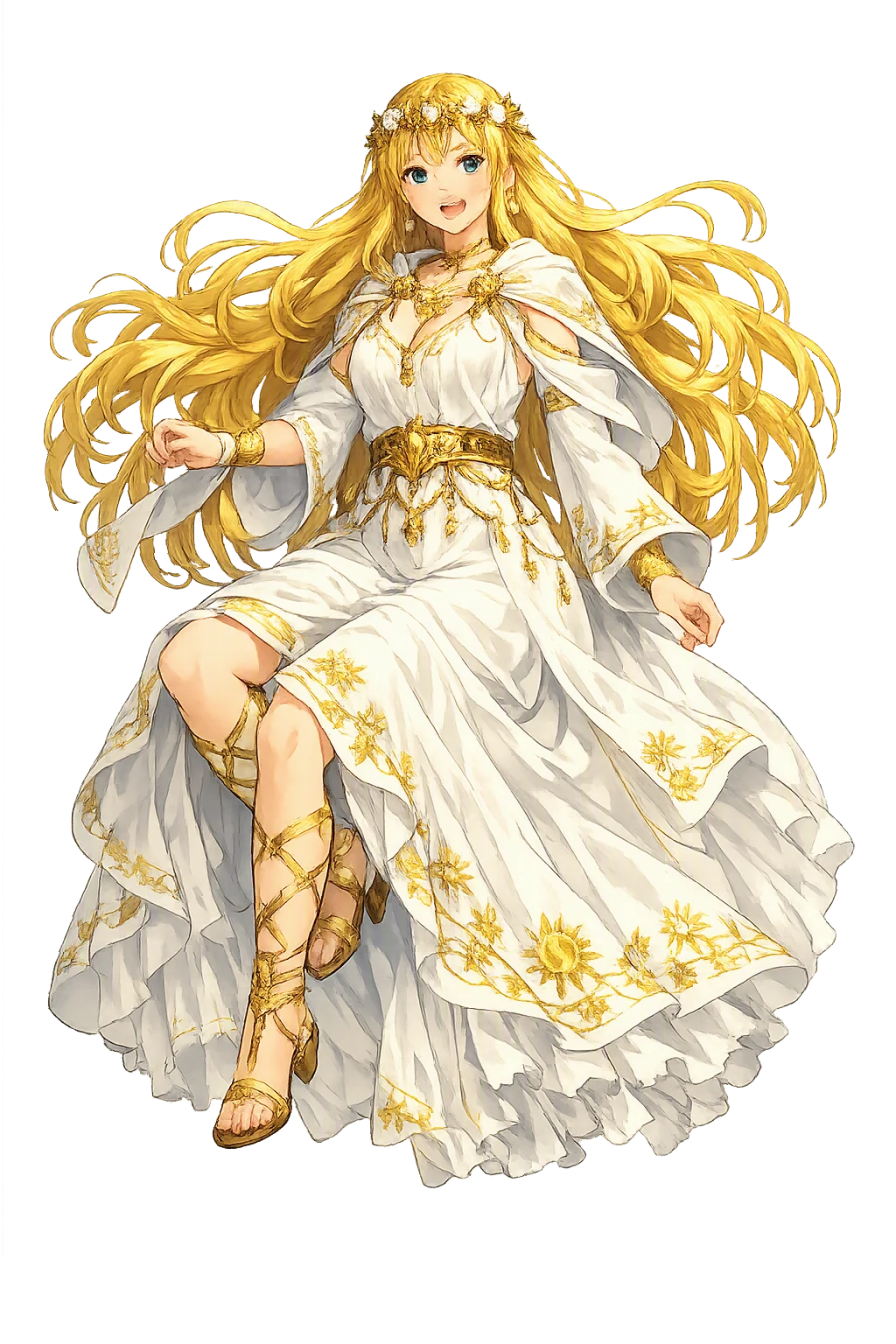
Pronouncing Niamh: a guide for the curious
Saying Niamh aloud is harder than reading it on a screen, and more rewarding. The restored spelling is a compressed pronunciation guide: every accent and macron is an instruction. This post unpacks those instructions — the reconstructed sound, the phoneme-by-phoneme record, the kindred forms in neighboring languages — and then zooms out to the full record around the name: its Celtic transcription writing, its mythology, its cult, and its modern life as a Unicode domain. Whether you arrive as a linguist, a reader of myth, or a domainer, you will leave able to say the name the way the evidence suggests it was said — and able to type it the way it was written.
At a Glance
- Restored name: Niamh
- ASCII form: niamh
- Meaning: "Bright, radiant"
- Domain of influence: Beauty, Otherworld
- Pantheon: Celtic
- Classification: Tier 2
Overview
Niamh (niamh) — Beauty, Otherworld · Bright, radiant — is the golden-haired daughter of the king of Tír na nÓg who rides out of the western sea on a white horse to claim Oisín, the last great poet of the Fianna, and carries him to the Land of Youth, where three hundred years pass as a single season. Her story survives as one beloved tale: the Laoi Oisín ar Thír na nÓg, 'The Lay of Oisín in the Land of Youth', ascribed to the eighteenth-century poet Mícheál Coimín and first printed with an English translation by the Ossianic Society in 1859.
The name is the Irish common noun made personal: Old Irish niam, 'lustre, brilliance, radiance', so that Niamh is simply 'the radiant one' — and the lay wears the meaning on its sleeve in her epithet, Chinn Óir, 'of the Golden Hair'. Late tradition makes her a daughter of Manannán mac Lir, lord of the sea-Otherworlds; the lay itself names her father only as the king of Tír na nÓg, and the Manannán paternity is the tradition's own harmonization.
PuniCodex restores the name as Niamh — identical to the ASCII input, because the canonical modern Irish spelling writes no diacritic. The mechanical rule therefore places it in Tier 2: nothing distinctive is lost in transit, a statement about orthography and never about the figure. No domain is claimed: the plain-ASCII niamh.com is registered to a third party outside the collection and is watched for release.
The Name
The name is attested in Old and Middle Irish as Níam — the medieval spelling, with the síneadh fada marking the long vowel — and in canonical modern Irish as Niamh, where the digraph mh writes the lenited m and the fada is dropped. It is the common noun made personal: eDIL's first niam is 'lustre, brilliance, radiance', and the name is the abstract quality carried by a woman — 'the radiant one'. The lay itself makes the equation visible, styling her Niamh Chinn Óir, 'Niamh of the Golden Hair': the brightness of the name worn as an epithet.
She is not the only bearer of the name in the corpus — Irish tradition knew several women called Niamh, among them a wife of Conall Cernach in the Ulster Cycle — but the golden-haired rider of the Fenian lay has absorbed the name so completely that in the modern imagination there is only one.
The ASCII form niamh loses nothing, because the canonical modern Irish spelling is already plain Latin letters; the restoration is therefore a matter of canonical reference, not rescued diacritics, and the name is classified Tier 2 by the project's mechanical rule.
The letter-by-letter transformation runs:
- n → N — Same, capitalized
- i → i — Same
- a → a — Same
- m → m — Same
- h → h — Same
The project holds no domain for this name: niamh.com is registered to a third party outside the PuniCodex collection and is watched for release. The temple lives at its canonical lexicon address.
The Original Script
The name is preserved in medieval Irish manuscripts in the Latin alphabet as Níam — Old and Middle Irish in Insular minuscule — beside the common noun niam, 'lustre, brilliance'; the síneadh fada marks the long vowel. The canonical modern Irish spelling Niamh writes the lenited m with the digraph mh and drops the fada; it is this modern form that the temple carries. The earlier monumental alphabet, ogham, predates the manuscript tradition, but no attestation of the name has ever been read on an ogham stone; the manuscript form is the primary witness.
The scholarly rendering proceeds step by step:
- Old Irish was written in the Latin alphabet using Insular minuscule from the early medieval period; the medieval spelling of the name is Níam, with the fada on the í.
- Modern Irish regularized the spelling to Niamh, the mh digraph writing the lenited m ([vˠ]) — plain Latin letters throughout.
- The canonical modern form therefore requires no diacritic: the Unicode restoration Niamh is identical to the ASCII form apart from the capital.
- The temple form is a canonical reference to the living Irish name, not a rescued spelling; nothing distinctive is lost in ASCII.
One caution attaches to the record: where the medieval spelling Níam is quoted, the fada is the manuscripts' own; where the temple and the lay tradition write Niamh, no accent is claimed — the two spellings are kept distinct, as the sources keep them.
Pronunciation
The pronunciation of the name in modern Irish is /ˈn̠ʲiːəvˠ/ — Modern Irish (Standard).
Phoneme by phoneme:
- N- — Slender (palatalized) dental nasal [n̠ʲ], the 'ny' of 'new' in an Irish accent; Irish n before i is always slender
- -ia- — Long close [iː] releasing into a brief [ə]; Munster Irish sounds both beats, 'NEE-uv', while the standard northern pronunciation draws them into one long syllable, 'NEEV'
- -mh — The lenited m of Irish spelling, sounded as broad [vˠ], a soft 'v'; the h writes the lenition and is never an 'h' sound
For the modern speaker, the closest approximation is: 'NEE-uv' (Munster) or 'NEEV' (standard) — the weight on the long 'ee', the final mh a soft v; never 'nee-AM' and never an English h.
Kindred and historical forms of the name:
- Old Irish — Níam, the medieval spelling, beside the common noun niam, 'lustre, brilliance'
- The name as word — niam (eDIL s.v. 1 niam), 'lustre, brilliance, radiance' — the name is the abstract noun made personal
- Other bearers — Niamh, wife of Conall Cernach of the Ulster Cycle
- Modern Irish — Niamh, among the most popular Irish girls' names of the modern era
Niamh is Tier 2 because the restoration preserves nothing ASCII loses: the letters of the canonical modern spelling are the letters of the keyboard. The capital alone marks the temple form.
Mythology
Niamh's mythology is a single arc — summons, crossing, sojourn, longing, fall — told in one late and beloved text, the Laoi Oisín ar Thír na nÓg, and framed at its end by the medieval Oisín-and-Patrick tradition.
The Summons from over the Sea (Laoi Oisín ar Thír na nÓg)
A maiden none of the Fianna knows rides out of the west on a white horse and names herself: Niamh Chinn Óir, daughter of the king of Tír na nÓg. She has heard the fame of Oisín across the sea and has come for his love, and her praise of him rises above every man of the Fianna present. Oisín answers that he has never seen her equal, gives his word, and mounts behind her.
The Wonders on the Wave
The white horse rides the sea as if it were a road, and marvels pass them on the wave: a fawn coursed by a white hound with red ears; a maiden riding with a golden apple in her hand; a young rider in a crimson cloak hard behind her, a gold-hilted sword at his side. Oisín asks what they mean, and the lay lets them pass unexplained — the old heraldry of the síd, set loose on the open sea.
Three Hundred Years as a Dream
In the Land of Youth the king receives Oisín, and he and Niamh are made one. There is no age there and no decay; Niamh bears him three children, named at his asking for the world he left — the sons Fionn and Oscar, for his father Fionn and his son, and the daughter Plúr na mBan, 'flower of women'. Three hundred years go by, sweet as a single season.
The Warning and the Horse
Longing comes on Oisín at last — to see Ireland, to look for Fionn and the remnant of the Fianna. Niamh does not refuse him. She gives him the white horse and the command on which everything turns: ride where he will, but he must not dismount, for if his foot touches the soil of Ireland he will never return to the Land of Youth.
The Slab in the Glen
Ireland is changed past recognition: the Fianna are gone, their ramparts green mounds, the people small, and Christianity has come. In a glen of the south — the lay names Gleann an Smóil — Oisín finds men straining at a great flagstone that one man of the Fianna would have lifted alone; leaning from the saddle to help, he puts his strength to the stone, and the girth breaks. His foot touches Irish soil, the three hundred years land on him at once, and he rises an old, withered, grey-haired man while the white horse wheels home over the sea without him.
The Old Man and the Saint (Acallam na Senórach / the after-tradition)
The lay ends where the medieval tradition had long stationed Oisín: at the door of St. Patrick. The Acallam na Senórach (c. 1200) already framed its Fenian treasury this way — Oisín and Caílte, the last of the Fianna, walking Ireland with Patrick and reciting its lore. The Niamh episode belongs to the later lay, not to the Acallam, but the ending is one: the pagan hero out of time, telling the golden age to the new faith. Niamh remains in Tír na nÓg with their children, on the far side of a sea he will never cross again.
Symbols & Iconography
Niamh's attributes are the properties of the lay itself — a horse, a head of golden hair, a sea-road, and the single prohibition that ends them all:
- The white horse — The Otherworld's transport, which carries Oisín to Tír na nÓg and home again; the lay leaves it unnamed, and later tradition gives it Manannán's horse, Enbarr — it is also the vehicle of the warning: touch the ground and all is lost
- The golden hair — Chinn Óir, 'of the Golden Head': the name Niamh, 'radiance', worn as an epithet — brightness made visible
- The sea-crossing — The threshold between the mortal world and Tír na nÓg, ridden as if it were a road; the passage where the lay sets its unexplained marvels — the red-eared hound, the golden apple, the pursuing rider
- The three hundred years — Time suspended in the Land of Youth: the Otherworld's gift and its price, counted only when it is spent
- The broken girth — The saddle-strap that snaps over the flagstone in the Irish glen: the single touch of home soil that resumes mortality in an instant
Archaeology & Evidence
Niamh is an entirely textual figure: no ogham stone names her, no votive deposit invokes her, and Irish paganism generally left literature rather than dedications. Her tale has an exact documentary trail. The Laoi Oisín ar Thír na nÓg, ascribed to the eighteenth-century Clare poet Mícheál Coimín, survives in the Irish paper-manuscript tradition and reached print in the Transactions of the Ossianic Society (vol. 4, 1859) — the learned society that did for the Fenian lays what the Grimms did for the folktale.
The medieval frame into which the lay fits its ending — Oisín and Caílte reciting Ireland to St. Patrick — is preserved in the Acallam na Senórach, whose great witness is the fifteenth-century Book of Lismore, with Oxford's Laud Misc. 610 among its sister codices. Her Otherworld has no fixed address, and that is its nature: unlike the Dagda's Brú na Bóinne, where Newgrange gives myth a monument, Tír na nÓg was never mapped onto any real island. The material record of Niamh is the manuscript tradition itself — and the unbroken popularity of her name.
Realm & Domain
Niamh is catalogued under the domain 'Beauty, Otherworld' — the two words the whole lay is built from.
Beauty
She enters the story as the most beautiful woman Oisín has ever seen, and the lay gives the claim a name to match: niam, 'radiance', and the epithet Chinn Óir, 'of the Golden Hair'. Hers is the Otherworld's beauty — the kind that crosses the sea to do its own choosing, praises the mortal above every man present, and is not refused.
Otherworld
She is the daughter of the king of Tír na nÓg, the Land of the Young across the western sea, where age, sickness, and decay never come; and she is its ferryman — the white horse that rides the sea-road as if it were a road answers to her. In her person the Irish Otherworld does what it does in Midir and Étaín, in Connla's crystal ship, and in Bran's silver branch: it issues an invitation.
The Time-Bargain
Her domain has a third face the lexicon's two words hold between them: time. Three hundred years in Tír na nÓg cost Oisín nothing until he touched Irish soil — and then they cost him everything at once. Niamh keeps the boundary where the Otherworld's exemption and mortality's arithmetic meet.
Across Cultures
Niamh belongs to the oldest company in Irish narrative: the Otherworld woman who comes for a mortal man. Echtrae Chonnlai gives the type its starkest form — a woman of the síd, visible only to Connla, throws him an apple that never diminishes and calls him to Mag Mell, until he leaps into her crystal ship and is seen no more. Immram Brain sends a woman from Emain with a silver branch to summon Bran across the sea to the Land of Women, where a year is no time at all — the same time-arithmetic as Oisín's three centuries. In Tochmarc Étaíne the direction reverses: Midir of Brí Léith wins back Étaín, and the two fly from Tara as swans.
The frame late tradition gave Niamh herself is genealogical: she is made a daughter of Manannán mac Lir, lord of the sea-Otherworlds Emain Ablach and Mag Mell, whose Welsh cognate is Manawydan fab Llŷr — though the lay names her father only as the king of Tír na nÓg, and the Manannán paternity is the tradition's own harmonization. Folklore comparison adds the international motif: the supernatural lapse of time in fairyland — the traveller who returns to find centuries gone — which Hartland made the type-case of The Science of Fairy Tales.
Cultural Legacy
Niamh has the largest modern afterlife of any Irish Otherworld woman, and it runs through one poem. W. B. Yeats's The Wanderings of Oisin (1889) — his first major work and a foundation-poem of the Irish Literary Revival — took the lay's summons as its frame: Niamh calls Oisin away on the white horse, and three enchanted islands later he returns to a Christian Ireland and dies with the Fianna on his lips. Yeats's three islands are his own invention, but the wooer is the lay's, and through him Niamh became world literature's type of the Celtic Otherworld bride. Lady Gregory's Gods and Fighting Men (1904) carried the prose retelling to the same generation.
In Ireland itself the name went the opposite way — from mythology to the birth register. Niamh became one of the most popular Irish girls' names of the late twentieth century, so that the golden-haired rider is now, for most who bear the name, simply themselves. And Tír na nÓg has passed into the general vocabulary as the default name of the Celtic paradise: the land over the western sea where nobody grows old, reached only on a white horse, and only in her company.
The Scholarly Record
The account of Niamh given in this edition rests on the witnesses and reference works listed below. The Laoi Oisín ar Thír na nÓg supplies the whole narrative; the Acallam na Senórach the medieval Oisín-and-Patrick frame; the dictionaries secure the name; the comparative and folkloric material is cited for context only.
- O'Daly, John, ed. and trans., 'The Lay of Oisin in the Land of the Young, ascribed to Micle Coimin', Transactions of the Ossianic Society 4 (Dublin: The Ossianic Society, 1859).
- Stokes, Whitley, ed. and trans., 'Acallamh na Senórach', Irische Texte, ser. 4, vol. 1 (Leipzig: Hirzel, 1900).
- Mac Neill, Eoin, and Gerard Murphy, ed. and trans., Duanaire Finn: The Book of the Lays of Fionn, 3 vols., Irish Texts Society 7, 28, 43 (Dublin: Irish Texts Society, 1908–53).
- Dictionary of the Irish Language (Dublin: Royal Irish Academy, 1913–76; electronic ed. eDIL 2019), s.v. 1 niam.
- Meyer, Kuno, and Alfred Nutt, ed. and trans., The Voyage of Bran, Son of Febal, 2 vols. (London: David Nutt, 1895–97).
- Bergin, Osborn, and R. I. Best, ed. and trans., 'Tochmarc Étaíne', Ériu 12 (1938), 137–196.
- Mac Cana, Proinsias, Celtic Mythology (London: Hamlyn, 1970).
- MacKillop, James, A Dictionary of Celtic Mythology (Oxford: Oxford University Press, 1998).
- Koch, John T., ed., Celtic Culture: A Historical Encyclopedia, 5 vols. (Santa Barbara: ABC-CLIO, 2006).
- Hartland, Edwin Sidney, The Science of Fairy Tales (London: Walter Scott, 1891).
- Yeats, W. B., The Wanderings of Oisin and Other Poems (London: Kegan Paul, Trench, 1889).
- Gregory, Lady Augusta, Gods and Fighting Men (London: John Murray, 1904).
- Ó Siadhail, Mícheál, Modern Irish: Grammatical Structure and Dialectal Variation (Cambridge: Cambridge University Press, 1989).
- McManus, Damian, A Guide to Ogam, Maynooth Monographs 4 (Maynooth: An Sagart, 1991).
A Meditation
Niamh is the name of a temptation, and the temptation is not what it first seems. She offers beauty, youth, and three hundred years without a wrinkle — and the story's verdict is that the offer is genuine. Tír na nÓg is no trap: the children are real, the delight is real, the warning she gives him is honest and exact. What the lay understands is that exemption from time is itself a kind of exile, and that a mortal carries his mortality inside him as homesickness. Oisín does not fall because the Otherworld failed him; he falls because Ireland is his, and a single touch of its soil outweighs three centuries of paradise.
Her name keeps the paradox in one syllable. Niamh — radiance, the shining thing — is the brightest name in the Fenian cycle, and she rides it out of the sea to the one man whose whole art was memory. Between them the lay poses the question it never answers: is the golden age the land across the water where nothing ages, or the lost Ireland of the Fianna that the old poet spends his last days reciting to a saint? Niamh holds one answer. Oisín holds the other. The white horse runs between them, and it does not wait.
The Unicode Restoration
Niamh is classified as Tier 2: the restoration needs no distinctive letters or diacritics its ASCII form would lose. The ASCII fallback niamh still resolves everywhere, but it is the restored form that carries the name's full information. That is the whole thesis of this temple: the marks are the message.
Why This Restoration Matters
Pronunciation turns out to be the heart of the matter. The marks in Niamh are instructions for the voice, and a web that strips them is a web that mispronounces the past at scale. The restoration hands the instructions back: say it as the evidence suggests, type it as the tradition wrote it, and let the punycode machinery do the quiet translation in between. That is all the PuniCodex project asks of the infrastructure — and everything it asks of you, the reader, is to use the whole name.
Explore Further
This post is one doorway into the temple. The home page carries the full character breakdown and the ambient canvas; the lore page tells the myths in long form; the Scholarly Edition preserves the sources, pronunciation data, and revision history; and the patron wall supports the restoration directly. For the wider map, browse the Lexicon, explore the Pantheon, or return to the PuniCodex blog.
Related Names
Sources
The full scholarly apparatus — every citation, revision, and review — lives in the Scholarly Edition. Key references for this post:
- O'Daly, John, ed. and trans., 'The Lay of Oisin in the Land of the Young, ascribed to Micle Coimin', Transactions of the Ossianic Society 4 (Dublin: The Ossianic Society, 1859).
- Dictionary of the Irish Language (Dublin: Royal Irish Academy, 1913–76; electronic ed. eDIL 2019), s.v. 1 niam.
- MacKillop, James, A Dictionary of Celtic Mythology (Oxford: Oxford University Press, 1998), s.v. Niamh, Manannán mac Lir.
- O'Daly, John, ed. and trans., 'The Lay of Oisin in the Land of the Young', Transactions of the Ossianic Society 4 (1859).
- Lexicon authorities for this entry: Irish folklore, MacKillop.