PuniCodex

Extended Lore

ᛘᚢᛋᛒᛁᛚᛚᚼᛁᛘᚱ Muspellheimr

Etymology · Orthography · Cult · Iconography · Reception · Sources

Tier 2 Muspellheimr.com
Muspellheimr — World of Fire
01

Quick Facts

Essential information about Muspellheimr, World of Fire

Original Scriptᛘᚢᛋᛒᛁᛚᛚᚼᛁᛘᚱ
Unicode RestorationMuspellheimr
Reconstructed Pronunciation/ˈmus.pelˌhɛi̯mr/
PantheonNorse
DomainWorld of Fire
MeaningMuspel-home (world-ender)
ClassificationTier 2
Primary DomainMuspellheimr.com
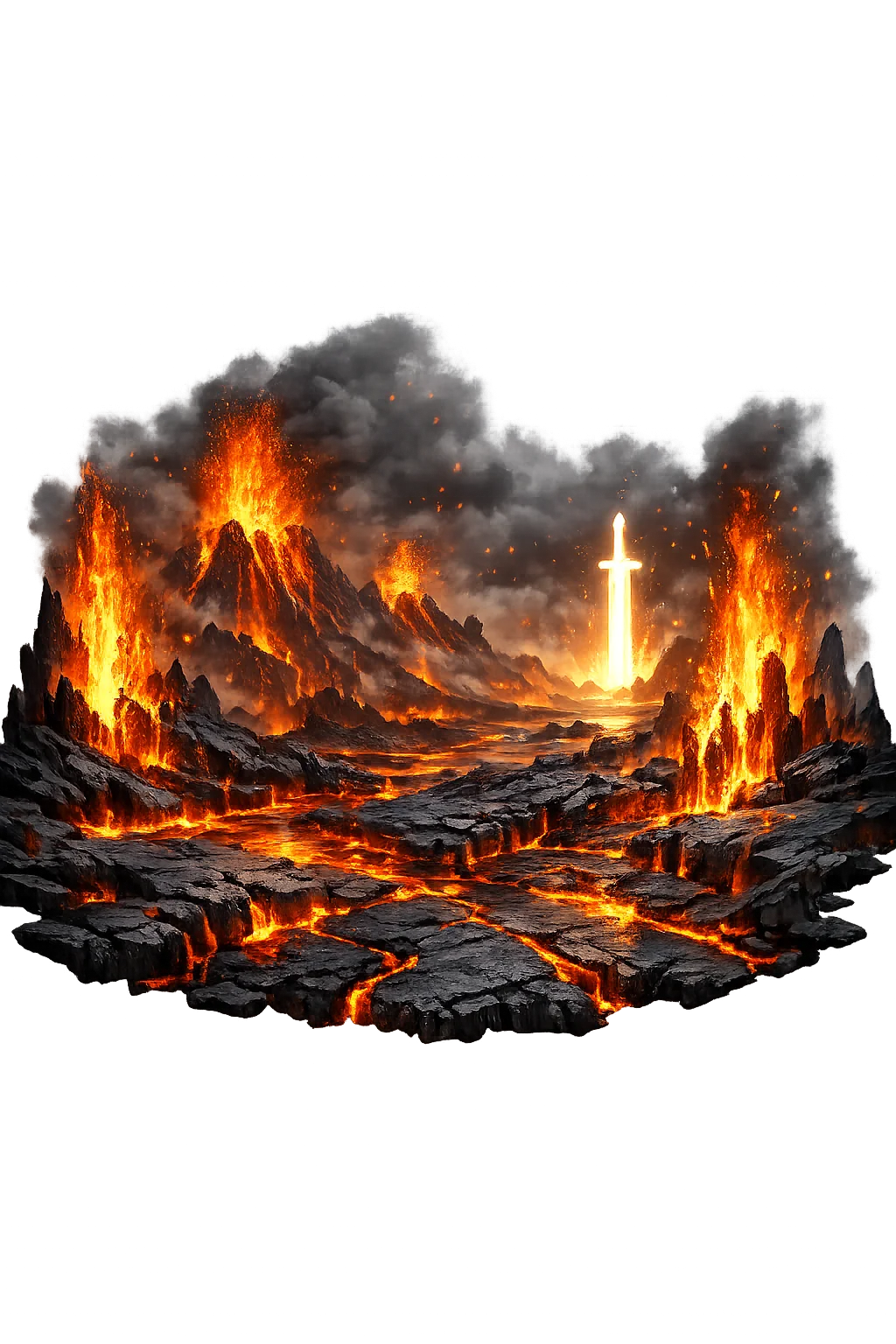
Sacred SymbolsSurtr's flaming sword, Lava field, Spark-shower, Fire-giant's crown, World-ash blackened
02

Etymology & Word Family

From original script to Unicode restoration

Proto-indo-european *Muspell- world-destroying fire
Original Script ᛘᚢᛋᛒᛁᛚᛚᚼᛁᛘᚱ Muspellheimr — "Muspel-home (world-ender)"
Unicode Restoration Muspellheimr Canonical scholarly spelling — ASCII-identical
Modern ASCII muspellheimr Plain-ASCII fallback

Uncertain; possibly from PGmc *muspell- "world-end fire". The realm of fire.

03

Unicode Character Breakdown

Character-by-character philological analysis

CharacterUnicodeNameBlockPhonetic Role
MU+004DLatin Capital Letter MBasic LatinSame, capitalized
uU+0075Latin Small Letter UBasic LatinSame
sU+0073Latin Small Letter SBasic LatinSame
pU+0070Latin Small Letter PBasic LatinSame
eU+0065Latin Small Letter EBasic LatinSame
lU+006CLatin Small Letter LBasic LatinSame
hU+0068Latin Small Letter HBasic LatinSame
eU+0065Latin Small Letter EBasic LatinSame
iU+0069Latin Small Letter IBasic LatinSame
mU+006DLatin Small Letter MBasic LatinSame
rU+0072Latin Small Letter RBasic LatinSame

The Tier 2 classification here reflects fidelity to the attested tradition, not recovered diacritics: every character of Muspellheimr already survives in ASCII. What the restoration preserves is the canonical spelling itself — the form scholarship standardised.

04

Cult & Worship

How the sacred was kept — rites, sanctuaries, remains

The Cult

No cult of Muspellheimr is attested, and honesty requires saying so plainly: no temple, no festival, no votive, and no priesthood names the fire-world or its ruler. Surtr received no known sacrifice, and the realm's only liturgy is literary — Völuspá's chant and Snorri's classroom retelling. What survives around it is the generic fire-ritual of the Germanic world: the protected hearth, the need-fire kindled in emergency, the bonfire customs later recorded across Scandinavia. None of it is tied to Muspell by any source. The fire-world lived in cosmogony and at the end of the world, not in the calendar.

In the Earth

The fiery south is anchored in the volcanic geology witnessed by medieval Icelanders. The Eldgjá fissure eruption of c. 939 CE and repeated Hekla eruptions supplied an empirical model for a world of flame. The name Muspell itself echoes continental Germanic eschatological fire poems such as the Old High German Muspilli, preserved in the manuscript at the Bavarian State Library.

05

Iconography

How Muspellheimr was imaged across the ages

The Image

Muspellheimr was not pictured for seven centuries. The Eddic manuscripts are unillustrated, and every early image of the fire-world is modern: Finnur Magnússon's 1824 cosmological plate set the fashion by drawing creation as fire meeting ice, and nineteenth-century editions of the Edda gave Surtr his first body — immense, armed, wreathed in flame. His attributes are textual and precise: a sword from which the sun of the battle-gods shines (Völuspá 52), the black flame called Surtalogi (Vafþrúðnismál 50–51), a host of burning sons, and the southern direction Snorri assigns him. Romantic and Victorian book illustration fixed the flaming sword as his emblem, and modern fantasy froze the image. Until the eighteenth century, Muspellheimr existed only as verse — a world made entirely of description.

06

Reception & Transformation

The name after its own age — transmission, translation, survival

Afterlives

The fire-world's transmission is a story of narrow survival. Völuspá's burning of the world survives in the Codex Regius and the fragmentary Hauksbók; Snorri's account rides on three vellum codices, none older than about 1300. The continental echo fared worse: the Old High German Muspilli is a single damaged manuscript in Munich (Clm 14098), edited for the first time by Schmeller in 1832, and Grimm wrestled with the word in the first volume of his Deutsche Mythologie (1835) — whether muspilli is a native Germanic word for the world-fire or a learned coinage remains unsettled. Twentieth-century scholarship read the poem against geology: Sigurður Nordal's edition of Völuspá (1923) and later commentators have taken Surtr's fire as the volcanism medieval Icelanders knew from Eldgjá and Hekla. Muspellheimr ends where it began: a name, a fire, and a question.

Identifications Across Traditions

Muspellheimr's nearest relatives are continental Germanic rather than Norse: the Old High German Muspilli and the Old Saxon Heliand's mūdspelli reuse the word for the Christian Last Judgment, though whether muspilli is a native Germanic term for the world-fire or a learned coinage remains unsettled — the sources, as so often here, refuse certainty. Christian apocalyptic coloring of Völuspá's fire is debated in the same register: the poem's burning of the world may be old, may be medieval, likely both at once. On the ground, medieval Icelanders knew exactly what a fire-world looked like: the Eldgjá fissure eruption of c. 939 CE — one of the largest lava floods of the last two millennia — and repeated eruptions of Hekla, long rumored in European lore as an entrance to hell, gave the southern realm an empirical address. Later centuries moved the realm into fantasy literature and modern heathenry, where Muspel stands for the primal fire in games, novels, and neopagan cosmology.

Modern Legacy

The name lives on in modern fantasy, Neopagan practice, Scandinavian heritage, and the global reception of Viking-Age literature. Restoring Muspellheimr in Unicode preserves the name's cultural specificity against the flattening force of plain ASCII. Muspell's fire resonates in apocalyptic imagination, volcanic disaster narratives, and climate change discourse. The Old Norse form Muspellheimr preserves a medieval intuition that creation and destruction are fueled by the same primordial heat.

07

The Meditation

What Muspellheimr means — beyond the dictionary

Names are not merely labels; they are compressed worlds. Muspellheimr carries within it a norse understanding of muspel-home (world-ender). Unicode restoration returns that world to readable form.

08

Frequently Asked Questions

Common questions about Muspellheimr, World of Fire, and Unicode restoration

01How do you pronounce Muspellheimr?

In reconstructed pronunciation, Muspellheimr is /ˈmus.pelˌhɛi̯mr/ — approximately 'MOOS-pel-haymr' — stress the first syllable, keep the vowels short, and glide through the final 'haymer'.

02What does Muspellheimr mean?

Muspellheimr means Muspel-home (world-ender) in the norse tradition.

03What are the symbols of Muspellheimr?

Muspellheimr is associated with Surtr's flaming sword (The giant's bright blade that burns the world at Ragnarǫk), Lava field (The volcanic landscape of Iceland that medieval Norse readers imagined as Muspell), Spark-shower (The fire that flies from Muspellheimr to kindle sun, moon, and stars), Fire-giant's crown (Surtr as the ruler of the flaming realm, sometimes shown with a crown of flames), World-ash blackened (The burned Yggdrasil after the fire of Muspell has passed).

04Why restore Muspellheimr in Unicode?

Muspellheimr is written entirely in ASCII letters, so its restoration is about canonical fidelity rather than recovered diacritics: the temple fixes the name in its scholarly standard spelling, attested in the source tradition, instead of leaving it to drift.

05What is the most important myth about Muspellheimr?

“Surtr Comes from the South” — the Völuspá 47–52 story that anchors the mythology of Muspellheimr, told in full on the lore page.

09

Scholarly Sources

The philological foundations of this restoration

Every claim on this page is grounded in established scholarship. The orthographic restorations follow disciplinary convention. The etymological chain follows the best available reference works. This is not invention — it is resurrection through scholarship.

◈

Lexicography & Philology

  • Cleasby-Vigfusson
◎

Primary Texts

  • Prose Edda
  • Poetic Edda: Völuspá 47–52
  • Snorri Sturluson, Prose Edda: Gylfaginning 4–8 (Muspellheimr, Surt, the first melting; the sparks fixed as stars)
  • Poetic Edda: Vafþrúðnismál 50–51 (Surtalogi, the black flame)
◉

Archaeology & Art History

  • Material evidence — iconography, inscriptions, and temple archaeology — for Muspellheimr and related cults.
✦

Religious Studies

  • Das althochdeutsche Muspilli (Munich, BSB Clm 14098); the Heliand’s mūdspelli
  • Simek, Dictionary of Northern Mythology, s.v. Muspell(heimr), Surtr
  • de Vries, Altnordisches etymologisches Wörterbuch, s.v. muspell
Return

The Surface Awaits

You have traced the name from its earliest attestation to its Unicode restoration. Now return to the myth. The story is where the name lives.

Back to Lore
Muspellheimr mascot