PuniCodex

Extended Lore

摩利支天 Marishiten

Etymology · Phonology · Orthography · Cultural Legacy · Primary Sources

Tier 2 Marishiten
Marishiten — War, Invisibility, Sun
01

Quick Facts

Essential information about Marishiten, War, Invisibility, Sun

Original Script摩利支天
Unicode RestorationMarishiten
Reconstructed Pronunciation/ma.ɾi.ɕi.teɴ/
PantheonJapanese
DomainWar, Invisibility, Sun
MeaningMarici in Japanese
ClassificationTier 2
Primary DomainMarishiten
Sacred SymbolsBoar, Sun chariot, Weapons, Multiple arms
02

Etymology & Word Family

From original script to Unicode restoration

Original Script 摩利支天 Marishiten — "Marici in Japanese"
Unicode Restoration Marishiten Restored stress, length, and script
Modern ASCII marishiten Plain-ASCII fallback

Marishiten is Tier 2: the Japanese form is plain Hepburn. She is a Buddhist-Taoist warrior goddess adopted by samurai and martial artists.

03

Unicode Character Breakdown

Character-by-character philological analysis

CharacterUnicodeNameBlockPhonetic Role
MU+004DLatin Capital Letter MBasic LatinSame, capitalized
aU+0061Latin Small Letter ABasic LatinSame
rU+0072Latin Small Letter RBasic LatinSame
iU+0069Latin Small Letter IBasic LatinSame
sU+0073Latin Small Letter SBasic LatinSame
hU+0068Latin Small Letter HBasic LatinSame
iU+0069Latin Small Letter IBasic LatinSame
tU+0074Latin Small Letter TBasic LatinSame
eU+0065Latin Small Letter EBasic LatinSame
nU+006ELatin Small Letter NBasic LatinSame

The Tier 2 classification reflects how much of the original phonology this restoration preserves — stress and vowel length for Greek names, distinctive letters and diacritics for every other tradition.

04

Cultural Significance

From ancient cult to modern Unicode

Ancient Domain

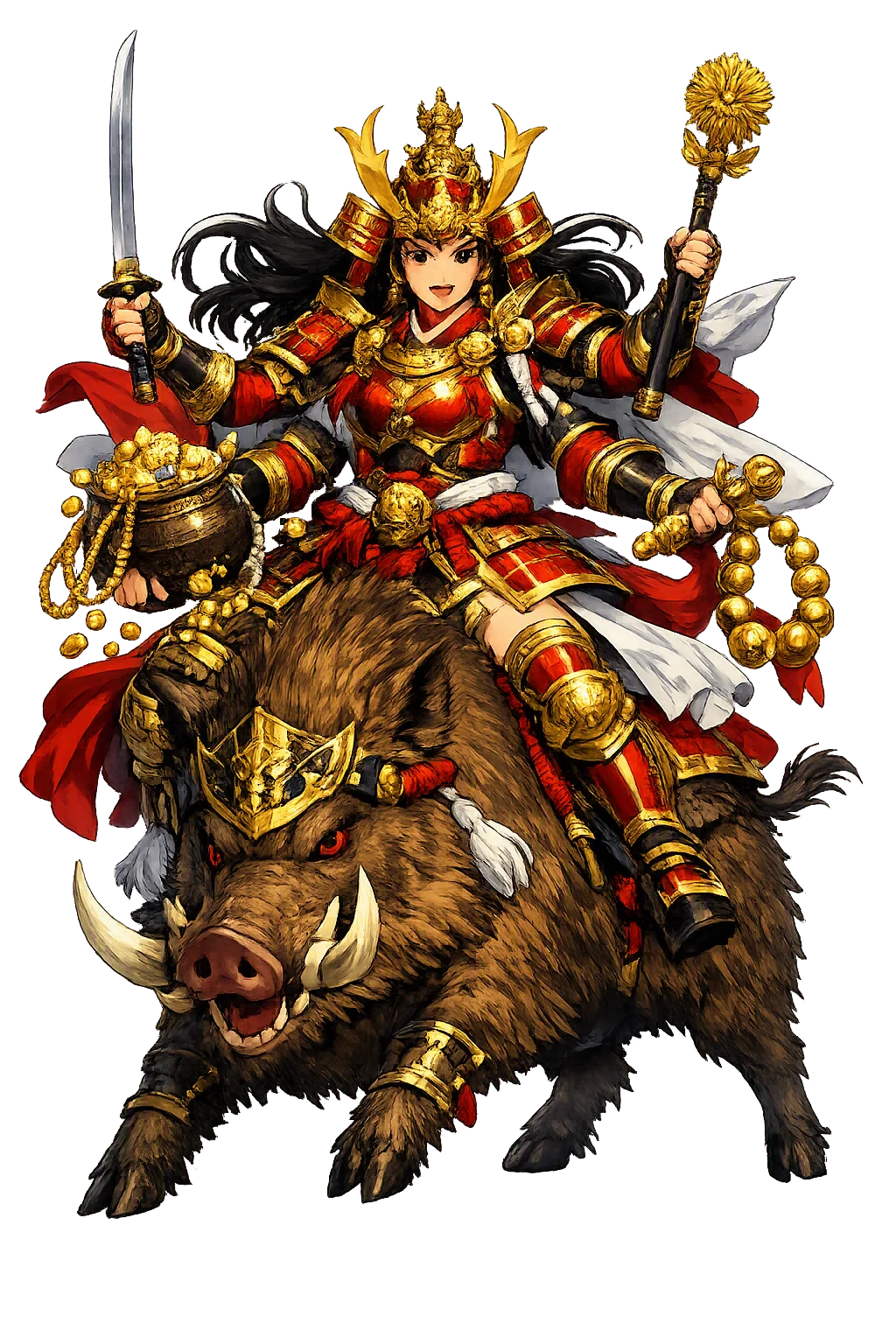
Marishiten is the Japanese form of Mārīcī, a Buddhist goddess of dawn, light, and victory. In Japan she became a patron of warriors, archers, and practitioners of the martial arts, worshipped for her power to make devotees invisible to harm and irresistible in battle. She rides a boar and is often depicted with multiple arms bearing weapons.

Marishiten in Later Traditions

Marishiten is a Buddhist warrior goddess who overlaps with Shinto sun kami and Taoist astral figures. Her boar mount connects her to the Japanese zodiac and agricultural cults, while her solar chariot links her to Amaterasu. She represents the Buddhist appropriation of solar and martial power for the protection of the faithful.

Modern Legacy

Marishiten is still venerated in some Buddhist temples and martial arts dojos. Her image appears in Japanese Buddhist iconography, and her name is known to practitioners of traditional archery and swordsmanship. In popular culture she appears as a solar warrior goddess in games and manga.

Unicode Restoration as Cultural Act

Restoring Marishiten in a domain name is more than orthographic accuracy. It is a statement that the internet should recognize the full range of human writing — not only the ASCII keyboard.

05

Frequently Asked Questions

Common questions about Marishiten, War, Invisibility, Sun, and Unicode restoration

01How do you pronounce Marishiten?

In reconstructed pronunciation, Marishiten is /ma.ɾi.ɕi.teɴ/ — approximately 'MAH-ree-shee-ten' — the 'r' is a light tap, and the final 'n' is soft..

02What does Marishiten mean?

Marishiten means Marici in Japanese in the japanese tradition.

03What are the symbols of Marishiten?

Marishiten is associated with Boar (Her vehicle and a symbol of courage and prosperity), Sun chariot (Her association with dawn and solar victory), Weapons (The bow, arrow, sword, and spear of the warrior goddess), Multiple arms (Her ability to act in many directions at once).

04Why restore Marishiten in Unicode?

Plain ASCII marishiten strips the stress, length, and script that make the name specific. Unicode restoration returns the name to its original written dignity.

05What is the most important myth about Marishiten?

In Indian Buddhism, Mārīcī was a goddess of dawn, a ray of light preceding the sun. She was invoked for protection, especially by travelers and those in danger. Her association with invisibility and escape comes from her ability to move unseen before the dawn.

06

Scholarly Sources

The philological foundations of this restoration

Every claim on this page is grounded in established scholarship. The orthographic restorations follow disciplinary convention. The etymological chain follows the best available reference works. This is not invention — it is resurrection through scholarship.

Lexicography & Philology

  • Japanese Buddhism
  • Buddhist texts

Primary Texts

  • The Kojiki; the Nihon Shoki; shrine ritual records.

Archaeology & Art History

  • Material evidence — iconography, inscriptions, and temple archaeology — for Marishiten and related cults.
  • Marishiten is primarily an iconographic and textual figure, preserved in Buddhist statuary, mandalas, and martial-arts manuscripts. Temples such as Hase-dera and Enryaku-ji preserve images of the goddess.

Religious Studies

  • Buddhist texts (Mārīcī dhāraṇī and sūtras)
  • Japanese martial-arts ritual texts
  • Bocking, A Popular Dictionary of Shinto
Return

The Surface Awaits

You have traced the name from its earliest attestation to its Unicode restoration. Now return to the myth. The story is where the name lives.

Back to Lore
Marishiten mascot