
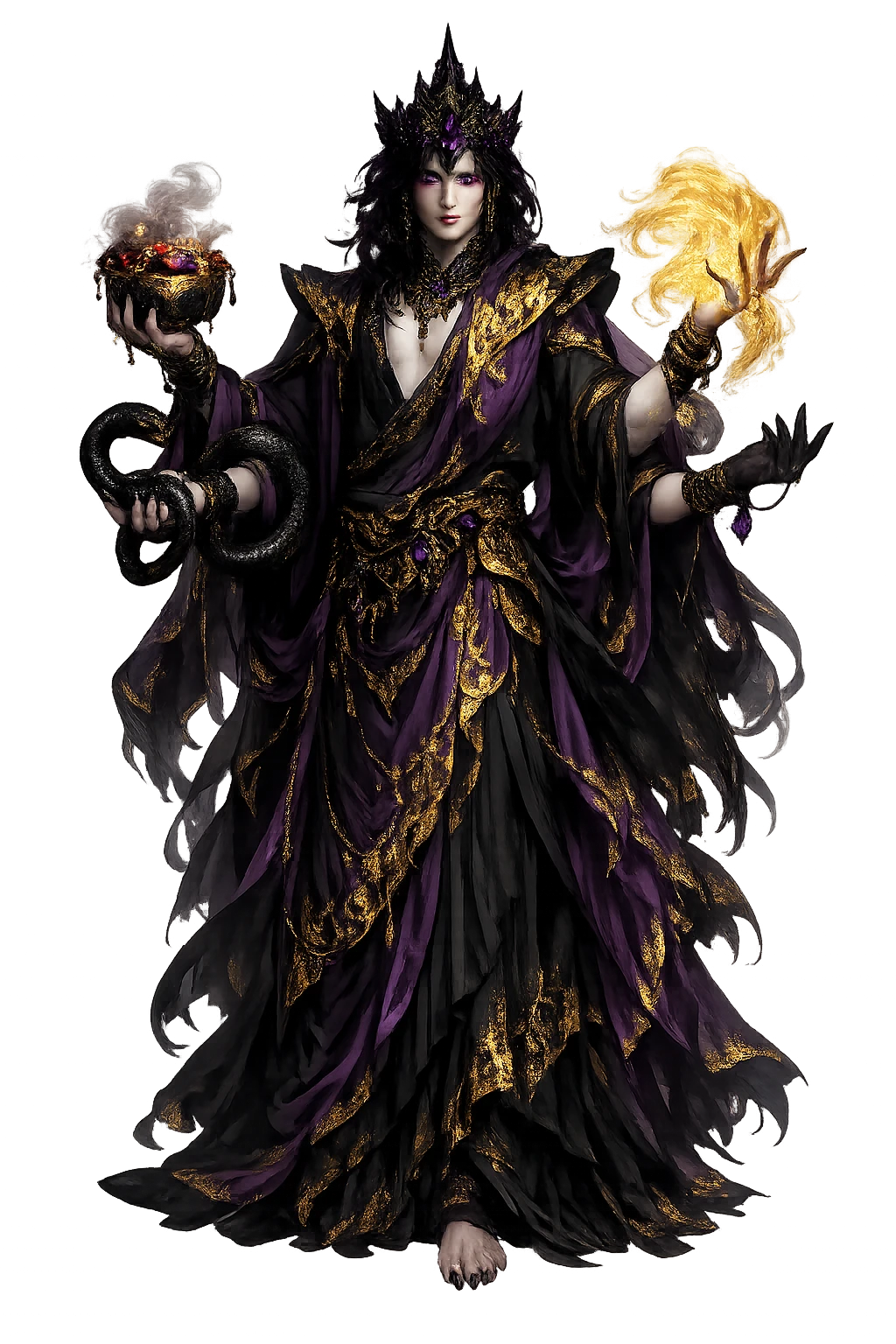
The appointments Māra made — and who is keeping them
Take Māra's stories in sequence. They are not episodes; they are appointments — and the modern trades are keeping them.
At a Glance
- Temple: Māra
- Pantheon: Buddhist
- Domain of influence: Death, Temptation, Illusion
- Pattern seats: 3
- Sectors touched: Technology & Innovation · Culture & Entertainment · Health & Wellbeing
- Strongest seat: Cybersecurity & Digital Protection
- Series: The Resonance Files, No. 299 of 546
The Cycle, Read Forward
Cybersecurity & Digital Protection — through The Ten Armies
The Sutta Nipāta's Padhāna Sutta gives his order of battle, and it is a psychology textbook disguised as an epic: sensual pleasure is the first army, discontent the second, hunger and thirst the third, craving the fourth, sloth and torpor the fifth, fear the sixth, doubt the seventh, hypocrisy and obstinacy the eighth, gains, fame, and honor the ninth, and the tenth — the general's own guard — is self-exaltation joined with contempt for others. Māra rides the elephant Girimekhala, a hundred leagues tall, and boasts that not even a thousand Sakyans together could escape him.
The atlas states the seat in one line: The adversary who tests the awakened mind; temptation as the original red team. The story above is the long version of the same sentence. That is the cycle working: story becomes duty, duty becomes trade.
Gaming, Fantasy & Entertainment IP — through The Night Under the Tree
The full assault is told in the Nidānakathā and versified in Aśvaghoṣa's Buddhacarita, whose thirteenth canto — the Defeat of Māra — is Sanskrit poetry's great set-piece: whirlwinds that cannot stir the bodhisattva's robe, a rain of rocks that falls as garlands, darkness that will not spread, a flight of arrows that turns to flowers before it lands. Mounted on Girimekhala, Māra advances his final claim — the seat of awakening is his by right of lineage and merit — and calls his army as witness.
The atlas states the seat in one line: The tempter at the final gate; the archetypal endboss of the mind. The story above is the long version of the same sentence. Industries do not invent their archetypes; they inherit them and call them best practice.
Mental Health & Emotional Wellness — through The Daughters
Force having failed, Māra sent subtlety: his three daughters, Taṇhā (Craving), Aratī (Aversion), and Rāgā (Passion), came to the newly-awakened Buddha in every guise beauty can wear — maiden, mother, worker, queen — and made their offer one after another. He regarded each in turn and dismissed her with the calm of a man reading names off a list: 'I have done with craving; go, daughters, find your husbands elsewhere.
The atlas states the seat in one line: The voice of doubt and craving; the inner adversary every practice names. The story above is the long version of the same sentence. That is the cycle working: story becomes duty, duty becomes trade.
The Theme That Runs the Cycle
Māra's mythology is the dark half of the Buddhist biography: wherever the teaching advances, the texts station him at the next bend — and his defeats chart the whole path from striving to parinibbāna.
The Method, Stated Plainly
None of this is numerology. A seat exists only where the match can be argued from the deity’s documented domains and deeds — weighted, published, and falsifiable. The derivation, the weights, and the challenge process are public on the methodology page. If a seat in this file reads wrong, the atlas itself tells you how to prove it — and the correction becomes part of the record.
For the Ones Who Work There
If you work in cybersecurity & digital protection, gaming, fantasy & entertainment ip, or any trade this temple holds a seat in, this is the honest version of what a placement means: your industry beside the story it has been re-telling all along — on the temple floor itself, before an audience that came specifically to read it. The patron tier and the advertising terms describe the mechanics; the resonance above describes the fit.
The File Continues
One of 546 Resonance Files — the series where the pantheon goes to work. Read the founding dispatch for the name, the Restoration File for the spelling, or the whole archive end to end.
Continue the series — previous: Mañjuśrī (read it) · next: Marduk (read it).
The Resonance Files are argued from the same canonical record as the pattern atlas itself: the lexicon, the lore catalog, and the cited sources. Every seat can be challenged at the methodology page — and the challenge is the point.