
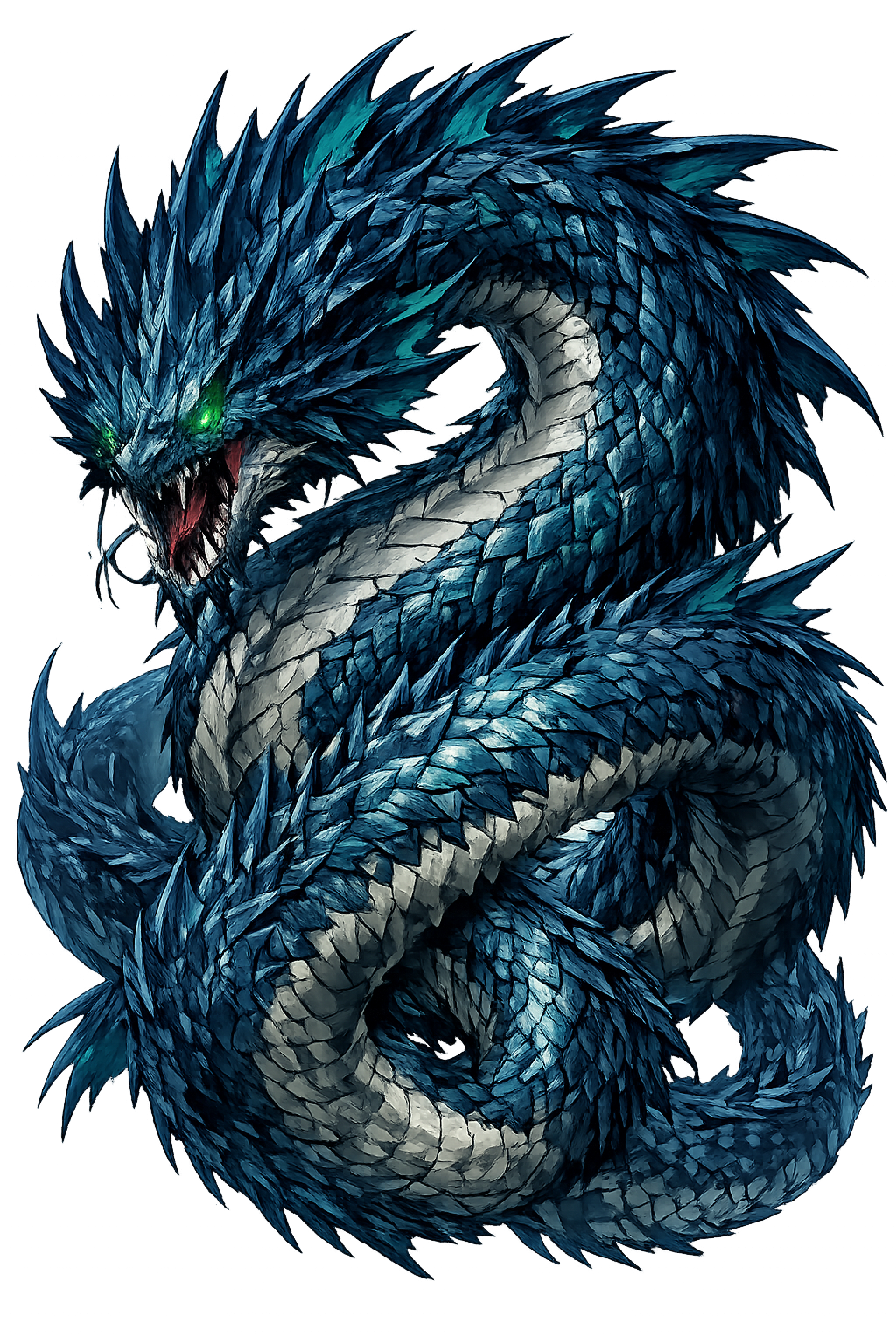
Liwyāṯān: the stories first, then the spelling
The marks in Liwyāṯān make the most sense standing next to the myths they have to carry. So the myths come first.
The Stories That Carry the Name
Lôtān and Baʿal. In the Ugaritic Baʿal Cycle, the seven-headed dragon Lôtān (ltn) is the ally of Yamm, the sea, crushed by Baʿal with his maces (KTU 1. 5 i 1–3; Day, Yahweh and the Gods and Goddesses of Canaan, 105–6). The episode is the Canaanite version of the combat myth, the battle against the sea that establishes divine kingship: the god who kills the sea-dragon earns the throne of the gods.
The Crushing of the Heads. The psalmist, lamenting the destruction of the sanctuary, calls on God to remember his ancient victories: 'You divided the sea by your might; you broke the heads of the sea monsters on the waters. You crushed the heads of Leviathan; you gave him as food for the creatures of the wilderness' (Psalm 74:12–17). The many-headed sea-serpent of Ugarit survives here intact, seven heads and all, transplanted from epic into hymnody.
The Beast No Mortal Can Master. In Job, God speaks from the whirlwind and challenges the sufferer to consider Leviathan. No hook can hold him; he laughs at the javelin; his scales are his pride, each one shut up tight as with a seal; light darts from his eyes; fire comes from his mouth; he makes the deep boil like a pot (Job 40:25–41:26). The point is not that Leviathan is evil but that he is unmasterable by any human — only God can play with him as with a bird.
And Here Is What the Spelling Preserves
The restoration keeps 2 features the ASCII form leviathan cannot show:
- a → ā — Macron: long vowel: how long the vowel is held.
- a → ā — Macron: long vowel: how long the vowel is held.
A storyteller pronouncing the name would restore every one of them by instinct. The file only writes down what the voice already knows.
At a Glance
- Restored name: Liwyāṯān
- ASCII form: leviathan
- Meaning: "Coiled sea serpent"
- Domain of influence: Sea Serpent, Chaos
- Pantheon: Canaanite
- Classification: Tier 1
- Original script: לִוְיָתָן
- Series: The Restoration Files, No. 277 of 546
The Name Travels
Liwyāṯān is part of a family of ancient Near Eastern chaos monsters. The Mesopotamian Tiamat, the salt-water dragon split by Marduk in the Enuma Elish, is his closest cousin.
The Address It Earned
The temple of Liwyāṯān stands at /leviathan/ — lore, scholars, patterns — because a name carrying this much story deserves more than a parking page. The restoration preserves more than the ASCII form can express — stress, length, or a letter the Latin keyboard lost — which places it, mechanically, in Tier-1.
The Sources Are Open
The myths above are retold from the temple's record; the primary voices are in the Sacred Texts: Enūma Eliš. Nothing in this file outranks them.
The File Continues
Read the founding dispatch for the name's full story, the Resonance File for the archetype at work — or the whole archive in one sitting.
Continue the series — previous file: Lētō (read it here) · next file: Libyē (read it here).
The Restoration Files are written from the same canonical record as the temples themselves: the lexicon, the lore catalog, the pattern atlas, and the cited scholarly sources. If a file ever disagrees with its temple, the temple is right — tell us, and the file will be corrected.