
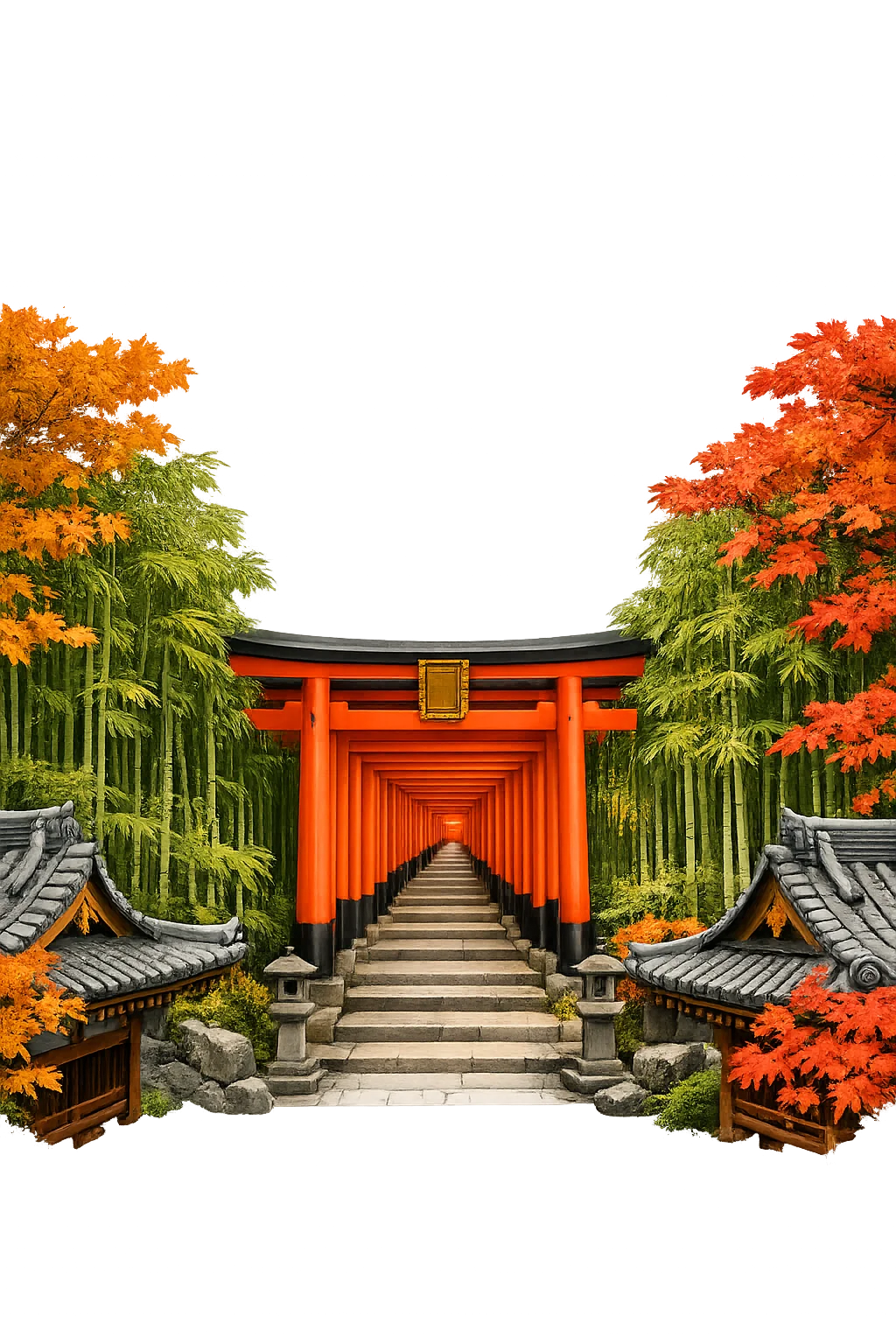
The Cult
Kyōto's cult life is the accumulated practice of more than a thousand years as an imperial and religious capital. The Kamo shrines, Iwashimizu Hachiman-gū, and the imperial palace rituals preserved court jingi ceremonies, while Buddhist institutions such as Kiyomizu-dera, Kinkaku-ji, and Tō-ji shaped the city's ritual calendar. Tea ceremony, geiko and maiko arts, and the Gion Matsuri are themselves forms of living cult, binding residents and pilgrims to seasonal time. The emperor's annual rites and the city's countless local festivals continue to sacralize the Heian grid even after political power moved to Edo and then Tokyo.