PuniCodex

Extended Lore

京都 Kyōto

Etymology · Orthography · Cult · Iconography · Reception · Sources

Tier 1 Kyōto.com
Kyōto — Imperial Capital, Kansai
01

Quick Facts

Essential information about Kyōto, Imperial Capital, Kansai

Original Script京都
Unicode RestorationKyōto
Reconstructed Pronunciation/kjoːto/
PantheonJapanese
DomainImperial Capital, Kansai
MeaningCapital city
ClassificationTier 1
Primary DomainKyōto.com
Sacred SymbolsTorii, Five-story pagoda, Chrysanthemum, The Kamo River
02

Etymology & Word Family

From original script to Unicode restoration

Proto-sino-tibetan 京都 capital + city
Original Script 京都 Kyōto — "Capital city"
Unicode Restoration Kyōto Restored stress, length, and script
Modern ASCII kyoto Plain-ASCII fallback

From Japanese 京都 "capital city"; the imperial capital for over 1,000 years.

03

Unicode Character Breakdown

Character-by-character philological analysis

CharacterUnicodeNameBlockPhonetic Role
KU+004BLatin Capital Letter KBasic LatinSame
yU+0079Latin Small Letter YBasic LatinSame
ōU+014DLatin Small Letter O with MacronLatin Extended-AMacron: long vowel
tU+0074Latin Small Letter TBasic LatinSame
oU+006FLatin Small Letter OBasic LatinShort vowel

The Tier 1 classification reflects how much of the original phonology this restoration preserves — stress and vowel length for Greek names, distinctive letters and diacritics for every other tradition.

04

Cult & Worship

How the sacred was kept — rites, sanctuaries, remains

The Cult

Kyōto's cult life is the accumulated practice of more than a thousand years as an imperial and religious capital. The Kamo shrines, Iwashimizu Hachiman-gū, and the imperial palace rituals preserved court jingi ceremonies, while Buddhist institutions such as Kiyomizu-dera, Kinkaku-ji, and Tō-ji shaped the city's ritual calendar. Tea ceremony, geiko and maiko arts, and the Gion Matsuri are themselves forms of living cult, binding residents and pilgrims to seasonal time. The emperor's annual rites and the city's countless local festivals continue to sacralize the Heian grid even after political power moved to Edo and then Tokyo.

In the Earth

The Heian-kyō grid survives in Karasuma Street postholes and palace foundations excavated by the Kyoto City Archaeological Research Institute. The Daigokuden audience hall of the former imperial palace has been reconstructed on its archaeological footprint, while Kiyomizu-dera's wooden stage, Kinkaku-ji's golden pavilion, and the Kamo shrines' Tadasu no Mori forest anchor more than a millennium of imperial, Buddhist, and Shinto material culture.

05

Iconography

How Kyōto was imaged across the ages

The Image

Kyōto has been imaged through architecture and seasonal landscape rather than through a single deity. The Daigokuden audience hall, reconstructed on its archaeological footprint, the golden pavilion of Kinkaku-ji, the wooden stage of Kiyomizu-dera, and the Phoenix Hall of Byōdō-in are among the most reproduced monuments in Japanese visual culture. Medieval narrative handscrolls, Edo-period woodblock prints, and modern photography all return to the city's temples, gardens, and cherry or maple vistas. The grid of Heian-kyō itself, laid out on a Chinese capital model, is the largest iconographic statement of Kyōto's identity.

06

Reception & Transformation

The name after its own age — transmission, translation, survival

Afterlives

Kyōto was founded in 794 as Heian-kyō, "Capital of Peace and Tranquility," and for four centuries it was the stage of classical Japanese civilization recorded in The Tale of Genji and The Pillow Book. The transfer of the imperial court to Edo in the early modern period and the Meiji move of the capital to Tokyo in 1868 could have reduced it to a backwater, but instead Kyōto became the self-conscious keeper of traditional culture. Today it is a UNESCO World Heritage city, a center of Buddhism, Shinto, tea, and the arts, and a global synonym for refined "Japaneseness." Its name itself signals preservation, elegance, and the endurance of courtly tradition.

Identifications Across Traditions

Kyōto is a palimpsest of Chinese, Buddhist, Shinto, and aristocratic layers.

The city's grid and geomancy came from Tang China; its shrines were staffed by local clans who wove kami worship into an imperial frame. Buddhism arrived from Korea and China, and by the Heian period esoteric schools such as Tendai and Shingon shaped both court ritual and mountain practice. The later fusion of Zen, tea, and warrior taste produced a culture that exported itself back to China and on to the West. Modern Kyōto markets this synthesis as 'traditional Japan', even as the city remains a centre of research, sake brewing, and manga production.

Modern Legacy

Kyōto is the city modern Japan uses to remember itself.

With seventeen UNESCO World Heritage sites, thousands of temples and shrines, and living traditions such as geiko districts, tea ceremony, and Noh, Kyōto is the material archive of pre-modern Japanese civilization. It survived the Ōnin War, the Meiji Restoration, and the Second World War to become the cultural capital of the nation. For visitors and Japanese alike, Kyōto represents the aesthetic and spiritual values that industrial modernity threatened but did not erase.

07

The Meditation

What Kyōto means — beyond the dictionary

Kyōto is what a city becomes when it is planned as a cosmos and then allowed to age. Heian-kyō was drawn as a fixed point around which the realm would turn; instead it became the realm's memory. Every regime that took power elsewhere — Kamakura, Edo, Tōkyō — had to define itself against Kyōto's standard of taste, and in doing so kept the city alive as a mirror rather than a rival. Its grid of avenues is a diagram of an old belief: that human order can be laid out in harmony with mountains and rivers. A thousand years later the diagram is still legible under the traffic, and the shrines at the compass points still guard a geomancy no planner was ever asked to update. Kyōto's lesson is that a capital can fall and yet win: lose the government, keep the meaning.

08

Frequently Asked Questions

Common questions about Kyōto, Imperial Capital, Kansai, and Unicode restoration

01How do you pronounce Kyōto?

In reconstructed pronunciation, Kyōto is /kjoːto/ — approximately 'KYOH-toh' — the first syllable is long and lightly pitched; the second is short and unstressed.

02What does Kyōto mean?

Kyōto means Capital city in the japanese tradition.

03What are the symbols of Kyōto?

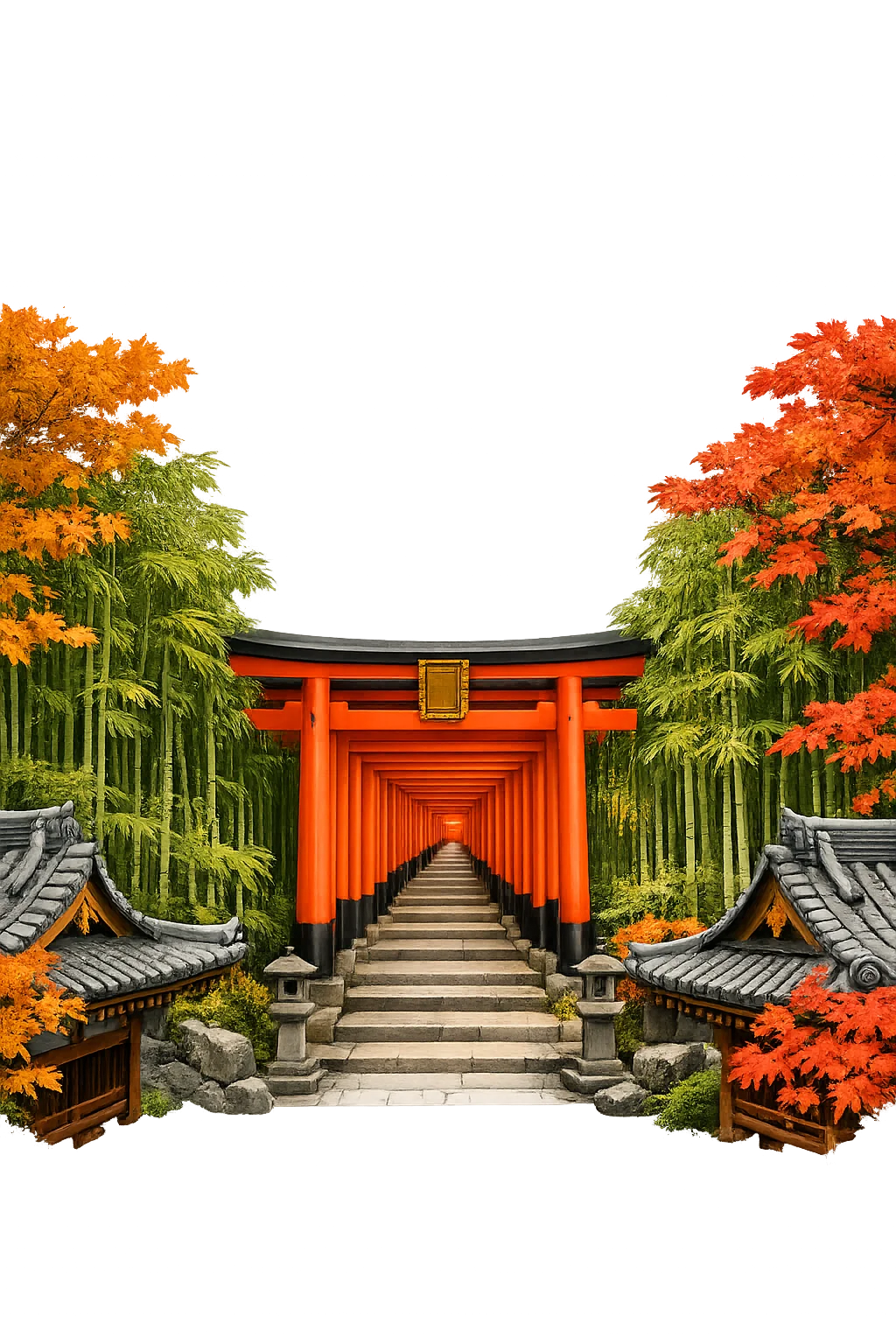
Kyōto is associated with Torii (The red gate of Fushimi Inari and the Kamo shrines, marking the city's sacred boundaries), Five-story pagoda (The Buddhist tower visible above the city, a reminder of Kyōto's monastic wealth and patronage), Chrysanthemum (The imperial crest, linking the city to the Japanese throne even after the court moved to Tōkyō), The Kamo River (The eastern water-boundary of the geomantic plan, where the Kamo shrines' purification rites still mark the city's northern edge each May).

04Why restore Kyōto in Unicode?

Plain ASCII kyoto strips the stress, length, and script that make the name specific. Unicode restoration returns the name to its original written dignity.

05What is the most important myth about Kyōto?

“Heian-kyō, the Capital of Peace” — the Foundation story that anchors the mythology of Kyōto, told in full on the lore page.

09

Scholarly Sources

The philological foundations of this restoration

Every claim on this page is grounded in established scholarship. The orthographic restorations follow disciplinary convention. The etymological chain follows the best available reference works. This is not invention — it is resurrection through scholarship.

◈

Lexicography & Philology

  • Hepburn
◎

Primary Texts

  • Kojiki
  • Engishiki (Procedures of the Engi Era, 927), shrine registers
◉

Archaeology & Art History

  • Material evidence — iconography, inscriptions, and temple archaeology — for Kyōto and related cults.
✦

Religious Studies

  • Shoku Nihongi (Chronicle of Japan, Continued, 797), Enryaku 13 record of the capital's transfer
  • Murasaki Shikibu, The Tale of Genji (c. 1000–1012)
  • Sei Shōnagon, The Pillow Book (c. 1000)
  • Ōnin ki (Chronicle of the Ōnin War)
  • UNESCO World Heritage Centre, Historic Monuments of Ancient Kyoto (1994 listing)
Return

The Surface Awaits

You have traced the name from its earliest attestation to its Unicode restoration. Now return to the myth. The story is where the name lives.

Back to Lore
Kyōto mascot