PuniCodex

Extended Lore

Κήρ Kēr

Etymology · Orthography · Cult · Iconography · Reception · Sources

Tier 1 Kēr.com
Kēr — Violent Death, Doom, Fate
01

Quick Facts

Essential information about Kēr, Violent Death, Doom, Fate

Original ScriptΚήρ
Unicode RestorationKēr
Reconstructed Pronunciation/kɛː́r/
PantheonGreek
DomainViolent Death, Doom, Fate
MeaningDoom, violent death (from κήρ)
ClassificationTier 1
Primary DomainKēr.com
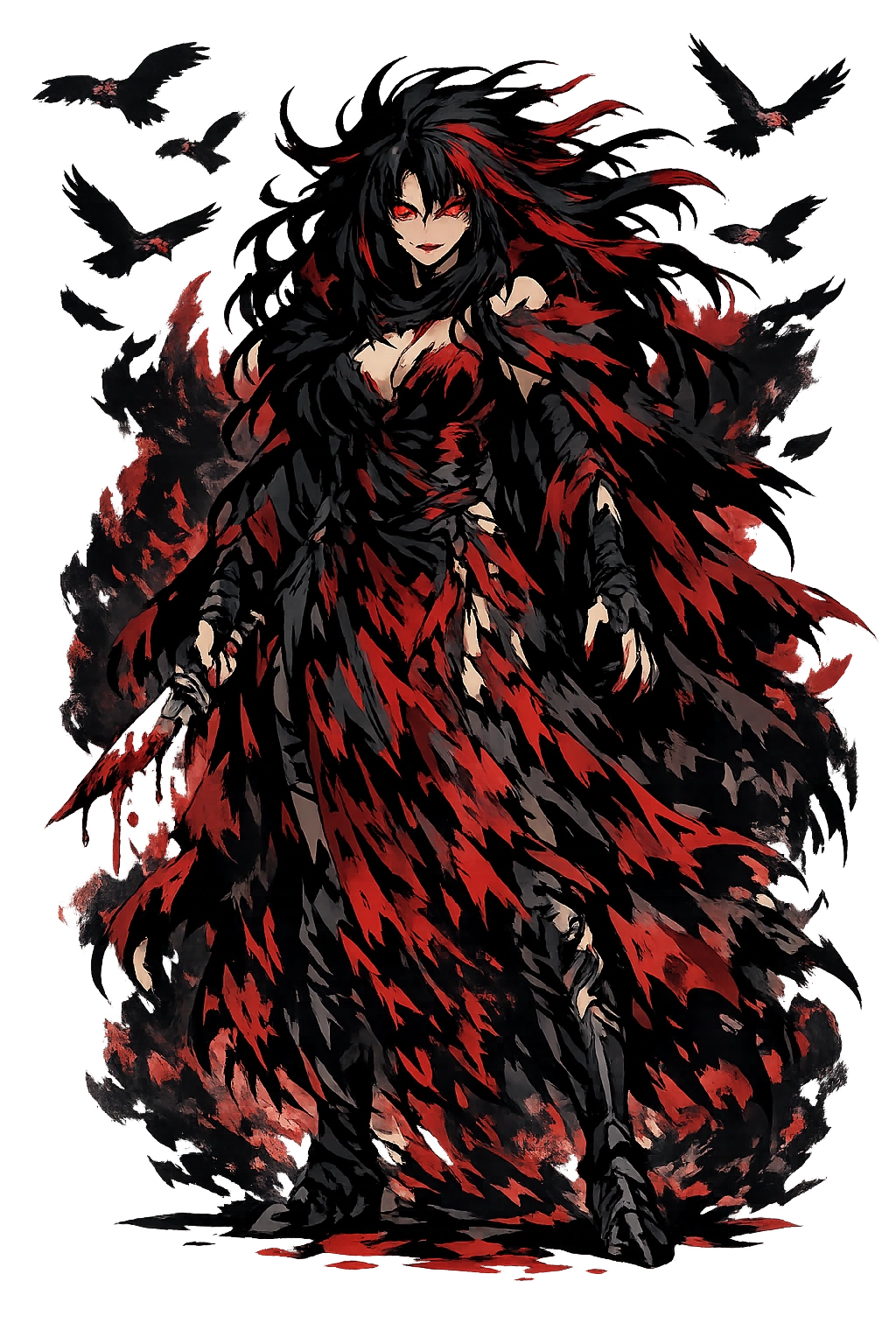
Sacred SymbolsWings, Claws or talons, Black robes, Blood, Torch reversed
02

Etymology & Word Family

From original script to Unicode restoration

Original Script Κήρ Kēr — "Doom, violent death (from κήρ)"
Unicode Restoration Kēr Restored stress, length, and script
Modern ASCII ker Plain-ASCII fallback

Doom, violent death (from κήρ)

03

Unicode Character Breakdown

Character-by-character philological analysis

CharacterUnicodeNameBlockPhonetic Role
KU+004BLatin Capital Letter KBasic LatinKappa
ēU+0113Latin Small Letter E with MacronLatin Extended-AMacron: long eta
rU+0072Latin Small Letter RBasic LatinRho

The Tier 1 classification reflects how much of the original phonology this restoration preserves — stress and vowel length for Greek names, distinctive letters and diacritics for every other tradition.

04

Cult & Worship

How the sacred was kept — rites, sanctuaries, remains

The Cult

Ker was never worshipped, and the evidence does not pretend otherwise: no sanctuary, festival, priest, or votive offering to Ker survives from antiquity. She was not a recipient of cult but a fact of cult's fear — the swarm of death that epic and the battlefield made visible. What can be said is negative and structural: ritual energy ran the other way, toward keeping her off. White-ground lekythoi and grave markers deploy apotropaic imagery to bar the taloned spirits from the tomb, and Hesiod files Ker among the dread offspring of Night. Her 'cult' is thus the cult of exclusion — the Greek world's most honest theology, addressing death by warding rather than praying.

In the Earth

Attic black-figure and red-figure vases of the sixth–fifth centuries BCE show Keres as winged, clawed females hovering over battlefield dead or dragging souls away; notable examples include Tyrrhenian amphorae of the mid-sixth century. White-ground lekythoi and grave reliefs from Athens deploy apotropaic imagery meant to keep the Ker at bay. Etruscan tomb painting of the Vanth extends the iconography into Italy. The literary witnesses rest on the medieval manuscript tradition of Homer and Hesiod.

05

Iconography

How Kēr was imaged across the ages

The Image

Attic painters gave Ker a body in the sixth century BCE, and she kept it: a winged woman, dark or blood-red, hooked of nose and claw, fluttering over the duel to seize the fallen — the vulture-logic of the Iliad set in silhouette. Tyrrhenian amphorae of the mid-sixth century show her hovering between combatants, and black-figure lekythoi crowd her among corpses. She differs from a Fury by her filth and from a Gorgon by her wings and claws, though the types blur as the Archaic period closes. White-ground lekythoi, painted for graves, answer her with quieter winged figures and the composed dead. The type is brief but coherent — a demon sketched in black glaze, hovering at the exact moment a hero's knees give way, talons already out.

06

Reception & Transformation

The name after its own age — transmission, translation, survival

Afterlives

Ker's afterlife is the afterlife of a word. In Homer and Hesiod kēr is both the individual death-demon and, in the plural, the grim swarm — an ambiguity ancient commentators already noticed, and Byzantine lexica glossed her under both heads. The personification thinned quickly: after the Archaic period Greek art drops her almost entirely, and learned tradition keeps only the plural keres as poetic diction for doom, a fossil in the epic formula 'keres of death.' She surfaces again in modern philology, when nineteenth-century scholarship reassembled her: Rohde's Psyche (1894) made the keres key witnesses of the Greek fear that the soul is seized rather than released, Usener's Götternamen (1896) pressed her into the debate on moment-gods, and Nilsson's Geschichte der griechischen Religion gave her a measured entry. The scholia, lexica, and Suda that transmitted her name are her real monument — a goddess whose temple is a dictionary entry, which is more than most personifications receive.

Identifications Across Traditions

The Romans had no exact equivalent for the kēres: Latin letum and the shadowy goddess Mors render the idea, not the person. In Etruria, however, the winged Vanth — painted in tombs guiding and guarding the dead — is the closest relative in image, and art historians trace a continuous iconography from the clawed kēres of Attic vases to the winged death-figures of Roman and early Christian art. Later Greek religion assimilated the kēres to the Erinyes and to avenging demons; Christian tradition replaced the swarm with a single angel of death, collapsing a population into a person. Kēr survives in English mainly through scholarship and fantasy, where 'keres' names winged reapers — the swarm, at last, kept its wings.

Modern Legacy

Kēr is the forgotten death goddess of the Greek imagination. While Thanatos is peaceful and Hādēs administrative, Kēr is violent and voracious — the truth that many deaths are sudden seizures, not gentle transitions. In modern fantasy and games the kēres appear as dark winged reapers, and the word has entered popular culture through role-playing games and novels as a species of death-spirit. Restoring Kēr restores the name of the being who takes the soul at the moment of violent death — and reminds us that Greek religion, for all its orderliness, never domesticated the battlefield's appetite.

07

The Meditation

What Kēr means — beyond the dictionary

Kēr is death without dignity. She does not guide; she grabs. She does not judge; she feeds. In the Iliad she is one of many, a swarm, which makes battlefield death feel less like a personal event and more like a natural disaster — weather that walks on taloned feet.

Modern medicine and safety have made violent death less visible, but Kēr has not disappeared. She waits in accidents, wars, and sudden collapses. The restoration of her name is a refusal to sentimentalize mortality: some deaths are not passages but seizures. And yet the swarm carries a strange comfort Hesiod understood — death that is older than the gods cannot be bargained with, only faced.

08

Frequently Asked Questions

Common questions about Kēr, Violent Death, Doom, Fate, and Unicode restoration

01How do you pronounce Kēr?

In reconstructed pronunciation, Kēr is /kɛː́r/ — approximately 'KER' — one pitched, sharp syllable, like the cut of death itself.

02What does Kēr mean?

Kēr means Doom, violent death (from κήρ) in the greek tradition.

03What are the symbols of Kēr?

Kēr is associated with Wings (The swift arrival of death), Claws or talons (The seizure of the dying soul), Black robes (Mourning and the darkness of death), Blood (The sustenance of the kēres), Torch reversed (Extinguished life).

04Why are there different spellings of Kēr?

Each form is a historically attested restoration rather than a mistake: Kḗr is the ideal form (Stacked macron+acute on the stressed long vowel, matching Greek Κήρ; philologically ideal but often untypeable on phones.). PUNICODEX registers the full set so the tradition is preserved under every defensible spelling.

05Why restore Kēr in Unicode?

Plain ASCII ker strips the stress, length, and script that make the name specific. Unicode restoration returns the name to its original written dignity.

06What is the most important myth about Kēr?

“The Keres on the Shield” — the Homer story that anchors the mythology of Kēr, told in full on the lore page.

09

Scholarly Sources

The philological foundations of this restoration

Every claim on this page is grounded in established scholarship. The orthographic restorations follow disciplinary convention. The etymological chain follows the best available reference works. This is not invention — it is resurrection through scholarship.

◈

Lexicography & Philology

  • Liddell, H. G., Scott, R., & Jones, H. S. A Greek-English Lexicon. Oxford: Clarendon Press, 9th ed. 1996.
  • Pape, W., & Benseler, G. E. Wörterbuch der griechischen Eigennamen. Braunschweig: Vieweg, 1884.
  • Beekes, R. S. P. Etymological Dictionary of Greek. Leiden: Brill, 2010.
◎

Primary Texts

  • Homer, Iliad 9.411–416; 12.326–328; 18.535–540
  • Hesiod, Theogony 211–225
◉

Archaeology & Art History

  • Material evidence — iconography, inscriptions, and temple archaeology — for Kēr and related cults.
✦

Religious Studies

  • LSJ, s.v. κήρ
  • Beekes, Etymological Dictionary of Greek, s.v. κήρ
  • Garland, Robert, The Greek Way of Death (Duckworth, 1985)
  • de Grummond, Nancy T., Etruscan Myth, Sacred History, and Legend (University of Pennsylvania Museum, 2006)
Return

The Surface Awaits

You have traced the name from its earliest attestation to its Unicode restoration. Now return to the myth. The story is where the name lives.

Back to Lore
Kēr mascot