
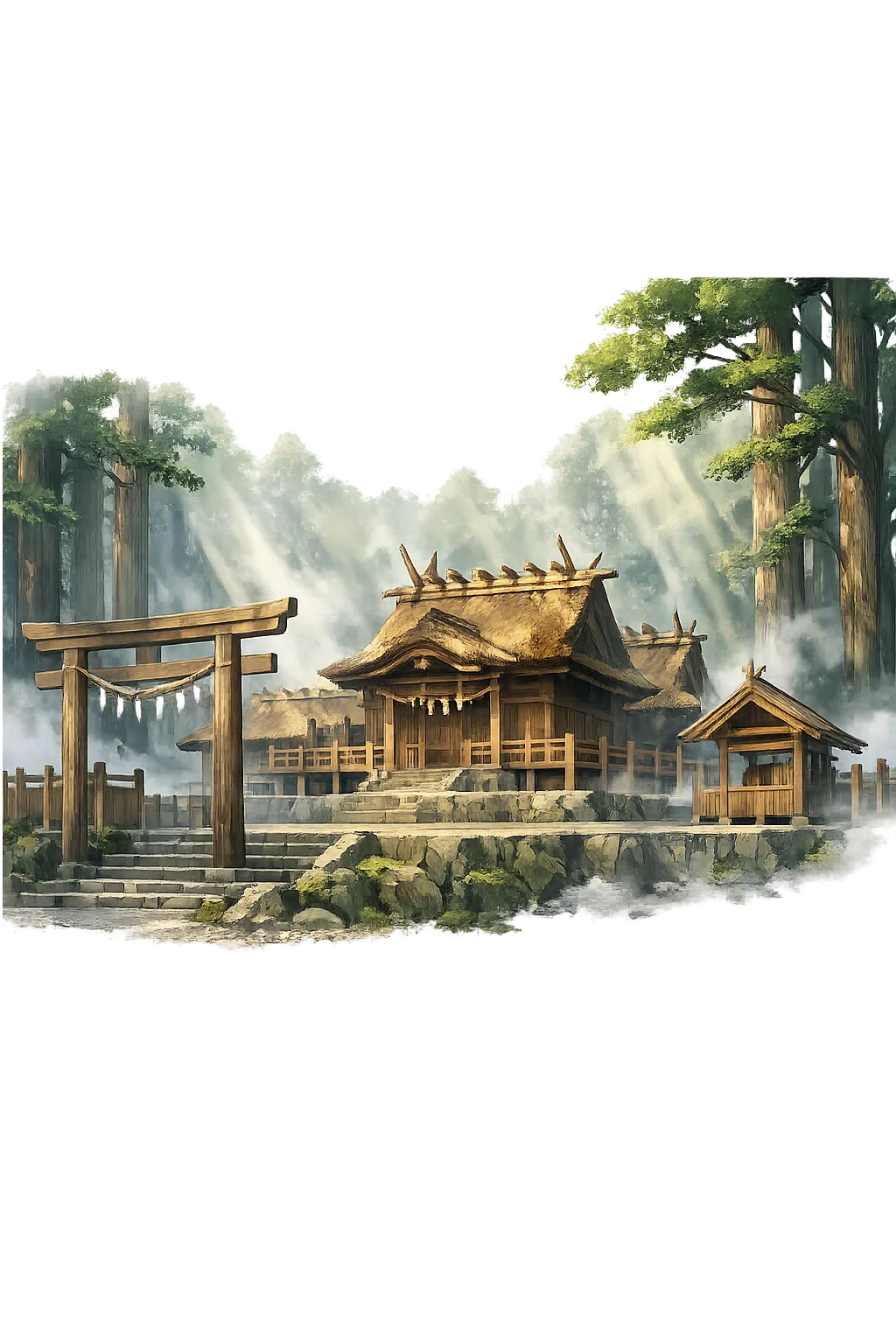
Why Ise is spelled that way — and what it costs to get it right
There is a version of this name the early internet had to settle for: ise. This is the file on how Ise replaced it.
Ise's mythology is inseparable from the mythology of Amaterasu and the imperial house. The city exists because the sun goddess needed a dwelling worthy of her.
At a Glance
- Restored name: Ise
- ASCII form: ise
- Meaning: "Ancient province"
- Domain of influence: Sacred Shrine
- Pantheon: Japanese
- Classification: Tier 2
- Original script: 伊勢
- Series: The Restoration Files, No. 237 of 548
The Name Before the Marks
The name is attested as 伊勢, as Kojiki and Nihon Shoki (Amaterasu, Ama-no-Iwato, and Yamatohime legends) and Engishiki (ritual regulations for the Ise cult) record. On the evidence, it means "Ancient province".
Spoken, the name runs `/i.se/` — 'EE-seh' — two light, even syllables.
The Temple That Stands Now
The restored name is not a plaque; it is an address. The temple of Ise lives at /ise/, with its mythology in the lore halls, its peer-reviewed record in the Scholarly Edition, and its place in the pattern atlas on the patterns floor.
The restoration keeps one feature the ASCII form drops. One is enough to matter, and the label says so plainly: Tier-2.
Where the Name Stood First
The Ise Grand Shrine complex includes the Inner Shrine (Kōtai Jingū), Outer Shrine (Gekū), and numerous auxiliary shrines. Archaeological investigations have clarified the shifting locations of successive rebuilding plots and the ancient use of the Isuzu River for ritual purification. The nearby Sengu Museum preserves building models and ritual implements from past rebuildings. The temple on the web is the newest of these addresses — the first one that fits in a pocket.
The Archetype at Work
The pattern atlas seats this temple in 3 industries, each match argued and weighted: Faith & Spiritual Organizations (the Ise Grand Shrine is the spiritual home of the Japanese polity.); Travel, Tourism & Place Branding (the Ise Grand Shrine draws millions on pilgrimage; the inner and outer shrines define sacred travel.); Architecture & Spatial Design (the Ise Grand Shrine and its twenty-year rebuilding cycle are the world's longest-running sacred design brief.). The Resonance File reads those seats through the myths themselves.
In the Sacred Texts
The Japanese tradition is not a vibe; it is a library. The Sacred Texts collection holds Kojiki and Nihon Shoki — the primary sources the temple's scholarship is built on. The temple is the argument; the texts are the evidence.
The File Continues
The temple's founding dispatch tells the name's story; its Resonance File reads the myths into the industries; the blog index holds the whole archive.
Continue the series — previous file: Îris (read it here) · next file: Ištar (read it here).
The Restoration Files are written from the same canonical record as the temples themselves: the lexicon, the lore catalog, the pattern atlas, and the cited scholarly sources. If a file ever disagrees with its temple, the temple is right — tell us, and the file will be corrected.