
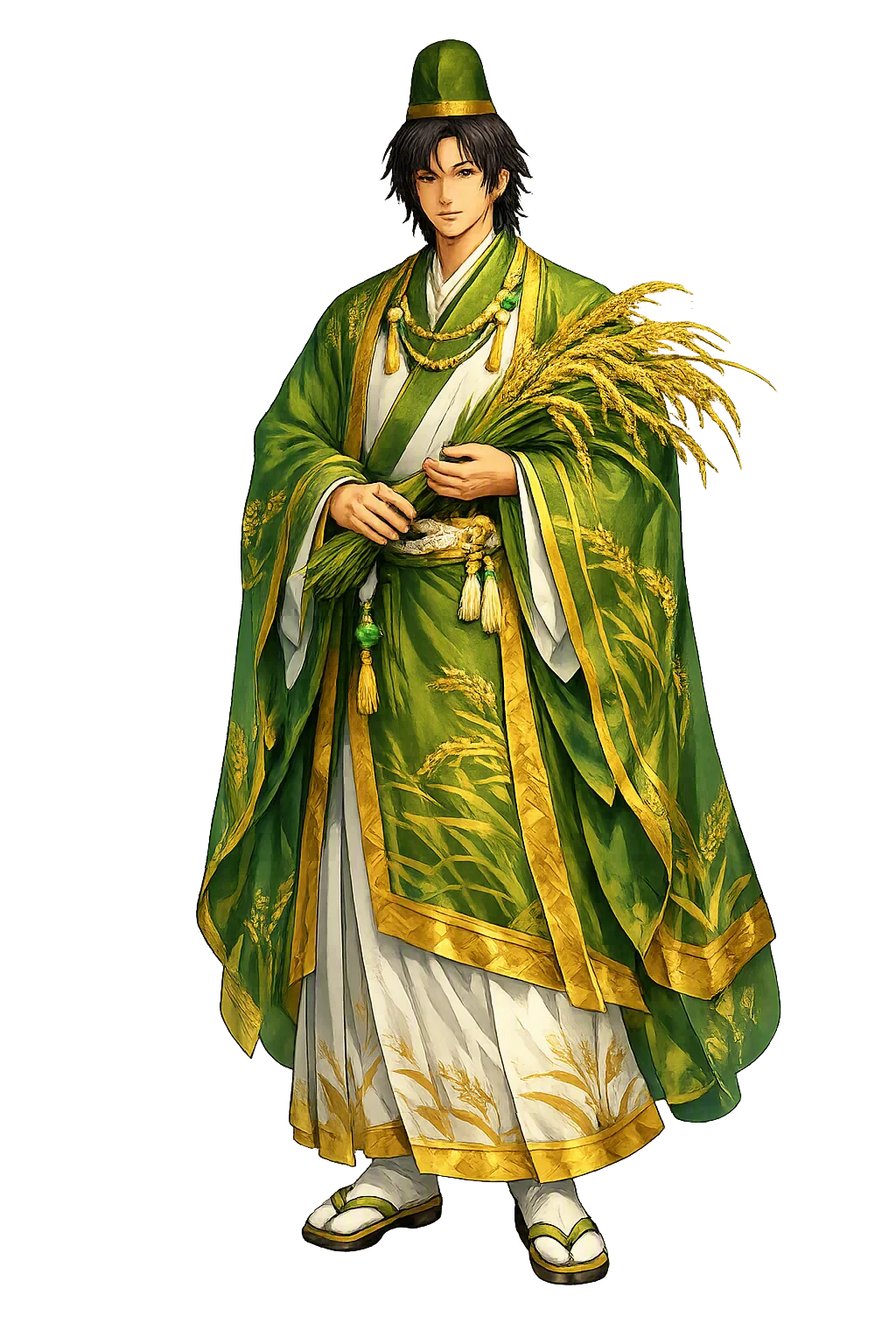
Hoori, translated into industries: what the archetype actually does
The myths did not retire. They moved offices. This is the file on where Hoori works now.
Hoori's mythology is the bridge between the heavenly descent of Ninigi and the earthly reign of Emperor Jimmu: a story of exchanged tools, a lost hook, a voyage to the dragon palace, a broken promise, and a line of kings. It is told in the Kojiki and repeated, with variations, in the Nihon Shoki.
The pattern atlas — which maps every flagship temple to the industries its archetype demonstrably resonates with, each match argued and open to challenge — seats this temple in 3 industries. This file reads those seats the way they were earned: through the myths.
At a Glance
- Temple: Hoori
- Pantheon: Japanese
- Domain of influence: Agriculture, Hunter
- Pattern seats: 3
- Sectors touched: Energy & Natural World · Culture & Entertainment
- Strongest seat: Agriculture, Food & Harvest
- Series: The Resonance Files, No. 215 of 548
The Myth at Work
The Exchanged Tools. The youngest son of Ninigi and Konohana-Sakuya-hime received from his father the bow, while his elder brother Hoderi received the fishhook — one son of the mountains, one of the sea, mirroring the division of the land itself (Kojiki I). Hoori proposed that they exchange tools for a single day: he would try his brother's fortune with the hook, Hoderi the mountains with the bow. — hold that image; the industries below are where it goes to work.
The Dragon Palace of Watasumi. Following the counsel of an old man on the beach — one of the passing kami who advise heroes at their lowest hour — Hoori sat on the bough of a tree that bent over the waves until the tide carried him down through a gateway into the undersea palace of Watasumi-no-kami, the sea deity. There he was welcomed, bathed, feasted, and married to the sea god's daughter Toyotama-hime, the 'Abundant-Jewel Princess' (Kojiki I). — remember the shape of that act. You will see it again, wearing a logo.
The Seats
Each of these is argued in the atlas with a weight and a why-line. What the atlas cannot fit in one line is the whole myth — so here is each seat with its story restored.
Agriculture, Food & Harvest
Farming, grain, food production, and agtech. (Sector: Energy & Natural World)
The fire-subduing hunter and agricultural kami; the field and the hunt are his twin harvests. Swap the costume and the sentence is indistinguishable from the myth. That is what a resonance seat means.
Forestry, Conservation & Outdoor Industries
Forestry, wildlife protection, and outdoor recreation. (Sector: Energy & Natural World)
The hunter of the high places; the wild wood and the chase are his realm. Swap the costume and the sentence is indistinguishable from the myth. That is what a resonance seat means.
Sports, Fitness & Competition
Athletics, fitness brands, and competitive leagues. (Sector: Culture & Entertainment)
The hunter whose skill with bow and field defines the athletic chase. — the atlas stops there, out of discipline. The myth keeps going: the function Hoori performs in the stories is precisely the function this industry sells.
The Long Employment
Hoori is remembered almost entirely as an ancestor, but his story has never stopped being retold. The dragon palace resurfaces in Heian tales, in otogizōshi storybooks, in puppet-theatre and Kabuki adaptations, and in modern novels, manga, and anime — the sea-bride and the undersea court are among Japan's most durable images. The age changed. The work did not.
The Method, Stated Plainly
None of this is numerology. A seat exists only where the match can be argued from the deity’s documented domains and deeds — weighted, published, and falsifiable. The derivation, the weights, and the challenge process are public on the methodology page. If a seat in this file reads wrong, the atlas itself tells you how to prove it — and the correction becomes part of the record.
For the Ones Who Work There
If you work in agriculture, food & harvest, forestry, conservation & outdoor industries, or any trade this temple holds a seat in, this is the honest version of what a placement means: your industry beside the story it has been re-telling all along — on the temple floor itself, before an audience that came specifically to read it. The patron tier and the advertising terms describe the mechanics; the resonance above describes the fit.
The File Continues
One of 548 Resonance Files — the series where the pantheon goes to work. Read the founding dispatch for the name, the Restoration File for the spelling, or the whole archive end to end.
Continue the series — previous: Honshū (read it) · next: Ḥr (read it).
The Resonance Files are argued from the same canonical record as the pattern atlas itself: the lexicon, the lore catalog, and the cited sources. Every seat can be challenged at the methodology page — and the challenge is the point.