
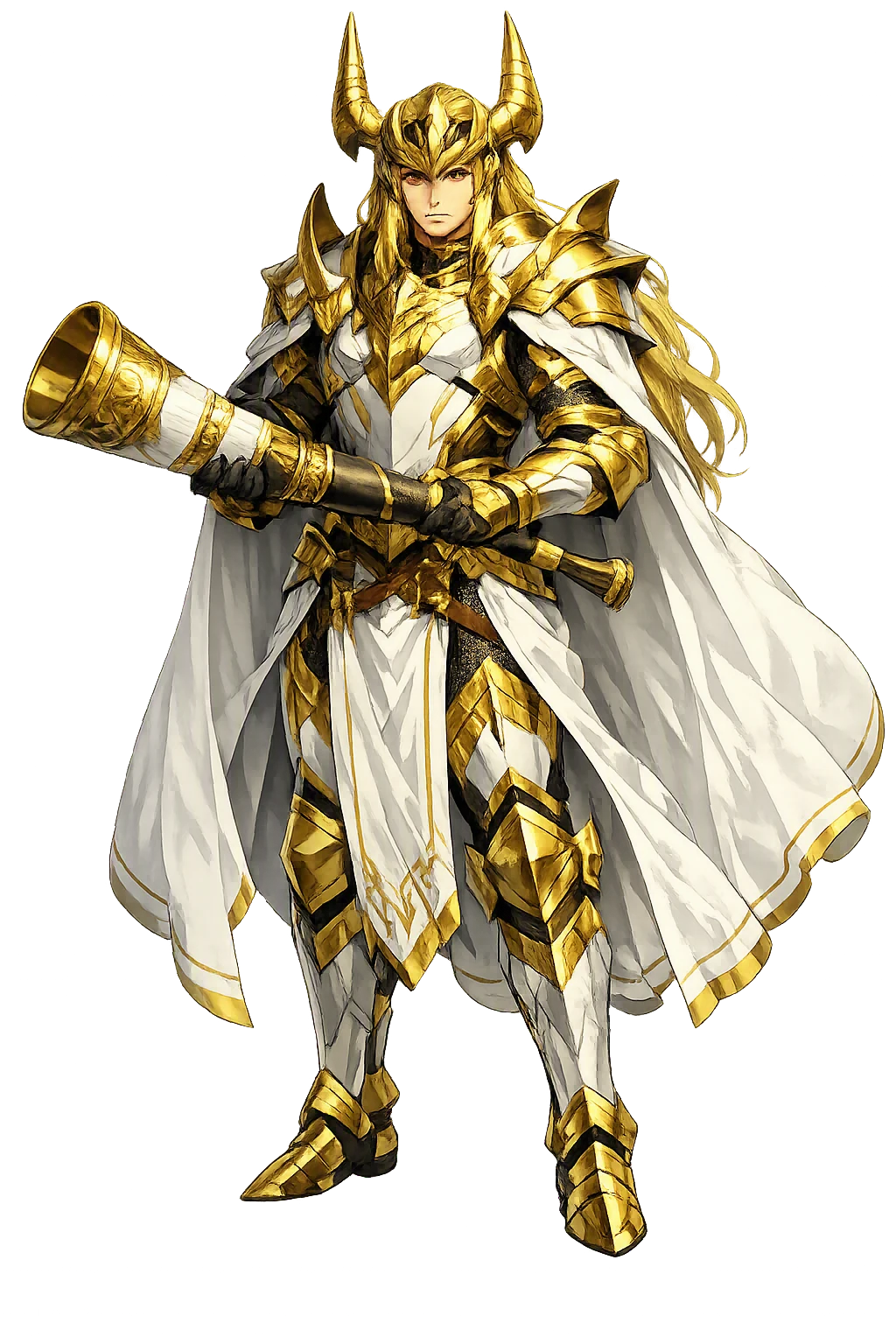
The many faces of Heimdallr
No important name has only one face. Heimdallr appears as a figure of myth, a scholarly reconstruction, a piece of material culture, a memory carried across languages, and — most recently — a Unicode domain. This post looks at each face in turn: the name and its roots, the Younger Futhark original, the reconstructed pronunciation, the mythological record, the symbols and sanctuaries, the cross-cultural afterlife, and the engineering that lets the restored spelling resolve in a browser. Taken together, those faces explain why heimdallr was never going to be enough — and why the restored form is worth a domain of its own.
At a Glance
- Restored name: Heimdallr
- ASCII form: heimdallr
- Meaning: "World-brightener (from heimr + dallr)"
- Domain of influence: Foreknowledge, Watchman, Bifrost
- Pantheon: Norse
- Classification: Tier 2
- Original script: ᚼᛁᛘᛏᛅᛚᛚᚱ (Younger Futhark)
Overview
Heimdallr (heimdallr) — Foreknowledge, Watchman, Bifrost · the Watchman of Himinbjǫrg — is the god the Æsir posted at the world's edge: the white god who dwells at Himinbjǫrg beside Bifrǫst to guard the bridge against the mountain-giants, needing less sleep than a bird, seeing a hundred leagues by night as well as by day, and hearing the grass grow on the earth and the wool on the sheep. When the end comes, it is his horn — the Gjallarhorn — that wakes the nine worlds, and his last duel, with Loki, that closes the oldest feud in the Norse record.
Old Norse Heimdallr is a compound whose first element is secure and whose second is not: heimr 'world, home, abode' is certain, but the second element — usually taken as the rare poetic word dallr, perhaps 'bright one' — has never been settled, and the standard handbooks register the etymology as debated. The honest glosses are therefore two: 'world-brightener' if the second element is light, 'home-dweller' if it is not; this temple carries both because the sources do.
The same god who watches the bridge is, in Rígsþula, the wanderer Rígr who fathers the three classes of men — thrall, free farmer, and noble — and Völuspá opens by calling all humanity 'the sons of Heimdallr, greater and lesser'. PuniCodex restores the name as Heimdallr and keeps its temple domain-less: the plain-ASCII heimdallr.com was registered decades ago outside the collection and is watched for release. The name is Tier 2 by the mechanical rule — the normalized Old Norse form loses nothing in ASCII.
The Name
The name is attested in Old Norse as Heimdallr (nominative; genitive Heimdalar). It is a compound whose first element is the common noun heimr 'world, home, abode' — the same word as the -heim of Jötunheimr and Álfheimr. The second element is the crux: it is usually identified with the rare poetic word dallr, taken by many scholars as 'bright one, shining one', whence the gloss 'world-brightener'; others have read a tree-name or a cult-term, and a derivation 'home-dweller' has also been defended. De Vries treats the etymology as unsettled, and Simek, Orchard, and Lindow all register the debate rather than resolve it.
The bynames the tradition gave him tell their own story. Snorri records Hallinskiði 'the slant-horned' — elsewhere a name for the ram — and Gullintanni 'golden-teeth', explaining that his teeth were of gold; Þrymskviða calls him hvítastr ása, 'whitest of the Æsir'. The whiteness, the gold, and the horn are the name's whole iconographic argument.
The ASCII form heimdallr is, for once, complete: the normalized Old Norse spelling carries no diacritic, no thorn, no eth, and the ASCII alphabet loses nothing in copying it. The restoration differs from the lowercase input only in capitalization, which places the name in Tier 2 by the mechanical rule.
The letter-by-letter transformation runs:
- h → H — Same, capitalized
- e → e — Same
- i → i — Same
- m → m — Same
- d → d — Same
- a → a — Same
- l → l — Same
- l → l — Same
- r → r — Same
Because the name is pure ASCII, its domain was registered decades ago in the ordinary way: heimdallr.com is held by a third party outside the PuniCodex collection and is watched for release — no form of the name is currently owned, and this temple claims none.
The Original Script
The name is preserved in medieval Icelandic manuscripts in the Latin alphabet as Heimdallr — Old Norse (North Germanic), attested 13th–14th c. CE in the Codex Regius, the Codex Wormianus, and Flateyjarbók, recording material centuries older. Before the Latin bookhand, Old Norse names were carved in the younger futhark; the Saltfleetby whorl shows the name was carved in life as well as written in books.
The scholarly rendering proceeds step by step:
- The compound is heimr 'world, home' plus a disputed second element, usually identified with the rare poetic dallr; the nominative singular ending -r closes the name.
- In the Younger Futhark the name would have been carved ᚼᛁᛘᛏᛅᛚᛦ (h-i-m-t-a-l-R): the ᛁ writes the diphthong ei, the ᛏ writes d, a single ᛚ stands for the geminate as runic practice simplifies double consonants, and ᛦ writes the final nominative -r.
- The normalized manuscript spelling carries no diacritic and no distinctive letter; the Unicode restoration Heimdallr is therefore identical to the ASCII form save the capital — an honest Tier 2.
Pronunciation
The reconstructed pronunciation of the name is /ˈhɛim.dɑl.r̩/ — Old Norse Reconstruction.
Phoneme by phoneme:
- Heim- — Voiceless glottal [h] followed by the falling diphthong [ɛi], the 'ei' Old Norse writes with two letters and the runes with one; stress falls on this first syllable, as in every Old Norse word
- -dall — Voiced dental stop [d], short open [ɑ], and the geminate lateral [lː]: the double l is held long, a consonant length the spelling insists on
- -r — The syllabic alveolar trill [r̩] of the nominative ending; the final r carries its own beat, as in modern Icelandic
For the modern speaker, the closest approximation is: 'HAYM-dahl-r' — the diphthong of day, a short open a, the double l held, and a light syllabic trill to close, as in Icelandic Heimdallur.
Kindred and historical forms of the name:
- Old Norse — Heimdallr, the manuscript form
- Modern Icelandic — Heimdallur, the name's unbroken living form
- Norwegian — Heimdal, the form of the place-names and the modern given name
- Younger Futhark — ᚼᛁᛘᛏᛅᛚᛦ (h-i-m-t-a-l-R), the Viking-Age runic rendering
Heimdallr is Tier 2 because the restoration preserves nothing the ASCII form loses — the name was already complete in plain letters. The diphthong, the geminate l, and the syllabic final r are features of sound, not of spelling.
Mythology
Heimdallr's mythology is scattered across the whole corpus — a stanza here, a þula there, a lost poem behind a kenning — but it adds up to a single office: the god who watches, and the horn that ends the watching.
The Watchman at Himinbjǫrg (Grímnismál 13 · Gylfaginning 27)
Grímnismál counts Himinbjǫrg the eighth of the gods' dwellings, 'and there they say Heimdallr rules over his sanctuaries; there the watchman of the gods drinks, in the peaceful house, gladly, the good mead'. Snorri fills out the portrait: the white god dwells beside Bifrǫst at heaven's edge to guard the bridge from the mountain-giants; he needs less sleep than a bird, sees a hundred leagues by night as by day, and hears the grass grow and the wool on the sheep. His horn is the Gjallarhorn; his horse is Gulltoppr; his teeth are gold.
Born of Nine Mothers (Hyndluljóðr 35–38)
Hyndluljóðr gives him the strangest birth in the Edda: one was born in days of old, of the gods' kin, and nine bore him — giant-maids at the edge of the earth. The poem names them: Gjálp and Greip, Eistla and Eyrgjafa, Ulfrún and Angeyja, Imðr and Atla and Járnsaxa; the child was strengthened with the might of the earth, the ice-cold sea, and sacrificial blood. Snorri quotes the companion lines: 'I am the son of nine mothers, I am the son of nine sisters.' The poem does not explain, and the scholars have never stopped asking.
Rígr and the Three Classes (Rígsþula)
The prose frame names him outright: one of the Æsir, called Heimdallr, walked the green ways, came to a farmstead, and called himself Rígr. Three nights between Ái and Edda beget Þræll, the thrall; three nights between Afi and Amma beget Karl, the free farmer; three nights between Faðir and Móðir beget Jarl, the noble — to whom Rígr returns in person, teaching runes, giving his own name, and declaring the boy his son. Völuspá's opening address to 'all the sons of Heimdallr, greater and lesser' suggests the tradition meant it: all men are the watchman's children.
The Seal-Fight at Singasteinn (Húsdrápa · Skáldskaparmál)
Úlfr Uggason's Húsdrápa, composed about 983 and quoted in Skáldskaparmál, preserves the oldest Heimdallr myth on record: the famed one, wise in counsel, strives at Singasteinn with the cunning son of Fárbauti, and the mighty son of nine mothers holds the fair 'sea-kidney'. The son of Fárbauti is Loki; the sea-kidney is the Brísingamen, Freyja's necklace; Snorri's prose explains that the two gods had taken the shapes of seals and fought for the jewel in the water. The feud is older than the Eddas themselves.
The Horn at Ragnarǫk (Völuspá 46 · Gylfaginning 51)
Völuspá gives the end its sound: 'Mímir's sons are at play, and fate is kindled at the old Gjallarhorn; loudly blows Heimdallr, the horn is aloft; Óðinn speaks with Mímir's head.' Snorri stages it: Heimdallr stands and blows the Gjallarhorn with all his strength, and wakes all the gods for their last council. And on the field Vígríðr the oldest enmity closes: Loki fights with Heimdallr, and each brings about the other's death. The watchman and the thief — the seal-fight fought once more at the end of the world.
Symbols & Iconography
Heimdallr's iconography is fixed by Snorri's portrait and the poems' bynames — a small set of attributes, all of them arguments about vigilance:
- The Gjallarhorn — 'the resounding horn', hidden in Mímir's well until the end: the blast that will be heard in all worlds when Ragnarǫk begins
- Himinbjǫrg — 'heaven-mountain', his hall at the bridge's head: the one dwelling in the Edda defined entirely by the duty kept there
- Gulltoppr — 'gold-top', his horse: the mount he rode to Baldr's pyre in Gylfaginning's account of the funeral
- The golden teeth — Gullintanni, the byname Snorri explains plainly: the watchman's brightness struck in metal
- Hallinskiði — 'the slant-horned', his other byname, elsewhere a name for the ram: the animal of the cliff-edge lookout lending the god its horns
- The senses themselves — sight across a hundred leagues of night, hearing sharp enough for growing grass: vigilance sharpened past the edge of the possible
Archaeology & Evidence
Heimdallr's material record is thin but real. The outstanding witness is the Saltfleetby spindle whorl (Lincolnshire, 10th–11th c.), a lead whorl whose runic inscription calls on Óðinn, Heimdallr, and Þjálfi for help — the only runic charm yet found that invokes the watchman by name, and proof that his name travelled to England with the Norse settlers.
In art, the Gosforth Cross in Cumbria carries a Ragnarǫk panel with a figure raising a horn, often read as Heimdallr sounding the last alarm, and the Jurby cross-slab on the Isle of Man shows a horn-blowing figure sometimes given the same reading; neither stone names him. Place-names formed on his hall Himinbjǫrg survive in Scandinavia (the Himberg type in Norway and Sweden), and Úlfr Uggason's Húsdrápa — composed about the carvings in Óláfr pái's hall at Hjarðarholt — proves his myth decorated a chieftain's hall by the 980s. Of the texts: the Codex Regius preserves Völuspá, Grímnismál, Þrymskviða, and Lokasenna; Rígsþula survives only in the Codex Wormianus; Hyndluljóðr in Flateyjarbók.
Realm & Domain
Heimdallr is the watchman of the gods — and the tradition is remarkably consistent about what watching means: sight past the horizon, hearing past the possible, and a horn for the day the watch ends.
The Watchman
He sits at Himinbjǫrg, at heaven's edge where Bifrǫst lands, to guard the bridge against the mountain-giants. Grímnismál's vignette is the whole job description: the watchman of the gods drinks good mead in the peaceful house, gladly — duty as contentment.
The White God
Snorri calls him the white god; Þrymskviða calls him hvítastr ása, 'whitest of the Æsir', and credits him with foreknowledge 'like the other Vanir'. His brightness is his byname-cluster — Gullintanni's golden teeth, Gulltoppr's golden forelock — the dawn-side of the watch: the god whose colour is first light.
Hearing
His signature sense: he hears grass growing on the earth and wool on sheep, and Völuspá 27 says his hearing itself lies hidden beneath the sacred tree, washed by the torrent from Óðinn's pledge. The seeing god paid an eye to Mímir's well; the hearing god's stake in that water is the corpus's standing riddle.
The Father of Men
As Rígr he walks the green ways and fathers thrall, farmer, and noble; Völuspá opens by calling mankind 'the sons of Heimdallr'. Watchfulness, in this telling, is not only defence — it is the attention out of which society itself was born.
Across Cultures
Heimdallr resists the usual syncretic moves: no Roman writer ever matched him, and no continental charm securely names him. The twentieth century built him a different kind of company. Georges Dumézil made Rígsþula a Scandinavian cornerstone of his trifunctional reading of Indo-European society — thrall, farmer, and noble begotten by one wandering god maps the pattern he traced from the Vedas to Rome — and the comparison, whatever its critics, fixed the poem at the centre of the debate about Indo-European social ideology.
Within the Germanic record, the clearest pairing is archaeological: the Saltfleetby spindle whorl from Lincolnshire, whose runic charm calls on Óðinn and Heimdallr and Þjálfi for help — the watchman invoked beside the Allfather in a working household of the Danelaw. Scholars have also set his nine giantess-mothers beside Ægir's nine wave-daughters, and his birth 'at the edge of the earth' beside other shore-born figures; none of the equations has won consensus, and the handbooks — Simek, Orchard, Lindow — converge on the same honest verdict: enigmatic. His closest kin in the lexicon are Loki, his appointed opposite from Singasteinn to Vígríðr, and Bifrǫst, the bridge his whole existence is spent guarding.
Cultural Legacy
Heimdallr's afterlife runs on the horn and the watch. The name never left the North: Norwegian Heimdal survives in place-names — among them the Trondheim borough — and as a given name, and Icelandic keeps Heimdallur.
In modern reception he has become the fixed image of the gatekeeper. The cinema's Heimdall, sighting across the Bifröst, is now the spelling most of the world meets first; security software borrows the name when it wants to promise that nothing gets past; and every retelling of Ragnarǫk keeps his one irreplaceable stage direction — the horn, aloft, heard in all worlds. Modern Heathenry honors him as the father of mankind's orders and the god of vigilance, while scholarship keeps him as its favorite unsolved problem: the white god whose dossier is large and whose meaning is still debated.
The Scholarly Record
The account of Heimdallr given in this edition rests on the witnesses and reference works listed below. The Eddas supply the myth; the lexica frame the debated etymology; the runic and art-historical record carries what little material attestation survives.
- The Poetic Edda, trans. Carolyne Larrington, 2nd ed. (Oxford: Oxford University Press, 2014): Völuspá 1, 27, 46; Grímnismál 13; Þrymskviða 15; Lokasenna 48; Rígsþula; Hyndluljóðr 35–38.
- Snorri Sturluson, Edda, trans. Anthony Faulkes (London: Everyman, 1987): Gylfaginning 15, 27, 49, 51; Skáldskaparmál (Húsdrápa; the kennings 'Heimdallr's sword' and 'Heimdallr's head').
- Úlfr Uggason, Húsdrápa (c. 983), preserved in Skáldskaparmál.
- Cleasby, Richard, and Guðbrandur Vigfússon, An Icelandic-English Dictionary, 2nd ed. (Oxford: Clarendon Press, 1957), s.v. Heimdallr, dallr, hallinskiði.
- Zoëga, Geir T., A Concise Dictionary of Old Icelandic (Oxford: Clarendon Press, 1910), s.v. Heimdallr.
- de Vries, Jan, Altnordisches etymologisches Wörterbuch, 2nd ed. (Leiden: Brill, 1962), s.v. Heimdallr, dallr.
- Gordon, E. V., An Introduction to Old Norse, 2nd ed. rev. A. R. Taylor (Oxford: Clarendon Press, 1957).
- Dumézil, Georges, Gods of the Ancient Northmen, ed. Einar Haugen (Berkeley: University of California Press, 1973).
- Simek, Rudolf, Dictionary of Northern Mythology, trans. Angela Hall (Cambridge: D. S. Brewer, 1993), s.v. Heimdallr, Himinbjörg; Orchard, Andy, Dictionary of Norse Myth and Legend (London: Cassell, 1997), s.v. Heimdall; Lindow, John, Norse Mythology: A Guide to the Gods, Heroes, Rituals, and Beliefs (Oxford: Oxford University Press, 2001), s.v. Heimdallr.
- Holman, Katherine, Scandinavian Runic Inscriptions in the British Isles: Their Historical Context (Trondheim: Tapir, 1996), on the Saltfleetby spindle whorl.
A Meditation
Heimdallr is the god of the unglamorous miracle: attention. No adventure of his survives whole — the great deeds are lost poems and kenning-fragments — but the corpus is unanimous about the senses. He hears grass grow. He sees through night. He needs less sleep than a bird. And the Edda builds the whole meaning of vigilance out of that patience: the watch is not the battle; the watch is what makes the battle survivable, and the horn is what makes the watch worth keeping.
Rígsþula adds the stranger claim — that this same tireless attention once walked the green ways as Rígr and fathered every class of men, as if to say that society itself began as something watched over. His last act is not a victory: he blows the horn, and then he and Loki kill each other. The watch ends in the warning, not in the rescue. That is the whole of it, and it is enough: someone has to be awake when the rest of the world is not, and the Edda gave that someone a name.
The Unicode Restoration
Heimdallr is classified as Tier 2: the restoration needs no distinctive letters or diacritics its ASCII form would lose. The ASCII fallback heimdallr still resolves everywhere, but it is the restored form that carries the name's full information. That is the whole thesis of this temple: the marks are the message.
Why This Restoration Matters
Myth, script, sound, cult, legacy, domain: the faces of Heimdallr add up to a single argument — that a name is a record, and records deserve fidelity. The PuniCodex restoration keeps that record in working order: the temple presents it, the Scholarly Edition footnotes it, the lexicon catalogs it, and the domain makes it addressable. heimdallr will always exist as a fallback. But fallback is not identity. Heimdallr is the name; everything else is a convenience.
Explore Further
This post is one doorway into the temple. The home page carries the full character breakdown and the ambient canvas; the lore page tells the myths in long form; the Scholarly Edition preserves the sources, pronunciation data, and revision history; and the patron wall supports the restoration directly. For the wider map, browse the Lexicon, explore the Pantheon, or return to the PuniCodex blog.
Related Names
Sources
The full scholarly apparatus — every citation, revision, and review — lives in the Scholarly Edition. Key references for this post:
- Snorri Sturluson, Edda, Gylfaginning 27 (the portrait of Heimdallr at Himinbjǫrg), ed. and trans. Anthony Faulkes (London: Everyman, 1987).
- Völuspá 46 (Poetic Edda), trans. Carolyne Larrington, The Poetic Edda, 2nd ed. (Oxford: Oxford University Press, 2014); Snorri, Edda, Gylfaginning 51, trans. Faulkes (1987).
- de Vries, Jan, Altnordisches etymologisches Wörterbuch, 2nd ed. (Leiden: Brill, 1962), s.v. Heimdallr; Simek, Rudolf, Dictionary of Northern Mythology, trans. Angela Hall (Cambridge: D. S. Brewer, 1993), s.v. Heimdallr.
- Rígsþula (prose introduction) and Völuspá 1 (Poetic Edda), trans. Larrington (2014).
- Lexicon authorities for this entry: Cleasby-Vigfusson, Zoëga.