PuniCodex

Extended Lore

ᚼᛁᛘᛏᛅᛚᛚᚱ Heimdallr

Etymology · Phonology · Orthography · Cultural Legacy · Primary Sources

Tier 2 Heimdallr
Heimdallr — Foreknowledge, Watchman, Bifrost
01

Quick Facts

Essential information about Heimdallr, Foreknowledge, Watchman, Bifrost

Original Scriptᚼᛁᛘᛏᛅᛚᛚᚱ
Unicode RestorationHeimdallr
Reconstructed Pronunciation/ˈhɛim.dɑl.r̩/
PantheonNorse
DomainForeknowledge, Watchman, Bifrost
MeaningWorld-brightener (from heimr + dallr)
ClassificationTier 2
Primary DomainHeimdallr
Sacred SymbolsThe Gjallarhorn, The golden teeth, Himinbjǫrg, The hearing, The green ways of Rígr
02

Etymology & Word Family

From original script to Unicode restoration

Original Script ᚼᛁᛘᛏᛅᛚᛚᚱ Heimdallr — "World-brightener (from heimr + dallr)"
Unicode Restoration Heimdallr Restored stress, length, and script
Modern ASCII heimdallr Plain-ASCII fallback

Heimdallr is Tier 2 by the mechanical rule: the normalized Old Norse form is already plain ASCII — no diacritic, no thorn, no eth for the ASCII alphabet to lose. The etymology is genuinely debated (heimr 'world, home' plus a disputed second element, usually taken as the rare poetic dallr, perhaps 'bright one'), but the orthography is not: only the capital distinguishes the restored form from the input.

03

Unicode Character Breakdown

Character-by-character philological analysis

CharacterUnicodeNameBlockPhonetic Role
HU+0048Latin Capital Letter HBasic LatinSame
eU+0065Latin Small Letter EBasic LatinSame
iU+0069Latin Small Letter IBasic LatinSame
mU+006DLatin Small Letter MBasic LatinSame
dU+0064Latin Small Letter DBasic LatinSame
aU+0061Latin Small Letter ABasic LatinSame
lU+006CLatin Small Letter LBasic LatinSame
rU+0072Latin Small Letter RBasic LatinSame

The Tier 2 classification reflects how much of the original phonology this restoration preserves — stress and vowel length for Greek names, distinctive letters and diacritics for every other tradition.

04

Cultural Significance

From ancient cult to modern Unicode

Ancient Domain

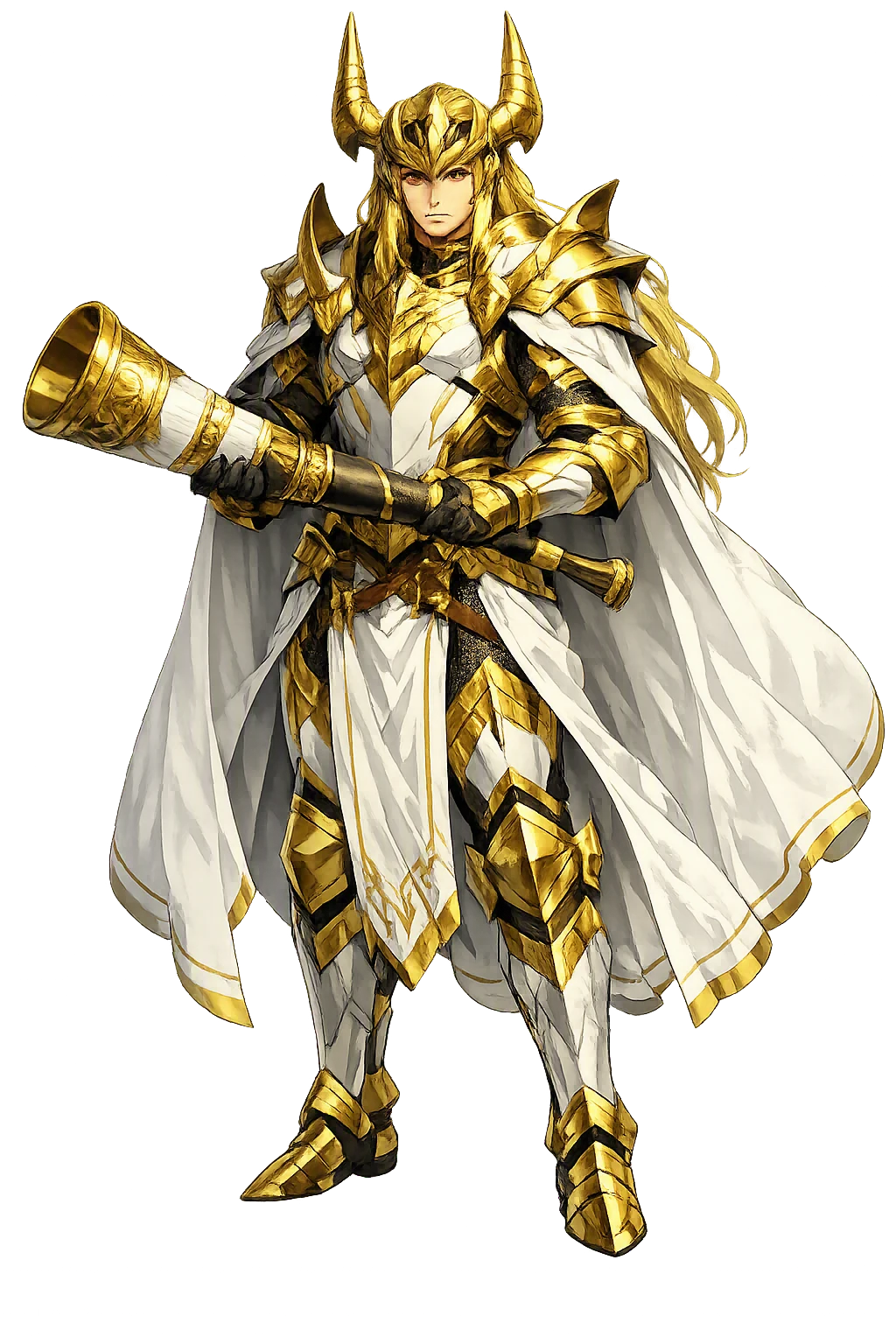
Heimdallr is the watchman of the gods: the white god who sits at Himinbjǫrg by the bridge's end, who needs less sleep than a bird, who sees a hundred leagues by night as by day, and who hears the grass grow on the earth and the wool on the sheep. When the end comes it is his horn that wakes the nine worlds — and his last fight, with Loki, that ends them both.

Heimdallr in Later Traditions

Heimdallr resists the usual syncretic moves — no Roman writer ever matched him, and no continental charm securely names him — but the twentieth century built him a different kind of company. Georges Dumézil made Rígsþula a Scandinavian cornerstone of his trifunctional reading of Indo-European society: thrall, farmer, and noble begotten by one wandering god maps the pattern he traced from the Vedas to Rome. Within the Germanic record, the clearest pairing is the Saltfleetby spindle whorl from Lincolnshire, whose runic charm calls on Óðinn and Heimdallr and Þjálfi for help — the watchman invoked beside the Allfather in a working household. Scholars have also set his nine giantess-mothers beside Ægir's nine wave-daughters and his birth 'at the edge of the earth' beside other shore-born figures; none of the equations has won consensus, and the handbooks converge on the same honest word: enigmatic.

Modern Legacy

Heimdallr's afterlife runs on the horn and the watch. The name never left the North — Norwegian Heimdal survives in place-names and as a given name, and Icelandic keeps Heimdallur — and in modern reception he has become the fixed image of the gatekeeper: the cinema's Heimdall, sighting across the Bifröst, is now the spelling most of the world meets first, and security software borrows the name when it wants to promise that nothing gets past. Modern Heathenry honors him as the father of mankind's orders and the god of vigilance, while the scholarship keeps him as its favorite unsolved problem — the white god whose dossier is large and whose meaning is still debated.

Unicode Restoration as Cultural Act

Restoring Heimdallr in a domain name is more than orthographic accuracy. It is a statement that the internet should recognize the full range of human writing — not only the ASCII keyboard.

05

Frequently Asked Questions

Common questions about Heimdallr, Foreknowledge, Watchman, Bifrost, and Unicode restoration

01How do you pronounce Heimdallr?

In reconstructed pronunciation, Heimdallr is /ˈhɛim.dɑl.r̩/ — approximately 'HAYM-dahl-r' — the ei is the diphthong of 'day', the a short and open, the double l held long, and the final r sounded as a light syllabic trill, as in Icelandic Heimdallur..

02What does Heimdallr mean?

Heimdallr means World-brightener (from heimr + dallr) in the norse tradition.

03What are the symbols of Heimdallr?

Heimdallr is associated with The Gjallarhorn (The resounding horn hidden beneath the sacred tree — the blast that will be heard in all worlds when the end begins), The golden teeth (Gullintanni, the byname Snorri explains plainly — the watchman's brightness struck in metal), Himinbjǫrg ('Heaven-mountain', his hall at the bridge's head — the one dwelling in the Edda defined entirely by the duty kept there), The hearing (He hears grass growing on the earth and wool on sheep — vigilance sharpened past the edge of the possible), The green ways of Rígr (The roads he walked as Rígr, sleeping three nights in each house — the wanderings that fathered the classes of men).

04Why restore Heimdallr in Unicode?

Plain ASCII heimdallr strips the stress, length, and script that make the name specific. Unicode restoration returns the name to its original written dignity.

05What is the most important myth about Heimdallr?

Grímnismál counts Himinbjǫrg the eighth of the gods' dwellings, 'and there they say Heimdallr rules over his sanctuaries; there the watchman of the gods drinks, in the peaceful house, gladly, the good mead.' Snorri fills out the portrait in Gylfaginning: Heimdallr is called the white god, and he is great and holy. He dwells at Himinbjǫrg beside Bifrǫst, at heaven's edge, to guard the bridge against the mountain-giants. He needs less sleep than a bird; he sees by night just as well as by day for a hundred leagues; he hears the grass growing on the earth and the wool on sheep, and everything that makes more noise than that. His horn is the Gjallarhorn, and its blast is heard in all worlds. His horse is Gulltoppr, his teeth are of gold, and one of his names — Hallinskiði, 'the slant-horned' — is elsewhere a name for the ram.

06

Scholarly Sources

The philological foundations of this restoration

Every claim on this page is grounded in established scholarship. The orthographic restorations follow disciplinary convention. The etymological chain follows the best available reference works. This is not invention — it is resurrection through scholarship.

Lexicography & Philology

  • Cleasby-Vigfusson
  • Zoëga

Primary Texts

  • Poetic Edda: Völuspá 1 and 27 (the sons of Heimdallr; the hearing hidden under the tree) and 46 (the horn at Ragnarǫk); Grímnismál 13 (Himinbjǫrg); Þrymskviða 15 (the whitest of the Æsir, who knows the future like the Vanir); Lokasenna 48 (Loki's taunt to the sleepless watchman); Rígsþula (Rígr and the three classes); Hyndluljóðr 35–38 (the nine mothers)
  • Snorri Sturluson, Prose Edda: Gylfaginning 15 (the Gjallarhorn hidden in Mímir's well), 27 (the fullest portrait: the white god, Hallinskiði, Gullintanni, Gulltoppr, the senses, the horn), 49 (Gulltoppr at Baldr's funeral), 51 (Ragnarǫk: the blast and the last fight with Loki); Skáldskaparmál (Húsdrápa on the seal-fight at Singasteinn; the kennings 'Heimdallr's sword' for head and 'Heimdallr's head' for sword)
  • Úlfr Uggason, Húsdrápa (c. 983), preserved in Skáldskaparmál — the oldest attestation of the feud with Loki

Archaeology & Art History

  • Material evidence — iconography, inscriptions, and temple archaeology — for Heimdallr and related cults.
  • Heimdallr's material record is thin but real. The outstanding witness is the Saltfleetby spindle whorl (Lincolnshire, 10th–11th c.), a lead whorl whose runic inscription calls on Óðinn, Heimdallr, and Þjálfi for help — the only runic charm yet found that invokes the watchman by name, and proof his name travelled to England with the Norse settlers. In art, the Gosforth Cross in Cumbria carries a Ragnarǫk panel with a figure raising a horn, often read as Heimdallr sounding the last alarm, and the Jurby cross-slab on the Isle of Man shows a horn-blowing figure sometimes given the same reading; neither stone names him. Place-names formed on his hall Himinbjǫrg survive in Scandinavia (the Himberg type in Norway and Sweden), and Úlfr Uggason's Húsdrápa — composed about the carvings in Óláfr pái's hall at Hjarðarholt — proves his myth decorated a chieftain's hall by the 980s. Of the texts: the Codex Regius preserves Völuspá, Grímnismál, Þrymskviða, and Lokasenna; Rígsþula survives only in the Codex Wormianus; Hyndluljóðr in Flateyjarbók.

Religious Studies

  • Cleasby–Vigfusson, An Icelandic-English Dictionary, s.v. Heimdallr, dallr, hallinskiði
  • Zoëga, A Concise Dictionary of Old Icelandic, s.v. Heimdallr
  • Simek, Dictionary of Northern Mythology; Orchard, Dictionary of Norse Myth and Legend; Lindow, Norse Mythology: A Guide — s.v. Heimdallr (the debated etymology and the interpretive debates)
Return

The Surface Awaits

You have traced the name from its earliest attestation to its Unicode restoration. Now return to the myth. The story is where the name lives.

Back to Lore
Heimdallr mascot