
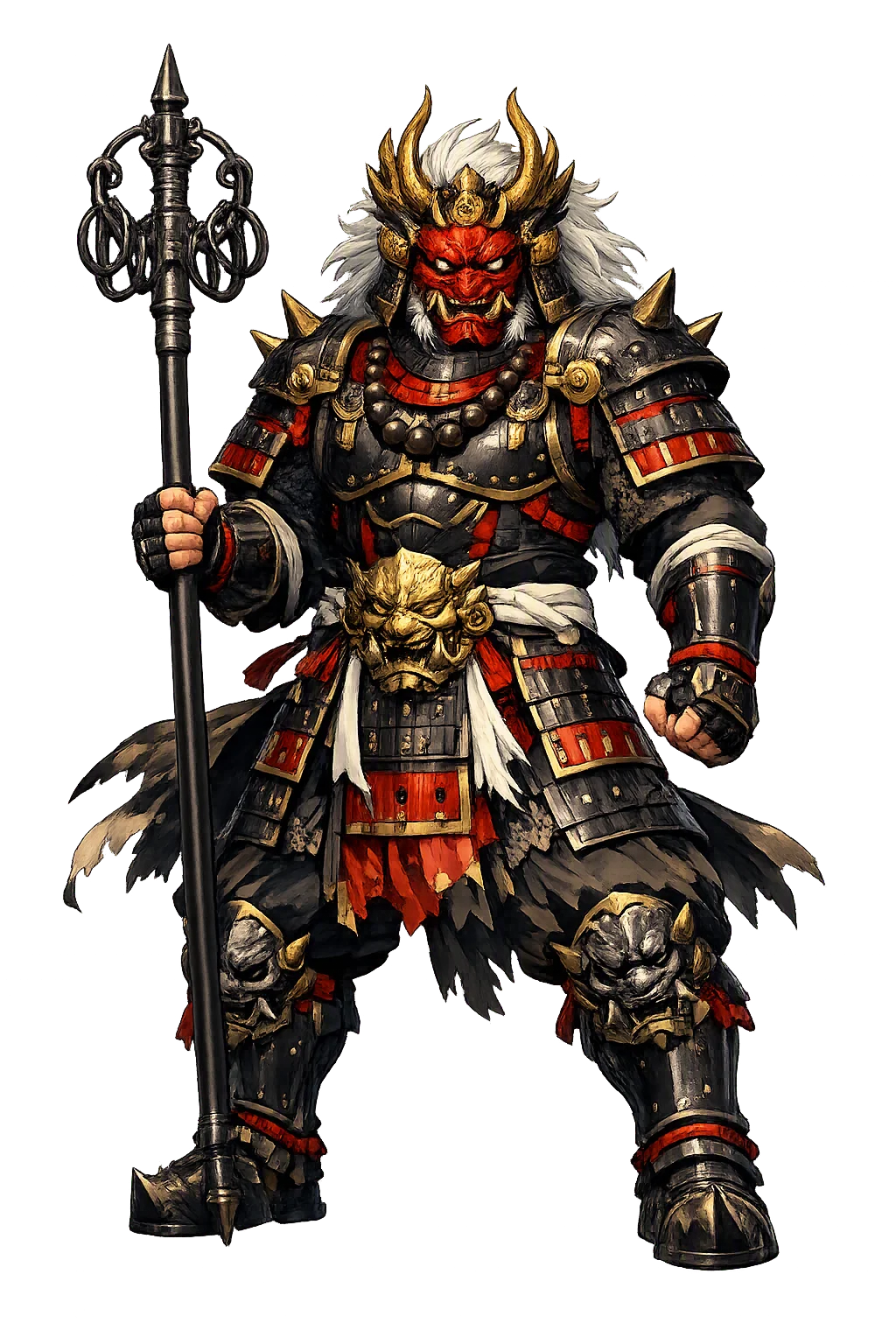
The provenance file on Goshin
Catalogue entry — Goshin. Every claim below carries its chain of custody.
Provenance
1. The attestation. 五神 — "Five gods". On record: The Womb- and Diamond-Realm Mandalas transmitted to Japan by Kūkai (806 CE), preserved at Tōji, Kyoto, Abe, Ryūichi, The Weaving of Mantra: Kūkai and the Construction of Esoteric Buddhist Discourse (Columbia University Press, 1999), Bock, Felicia G., Classical Learning and Taoist Practices in Early Japan (University of Arizona Press, 1985), Rambelli, Fabio, and Mark Teeuwen, eds., Buddhas and Kami in Japan: Honji Suijaku as a Combinatory Paradigm (RoutledgeCurzon, 2003).
2. The narrative record. The Five Buddhas of the Womb Realm — When Kūkai returned from Tang China in 806 CE he carried two great mandalas, and the Womb-Realm (Taizōkai) mandala painted five buddhas enthroned at its heart: Dainichi Nyorai (Mahāvairocana) of the Law at the center, attended by four more, with the full assembly of bodhisattvas radiating outward like a celestial court. In ritual the practitioner 'enters' the mandala to be born into enlightenment — the womb is taken literally: the devotee is conceived, gestated, and delivered as a buddha within Dainichi's diagram. The Five Wisdom Kings — Guarding the mandala's edges stand the Five Wisdom Kings (godai myōō): Fudō Myōō immovable at the center with sword and lasso, Gōzanze Myōō trampling the three traitors in the east, Gundari Myōō hurling his serpent noose in the south, Daiitoku Myōō riding the water-buffalo demon in the west, and Kongōyasha Myōō keeping the northern gate. These wrathful figures are not demons but compassion at full pressure — the ferocity a buddha assumes to break the attachments that gentleness cannot reach.
3. The physical record. No single excavation corresponds to 'goshin,' but the concept's material traces are national landmarks. The five-story pagoda of Hōryūji (Ikaruga, Nara; seventh century, rebuilt after the fire of 670) is the oldest standing exemplar; the Tōji pagoda in Kyoto (rebuilt 1644) preserves the five-element reading in urban form. Mandala material culture survives in the Kūkai-era treasures of Tōji — the Taizōkai and Kongōkai scrolls — and in the five-tiered altars of the goma fire rite. The Onmyōryō's legacy is documentary rather than monumental: horoscope records, calendars, and divination manuals preserved in temple and court archives, with the five-phase tables still legible on them.
4. The current holding. The temple at /goshin/, classified Tier 2. Tier-2 here means one preserved truth — not less important, just singular. The temple shows it and names it.
5. The documented resonances. Defense, Military & Security, Faith & Spiritual Organizations, Insurance & Protection Services — seats argued and weighted in the pattern atlas, read through the myths in this temple's Resonance File.
6. The primary sources. Kojiki, Nihon Shoki — the library this file answers to, open at the Sacred Texts collection.
7. The continuing record. The five remains one of the most productive numbers in Japanese culture. The five-story pagoda anchors temple skylines from Hōryūji to Nikkō; the five colors thread festival banners and the koinobori streamers of Children's Day; five-phase reasoning still underlies fortune-telling, calendar lore, and the aesthetics of tea and garden design.
At a Glance
- Restored name: Goshin
- ASCII form: goshin
- Meaning: "Five gods"
- Domain of influence: Five Deities, Protection
- Pantheon: Japanese
- Classification: Tier 2
- Original script: 五神
- Series: The Restoration Files, No. 178 of 548
The File Continues
Read the founding dispatch for the name's full story, the Resonance File for the archetype at work — or the whole archive in one sitting.
Continue the series — previous file: Gnowee (read it here) · next file: Gravitas (read it here).
The Restoration Files are written from the same canonical record as the temples themselves: the lexicon, the lore catalog, the pattern atlas, and the cited scholarly sources. If a file ever disagrees with its temple, the temple is right — tell us, and the file will be corrected.