
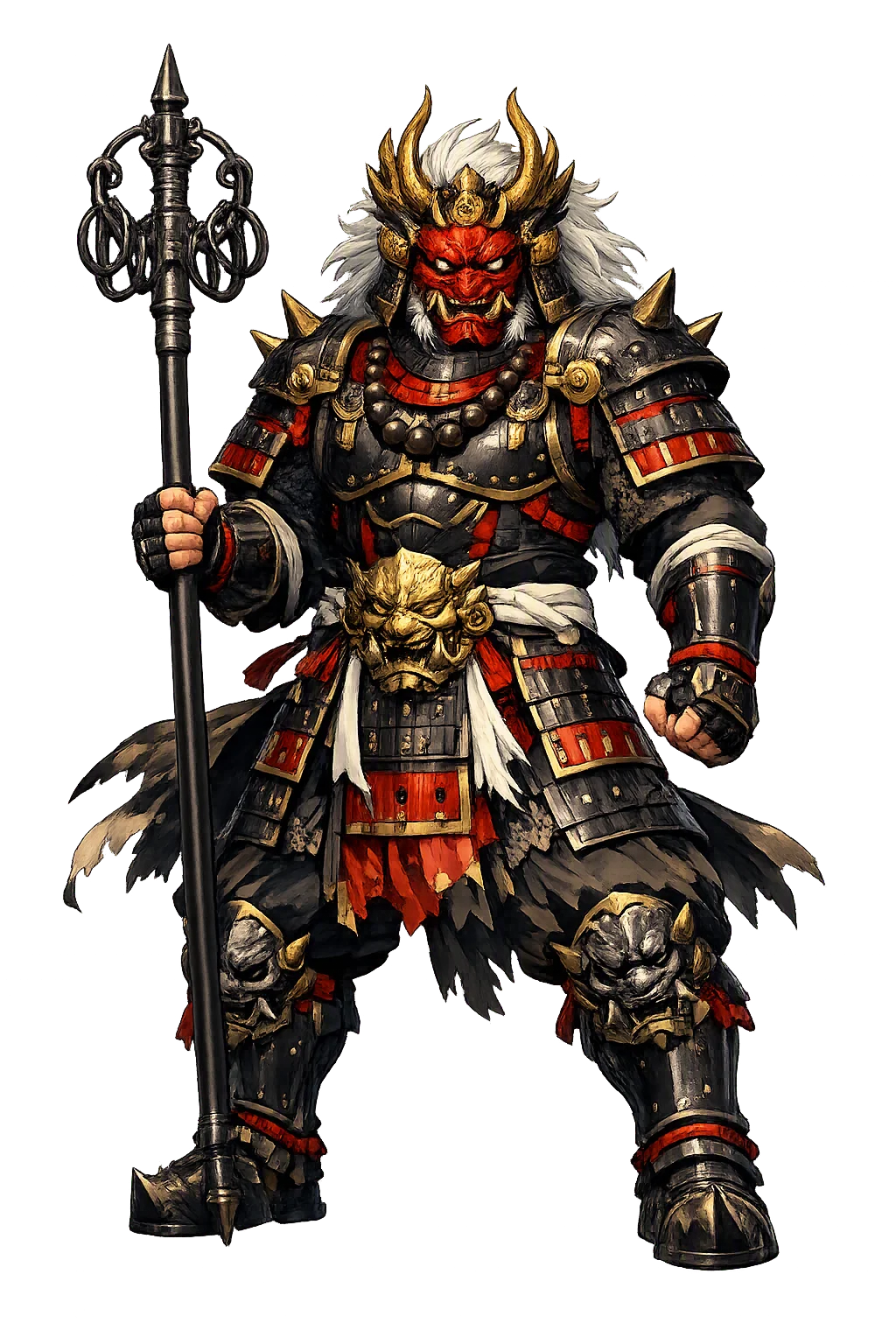
Stress-testing Goshin: do the industry seats hold?
The stress test for Goshin. Every seat in the atlas was attacked with the same question — is the match real, or is it poetry? — and the survivors are recorded with their evidence.
At a Glance
- Temple: Goshin
- Pantheon: Japanese
- Domain of influence: Five Deities, Protection
- Pattern seats: 4
- Sectors touched: Commerce & Governance · Society & Spirit · Technology & Innovation
- Strongest seat: Defense, Military & Security
- Series: The Resonance Files, No. 178 of 548
The Test
Seat 1: Defense, Military & Security
Claim: The five protective deities; their very name means the divine guard. Exhibit: The Five Buddhas of the Womb Realm — When Kūkai returned from Tang China in 806 CE he carried two great mandalas, and the Womb-Realm (Taizōkai) mandala painted five buddhas enthroned at its heart: Dainichi Nyorai (Mahāvairocana) of the Law at the center, attended by four more, with the full assembly of bodhisattvas radiating outward like a celestial court.
Verdict: stands. Strip both to their function and the functions match.
Seat 2: Faith & Spiritual Organizations
Claim: The five deities as a protective cult; guardian faith in collective form. Exhibit: The Five Wisdom Kings — Guarding the mandala's edges stand the Five Wisdom Kings (godai myōō): Fudō Myōō immovable at the center with sword and lasso, Gōzanze Myōō trampling the three traitors in the east, Gundari Myōō hurling his serpent noose in the south, Daiitoku Myōō riding the water-buffalo demon in the west, and Kongōyasha Myōō keeping the northern gate.
Verdict: holds under load. The correspondence is functional, not decorative.
Seat 3: Insurance & Protection Services
Claim: Five protective deities; the layered-guard model is cosmic insurance. Exhibit: The Five Phases and the Demon Gate — The yin-yang bureau (Onmyōryō), founded at the Japanese court on Chinese models in the seventh century, organized the world through the five phases (gogyō): wood, fire, earth, metal, water — each tied to a direction, a season, a color, and an organ of the body.
Verdict: survives scrutiny. The myth and the trade do the same work.
Seat 4: Cybersecurity & Digital Protection
Claim: Five deities of protection; the layered-guard logic is already divine. Exhibit: The Five Buddhas of the Womb Realm — When Kūkai returned from Tang China in 806 CE he carried two great mandalas, and the Womb-Realm (Taizōkai) mandala painted five buddhas enthroned at its heart: Dainichi Nyorai (Mahāvairocana) of the Law at the center, attended by four more, with the full assembly of bodhisattvas radiating outward like a celestial court.
Verdict: stands. Strip both to their function and the functions match.
The Control Group
Against the seats that survived, one control: the temple's own summary of its figure — Because goshin (御神, 五神) is a generic term — 'the august gods,' 'the five gods' — it has no single canonical mythology. The seats do not drift far from it. That is the audit's cleanest result.
The Method, Stated Plainly
The atlas is not a horoscope. Seats are earned from the sources — argued, weighted, published — and every one of them can be challenged at the methodology page. A match that cannot survive an argument does not survive review. That is the whole trick: the patterns are claims, and claims can be tested.
For the Ones Who Work There
For a sponsor in defense, military & security, the fit here is not adjacency — it is inheritance. Your trade already tells this story every working day; the temple simply holds the original. The patron tier and the advertising terms carry the mechanics; the myths above carry the reason.
The File Continues
This is one of 548 Resonance Files — the third dispatch from every flagship temple, where the myths meet the markets. The temple's founding dispatch tells the name's story; its Restoration File tells the spelling's; the blog index holds the whole archive.
Continue the series — previous: Gnowee (read it) · next: Gravitas (read it).
The Resonance Files are argued from the same canonical record as the pattern atlas itself: the lexicon, the lore catalog, and the cited sources. Every seat can be challenged at the methodology page — and the challenge is the point.