
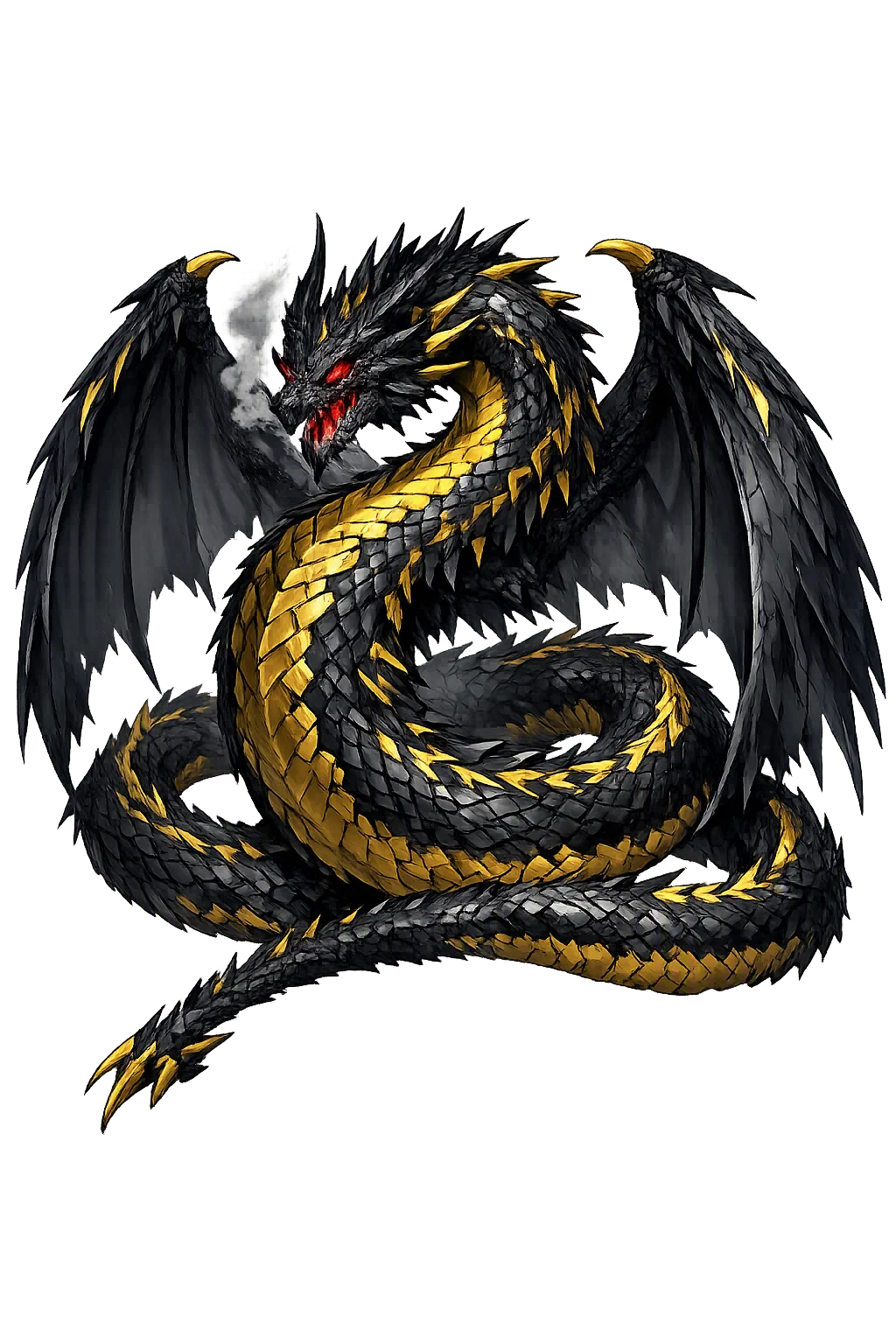
The many faces of Fáfnir
No important name has only one face. Fáfnir appears as a figure of myth, a scholarly reconstruction, a piece of material culture, a memory carried across languages, and — most recently — a Unicode domain. This post looks at each face in turn: the name and its roots, the Younger Futhark original, the reconstructed pronunciation, the mythological record, the symbols and sanctuaries, the cross-cultural afterlife, and the engineering that lets the restored spelling resolve in a browser. Taken together, those faces explain why fafnir was never going to be enough — and why the restored form is worth a domain of its own.
At a Glance
- Restored name: Fáfnir
- ASCII form: fafnir
- Meaning: "figure in Germanic heroic legend"
- Domain of influence: Dwarf turned Dragon
- Pantheon: Norse
- Classification: Tier 1
- Original script: ᚠᛅᚠᚾᛁᚱ (Younger Futhark)
- Live domain: fáfnir.com
Overview
Fáfnir (fafnir) — Dwarf turned Dragon · figure in Germanic heroic legend — belongs to the Norse tradition, where it is catalogued under the domain "Dwarf turned Dragon". The name means "figure in Germanic heroic legend".
In the norse tradition, Fáfnir governed gold, greed, and the metamorphosis that greed performs. The son of Hreiðmarr who became the dragon of Gnitaheiðr, he is the living proof of the curse he served: the weregild gold of the dwarf Andvari unmade a farmer's son into a poison-breathing serpent, and turned a name that means the embracer into an emblem of everything that hoarding destroys.
His domain is the moral underside of heroic legend: patricide for an inheritance, kinship dissolved by a ring, and the slow alchemical change of a man into the monster that guards what he cannot use. When Sigurðr's sword found his heart, the gold passed on — and the curse passed with it, through the hall of the Gjúkungs to the ruin of the whole Vǫlsung line.
PuniCodex restores the name as Fáfnir and serves its temple at fáfnir.com. The restoration preserves at least one distinctive feature — a diacritic or a distinctive letter — that the ASCII form loses, and exactly one historically valid Unicode restoration exists, which places the name in Tier 1. The plain ASCII form fafnir survives as a modern convenience imposed by the early domain-name system; the restoration, not the fallback, is the form the project defends as philologically complete.
The Name
The name is attested in Younger Futhark as ᚠᛅᚠᚾᛁᚱ. Etymologically it means "figure in Germanic heroic legend".
The ASCII form fafnir survives only because the early domain-name system could not carry diacritics; it is a technological compromise, not an ancient spelling. The Unicode restoration Fáfnir recovers the stress accent of the original directly in the address bar. The restoration preserves at least one distinctive feature — a diacritic or a distinctive letter — that the ASCII form loses, and exactly one historically valid Unicode restoration exists, which places the name in Tier 1.
The letter-by-letter transformation runs:
- f → F — Same, capitalized
- a → á — Stress on a
- f → f — Same
- n → n — Same
- i → i — Same
- r → r — Same
The project holds the domain fáfnir.com (xn--ffnir-xqa.com) as the canonical home of this name.
The Original Script
The name is preserved in Younger Futhark as ᚠᛅᚠᚾᛁᚱ.
The scholarly transliteration is fafnir.
The rendering proceeds step by step:
- ᚠ (fé) writes both /f/ and /v/
- ᛅ (ár) writes /a/, /á/ and /æ/
- ᚾ (nauðr) writes /n/
- The spelling fafnir is a normalized phonetic reconstruction; Younger Futhark does not distinguish voiced/voiceless stops or separate short and long vowels
The name is Old Norse Fáfnir, written in the Latin alphabet by the medieval Icelandic scribes of the Codex Regius and Vǫlsunga saga. A Viking-Age carver would have rendered it in the Younger Futhark — a plausible runic spelling is ᚠᛅᚠᚾᛁᚱ — and the sixteen-rune row of that period does not mark vowel length at all: the acute accent on á is the modern editorial normalization that records the long vowel which metre and grammar attest. The Unicode restoration Fáfnir keeps that mark. As a registrable domain the restoration becomes fáfnir.com, which IDNA encodes as the punycode xn--ffnir-xqa.com — the long á travelling intact through the machinery that plain ASCII would strip away.
Pronunciation
The reconstructed pronunciation of the name is /ˈfɑːv.nir/ — Old Norse Reconstruction.
Phoneme by phoneme:
- á — Long open back vowel [ɑː]; the acute marks both stress and length, like a held 'ah' in 'father'
- fn — The fricative is voiced between vowels and before n, so the -fn- cluster is realized as [vn], not the hard [f] of 'fox'
- r — Final alveolar trill [r], the nominative ending of the strong masculine noun
For the modern speaker, the closest approximation is: 'FAHV-neer' — hold the first vowel long like 'ah', let the f soften to a 'v' before the n, and trill the final r.
Kindred and historical forms of the name:
- Modern Icelandic — Fáfnir, unchanged in form and inflection from the medieval language
- Continental German — Fafner, the form Wagner made famous in the Ring cycle
- Anglicized — Fafnir, the name stripped of its acute accent
Fáfnir is Tier 1: the acute on á marks stress and length on the first syllable — a feature the ASCII form Fafnir loses. The form is attested throughout the Codex Regius poems (Reginsmál, Fáfnismál) and in Vǫlsunga saga; Cleasby-Vigfusson (s.v. Fáfnir) and Zoëga's Concise Dictionary of Old Icelandic record the name and connect it with the notion of 'the embracer' (cf. faðmr, 'embrace'). The medial -fn- was pronounced with a voiced fricative, [vn] — hence the approximation 'FAHV-neer'.
Mythology
Fáfnir is the dragon at the hinge of the Vǫlsung cycle — born the son of the farmer-mage Hreiðmarr, brother to the shape-shifting Ótr and to Reginn the smith. When the gods paid the weregild for Ótr's death with the dwarf Andvari's cursed hoard, Fáfnir murdered his own father for the gold, refused Reginn his share, and withdrew to Gnitaheiðr, where greed slowly remade him: the Eddic poems call him an ormr, a creeping serpent who lay upon his inheritance and breathed poison over the heath. His death at the hand of Reginn's foster-son Sigurðr — struck from a trench beneath the dragon's path — is the pivot on which the whole heroic tragedy turns, for the curse of the ring Andvaranautr passed on with the gold to destroy every house that held it. The tale was carved in stone in eleventh-century Sweden, sung in the Codex Regius, and retold by Wagner and Tolkien; no Germanic legend has carried further.
The Weregild of Ótr (Skáldskaparmál)
Óðinn, Hœnir, and Loki came traveling to a waterfall where an otter sat eating a salmon, half-asleep. Loki killed the otter with a stone, and the gods flayed it and carried the skin as a trophy — but the otter was Ótr, son of Hreiðmarr, who had the craft to take that shape. That night Hreiðmarr seized the gods and named the ransom: the otter-skin was to be filled with gold and covered with gold, inside and out.
Loki borrowed Rán's net and caught the dwarf Andvari, who lived in the falls in the likeness of a pike, and stripped him of his hoard down to the last ring — Andvaranautr. Andvari cursed it as he went into the rock: the gold would be the death of two brothers and the strife of eight princes, and no man should joy in his wealth. When the skin was covered, Hreiðmarr saw one whisker still showing, and Óðinn had to give up the ring to hide it. So the ransom that was meant to settle a killing carried a spoken curse into the house that received it.
The Patricide of Gnitaheiðr (Reginsmál)
Fáfnir and Reginn demanded the blood-gold from their father as their share after Ótr. Hreiðmarr refused — and Fáfnir put his sword through his father sofanda, sleeping, while the old man called on his daughters to witness that his life was spent. Fáfnir took all the gold, and when Reginn asked for his inheritance, Fáfnir gave him a plain no.
Then Fáfnir went out to Gnitaheiðr, the Gnita heath, and there his greed finished what the curse had begun: he took on the likeness of a serpent — var í orms líki, as Reginsmál puts it — and lay brooding on the gold, wearing the ægishjálmr, the helm of terror that all living things feared, and blowing poison across the land so that none dared come near. Reginn, the cunning smith, went to the court of King Hjálprekr and became foster-father to the young Sigurðr, son of Sigmundr — and began, patiently, to point the boy at his brother.
The Strike from Beneath (Fáfnismál)
Reginn forged for Sigurðr the sword Gramr, so keen it sheared a lock of wool drifting down the Rhine and split Reginn's anvil in two. On the heath Sigurðr dug a deep trench in the dragon's track to the water and lay down in it; when Fáfnir crawled overhead, blowing venom, Sigurðr thrust Gramr upward into the heart. The dying dragon questioned his killer — Fáfnismál grants him a long, sardonic deathbed dialogue — and warned him twice: þér verða þeir baugar at bana, these rings will be your death.
Reginn cut out the heart and set Sigurðr to roast it. Testing whether it was done, Sigurðr burned his thumb and thrust it into his mouth — and the moment the dragon's heart-blood touched his tongue, he understood the speech of birds. The nuthatches in the thicket told him Reginn meant to betray him and claim the gold alone; Sigurðr struck off Reginn's head, ate the heart, and loaded the hoard onto his horse Grani. He had won the treasure — and inherited the curse, which would ride with the gold to the hall of the Gjúkungs and bring down the whole Vǫlsung line.
Symbols & Iconography
The iconography associated with Fáfnir concentrates in a small set of recurring attributes, each a compressed statement about the name:
- The hoard of Andvari — The weregild gold that ransomed Ótr's skin and cursed every hand it passed through
- Andvaranautr — The dwarf's ring, given up last and cursed aloud: death to its possessor and strife to his house
- The serpent shape — The ormr-form greed gave him on Gnitaheiðr; the Eddas' dragon crawls to his water — the winged firedrake belongs to later art
- The ægishjálmr — The helm of terror he wore over the gold, which he boasted made him stronger than all
- The heart's blood — The draught of wisdom that taught Sigurðr the speech of birds and unmasked Reginn's treachery
Archaeology & Evidence
The Fáfnir story is the most frequently illustrated narrative of the late Viking Age. The Ramsund carving (Sö 101) and the Gök stone (Sö 327), both eleventh-century monuments in Södermanland, Sweden, depict the whole cycle: Sigurðr thrusting his sword up through the serpent's body from below, the horse Grani, Reginn slain beside his smith's tools, the birds in the tree, and Sigurðr sucking his burned thumb over the roasting fire. The carved portal of Hylestad stave church in Norway (c. 1200, now in the University Museum of Bergen) shows Reginn forging the sword and the dragon's death, and crosses from the Isle of Man — Jurby and Kirk Andreas among them — carry the same Sigurðr iconography into the Irish Sea world. On the textual side, Reginsmál and Fáfnismál survive in the Codex Regius of the Poetic Edda (GKS 2365 4to, c. 1270), and Vǫlsunga saga is preserved most fully in the vellum NKS 1824 b 4to (c. 1400).
Realm & Domain
In the norse tradition, Fáfnir governed gold, greed, and the metamorphosis that greed performs. The son of Hreiðmarr who became the dragon of Gnitaheiðr, he is the living proof of the curse he served: the weregild gold of the dwarf Andvari unmade a farmer's son into a poison-breathing serpent, and turned a name that means the embracer into an emblem of everything that hoarding destroys.
His domain is the moral underside of heroic legend: patricide for an inheritance, kinship dissolved by a ring, and the slow alchemical change of a man into the monster that guards what he cannot use. When Sigurðr's sword found his heart, the gold passed on — and the curse passed with it, through the hall of the Gjúkungs to the ruin of the whole Vǫlsung line.
Andvaranautr
The ring of the dwarf Andvari, taken by Loki as ransom and cursed aloud to bring death to every owner; it drove Fáfnir to patricide.
The Worm of Gnitaheiðr
On the Gnita heath greed finished its work: Fáfnir took on the likeness of a serpent, lay upon his father's gold, and breathed poison over the land.
Gramr
The sword Reginn forged for his foster-son Sigurðr; from a trench dug in the dragon's path, Sigurðr thrust it upward into Fáfnir's heart.
The Heart's Blood
Roasting the dragon's heart, Sigurðr burned his thumb and tasted the blood; at once he understood the speech of birds and heard the nuthatches betray Reginn.
Across Cultures
Fáfnir belongs to the common Germanic heroic stock rather than to any cult, and his closest kin are literary. The continental redaction of the same legend-complex survives in the Middle High German Nibelungenlied, where Siegfried slays a dragon and wins the hoard of the Nibelungs — though there the dragon and the curse have drifted apart, the hoard's doom attaching to the Burgundian kings instead. The Old English Beowulf offers the nearest analogue scene: a fire-dragon coiled for three hundred years on a barrow-hoard, roused by the theft of a single cup, slain by a hero it kills in turn. Comparison is often drawn with the Indo-European serpent-slaying myth — the storm-god's combat with a watery serpent — but Fáfnir is a different creature: not a chaos-monster opposed to cosmic order but a man whom avarice deformed, a moral dragon rather than a cosmic one. The Norse Þiðrekssaga preserves yet another redaction of the Reginn–Sigurðr material, and in later Scandinavian folk tradition the dragon on the gold-barrow became a standing figure of sterile, hoarded wealth. The line descends unbroken into modern fantasy: Tolkien's Smaug is openly the heir of Fáfnismál's talking, riddle-loving worm.
Within the Norse tradition, closely related names in the corpus include Álfheimr, Bifrǫst, Búri, Eggþér, Helheimr, and Hermóðr.
Cultural Legacy
Wagner fixed the dragon's modern image: in Siegfried, the third opera of the Ring des Nibelungen, the giant Fafner — who has already murdered his brother Fasolt for the ring — has used the Tarnhelm to become a dragon and sleeps on the hoard in a forest cave until Siegfried's sword Nothung finds his heart; tasting the blood, Wagner's Siegfried likewise comes to understand the Woodbird and, warned by it, kills the treacherous Mime. Wagner conflated Hreiðmarr's sons with the giant brothers of his own invention, but the kinslaying for gold and the blood-taught birdsong come straight from Reginsmál and Fáfnismál. Tolkien acknowledged Fáfnir among the chief models for Smaug — the speaking dragon on his gold, with the one unarmoured patch beneath. In comics, Marvel's Fafnir appears as a Thor antagonist, the monstrous king of Nastrond; in games the name surfaces from Final Fantasy to Smite and God of War, where Fáfnir is remembered as a dwarf whose greed turned him dragon. The idiom of the dragon-hoard — wealth kept and never used — is his permanent bequest to the language of moralists. In modern Heathenry Fáfnir is no object of cult but a cautionary emblem: the man who embraced gold until the embrace became scales.
The Scholarly Record
The account of Fáfnir given in this edition rests on the witnesses and reference works listed below. Lexica and etymological dictionaries secure the form and meaning of the name; the literary and religious texts supply the narrative evidence.
- Vǫlsunga saga, tr. Morris & Magnússon (Project Gutenberg #1152). Full text
- Poetic Edda: Reginsmál, tr. Bellows (Internet Sacred Text Archive). Full text
- Poetic Edda: Fáfnismál, tr. Bellows (Internet Sacred Text Archive). Full text
- Prose Edda: Skáldskaparmál, tr. Brodeur (Internet Sacred Text Archive). Full text
- Reginsmál — Old Norse text (heimskringla.no). Full text
- Fáfnismál — Old Norse text (heimskringla.no). Full text
- Cleasby & Vigfusson, An Icelandic-English Dictionary (Germanic Lexicon Project). Full text
- The Ramsund carving (Sö 101) — the Sigurðr cycle in stone. Full text
A Meditation
Names are not merely labels; they are compressed worlds. Fáfnir — the embracer — names a man who embraced gold so completely that the embrace became his skin. The medieval scribes who wrote the name marked its long á with care, and the Unicode restoration keeps that mark: the length of the first syllable is the length of the boast he traded for a life. A dragon, in the end, is what a hoard does to the one who will not let it go.
The Unicode Restoration
Fáfnir is classified as Tier 1: the restoration preserves at least one distinctive feature — a diacritic or a distinctive letter — that the ASCII form loses. The ASCII fallback fafnir still resolves everywhere, but it is the restored form that carries the name's full information. Across the 6 characters of the name, the restoration adjusts 1: 1 mark of stress (á). That is the whole thesis of this temple: the marks are the message.
The Domain Name
The restored name is live as a working domain: fáfnir.com, which the DNS carries in punycode form as xn--ffnir-xqa.com — an ASCII-compatible encoding that lets a non-ASCII name travel the global network without breaking older infrastructure. The visitor sees Fáfnir; the machines see the encoding. That duality is the engineering compromise on which the entire restoration rests, and it is why a name written the way its own tradition wrote it in Younger Futhark can now be typed into any browser on earth.
Why This Restoration Matters
Myth, script, sound, cult, legacy, domain: the faces of Fáfnir add up to a single argument — that a name is a record, and records deserve fidelity. The PuniCodex restoration keeps that record in working order: the temple presents it, the Scholarly Edition footnotes it, the lexicon catalogs it, and the domain makes it addressable. fafnir will always exist as a fallback. But fallback is not identity. Fáfnir is the name; everything else is a convenience.
Explore Further
This post is one doorway into the temple. The home page carries the full character breakdown and the ambient canvas; the lore page tells the myths in long form; the Scholarly Edition preserves the sources, pronunciation data, and revision history; and the patron wall supports the restoration directly. For the wider map, browse the Lexicon, explore the Pantheon, or return to the PuniCodex blog.
Related Names
Sources
The full scholarly apparatus — every citation, revision, and review — lives in the Scholarly Edition. Key references for this post:
- Vǫlsunga saga, tr. Morris & Magnússon (Project Gutenberg #1152).
- Poetic Edda: Reginsmál, tr. Bellows (Internet Sacred Text Archive).
- Poetic Edda: Fáfnismál, tr. Bellows (Internet Sacred Text Archive).
- An Icelandic-English Dictionary, 2nd ed. with supplement, 1874.
- Poetic Edda (Eddukvæði), ed. Neckel-Kuhn; trans. Carolyn Larrington, Oxford World's Classics (2014), 1270.
- Snorri Sturluson, Prose Edda, trans. Anthony Faulkes, Everyman / Viking Society for Northern Research, 1220.
- Poetic Edda, Reginsmál (the weregild of Ótr; the curse of Andvari).
- Poetic Edda, Fáfnismál (the slaying at Gnitaheiðr; the wisdom of the dying dragon).
- Poetic Edda, Grípisspá (the prophecy of the whole cycle).
- Prose Edda, Skáldskaparmál (the weregild narrative; gold-kennings).
- Lexicon authorities for this entry: Poetic Edda, Cleasby-Vigfusson.