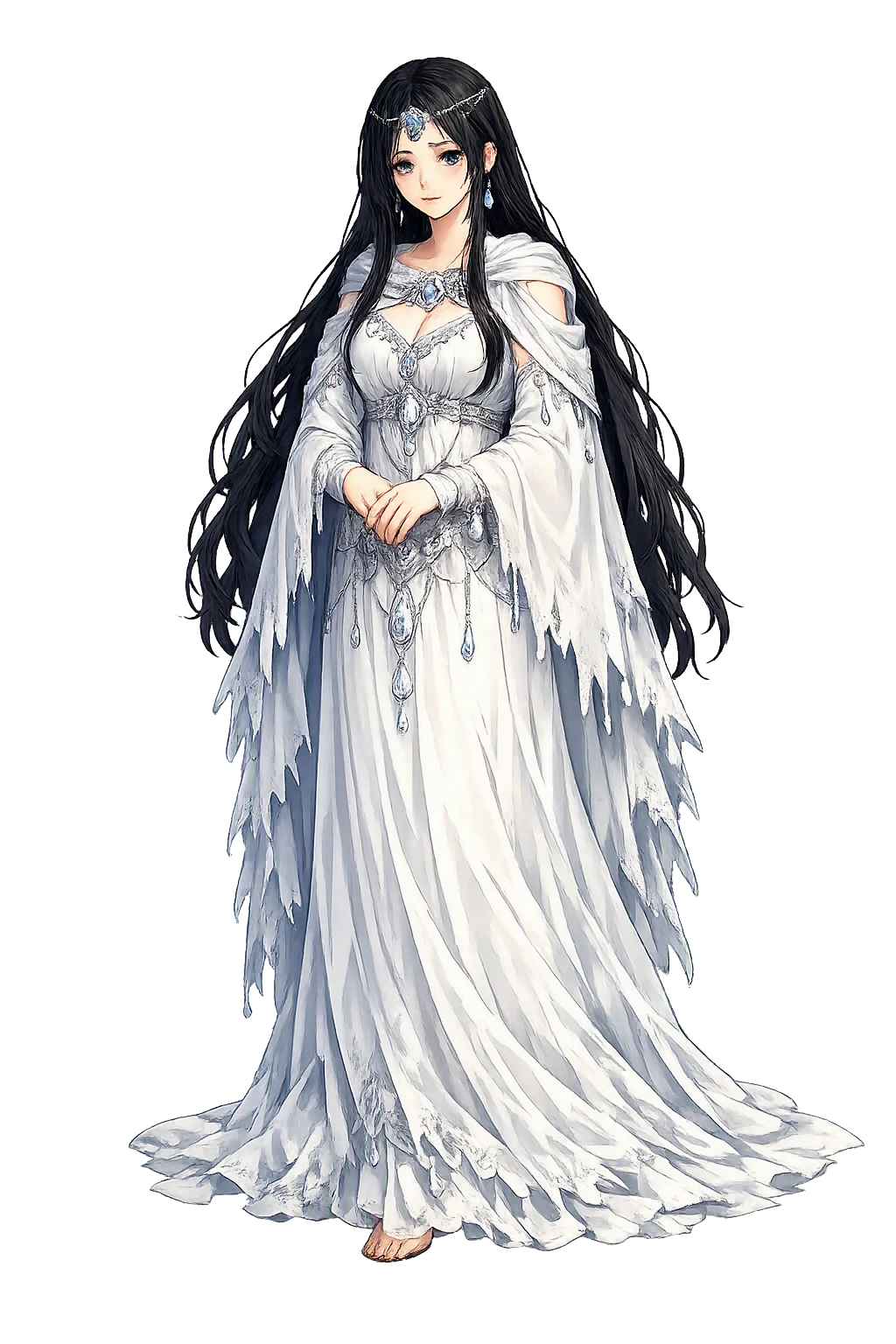
Stories of Deirdre
Deirdre's story is the most perfectly shaped tragedy in medieval Irish literature: a prophecy, a wish, an elopement, an exile, a betrayal, and a death, told in Longes mac nUislenn — the Exile of the Sons of Uisnech — with an economy no retelling has improved. It is a fore-tale of the Táin, and it leaves Ulster's honour in ruins before the great cattle-raid ever begins.
She was born to trouble. At the feast of Fedlimid mac Daill, Conchobar's storyteller, Fedlimid's wife cried out from the womb she carried, and the druid Cathbad laid his hand on her belly and spoke the child's fate: a girl of yellow hair and grey eyes and foxglove lips, whose beauty would be ruin — kings would fight for her, the sons of Uisnech would die for her, and Ulster would lose its greatest heroes because of her. The warriors of Ulster cried out to kill the infant at once.
Conchobar refused. He would take the child, he said, and raise her apart, and she would be his own wife — no one else's ruin. So Deirdre was reared in a secluded house with her foster-parents and her nurse Lebarcham, seeing no man but those three and the king who meant to claim her. The prophecy is the tale's first sentence; everything after is its unfolding.
One winter day her foster-father flayed a calf in the snow for her dinner, and a raven came down to drink the blood. Deirdre looked at the three colours and said to Lebarcham: she could love a man with those three colours — hair black as the raven, cheeks red as the blood, skin white as the snow. Lebarcham told her such a man was near: Naoise son of Uisnech, of Conchobar's own household.
Deirdre sent for him, and when Naoise came she put her two hands on his ears — 'two ears of shame and derision,' she said, if he would not take her away — and bound him by the honour of an Ulster warrior. That night Naoise took her, and with his brothers Ardan and Ainnle and a hundred and fifty warriors they fled the king's house. The wish spoken over the calf's blood is the tale's hinge: the one moment Deirdre chooses, and all the rest follows from the choosing.
Conchobar pursued them through Ireland until they crossed the sea to Alba, and there they made a life the tale calls happy: the sons of Uisnech hunted, Deirdre kept house, and their singing was famous. But the same pattern waited across the water — the king of Alba heard of her beauty and desired her, and the brothers had to fight free and flee again, from glen to glen and island to island, until no place in Alba was safe for a woman too beautiful and the men who would not give her up.
It was then that Conchobar's messengers came with peace on their lips. The king swore he longed for them; he sent sureties — in the old version, Fergus mac Róich, Conchobar's greatest champion, stood pledge for their safety. Deirdre alone did not believe it. She had dreamed, she said, of three birds from Emain carrying honey in their beaks who left with blood — the honey the fair words, the blood the truth of them. But the sons of Uisnech trusted the surety of Fergus, and they sailed home.
The trap was laid in the old way, through honour itself. As Fergus escorted the exiles south he was detained by an engineered feast — a geis-bound invitation he could not refuse — and sent the sons of Uisnech on to Emain under the protection of his sons, while Deirdre sang warnings at every stop. At Emain they were lodged in the house of the Red Branch, and when Conchobar sent to know whether Deirdre had kept her looks, and heard she had, he sent his warrior Maine against the house. The sons of Uisnech fought; the sons of Fergus died defending them; and at last Naoise and Ardan and Ainnle were cut down together, one sword-stroke taking the three, as Deirdre had foreseen in the blood-red dream.
Then Deirdre sang the laments the tradition kept as the summit of Irish elegy — for Naoise, 'fair and great and gentle', for the brothers, for the dún they would see no more. The betrayal broke Ulster: Fergus and three thousand of the Ulaid went into exile to Connacht, to Ailill and Medb — and that is why, when the Táin begins, Ulster's greatest champion stands in the enemy's host. Deirdre's tragedy is the Táin's hidden prologue.
Conchobar took Deirdre, and for a year she lived in his house and did not smile, did not raise her head from her knee, did not eat her fill or sleep her fill. When the king asked what she hated most in the world, she answered: 'You, and Éogan mac Durthacht' — the man who had struck down Naoise. So Conchobar gave her to Éogan, to be passed like a debt between the two men she loathed.
The next day she was driven beside Éogan's chariot, and as they went she saw the standing stone before her and put her head out of the chariot and dashed it against the rock, and so died. The later telling, Oided mac nUislenn, gives the tradition its consolation: she was buried beside Naoise, a yew grew from each grave, and the two trees wove their tops together over Emain Macha. The old version grants no such mercy — it ends with a woman who had been a prize since the hour of her birth taking back, in the only way left, the disposal of herself.
The Woman the Prophecy Named, Ireland's Most Sorrowful Heroine
Deirdre is the tragic heart of the Ulster Cycle: the girl whose beauty a druid prophesied at birth would bring ruin on Ulster, raised in secret by King Conchobar mac Nessa to be his own bride, who chose instead the young Naoise son of Uisnech and fled with him and his brothers to Alba. Lured home by a king's treachery, she saw her lovers slain at Emain Macha, lived a year without smiling, and dashed out her own life rather than pass to the man who had betrayed her — the death that made her, in the medieval phrase, the heroine of one of the Three Sorrowful Tales of Ireland.
She saw a raven drinking blood in the snow and wished for a man with hair black as the raven, cheeks red as the blood, skin white as the snow — and Lebarcham named Naoise.
Naoise, Ardan, and Ainnle — the three brothers whose singing could lull the world, whose exile and death the whole tale turns upon.
Conchobar's royal seat, the court that raised her, the fort where the sons of Uisnech were slain — and the place she would not survive.
In the later telling, two yews grew from the graves of Deirdre and Naoise and wove their tops together over Emain Macha — love outlasting the king.
From the original script to the living URL
Deirdre
The name survives in scholarly transliteration. Deirdre is the standard Celtic romanisation, documented in academic sources — “Sorrowful”. Because the spelling uses only Latin letters, the form is the same in both ASCII and Unicode.
No indigenous writing system is securely attested for individual celtic names. The form shown is a modern scholarly transliteration.
deirdre
The plain deirdre form is identical to the Unicode restoration. Because this name is already written in Latin letters, no diacritics, stress, or script information were lost — only capitalization differs.
Deirdre
The Unicode restoration does not need to recover lost marks for Deirdre. Its value is canonical spelling and consistent cataloguing, not the reconstruction of erased orthography. The domain is readable as-is to both DNS and humanity.
Deirdre.com
This restoration is written entirely in ASCII letters — no Punycode encoding stands between Deirdre and the DNS. The domain reads identically to machines and to human eyes.
Owned, ideal, and ASCII forms of Deirdre
Deirdre
The full Unicode restoration. deirdre.com is not in the PuniCodex collection — it is watched for release; if it drops, this temple upgrades to an owned flagship.
How Deirdre was spoken
How Deirdre is preserved in writing
No indigenous writing system is securely attested for individual celtic names. The form shown is a modern scholarly transliteration.
Contribute scholarly provenance →The lore you have read is the living myth. Extended Lore opens the scholarly vault beneath it: the cult and its material remains, a history of the image, the name after antiquity, a meditation on what the name still means, and the full scholarly apparatus — etymology, orthography, sources.
Enter Extended Lore