PuniCodex

Extended Lore

Deirdre

Etymology · Phonology · Orthography · Cultural Legacy · Primary Sources

Tier 2 Deirdre
Deirdre — Tragedy, Beauty
01

Quick Facts

Essential information about Deirdre, Tragedy, Beauty

Scholarly TransliterationDeirdre
Unicode RestorationDeirdre
Reconstructed Pronunciation/ˈdʲer.ðʲɾʲu/
PantheonCeltic
DomainTragedy, Beauty
MeaningSorrowful
ClassificationTier 2
Primary DomainDeirdre
Sacred SymbolsThe raven, the blood, the snow, The three sons of Uisnech, Emain Macha, The crossing to Alba, The two entwined trees
02

Etymology & Word Family

From original script to Unicode restoration

Scholarly Transliteration Deirdre Deirdre — "Sorrowful"
Unicode Restoration Deirdre Restored stress, length, and script
Modern ASCII deirdre Plain-ASCII fallback

Deirdre is Tier 2 by the mechanical rule: the normalized form is already plain ASCII — there is no diacritic and no distinctive letter for the ASCII alphabet to lose. The capital alone distinguishes the temple form from the input; the standing of Ireland's most tragic heroine in the tradition is beside the point.

03

Unicode Character Breakdown

Character-by-character philological analysis

CharacterUnicodeNameBlockPhonetic Role
DU+0044Latin Capital Letter DBasic LatinSame, capitalized
eU+0065Latin Small Letter EBasic LatinSame
iU+0069Latin Small Letter IBasic LatinSame
rU+0072Latin Small Letter RBasic LatinSame
dU+0064Latin Small Letter DBasic LatinSame
rU+0072Latin Small Letter RBasic LatinSame
eU+0065Latin Small Letter EBasic LatinSame

The Tier 2 classification reflects how much of the original phonology this restoration preserves — stress and vowel length for Greek names, distinctive letters and diacritics for every other tradition.

04

Cultural Significance

From ancient cult to modern Unicode

Ancient Domain

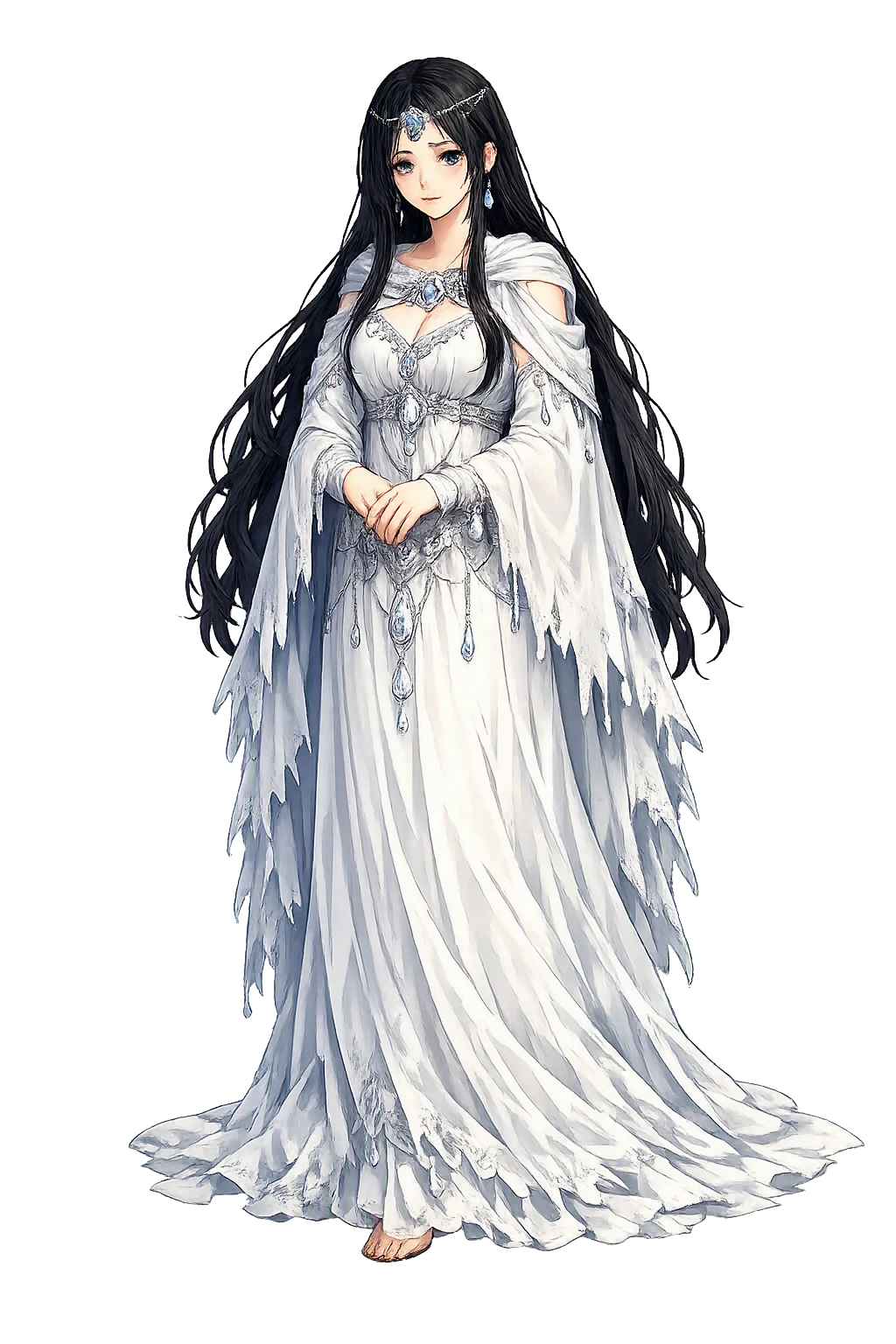
Deirdre is the tragic heart of the Ulster Cycle: the girl whose beauty a druid prophesied at birth would bring ruin on Ulster, raised in secret by King Conchobar mac Nessa to be his own bride, who chose instead the young Naoise son of Uisnech and fled with him and his brothers to Alba. Lured home by a king's treachery, she saw her lovers slain at Emain Macha, lived a year without smiling, and dashed out her own life rather than pass to the man who had betrayed her — the death that made her, in the medieval phrase, the heroine of one of the Three Sorrowful Tales of Ireland.

Deirdre in Later Traditions

The Welsh corpus knows no Deirdre, and the silence is honest: the Mabinogi and its wider tradition preserve no figure derived from her name. The instructive comparison within Celtic literature is structural — Blodeuwedd in the Fourth Branch of the Mabinogi, the woman made from flowers for a husband she does not choose, who takes her own lover and pays for it: the medieval Celtic literatures staged, more than once, the tragedy of a woman treated as a thing made or kept for a man. Scholars have also compared the wider motif-cluster — the beauty prophesied at birth to ruin a kingdom — with the classical pattern of Helen, a comparison of motifs, never of descent. Within Ireland, her closest company is the cycle's own doomed: the tradition itself grouped her tale with the Children of Lir and the sons of Tuireann as the Three Sorrowful Tales of Ireland, and her one year of silence beside Conchobar is the cycle's starkest answer to a king's power.

Modern Legacy

No Irish heroine has had a longer afterlife. The Gaelic tradition of Scotland kept her in Alba — the late recension of her death-tale survives in the Glenmasan manuscript, and Argyll named her exile's glens and lochs after her. The Irish literary revival made her its central woman: AE staged Deirdre in 1902, Yeats his Deirdre in 1907, Lady Gregory wove the tale through Cuchulain of Muirthemne, and J. M. Synge left at his death the unfinished Deirdre of the Sorrows (1910), the play that fixed her English name — the sorrows — forever. In the revolutionary generation she became an emblem of Ireland itself, the beautiful land betrayed and bereaved; and the name never left the language, Deirdre remaining a living Irish given name into the present century.

Unicode Restoration as Cultural Act

Restoring Deirdre in a domain name is more than orthographic accuracy. It is a statement that the internet should recognize the full range of human writing — not only the ASCII keyboard.

05

Frequently Asked Questions

Common questions about Deirdre, Tragedy, Beauty, and Unicode restoration

01How do you pronounce Deirdre?

In reconstructed pronunciation, Deirdre is /ˈdʲer.ðʲɾʲu/ — approximately 'DYER-dryu' — stress the first syllable; slender d, short 'e', the second d melted into the soft 'th' of 'this'. Modern Irish says 'DYER-dra', and English has long settled on 'DEER-dree'..

02What does Deirdre mean?

Deirdre means Sorrowful in the celtic tradition.

03What are the symbols of Deirdre?

Deirdre is associated with The raven, the blood, the snow (The three colours of her desire, spoken before she had seen a man — the wish the whole tragedy answers), The three sons of Uisnech (Naoise, Ardan, and Ainnle — one fate shared by three brothers; loyalty that follows her into exile and death), Emain Macha (The royal fort of Ulster — safety that was a cage, and the gate to which exile could not safely return), The crossing to Alba (The sea between Ireland and Scotland — the only escape the tale allows, and never a lasting one), The two entwined trees (Yews from the lovers' graves woven together — the later tradition's one gesture toward consolation).

04Why restore Deirdre in Unicode?

Plain ASCII deirdre strips the stress, length, and script that make the name specific. Unicode restoration returns the name to its original written dignity.

05What is the most important myth about Deirdre?

She was born to trouble. At the feast of Fedlimid mac Daill, Conchobar's storyteller, Fedlimid's wife cried out from the womb she carried, and the druid Cathbad laid his hand on her belly and spoke the child's fate: a girl of yellow hair and grey eyes and foxglove lips, whose beauty would be ruin — kings would fight for her, the sons of Uisnech would die for her, and Ulster would lose its greatest heroes because of her. The warriors of Ulster cried out to kill the infant at once.Conchobar refused. He would take the child, he said, and raise her apart, and she would be his own wife — no one else's ruin. So Deirdre was reared in a secluded house with her foster-parents and her nurse Lebarcham, seeing no man but those three and the king who meant to claim her. The prophecy is the tale's first sentence; everything after is its unfolding.

06

Scholarly Sources

The philological foundations of this restoration

Every claim on this page is grounded in established scholarship. The orthographic restorations follow disciplinary convention. The etymological chain follows the best available reference works. This is not invention — it is resurrection through scholarship.

Lexicography & Philology

  • Irish folklore
  • MacKillop

Primary Texts

  • The Immram Brain (Voyage of Bran); Tochmarc Étaíne; Cóir Anmann; medieval Irish saga literature.

Archaeology & Art History

  • Material evidence — iconography, inscriptions, and temple archaeology — for Deirdre and related cults.
  • Deirdre is a textual heroine: no ogham stone names her and no votive inscription invokes her, as befits a figure of heroic legend rather than cult. Her mythic address, however, is one of the most excavated sites in Ireland: Emain Macha, Conchobar's royal seat, survives as Navan Fort in County Armagh, where excavation revealed a great circular timber structure of the first century BC — raised, filled with stones, burned, and mounded over in what reads as a single enormous ritual act, dated by dendrochronology to 95/94 BC. Her manuscript witnesses are exact: Longes mac nUislenn survives earliest in the twelfth-century Book of Leinster (Trinity College Dublin, MS H 2.18), the basis of Hull's edition, while the expanded death-tale Oided mac nUislenn is preserved in the fifteenth-century Glenmasan manuscript (National Library of Scotland, Advocates' MS 72.1.37), the text that carried her story into the Gaelic tradition of Scotland. The name itself was a real one: eDIL records Derdriu as an ordinary woman's name in early Irish sources, so the heroine bore a name of her own world, not an invented one.

Religious Studies

  • Longes mac nUislenn (The Exile of the Sons of Uisnech), ed. and trans. Vernam Hull — the birth prophecy, the raven on the snow, the flight to Alba, the betrayal, the year without a smile, and her death
  • Oided mac nUislenn (The Death of the Sons of Uisnech), ed. Stokes from the Glenmasan manuscript — the expanded later recension; the entwined yews
  • The Book of Leinster (TCD MS H 2.18) — the earliest full manuscript witness of the tale
  • Dictionary of the Irish Language (eDIL), s.v. derdriu — the name's attestation as an ordinary early Irish woman's name
  • Mac Cana, Celtic Mythology — the Ulster Cycle and the fated-bride pattern
  • Koch, ed., Celtic Culture: A Historical Encyclopedia, s.v. Deirdre, Longes mac nUislenn, Ulster Cycle
  • MacKillop, Dictionary of Celtic Mythology, s.v. Deirdre — the lexicon's own cited authority
  • Thurneysen, A Grammar of Old Irish — lenition and the broad/slender system behind the reconstructed sound
  • Synge, Deirdre of the Sorrows; Yeats, Deirdre; Lady Gregory, Cuchulain of Muirthemne — the revival afterlife
Return

The Surface Awaits

You have traced the name from its earliest attestation to its Unicode restoration. Now return to the myth. The story is where the name lives.

Back to Lore
Deirdre mascot