
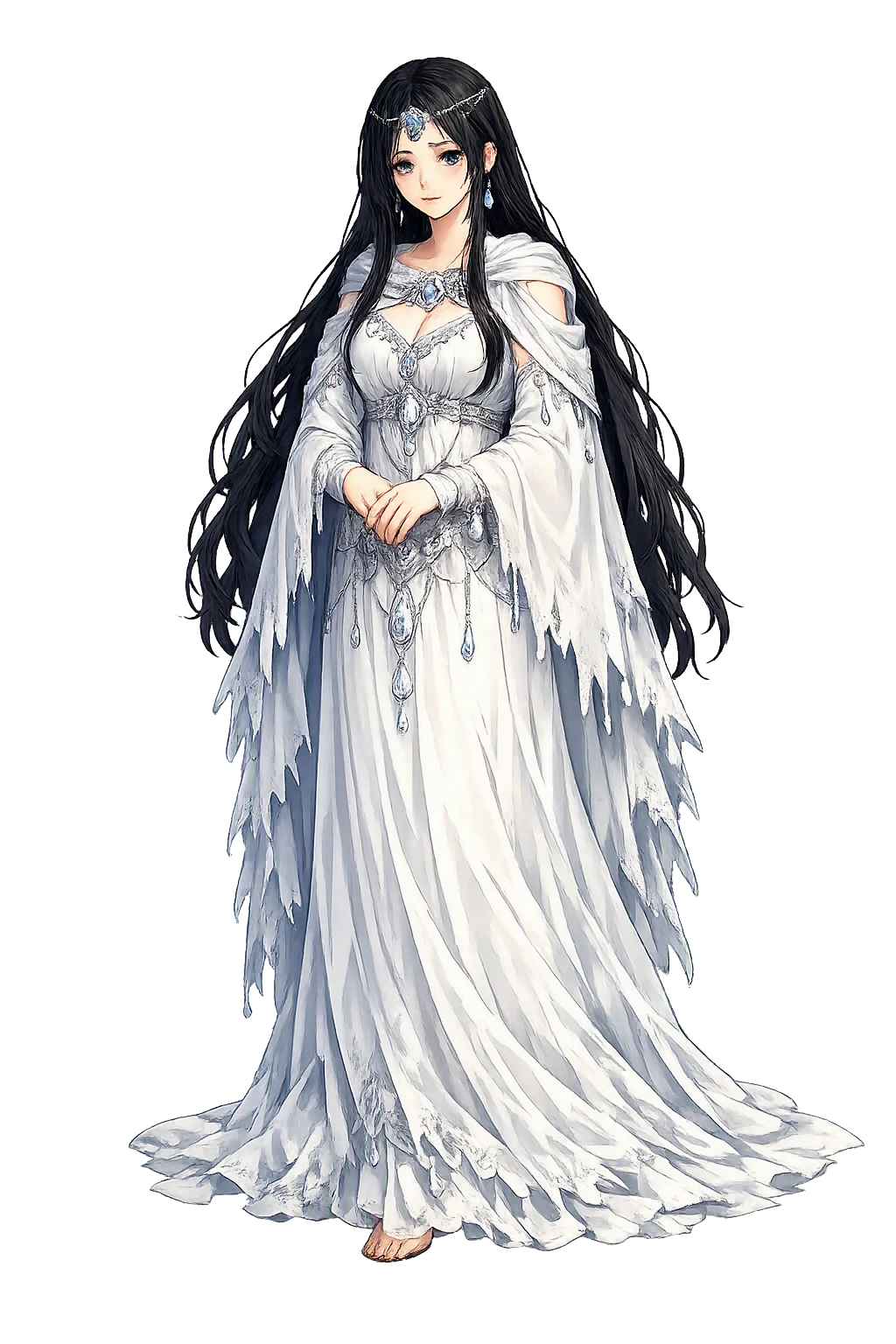
Pronouncing Deirdre: a guide for the curious
Saying Deirdre aloud is harder than reading it on a screen, and more rewarding. The restored spelling is a compressed pronunciation guide: every accent and macron is an instruction. This post unpacks those instructions — the reconstructed sound, the phoneme-by-phoneme record, the kindred forms in neighboring languages — and then zooms out to the full record around the name: its Celtic transcription writing, its mythology, its cult, and its modern life as a Unicode domain. Whether you arrive as a linguist, a reader of myth, or a domainer, you will leave able to say the name the way the evidence suggests it was said — and able to type it the way it was written.
At a Glance
- Restored name: Deirdre
- ASCII form: deirdre
- Meaning: "Sorrowful"
- Domain of influence: Tragedy, Beauty
- Pantheon: Celtic
- Classification: Tier 2
Overview
Deirdre (deirdre) — Tragedy, Beauty · Sorrowful — is the tragic heroine of the Ulster Cycle, the central figure of Longes mac nUislenn, the Exile of the Sons of Uisnech: the girl whose beauty the druid Cathbad prophesied at birth would bring ruin on Ulster, raised in seclusion by King Conchobar mac Nessa to be his own bride, who chose Naoise son of Uisnech instead, fled with him and his brothers to Alba, and was lured home to watch her lovers slain at Emain Macha. After a year in Conchobar's house without a smile, she dashed her head against a standing stone rather than pass to the man who had betrayed her — the death the Irish tradition counted among its Three Sorrowful Tales.
The name was a real one before it was hers: the Dictionary of the Irish Language records Derdriu as an ordinary woman's name in early Irish sources, so the heroine bore a name of her own world rather than an invented one. The traditional gloss is 'sorrowful'; the etymology itself is genuinely uncertain, and the modern reference works register the uncertainty rather than resolve it.
PuniCodex restores the name as Deirdre — identical to the ASCII input, because the normalized Modern Irish form writes no diacritic in this name. The mechanical rule therefore places it in Tier 2: nothing distinctive is lost in transit, a statement about orthography and never about the heroine. No domain is claimed: the plain-ASCII deirdre.com is registered to a third party outside the collection and is watched for release.
The Name
The name is attested in Old Irish as Derdriu — the spelling of the Book of Leinster, the earliest full manuscript witness of her tale — and in the normalized Modern Irish form Deirdre that the living language and this temple use. It was not coined for the story: eDIL records Derdriu as an ordinary early Irish woman's name, borne by women outside the legend, which makes Deirdre one of the few great Irish heroines whose name is a documented everyday name of her own tradition.
The etymology is honestly obscure. The traditional gloss is 'sorrowful' — a meaning the tale's reception has carried for centuries and the one this lexicon records — but no secure derivation has been established, and the standard handbooks register the name's origin as uncertain rather than printing a confident compound. What is certain is the name's literary weight: the medieval tradition itself grouped the Exile of the Sons of Uisnech with the fates of the Children of Lir and the sons of Tuireann as the Three Sorrowful Tales of Ireland, so the 'sorrowful' of the gloss describes the tale as much as the name.
The ASCII form deirdre loses nothing, because the normalized Irish spelling is already plain Latin letters; the restoration is therefore a matter of canonical reference, not rescued diacritics, and the name is classified Tier 2 by the project's mechanical rule.
The letter-by-letter transformation runs:
- d → D — Same, capitalized
- e → e — Same
- i → i — Same
- r → r — Same
- d → d — Same
- r → r — Same
- e → e — Same
The project holds no domain for this name: deirdre.com is registered to a third party outside the PuniCodex collection and is watched for release. The temple lives at its canonical lexicon address.
The Original Script
The name is preserved in medieval Irish manuscripts in the Latin alphabet as Derdriu — Old Irish in Insular script, attested in the twelfth-century Book of Leinster, the earliest full witness of Longes mac nUislenn. The earlier monumental alphabet, ogham, predates the manuscript tradition, but no attestation of this name has ever been read on an ogham stone; the manuscript form is the primary witness.
The scholarly rendering proceeds step by step:
- Old Irish was written in the Latin alphabet using Insular minuscule from the early medieval period; the spelling Derdriu requires no diacritic.
- The normalized Modern Irish form Deirdre regularizes the medieval spelling for the living language — a change of orthographic convention, not of letters; nothing diacritical is added or lost.
- Intervocalic d is lenited in pronunciation — [ð], the soft 'th' of 'this' — but the orthography writes plain d; nothing distinctive is lost in ASCII.
- The Unicode restoration Deirdre is therefore identical to the ASCII form apart from the capital; the temple form is a canonical reference, not a rescued spelling.
One caution attaches to the record: the traditional gloss 'sorrowful' belongs to the name's reception as much as to its etymology, which remains genuinely uncertain — the edition registers the gloss without pretending the derivation is settled.
Pronunciation
The reconstructed pronunciation of the Old Irish form Derdriu is /ˈdʲer.ðʲɾʲu/ — Old Irish Reconstruction.
Phoneme by phoneme:
- D- — Slender (palatalized) dental stop [dʲ], the tongue raised toward the hard palate — the soft 'dy' onset Irish keeps to this day
- -er- — Short front [e] with a slender r [ɾʲ], the stressed syllable — brief and bright, never the English 'eer'
- -dr- — Lenited [ð], the voiced dental fricative of English 'this', running into a second slender r; the manuscript writes plain d, the sound has softened
- -iu — The close ending of the Old Irish nominative Derdriu, a light rising finish
For the modern speaker, the closest approximation is: 'DYER-dryu' — stress the first syllable and let the second d melt into the soft 'th' of 'this'. Modern Irish says 'DYER-dra', and English has long settled on 'DEER-dree'.
Kindred and historical forms of the name:
- Old Irish — Derdriu, the manuscript form of the Book of Leinster
- Modern Irish — Deirdre, the normalized living form and the temple's spelling
- Scottish Gaelic — Deirdre / Dèirdre, kept in the Gaelic tradition of Alba that localized her exile in Argyll
- Anglicized — Deirdre, unchanged; the name crossed into English without losing a letter
Deirdre is Tier 2 because the restoration preserves nothing ASCII loses: the letters of the normalized form are the letters of the keyboard. The capital alone marks the temple form.
Mythology
Deirdre's mythology is a single perfectly shaped arc — prophecy, wish, flight, exile, betrayal, death — preserved in two recensions: the terse Old Irish Longes mac nUislenn and the expanded late-medieval Oided mac nUislenn.
The Prophecy at Her Birth (Longes mac nUislenn)
At the feast of Fedlimid mac Daill, Conchobar's storyteller, the unborn child cried out from the womb, and the druid Cathbad laid his hand on the mother's belly and spoke her fate: a girl of yellow hair and grey eyes whose beauty would ruin Ulster — kings would fight for her and the sons of Uisnech would die for her. The warriors demanded the infant's death; Conchobar refused, and took her to raise in seclusion as his own future wife, with only her foster-parents and her nurse Lebarcham for company.
The Raven on the Snow (Longes mac nUislenn)
One winter day, watching a raven drink the blood of a flayed calf in the snow, Deirdre told Lebarcham she could love a man of those three colours — hair black as the raven, cheeks red as the blood, skin white as the snow. Lebarcham named Naoise son of Uisnech. Deirdre sent for him and bound him by honour — 'two ears of shame and derision' upon him if he refused — and that night Naoise took her away, with his brothers Ardan and Ainnle and a hundred and fifty warriors, out of Conchobar's reach.
The Exile in Alba (Longes mac nUislenn)
Pursued through Ireland, the company crossed to Alba and made a life the tale calls happy: the brothers hunted, their singing was famous, and Deirdre was theirs. But the pattern repeated — the king of Alba desired her, and they fled from glen to glen until no place was safe. Then came Conchobar's messengers with peace on their lips and a surety behind them — Fergus mac Róich stood pledge for their safety. Deirdre alone disbelieved: she had dreamed of three birds that came from Emain with honey in their beaks and departed with blood. The sons of Uisnech trusted the surety, and sailed home.
The Betrayal at Emain Macha (Longes mac nUislenn / Oided mac nUislenn)
The trap closed through honour itself: Fergus was detained by a feast he could not refuse and sent the exiles on under his sons' protection. At Emain they were lodged in the house of the Red Branch; when Conchobar heard Deirdre had kept her looks, he sent his warriors against the house. The sons of Fergus died defending the exiles, and Naoise and Ardan and Ainnle were cut down together. Then Deirdre sang the laments the tradition kept as the summit of Irish elegy. The betrayal broke Ulster: Fergus and three thousand of the Ulaid went into exile to Ailill and Medb of Connacht — which is why, when the Táin begins, Ulster's greatest champion stands in the enemy host.
The Year Without a Smile, and the Death (Longes mac nUislenn)
A year she lived in Conchobar's house and did not smile, did not raise her head from her knee. Asked what she hated most, she answered: 'You, and Éogan mac Durthacht' — the man who had struck down Naoise. Conchobar gave her to Éogan; and the next day, driven beside his chariot, she saw a standing stone before her, put her head out of the chariot, and dashed it against the rock, and so died. The later Oided mac nUislenn adds the consolation the older text withholds: buried beside Naoise, a yew grew from each grave, and the two trees wove their tops together over Emain Macha.
Symbols & Iconography
Deirdre's iconography is fixed by the tale itself — a small set of images no retelling has ever dropped:
- The raven, the blood, the snow — The three colours of her wish, seen by the flayed calf: hair black as the raven, cheeks red as the blood, skin white as the snow — desire spoken before she had seen a man
- The three sons of Uisnech — Naoise, Ardan, and Ainnle, one fate in three brothers: loyalty that follows her into exile, and dies under one sword-stroke at Emain Macha
- Emain Macha — Conchobar's royal fort: the cage she was raised in, the gate exile could not safely re-enter, and the ground of her death
- The crossing to Alba — The sea between Ireland and Scotland, the only escape the tale allows and never a lasting one
- The two entwined trees — In the later recension, a yew from her grave and a yew from Naoise's woven together over Emain Macha — the tradition's one gesture of consolation
Archaeology & Evidence
Deirdre is a textual heroine: no ogham stone names her and no votive inscription invokes her, as befits a figure of heroic legend rather than cult. Her mythic address, by contrast, is one of the most excavated sites in Ireland: Emain Macha, Conchobar's royal seat, survives as Navan Fort in County Armagh, where excavation uncovered a great circular timber structure of the first century BC — raised, filled with stones, burned, and mounded over in what reads as a single enormous ritual act, dated by dendrochronology to 95/94 BC.
Her manuscript witnesses are exact. Longes mac nUislenn survives earliest in the twelfth-century Book of Leinster (Trinity College Dublin, MS H 2.18), the basis of Hull's edition; the expanded Oided mac nUislenn is preserved in the fifteenth-century Glenmasan manuscript (National Library of Scotland, Advocates' MS 72.1.37), the codex that carried her story into the Gaelic tradition of Scotland. And the name itself was a real one: eDIL records Derdriu as an ordinary woman's name in early Irish sources — the heroine bore a name of her own world, not an invented one.
Realm & Domain
Deirdre is catalogued under the domain 'Tragedy, Beauty' — two words the tale binds so tightly that neither survives without the other.
Tragedy
The prophecy comes before the person: Cathbad foretells at her birth that her beauty will ruin Ulster, and the tale spends its length proving the druid right by the deeds of kings and champions, not hers. The Irish tradition itself filed her story among the Three Sorrowful Tales of Ireland — beside the Children of Lir and the sons of Tuireann.
Beauty
Her beauty is the tale's engine: the foxglove-lipped girl of Cathbad's prophecy, the face the king of Alba covets across the water, the 'dearer than all' of her own lament. But the tale is careful — the beauty harms no one; the men who prize it do.
The Fated Bride
Raised from birth to be a king's possession, Deirdre is the cycle's type-case of the woman treated as a thing kept — and the one who answers back: one free choice by the calf's blood, one year of silence, and the standing stone. The betrayal that kills the sons of Uisnech also breaks Ulster, sending Cú Chulainn's own generation's champion Fergus mac Róich into exile with Medb of Connacht — the hidden prologue of the Táin.
Ireland Personified
In the modern reception the domain inverts: the beautiful, betrayed, unbreakable woman became the revival's figure for Ireland itself — Synge's Deirdre of the Sorrows is as much a nation as a heroine.
Across Cultures
The Welsh corpus knows no Deirdre: neither the Mabinogi nor the wider Brythonic tradition preserves a figure derived from her name, and the silence deserves to be recorded rather than repaired. The instructive Celtic comparison is structural rather than genealogical — Blodeuwedd in the Fourth Branch of the Mabinogi, the woman made from flowers for a husband she did not choose, who takes a lover of her own choosing and is punished for it. The medieval Celtic literatures staged more than once the tragedy of a woman treated as a thing made or kept for a man; Deirdre is the Irish instance, Blodeuwedd the Welsh.
Scholars have also set the wider motif-cluster — the beauty prophesied at birth to ruin a kingdom — beside the classical pattern of Helen: a comparison of motifs, never of descent. Within Ireland her company is the cycle's own doomed: the tradition grouped her tale with the Children of Lir and the sons of Tuireann as the Three Sorrowful Tales, and later Gaelic tradition placed her beside the heroines of the Fenian age such as Niamh and the lovers of Oisín's world — women between two worlds, whose stories end in parting.
Cultural Legacy
No Irish heroine has had a longer afterlife. The Gaelic tradition of Scotland kept her story in Alba: the expanded death-tale Oided mac nUislenn survives in the fifteenth-century Glenmasan manuscript, and the later Gaelic versions localized her exile among the glens and lochs of Argyll. The Irish literary revival then made her its central woman in a single decade: George Russell (AE) staged Deirdre in 1902, Lady Gregory wove the tale through Cuchulain of Muirthemne, W. B. Yeats wrote his Deirdre in 1907, and J. M. Synge left at his death the unfinished Deirdre of the Sorrows (1910) — the play that fixed her English epithet forever. James Stephens' novel Deirdre (1923) carried the retelling into prose.
In the revolutionary generation the beautiful, betrayed, unbreakable heroine became an emblem of Ireland itself, and her tragedy a standing figure for the nation's. The name never left the language: Deirdre remains a living Irish given name, and her tale remains the first tragedy an Irish reader learns.
The Scholarly Record
The account of Deirdre given in this edition rests on the witnesses and reference works listed below. Hull's edition of Longes mac nUislenn supplies the narrative spine; Stokes' edition of Oided mac nUislenn the later recension; eDIL and the handbooks secure the name; the Glenmasan and Book of Leinster manuscripts anchor the textual record; the revival material is cited for the afterlife only.
- Hull, Vernam, ed. and trans., Longes mac n-Uislenn: The Exile of the Sons of Uisliu, MLA Monograph Series 16 (New York: Modern Language Association of America; London: Oxford University Press, 1949).
- Stokes, Whitley, ed. and trans., 'Oided mac nUisnig', in Irische Texte, 2nd ser., vol. 2, ed. Ernst Windisch and Whitley Stokes (Leipzig: S. Hirzel, 1887).
- Best, R. I., Osborn Bergin, M. A. O'Brien, and Anne O'Sullivan, eds., The Book of Leinster, 6 vols. (Dublin: Dublin Institute for Advanced Studies, 1954–83).
- Dictionary of the Irish Language (Dublin: Royal Irish Academy, 1913–76; electronic ed. eDIL 2019), s.v. derdriu.
- Thurneysen, Rudolf, Die irische Helden- und Königsage bis zum siebzehnten Jahrhundert (Halle: Max Niemeyer, 1921).
- Thurneysen, Rudolf, A Grammar of Old Irish, trans. D. A. Binchy and Osborn Bergin (Dublin: Dublin Institute for Advanced Studies, 1946).
- Mac Cana, Proinsias, Celtic Mythology (London: Hamlyn, 1970).
- Koch, John T., ed., Celtic Culture: A Historical Encyclopedia, 5 vols. (Santa Barbara: ABC-CLIO, 2006), s.v. Deirdre, Longes mac nUislenn, Ulster Cycle.
- MacKillop, James, Dictionary of Celtic Mythology (London: HarperCollins, 1998), s.v. Deirdre.
- Lynn, Chris, Navan Fort: Archaeology and Myth (Dublin: Wordwell, 2003).
- McManus, Damian, A Guide to Ogam, Maynooth Monographs 4 (Maynooth: An Sagart, 1991).
- Gregory, Lady Augusta, Cuchulain of Muirthemne (London: John Murray, 1902); Yeats, W. B., Deirdre (1907); Synge, J. M., Deirdre of the Sorrows (1910).
A Meditation
Deirdre is the rare tragic heroine whose tragedy is not what she suffers but what she is denied: a single choice. The tale gives her exactly one free act — the wish by the calf's blood, the hands on Naoise's ears — and then spends its length closing every door it opened. The druid's prophecy is not a curse on her; it is a verdict on everyone around her, and the tale is careful to prove the druid right by the men's deeds, not hers. Conchobar's 'mercy' at her birth is only a longer leash; Fergus's surety is only a prettier trap. What the sons of Uisnech die of is not her beauty but a king's appetite wearing the mask of pardon.
Her answer, when every door is shut, is the hardest the Irish corpus knows: a year of silence, and then the standing stone. The medieval tale does not sentimentalize it — she will not be consoled, will not smile, will not be passed on. The later tradition added the entwined yews because the audience needed the mercy; the old text ends at the rock. Ireland grouped her story among its Three Sorrowful Tales not because a woman died, but because a whole kingdom's honour died with her — and the woman, in the end, was the only one who kept hers.
The Unicode Restoration
Deirdre is classified as Tier 2: the restoration needs no distinctive letters or diacritics its ASCII form would lose. The ASCII fallback deirdre still resolves everywhere, but it is the restored form that carries the name's full information. That is the whole thesis of this temple: the marks are the message.
Why This Restoration Matters
Pronunciation turns out to be the heart of the matter. The marks in Deirdre are instructions for the voice, and a web that strips them is a web that mispronounces the past at scale. The restoration hands the instructions back: say it as the evidence suggests, type it as the tradition wrote it, and let the punycode machinery do the quiet translation in between. That is all the PuniCodex project asks of the infrastructure — and everything it asks of you, the reader, is to use the whole name.
Explore Further
This post is one doorway into the temple. The home page carries the full character breakdown and the ambient canvas; the lore page tells the myths in long form; the Scholarly Edition preserves the sources, pronunciation data, and revision history; and the patron wall supports the restoration directly. For the wider map, browse the Lexicon, explore the Pantheon, or return to the PuniCodex blog.
Related Names
Sources
The full scholarly apparatus — every citation, revision, and review — lives in the Scholarly Edition. Key references for this post:
- Hull, Vernam, ed. and trans., Longes mac n-Uislenn: The Exile of the Sons of Uisliu, MLA Monograph Series 16 (New York: Modern Language Association of America; London: Oxford University Press, 1949).
- Dictionary of the Irish Language (Dublin: Royal Irish Academy, 1913–76; electronic ed. eDIL 2019), s.v. derdriu.
- MacKillop, James, Dictionary of Celtic Mythology (London: HarperCollins, 1998), s.v. Deirdre.
- Koch, John T., ed., Celtic Culture: A Historical Encyclopedia, 5 vols. (Santa Barbara: ABC-CLIO, 2006), s.v. Deirdre, Longes mac nUislenn.
- Lexicon authorities for this entry: Irish folklore, MacKillop.