PuniCodex

Extended Lore

단군 (檀君) Dangun

Etymology · Phonology · Orthography · Cultural Legacy · Primary Sources

Tier 2 Dangun
Dangun — Founder of Korea, First King
01

Quick Facts

Essential information about Dangun, Founder of Korea, First King

Original Script단군 (檀君)
Unicode RestorationDangun
Reconstructed Pronunciation/taŋ.ɡun/
PantheonKorean
DomainFounder of Korea, First King
MeaningLord of the sandalwood
ClassificationTier 2
Primary DomainDangun
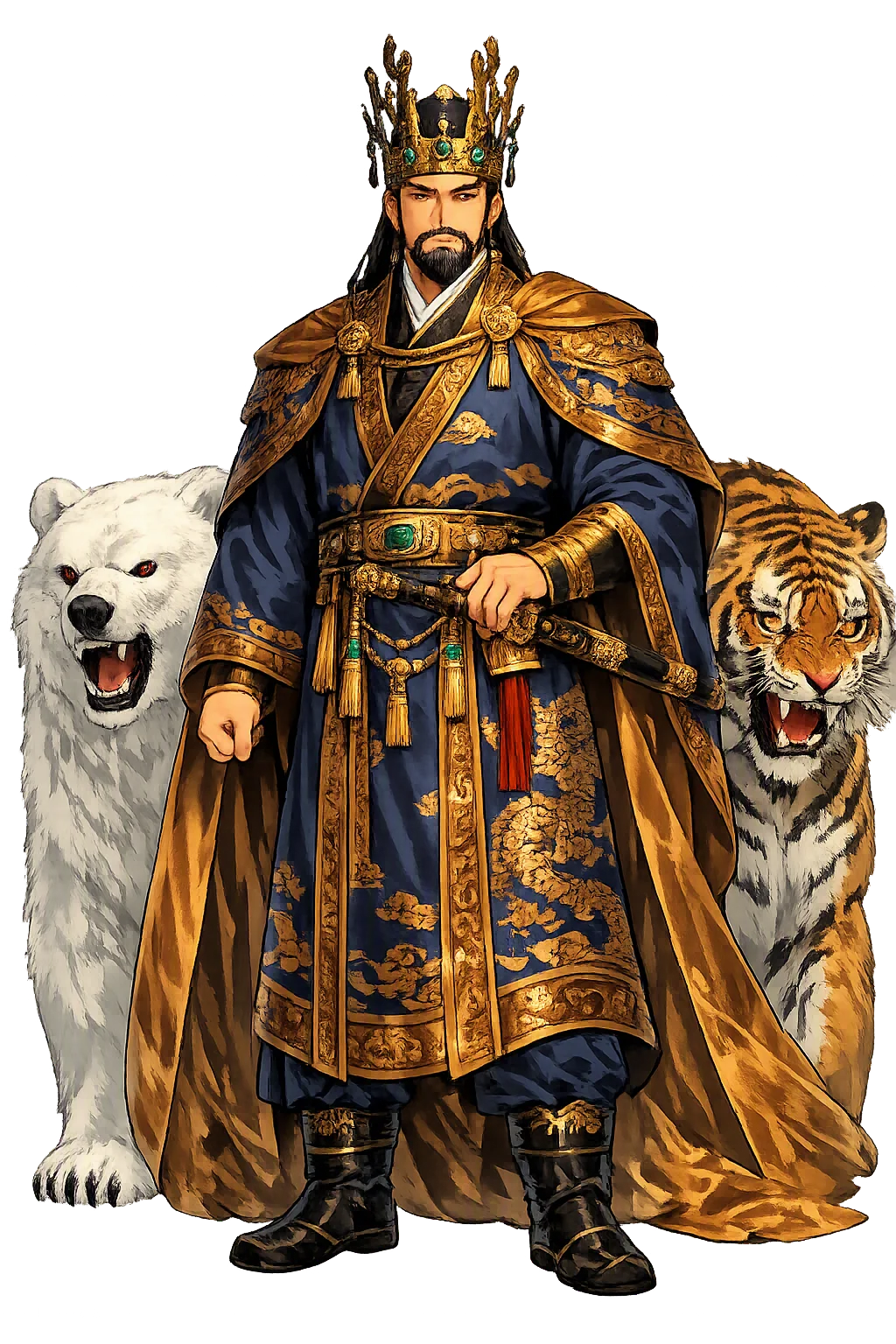
Sacred SymbolsThe sandalwood tree, Bear and tiger, Garlic and mugwort, Mountain peak
02

Etymology & Word Family

From original script to Unicode restoration

Original Script 단군 (檀君) Dangun — "Lord of the sandalwood"
Unicode Restoration Dangun Restored stress, length, and script
Modern ASCII dangun Plain-ASCII fallback

The initial consonant is an unaspirated velar stop, closer to a soft ‘t’ than to English ‘d’; the final nasal closes the first syllable. The scholarly capital marks the name as a proper noun.

03

Unicode Character Breakdown

Character-by-character philological analysis

CharacterUnicodeNameBlockPhonetic Role
DU+0044Latin Capital Letter DBasic LatinSame, capitalized
aU+0061Latin Small Letter ABasic LatinSame
nU+006ELatin Small Letter NBasic LatinSame
gU+0067Latin Small Letter GBasic LatinSame
uU+0075Latin Small Letter UBasic LatinSame
nU+006ELatin Small Letter NBasic LatinSame

The Tier 2 classification reflects how much of the original phonology this restoration preserves — stress and vowel length for Greek names, distinctive letters and diacritics for every other tradition.

04

Cultural Significance

From ancient cult to modern Unicode

Ancient Domain

Dangun is the legendary founder of Gojoseon and the first ancestor of the Korean people in Korean tradition. The name means "Lord of the sandalwood" and belongs to the domain "Founder of Korea, First King." Dangun is the son of Hwanung, the heavenly prince who descended to earth, and Ungnyeo, a bear who became a woman after enduring one hundred days in a cave eating garlic and mugwort. He is said to have founded the state of Gojoseon at Asadal in 2333 BCE, an event commemorated on National Foundation Day, 3 October.

Dangun in Later Traditions

The Dangun myth has been interpreted through many lenses: as a nativist charter myth, as a Confucian parable of virtuous rule, as a Buddhist tale of miraculous birth, and, in the modern era, as a national foundation narrative. North and South Korea both claim Dangun as a common ancestor, though their political interpretations differ. The myth also resonates with broader northeast Asian stories of bear ancestors and celestial founders.

Modern Legacy

Dangun is perhaps the most potent symbol of Korean national identity. His tomb near Pyongyang, the annual Gaecheonjeol ceremony, and countless school textbooks, monuments, and cultural productions keep the figure present in public life. The story is also invoked by overseas Korean communities and by inter-Korean dialogue that seeks a shared mythic past. In popular culture Dangun appears in films, video games, and webtoons, often reimagined as a heroic founder.

Unicode Restoration as Cultural Act

Restoring Dangun in a domain name is more than orthographic accuracy. It is a statement that the internet should recognize the full range of human writing — not only the ASCII keyboard.

05

Frequently Asked Questions

Common questions about Dangun, Founder of Korea, First King, and Unicode restoration

01How do you pronounce Dangun?

In reconstructed pronunciation, Dangun is /taŋ.ɡun/ — approximately 'TAHNG-goon' — The initial consonant is an unaspirated velar stop, closer to a soft ‘t’ than to English ‘d’; the final nasal closes the first syllable. The scholarly capital marks the name as a proper noun..

02What does Dangun mean?

Dangun means Lord of the sandalwood in the korean tradition.

03What are the symbols of Dangun?

Dangun is associated with The sandalwood tree (Dang 檀 means sandalwood; the tree marks the sacred descent place of Hwanung.), Bear and tiger (The two animals who underwent Hwanung's trial; the bear's perseverance became the origin of the Korean people.), Garlic and mugwort (The austere foods of transformation, marking the passage from animal to human and from wilderness to culture.), Mountain peak (The place where Dangun withdrew and continues to dwell as a protective mountain spirit.).

04Why restore Dangun in Unicode?

Plain ASCII dangun strips the stress, length, and script that make the name specific. Unicode restoration returns the name to its original written dignity.

05What is the most important myth about Dangun?

Hwanung tested a bear and a tiger by locking them in a cave with only garlic and mugwort. The tiger gave up, but the bear endured one hundred days and became a woman named Ungnyeo. Hwanung then took her as his wife, and she bore Dangun.

06

Scholarly Sources

The philological foundations of this restoration

Every claim on this page is grounded in established scholarship. The orthographic restorations follow disciplinary convention. The etymological chain follows the best available reference works. This is not invention — it is resurrection through scholarship.

Lexicography & Philology

  • Samguk Yusa
  • Korean folklore

Primary Texts

  • Primary sources in the korean tradition for Dangun.

Archaeology & Art History

  • Material evidence — iconography, inscriptions, and temple archaeology — for Dangun and related cults.

Religious Studies

  • Iryeon, Samguk Yusa (Memorabilia of the Three Kingdoms), 1281; English trans. Ha Tae-Hung and Grafton K. Mintz (1972).
  • Kim Pusik, Samguk Sagi (History of the Three Kingdoms), 1145.
  • Lee, Peter H., ed., Sourcebook of Korean Civilization, vol. 1 (Columbia University Press, 1993).
  • Grayson, James H., Korea: A Religious and Cultural History (Routledge, 2002).
Return

The Surface Awaits

You have traced the name from its earliest attestation to its Unicode restoration. Now return to the myth. The story is where the name lives.

Back to Lore
Dangun mascot