
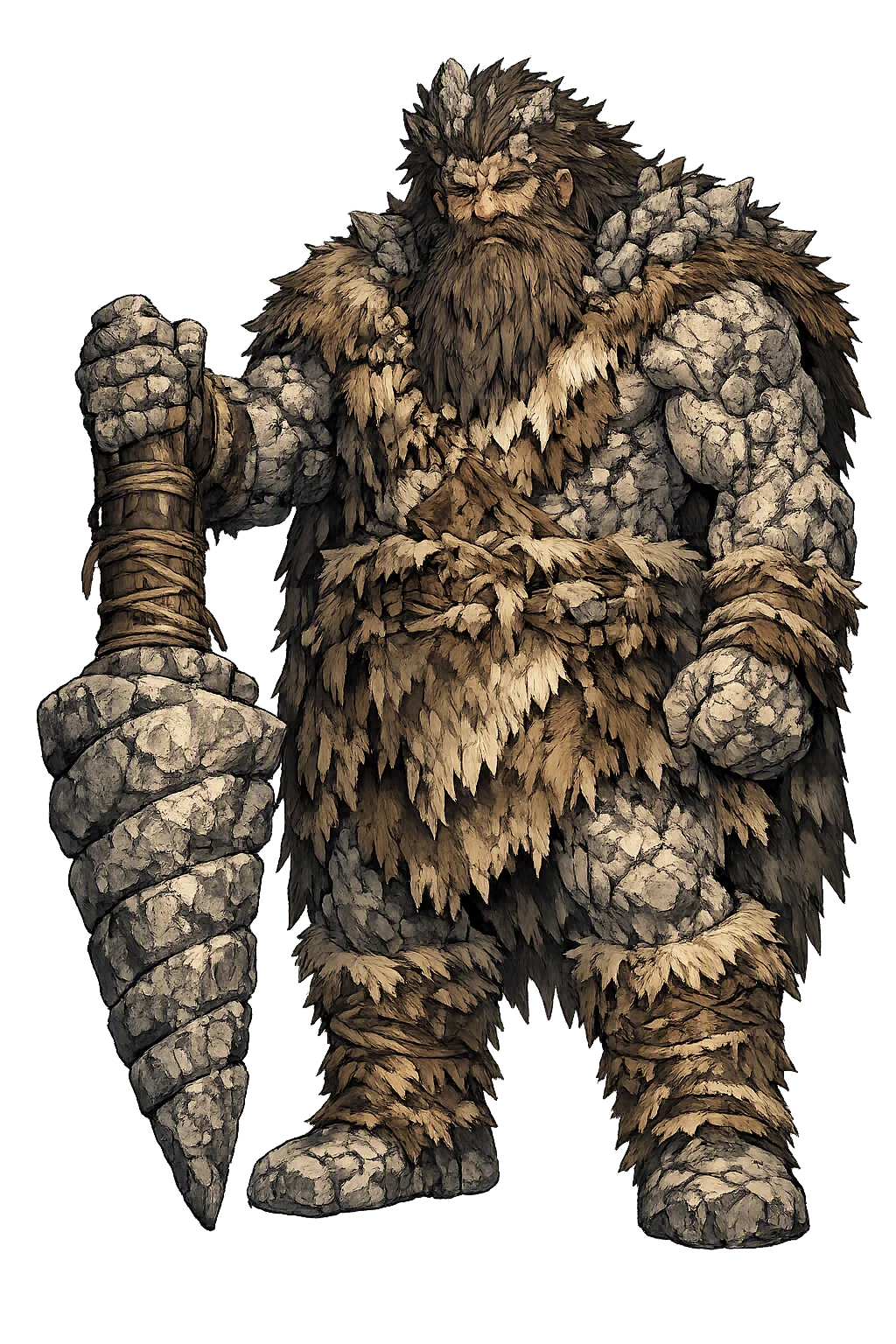
The many faces of Baugi
No important name has only one face. Baugi appears as a figure of myth, a scholarly reconstruction, a piece of material culture, a memory carried across languages, and — most recently — a Unicode domain. This post looks at each face in turn: the name and its roots, the Younger Futhark original, the reconstructed pronunciation, the mythological record, the symbols and sanctuaries, the cross-cultural afterlife, and the engineering that lets the restored spelling resolve in a browser. Taken together, those faces explain why baugi was never going to be enough — and why the restored form is worth a domain of its own.
At a Glance
- Restored name: Baugi
- ASCII form: baugi
- Meaning: "Ring-shaped"
- Domain of influence: Giant, Brother of Suttungr
- Pantheon: Norse
- Classification: Tier 2
- Original script: ᛒᛅᚢᚴᛁ (Younger Futhark)
Overview
Baugi (baugi) — Giant, Brother of Suttungr · the Keeper of the Door at Hnitbjǫrg — is the jötunn who makes the mead of poetry's theft possible: the brother of Suttungr, master of the nine thralls whose deaths open the labour bargain, and the wavering accomplice who bores the tunnel into the mountain where the mead is hoarded.
The name is usually connected with Old Norse baugr ‘ring, circlet’ — hence the traditional gloss ‘ring-shaped’ — though the derivation is not secure, and Simek registers the etymology as uncertain. Baugi's attestation is exactly as wide as his story: he appears in Snorri's Skáldskaparmál, in the mead-of-poetry narrative, and in the þulur of giant-names — a figure the tradition needed once, at the one door. In that one appearance he is the story's hinge: the labour-broker who contracts with the disguised Óðinn, the man who honestly names his limits — ‘the mead is Suttungr's, not mine’ — and then sells access to it anyway, and the would-be betrayer whose auger-stroke misses the crawling snake by an inch.
PuniCodex restores the name as Baugi — identical to the ASCII input, because normalized Old Norse writes no diacritic in this name; the mechanical tier rule therefore places it in Tier 2, a statement about orthography and never about the figure. The temple is domain-less: the plain-ASCII baugi.com is held outside the collection and watched for release, and no form of the name is claimed as owned.
The Name
The name is attested in Old Norse as Baugi, a masculine weak-form giant's name known from Skáldskaparmál's narrative and the þulur of jǫtna heiti. Its etymology is genuinely unsettled. The standard suggestion connects it with baugr ‘ring, circlet, coiled shape’ — the word that also stands in baugeiðr ‘ring-oath’ — yielding a gloss along the lines of ‘ring-shaped’ or ‘the coiled one’; Cleasby–Vigfusson and Zoëga document the underlying noun, while Simek treats the name's derivation as uncertain rather than solved. The resonance is worth registering without over-pressing: in Hávamál's own telling of the mead theft, the instrument Óðinn breaks is precisely a baugeiðr, a ring-oath — the god swears by the ring and leaves Suttungr defrauded.
The ASCII form is not a fallback but the original: the medieval manuscripts write five plain Latin letters, and no historically distinct Unicode spelling exists to restore. The mechanical rule therefore classifies the name Tier 2 — nothing distinctive is lost in transit.
The letter-by-letter transformation runs:
- b → B — Same, capitalized
- a → a — Same
- u → u — Same
- g → g — Same
- i → i — Same
No domain is held. The plain-ASCII baugi.com is registered to a third party outside the PuniCodex collection and is watched for release; this temple claims no address it does not hold.
The Original Script
The name is preserved in medieval Icelandic manuscripts in the Latin alphabet as Baugi — Old Norse (North Germanic), attested in the Codex Regius of the Prose Edda (GKS 2367 4to, early 14th c.) and the Codex Regius of the Poetic Edda (c. 1270), recording material centuries older. Before the Latin bookhand, Old Norse names were carved in the younger futhark; no runic attestation of this name survives, so the manuscript form is the primary witness.
The scholarly rendering proceeds step by step:
- The name is a giant's proper name of uncertain etymology, usually connected with baugr ‘ring, circlet’; Simek registers the derivation as unsettled.
- Old Norse orthography writes it in five plain letters: B-a-u-g-i, with no length mark and no special character.
- In the Younger Futhark it would run ᛒᛅᚢᚴᛁ (b-au-k-i); the k-rune writes the g, and the medial fricative [ɣ] that the spelling g represents has no rune of its own.
- The Unicode form Baugi is therefore identical to the ASCII input — the restoration is a matter of canonical reference, not rescued letters, which is exactly what the Tier 2 classification records.
Pronunciation
The reconstructed pronunciation of the name is /ˈbɑu.ɣi/ — Old Norse Reconstruction.
Phoneme by phoneme:
- B- — Voiced bilabial stop [b], fully voiced initially, as in English ‘bow’
- -au- — The falling diphthong [ɑu], open back vowel gliding to rounded u; close to the ‘ow’ of English ‘cow’
- -g- — Voiced velar fricative [ɣ] between vowels, not a stop; before front i it palatalizes toward a glide close to English ‘y’
- -i — Short unstressed [i] in the final syllable
For the modern speaker, the closest approximation is: ‘BOW-yee’ — first syllable rhyming with ‘cow’, the g softened to a glide so the second syllable lands almost like ‘yee’.
Kindred and historical forms of the name:
- Old Norse — Baugi, brother of Suttungr, in Skáldskaparmál and the þulur
- Younger Futhark — ᛒᛅᚢᚴᛁ (b-au-k-i), the normalized runic rendering; the k-rune ᚴ writes the g and no rune marks the medial fricative
- Word-kin — baugr ‘ring’ and baugeiðr ‘ring-oath’, the nouns to which the name is usually connected
Baugi is Tier 2 because the restoration preserves nothing ASCII loses: no diacritic, no distinctive letter, no vowel length. The five letters of the manuscripts are the five letters of the address bar.
Mythology
Baugi's mythology is a single episode of the mead-of-poetry myth — but that episode is the hinge on which the whole theft turns.
The Mead Comes to Hnitbjǫrg (Skáldskaparmál)
Before Baugi enters, the mead has its own violent history: Kvasir, made from the peace of Æsir and Vanir, is killed by the dwarfs Fjalar and Galar, who brew his blood with honey into the mead that makes poets; the dwarfs drown the giant Gilling and kill his wife; Gilling's son Suttungr takes the mead from them as blood-price, shuts it inside the mountain Hnitbjǫrg, and sets his daughter Gunnlǫð to guard it. Only then does Snorri write the genealogy the story needs: Suttungr had a brother named Baugi.
The Whetstone and the Nine Thralls (Skáldskaparmál)
Óðinn comes to Baugi's land calling himself Bǫlverkr, ‘Evil-doer’ — a name that announces rather than conceals. Nine of Baugi's thralls are mowing hay; Bǫlverkr sharpens their scythes with a whetstone so good that all nine want it, throws it up among them, and in the scramble the thralls cut each other's throats. That evening the stranger lodges with Baugi and hears him lament: nine thralls dead, the hay uncut. The vacancy the god is about to fill is one he made himself.
Nine Men's Work for One Draught (Skáldskaparmál)
Bǫlverkr offers the work of nine men for the summer, his wage one drink of Suttungr's mead. Baugi gives the story's one honest answer — the mead is not his to give, Suttungr alone controls it — and then commits himself anyway: he will go with Bǫlverkr and they will try together. The work is done; the pair go to Suttungr; the refusal is absolute. Baugi's brokerage has failed on its stated terms, and what remains is the half-promise of stratagems.
Rati and the Two Blowings (Skáldskaparmál)
Bǫlverkr produces the auger Rati, and Baugi bores into the mountain. He declares the hole through; Bǫlverkr blows into it and the chips fly back into his face — the bore is blind, and Baugi meant to betray him. Baugi bores again; the chips fly inward. Bǫlverkr becomes a snake and crawls through, and Baugi strikes after him with the auger and misses. Inside, Óðinn lies three nights with Gunnlǫð, wins three draughts, empties all three vessels, and rises as an eagle with the mead in him, Suttungr hard behind in eagle-shape; the Æsir set out their vats, and what Óðinn cannot hold falls backward — the poetasters' share.
Óðinn's Own Version (Hávamál 104–110)
Hávamál lets the god boast of the same theft in his own voice: Rati's mouth made room for him and gnawed the rock; Gunnlǫð gave him the drink from the golden seat; Óðrœrir came up among the Æsir; Suttungr was left defrauded and Gunnlǫð weeping, the ring-oath broken. But the poem never names Baugi. In the god's telling the doorkeeper has already vanished — contract, auger, and missed stroke absorbed into solitary cunning. Snorri's prose preserves what the boasting omits: the door had a keeper, the keeper had a price, and at the last moment he tried to close it on the snake.
Symbols & Iconography
Baugi's iconography is narrative, not cultic — the corpus gives him no regalia, but the heist fixed a small set of objects around his one episode:
- Hnitbjǫrg — The mountain of the mead, hoard and fortress in one; Baugi's auger makes the only door it ever had
- Rati — The auger, its name connected with the verb rata ‘to travel, find one's way’; tool of the breach and, for one stroke, almost the weapon that ends the story
- The whetstone — Óðinn's thrown bait: the thralls scramble for it and cut each other's throats, emptying Baugi's fields of nine workers at a throw
- The nine scythes — Harvest-tools honed too well; honest labour's edge turned to mutual death by a single act of sharpening
- Óðrœrir, Boðn, and Són — The three vessels of the mead — ‘heart-stirrer’, ‘vessel’, and ‘reconciliation’ — that wait on the far side of Baugi's tunnel
Archaeology & Evidence
Baugi is an entirely textual figure: no runestone invokes him, no picture stone has been convincingly read as the drilling of Hnitbjǫrg, and no place-name or votive deposit carries his name. His attestation is exactly as wide as his story — Snorri's Skáldskaparmál, preserved principally in the Codex Regius of the Prose Edda (GKS 2367 4to, early fourteenth century), with the Codex Wormianus and Codex Upsaliensis as the other main witnesses, plus his entry in the þulur of giant-names.
The mead myth he serves is materially older than its manuscripts. Kennings presupposing it — Kvasir's blood, Suttungr's mead, Óðinn's booty — are already at work in ninth- and tenth-century skaldic verse, proving the story's currency centuries before Snorri wrote it down. Hávamál's telling survives in the Codex Regius of the Poetic Edda (c. 1270), the same small codex that carries nearly all the mythological poems. The runic record is silent on the name, as it is on nearly all the jǫtnar.
Realm & Domain
Baugi is catalogued under the domain Giant, Brother of Suttungr — a relational domain, because the tradition gives him no independent portfolio: he exists exactly where his brother's hoard needs a door and a doorkeeper.
The Giant
He is of the jǫtnar, listed among them in the þulur, and his household — land, thralls, harvest — is the working farm on which Óðinn's deception is staged.
The Brother of Suttungr
His one genealogical fact is his defining one: Suttungr's brother, and therefore the one man with a legitimate path toward the mead that Suttungr hoards in Hnitbjǫrg.
The Labour-Broker
His nine thralls die by the whetstone trick, and his need for nine men's harvest-work becomes the contract that buys Bǫlverkr a summer's access.
The Doorkeeper of Hnitbjǫrg
With the auger Rati in his hands he bores the only entrance the mountain ever has — and then strikes at what crawls through it, and misses.
Across Cultures
Baugi himself has no cross-border reflex — no Old English or continental cognate figure, no cult, no charm; he is a person the Icelandic tradition made for one narrative. The myth he serves, however, sits in one of the oldest comparative dossiers in Indo-European study: the theft of the divine intoxicant. The standard parallel is Vedic — the śyena, the eagle or falcon that snatches the soma for the gods (Rigveda 4.26–27) — set beside Óðinn in eagle-shape carrying off the mead in his own body. The comparison was drawn in the nineteenth century and is still registered, with due caution, in the modern handbooks: Lindow treats the mead myth as the northern member of a genuine inheritance while warning against flattening its specifically Norse machinery — the labour contract, the auger, the broken oath.
Baugi's role belongs to that northern machinery: the intermediary who can be bought, the door that opens from the inside. Within the corpus his closest structural kin are the giants whose households Óðinn penetrates by guile — above all his brother Suttungr and the deep giant-lore descending from Ymir — and the wisdom-figures the god elsewhere out-talls, Mimir among them. The mead he fails to keep becomes the drink of Bragi's art.
Cultural Legacy
Baugi's afterlife is mostly the afterlife of the drink he failed to keep. Skaldic poetry — the whole court-poetry tradition of the Viking and medieval North — named itself out of this myth: Kvasir's blood, the dwarfs' drink, Suttungr's mead, Óðinn's theft, Óðrœrir's wave. Every character of the heist entered the poetic vocabulary except, so far as the corpus shows, its doorkeeper: no surviving kenning mints a ‘Baugi's mead’.
He survives instead as the specialists' hinge-figure. Every scholarly treatment of the mead myth, from Finnur Jónsson onward, must reckon with his two functions — the labour-broker who makes the theft logistically possible, and the wavering accomplice whose blind bore-hole and missed auger-stroke are the story's closest brush with failure. In the Norse-revival retellings and the modern handbooks he appears under his own name, always in the same posture: halfway through the mountain, one hand on the auger. The myth itself has become the North's great parable of inspiration as something hoarded and stolen rather than given — and Bragi, god of poetry, pours out what Baugi could not guard.
The Scholarly Record
The account of Baugi given in this edition rests on the witnesses and reference works listed below. Skáldskaparmál supplies the narrative; Hávamál the god's own counter-account; the þulur the attestation of the name; the lexica the etymological raw material; the handbooks arbitrate what cannot be settled.
- Snorri Sturluson, Edda, Skáldskaparmál (the mead-of-poetry narrative: Baugi, Bǫlverkr, the nine thralls, Rati, Hnitbjǫrg), ed. and trans. Anthony Faulkes (London: Everyman, 1987), pp. 61–64; þulur of giant-names.
- Hávamál 104–110 (Óðinn's account of the mead theft; Rati named at st. 106; Óðrœrir at st. 107; the ring-oath, Suttungr defrauded, and Gunnlǫð weeping at st. 110), trans. Carolyne Larrington, The Poetic Edda, 2nd ed. (Oxford: Oxford University Press, 2014).
- Cleasby, Richard, and Guðbrandur Vigfússon, An Icelandic-English Dictionary, 2nd ed. (Oxford: Clarendon Press, 1957), s.v. baugr, baugeiðr.
- Zoëga, Geir T., A Concise Dictionary of Old Icelandic (Oxford: Clarendon Press, 1910), s.v. baugr, baugeiðr.
- de Vries, Jan, Altnordisches etymologisches Wörterbuch, 2nd ed. (Leiden: Brill, 1962), s.v. baugr.
- Simek, Rudolf, Dictionary of Northern Mythology, trans. Angela Hall (Cambridge: D. S. Brewer, 1993), s.v. Baugi, mead.
- Orchard, Andy, A Dictionary of Norse Myth and Legend (London: Cassell, 1997), s.v. Baugi.
- Lindow, John, Norse Mythology: A Guide to the Gods, Heroes, Rituals, and Beliefs (Oxford: Oxford University Press, 2001), s.v. Baugi, mead of poetry.
- Gordon, E. V., An Introduction to Old Norse, 2nd ed. rev. A. R. Taylor (Oxford: Clarendon Press, 1957).
A Meditation
Baugi is the indispensable man nobody remembers. Strip him out and the myth stops cold: without the thralls' deaths there is no vacancy, without the contract there is no access, without the auger in his hand there is no door — and without the door there is no mead, and by the tradition's own accounting, no poetry at all.
Yet he is not the hero of his one story, nor even its villain. He is something rarer in the giant-world of the Eddas: a middleman. He names the limits of his power honestly — the mead is Suttungr's, not mine — and then sells access to what is not his anyway. He helps bore the hole and then tries to kill what crawls through it. The tradition leaves his motives exactly that tangled, and the tangle is the point: every hoard is opened from the inside, by someone whose loyalty is a price rather than a fact. The auger-stroke misses by the width of a snake — and because it misses, poems exist.
The Unicode Restoration
Baugi is classified as Tier 2: the restoration needs no distinctive letters or diacritics its ASCII form would lose. The ASCII fallback baugi still resolves everywhere, but it is the restored form that carries the name's full information. That is the whole thesis of this temple: the marks are the message.
Why This Restoration Matters
Myth, script, sound, cult, legacy, domain: the faces of Baugi add up to a single argument — that a name is a record, and records deserve fidelity. The PuniCodex restoration keeps that record in working order: the temple presents it, the Scholarly Edition footnotes it, the lexicon catalogs it, and the domain makes it addressable. baugi will always exist as a fallback. But fallback is not identity. Baugi is the name; everything else is a convenience.
Explore Further
This post is one doorway into the temple. The home page carries the full character breakdown and the ambient canvas; the lore page tells the myths in long form; the Scholarly Edition preserves the sources, pronunciation data, and revision history; and the patron wall supports the restoration directly. For the wider map, browse the Lexicon, explore the Pantheon, or return to the PuniCodex blog.
Related Names
Sources
The full scholarly apparatus — every citation, revision, and review — lives in the Scholarly Edition. Key references for this post:
- Snorri Sturluson, Edda, Skáldskaparmál (the mead-of-poetry narrative), ed. and trans. Anthony Faulkes (London: Everyman, 1987), pp. 61–64.
- The þulur of giant-names (Skáldskaparmál), ed. Faulkes (1987).
- Simek, Rudolf, Dictionary of Northern Mythology, trans. Angela Hall (Cambridge: D. S. Brewer, 1993), s.v. Baugi.
- Cleasby, Richard, and Guðbrandur Vigfússon, An Icelandic-English Dictionary, 2nd ed. (Oxford: Clarendon Press, 1957), s.v. baugr.
- Lexicon authorities for this entry: Prose Edda, Cleasby-Vigfusson.