
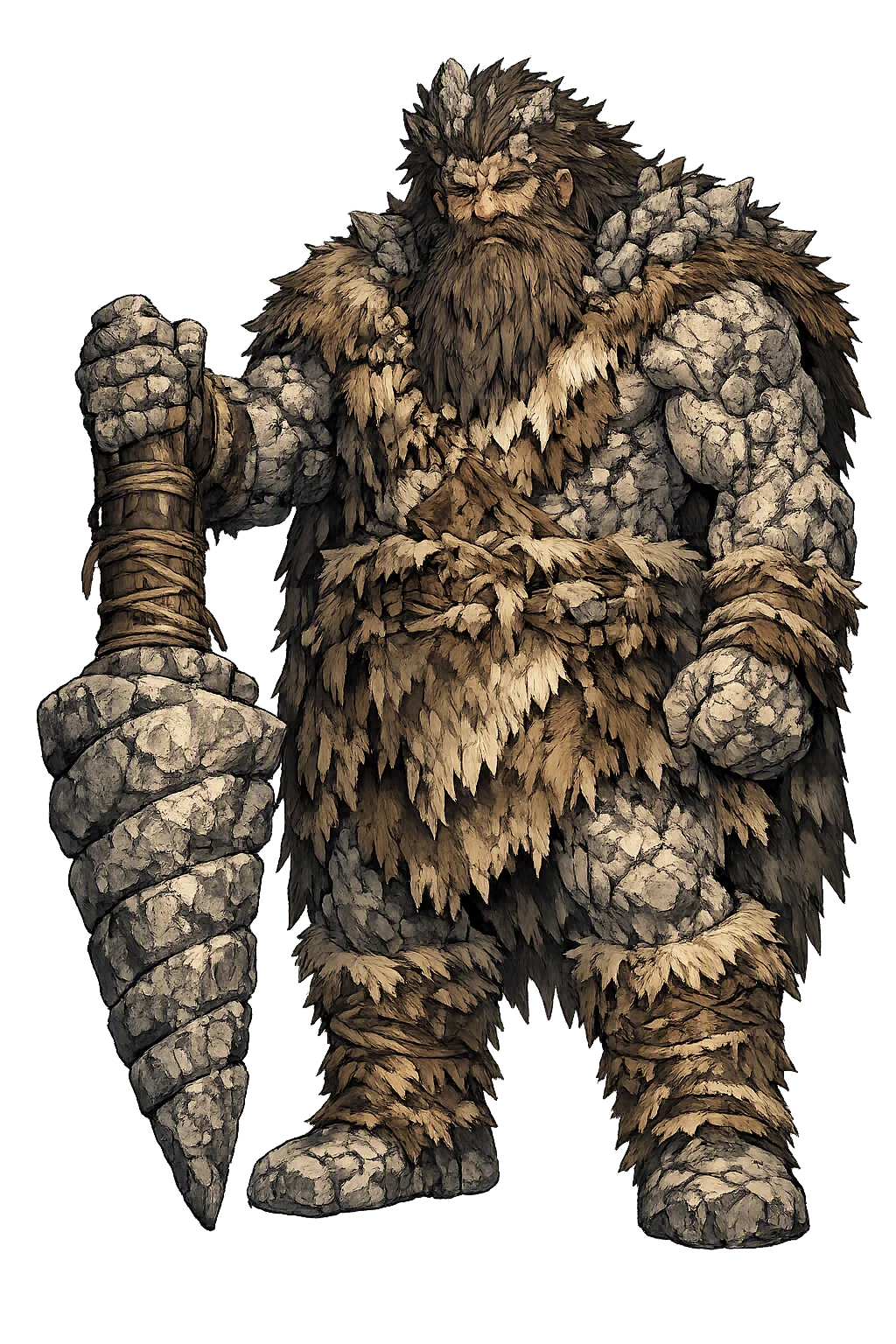
The provenance file on Baugi
Catalogue entry — Baugi. Every claim below carries its chain of custody.
Provenance
1. The attestation. ᛒᛅᚢᚴᛁ, from the tradition's own record. On record: Snorri Sturluson, Prose Edda, Skáldskaparmál — the mead-of-poetry narrative (Baugi, Bǫlverkr, Rati, Hnitbjǫrg), trans. Anthony Faulkes (Everyman, 1987), pp. 61–64, Hávamál 104–110 (Óðinn's own account of the mead theft; Rati named at st. 106; the ring-oath and Suttungr defrauded at st. 110), trans. Carolyne Larrington, The Poetic Edda, 2nd ed. (Oxford, 2014), The þulur of giant-names (Skáldskaparmál), listing Baugi among the jǫtnar, Cleasby–Vigfusson, An Icelandic-English Dictionary, s.v. baugr ('ring'; cp. baugeiðr, 'ring-oath').
2. The narrative record. The Mead Comes to Hnitbjǫrg — The story begins before Baugi enters it. From the peace-making of Æsir and Vanir is made Kvasir, wisest of beings; the dwarfs Fjalar and Galar kill him and brew his blood with honey into a mead that makes a poet or a scholar of whoever drinks it, keeping it in three vessels — Óðrœrir, Boðn, and Són. The Whetstone and the Nine Thralls — Óðinn comes walking to Baugi's land calling himself Bǫlverkr, 'Evil-doer' — a name that is not a disguise so much as an announcement. Nine of Baugi's thralls are mowing hay.
3. The physical record. Baugi is an entirely textual figure: no runestone invokes him, no picture stone has been convincingly read as the drilling of Hnitbjǫrg, and no place-name or votive deposit carries his name. His attestation is exactly as wide as his story — Snorri's Skáldskaparmál, preserved principally in the Codex Regius of the Prose Edda (GKS 2367 4to, early fourteenth century), with the Codex Wormianus and Codex Upsaliensis as the other main witnesses, plus his entry in the þulur of giant-names. The mead myth he serves is materially older than its manuscripts: kennings presupposing it — Kvasir's blood, Suttungr's mead, Óðinn's booty — are already at work in ninth- and tenth-century skaldic verse, which proves the story's currency centuries before Snorri wrote it down. Hávamál's telling survives in the Codex Regius of the Poetic Edda (c. 1270), the same small codex that carries nearly all the mythological poems. The runic record is silent on the theonym, as on nearly all the jǫtnar.
4. The current holding. The temple at /baugi/, classified Tier 2. Tier-2 here means one preserved truth — not less important, just singular. The temple shows it and names it.
5. The documented resonances. Wine, Brewing & Hospitality, Manufacturing, Craft & Automation, Writing, Publishing & Media — seats argued and weighted in the pattern atlas, read through the myths in this temple's Resonance File.
6. The primary sources. Poetic Edda, Prose Edda — the library this file answers to, open at the Sacred Texts collection.
7. The continuing record. Baugi's afterlife is mostly the afterlife of the drink he failed to keep. Skaldic poetry — the entire court-poetry tradition of the Viking and medieval North — called itself by kennings drawn from this myth: Kvasir's blood, the dwarfs' drink, Suttungr's mead, Óðinn's theft, Óðrœrir's wave.
At a Glance
- Restored name: Baugi
- ASCII form: baugi
- Meaning: "Ring-shaped"
- Domain of influence: Giant, Brother of Suttungr
- Pantheon: Norse
- Classification: Tier 2
- Original script: ᛒᛅᚢᚴᛁ
- Series: The Restoration Files, No. 81 of 548
The File Continues
Read the founding dispatch for the name's full story, the Resonance File for the archetype at work — or the whole archive in one sitting.
Continue the series — previous file: Bꜣstt (read it here) · next file: Bedwyr (read it here).
The Restoration Files are written from the same canonical record as the temples themselves: the lexicon, the lore catalog, the pattern atlas, and the cited scholarly sources. If a file ever disagrees with its temple, the temple is right — tell us, and the file will be corrected.