PuniCodex

Extended Lore

ᛒᛅᚢᚴᛁ Baugi

Etymology · Phonology · Orthography · Cultural Legacy · Primary Sources

Tier 2 Baugi
Baugi — Giant, Brother of Suttungr
01

Quick Facts

Essential information about Baugi, Giant, Brother of Suttungr

Original Scriptᛒᛅᚢᚴᛁ
Unicode RestorationBaugi
Reconstructed Pronunciation/ˈbɑu.ɣi/
PantheonNorse
DomainGiant, Brother of Suttungr
MeaningRing-shaped
ClassificationTier 2
Primary DomainBaugi
Sacred SymbolsHnitbjǫrg, Rati, The whetstone, The nine thralls' scythes, Óðrœrir, Boðn, and Són
02

Etymology & Word Family

From original script to Unicode restoration

Original Script ᛒᛅᚢᚴᛁ Baugi — "Ring-shaped"
Unicode Restoration Baugi Restored stress, length, and script
Modern ASCII baugi Plain-ASCII fallback

Baugi is Tier 2 by the mechanical rule: the normalized Old Norse form is already plain ASCII — no diacritic, no distinctive letter, nothing for the ASCII alphabet to lose. The tier reports the name's orthography, not the figure's standing; the corpus names him in one story and one list, and both are written in unbroken Latin letters.

03

Unicode Character Breakdown

Character-by-character philological analysis

CharacterUnicodeNameBlockPhonetic Role
BU+0042Latin Capital Letter BBasic LatinSame, capitalized
aU+0061Latin Small Letter ABasic LatinSame
uU+0075Latin Small Letter UBasic LatinSame
gU+0067Latin Small Letter GBasic LatinSame
iU+0069Latin Small Letter IBasic LatinSame

The Tier 2 classification reflects how much of the original phonology this restoration preserves — stress and vowel length for Greek names, distinctive letters and diacritics for every other tradition.

04

Cultural Significance

From ancient cult to modern Unicode

Ancient Domain

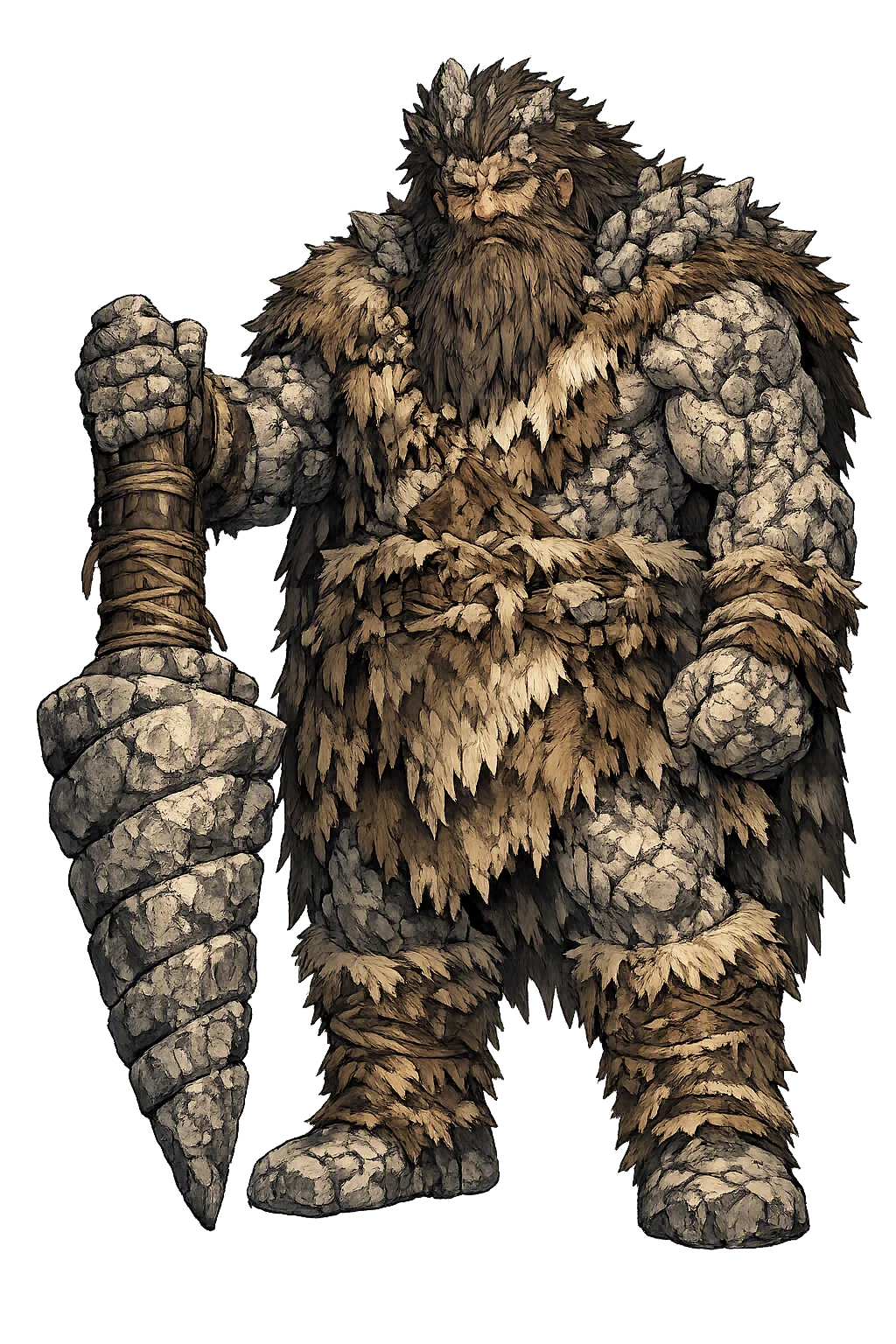
Baugi is the giant who holds the one door that matters in the story of the mead of poetry: brother to Suttungr, who hoards the mead inside the mountain Hnitbjǫrg, and master of the nine thralls whose deaths open the way to Óðinn's bargain. He is the hinge of the whole theft — the labour-contractor, the reluctant accomplice, and the would-be cheat whose auger-stroke misses a snake by an inch.

Baugi in Later Traditions

Baugi himself has no cross-border reflex — no Old English or continental cognate figure, no cult, no charm; he is a person the Icelandic tradition made for one narrative. The myth he serves, however, sits in one of the oldest comparative dossiers in Indo-European study: the theft of the divine intoxicant. The standard parallel is Vedic — the śyena, the eagle or falcon who snatches the soma and brings it to the gods (Rigveda 4.26–27) — set beside Óðinn in eagle-shape carrying off the mead in his body. The comparison was drawn in the nineteenth century and is still registered, with due caution, in the modern handbooks: Lindow treats the mead myth as the northern member of a genuine inheritance while warning against flattening its specifically Norse machinery — the labour contract, the auger, the broken oath. Baugi's own role belongs to that northern machinery: the intermediary who can be bought, the door that opens from the inside. His closest structural kin in the corpus are the other giants whose households Óðinn penetrates by guile, above all the world of [[suttungr|Suttungr]] itself and the deep giant-lore of [[ymir|Ymir]]'s kin.

Modern Legacy

Baugi's afterlife is mostly the afterlife of the drink he failed to keep. Skaldic poetry — the entire court-poetry tradition of the Viking and medieval North — called itself by kennings drawn from this myth: Kvasir's blood, the dwarfs' drink, Suttungr's mead, Óðinn's theft, Óðrœrir's wave. Every one of those names is a character in the heist except its doorkeeper; the corpus never minted a 'Baugi's mead'. He survives instead as the specialists' hinge-figure: every scholarly treatment of the mead myth, from Finnur Jónsson to Lindow, must reckon with his two functions — the labour-broker who makes the theft logistically possible, and the wavering accomplice whose bore-hole and auger-stroke are the story's closest brush with failure. In modern retellings of the myth he appears under his name in the better handbooks and in the illustrated Eddas of the Norse revival, always in the same posture: halfway through the mountain, one hand on the auger. The mead myth itself has become the North's great parable of inspiration as something stolen, hoarded, and re-stolen — and the god of poetry, [[bragi|Bragi]], pours out what Baugi could not guard.

Unicode Restoration as Cultural Act

Restoring Baugi in a domain name is more than orthographic accuracy. It is a statement that the internet should recognize the full range of human writing — not only the ASCII keyboard.

05

Frequently Asked Questions

Common questions about Baugi, Giant, Brother of Suttungr, and Unicode restoration

01How do you pronounce Baugi?

In reconstructed pronunciation, Baugi is /ˈbɑu.ɣi/ — approximately 'BOW-yee' — the first syllable rhymes with English 'cow', and the medial g is not a stop but a soft voiced glide between the vowels, so the second syllable lands almost like 'yee'..

02What does Baugi mean?

Baugi means Ring-shaped in the norse tradition.

03What are the symbols of Baugi?

Baugi is associated with Hnitbjǫrg (The mountain of the mead — hoard and fortress in one, opened by craft rather than force), Rati (The auger that gnaws through stone — the tool that makes the door, and nearly the weapon that closes the story), The whetstone (Óðinn's thrown bait — the small object whose coveting empties Baugi's fields of nine workers at a stroke), The nine thralls' scythes (The harvest-tools honed too well — honest labour's edge turned into mutual death by one act of sharpening), Óðrœrir, Boðn, and Són (The three vessels of the mead — 'heart-stirrer', 'vessel', and 'reconciliation' — emptied in three draughts).

04Why restore Baugi in Unicode?

Plain ASCII baugi strips the stress, length, and script that make the name specific. Unicode restoration returns the name to its original written dignity.

05What is the most important myth about Baugi?

The story begins before Baugi enters it. From the peace-making of Æsir and Vanir is made Kvasir, wisest of beings; the dwarfs Fjalar and Galar kill him and brew his blood with honey into a mead that makes a poet or a scholar of whoever drinks it, keeping it in three vessels — Óðrœrir, Boðn, and Són. The dwarfs then drown the giant Gilling at sea and kill his wife with a millstone, and Gilling's son Suttungr takes revenge: he sets the dwarfs on a tide-washed skerry, and they buy their lives with the mead. Suttungr carries it home, shuts it inside the mountain Hnitbjǫrg, and sets his daughter Gunnlǫð to guard it.Only now does Snorri bring Baugi on stage, in a single sentence of genealogy: Suttungr had a brother, and his name was Baugi. The hoard is sealed, the guard is set, and the god who wants the mead does not go to its owner — he goes to the owner's brother.

06

Scholarly Sources

The philological foundations of this restoration

Every claim on this page is grounded in established scholarship. The orthographic restorations follow disciplinary convention. The etymological chain follows the best available reference works. This is not invention — it is resurrection through scholarship.

Lexicography & Philology

  • Prose Edda
  • Cleasby-Vigfusson

Primary Texts

  • Snorri Sturluson, Prose Edda, Skáldskaparmál — the mead-of-poetry narrative (Baugi, Bǫlverkr, Rati, Hnitbjǫrg), trans. Anthony Faulkes (Everyman, 1987), pp. 61–64
  • Hávamál 104–110 (Óðinn's own account of the mead theft; Rati named at st. 106; the ring-oath and Suttungr defrauded at st. 110), trans. Carolyne Larrington, The Poetic Edda, 2nd ed. (Oxford, 2014)
  • The þulur of giant-names (Skáldskaparmál), listing Baugi among the jǫtnar
  • Orchard, Dictionary of Norse Myth and Legend, s.v. Baugi; Lindow, Norse Mythology: A Guide, s.v. Baugi and the mead of poetry (myth interpretation and the Vedic soma-eagle parallel, Rigveda 4.26–27)

Archaeology & Art History

  • Material evidence — iconography, inscriptions, and temple archaeology — for Baugi and related cults.
  • Baugi is an entirely textual figure: no runestone invokes him, no picture stone has been convincingly read as the drilling of Hnitbjǫrg, and no place-name or votive deposit carries his name. His attestation is exactly as wide as his story — Snorri's Skáldskaparmál, preserved principally in the Codex Regius of the Prose Edda (GKS 2367 4to, early fourteenth century), with the Codex Wormianus and Codex Upsaliensis as the other main witnesses, plus his entry in the þulur of giant-names. The mead myth he serves is materially older than its manuscripts: kennings presupposing it — Kvasir's blood, Suttungr's mead, Óðinn's booty — are already at work in ninth- and tenth-century skaldic verse, which proves the story's currency centuries before Snorri wrote it down. Hávamál's telling survives in the Codex Regius of the Poetic Edda (c. 1270), the same small codex that carries nearly all the mythological poems. The runic record is silent on the theonym, as on nearly all the jǫtnar.

Religious Studies

  • Cleasby–Vigfusson, An Icelandic-English Dictionary, s.v. baugr ('ring'; cp. baugeiðr, 'ring-oath')
  • Zoëga, A Concise Dictionary of Old Icelandic, s.v. baugr, baugeiðr
  • Simek, Dictionary of Northern Mythology, s.v. Baugi (attestation, etymological uncertainty, the auger episode)
Return

The Surface Awaits

You have traced the name from its earliest attestation to its Unicode restoration. Now return to the myth. The story is where the name lives.

Back to Lore
Baugi mascot