
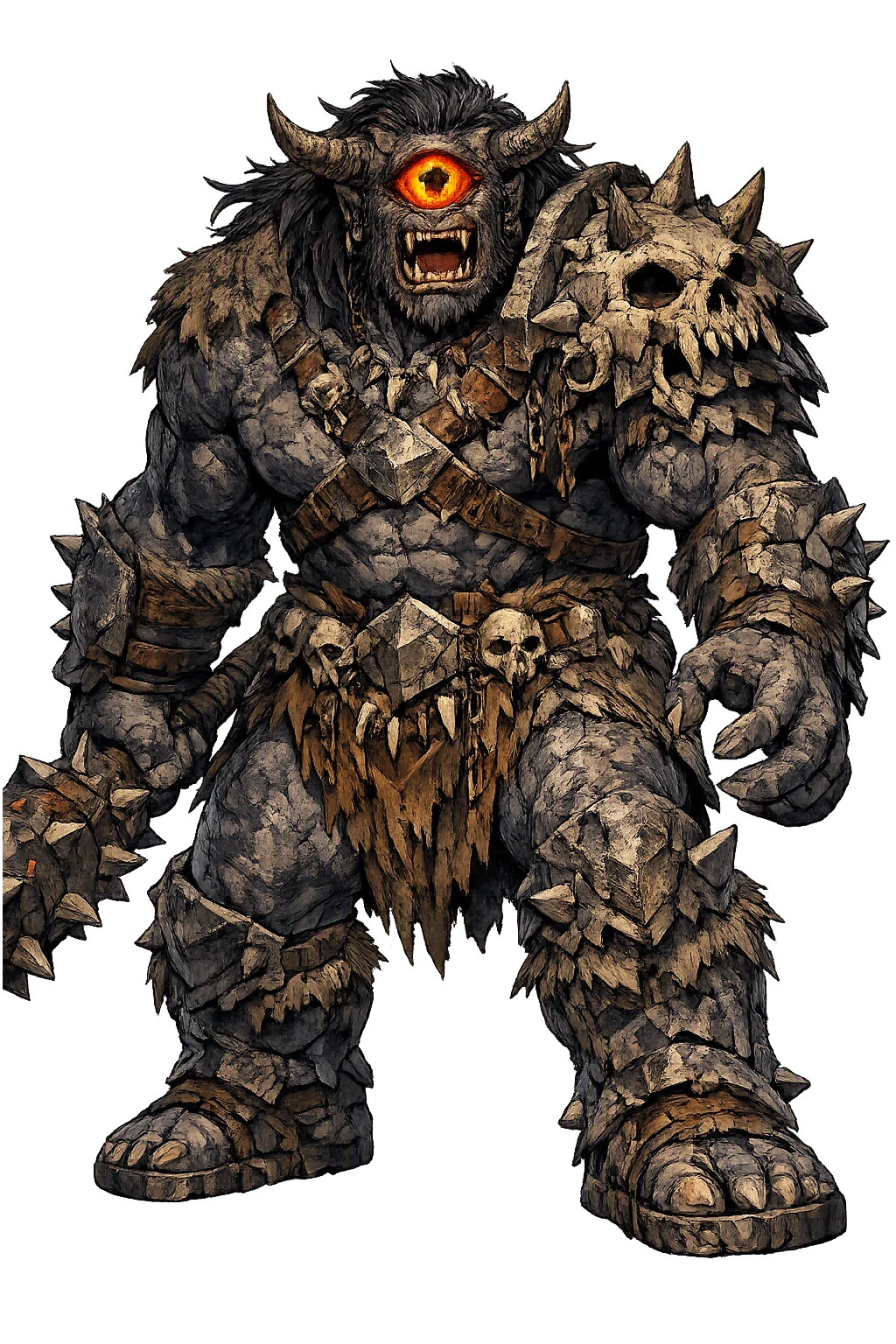
The name Balor and the world it opens
A name is a door. Balor opens onto an entire world: the domain of destruction, evil eye, fomorians, a Celtic tradition, and centuries of storytelling, worship, and scholarship. This post walks through that world room by room — the name and its roots, the original script, the sound of it, the myths, the symbols, the sites, the afterlife across cultures — and ends at the newest room of all: a Unicode domain that makes the whole structure addressable. balor gets you to the same building, but only the restored form tells you why it was built.
At a Glance
- Restored name: Balor
- ASCII form: balor
- Meaning: "Fomorian king whose destructive eye blasts armies when its lid is raised, slain by his grandson Lúg with a sling-stone at Cath Maige Tuired."
- Domain of influence: Destruction, Evil Eye, Fomorians
- Pantheon: Celtic
- Classification: Tier 2
Overview
Balor (balor) — Destruction, Evil Eye, Fomorians · the Fomorian king of the venomed eye — is the great antagonist of medieval Irish myth: Balor mac Doit meic Néit, 'Balor son of Dot, grandson of Nét', king of the Fomorians, the sea-borne oppressors who taxed Ireland from the outer islands until the second battle of Mag Tuired broke them. His weapon is the most feared in the corpus: a single eye, poisoned in his boyhood by the fumes of a druids' charm-brew, whose gaze made any army it looked upon worthless though it were many thousands strong — an eye never opened save on a battlefield, its lid raised by four men with a polished handle.
He is also, by the tradition's own reckoning, the grandfather of his destroyer. His daughter Ethniu bore Lugh to Cian, son of Dian Cécht; and at Mag Tuired it was Lugh's sling-stone that drove the eye backward through Balor's head, so that it was his own host that looked into it, and the Fomorian power over Ireland ended under his fall. The Lebor Gabála Érenn frames his lineage and records his wife Cethlenn's revenge — the wound she dealt the Dagda at Mag Tuired, of which the All-Father later died at the Brug.
PuniCodex restores the name as Balor — identical to the ASCII input, because normalized Old Irish writes no diacritic in this name. The mechanical rule therefore places it in Tier 2: nothing distinctive is lost in transit, a statement about orthography and never about the figure. No domain is claimed: the plain-ASCII balor.com is registered to a third party outside the collection and is watched for release.
The Name
The theonym is attested in Old and Middle Irish as Balor, and its etymology is one of the honest open questions of Irish onomastics: no derivation commands general assent, and the modern reference works register the proposals rather than endorse one. The tradition's own explanatory apparatus is the epithet — Balor Béimnech or Bailcbéimnech, 'Balor of the Mighty Blows', 'the Strong-Smiter' — which glosses not the name's origin but its owner's function: he is the one who strikes, and the whole corpus knows him by the blow. One scholarly line has connected the name with a root for 'blow, strike', which would make epithet and name say the same thing; this edition records the proposal without settling it, and the lexicon's meaning is given descriptively rather than etymologically.
His full manuscript style is genealogical: Balor mac Doit meic Néit, 'Balor son of Dot, grandson of Nét' — the ancestry the Lebor Gabála and Cath Maige Tuired agree on. The Donegal oral tradition keeps its own standing title, Balor na Súile Nimhe, 'Balor of the Evil Eye', the name under which the tower story and the stolen cow were still being told when the nineteenth-century collectors wrote them down.
The ASCII form balor loses nothing, because the normalized Old Irish spelling is already plain Latin letters; the restoration is therefore a matter of canonical reference, not rescued diacritics, and the name is classified Tier 2 by the project's mechanical rule.
The letter-by-letter transformation runs:
- b → B — Same, capitalized
- a → a — Same
- l → l — Same
- o → o — Same
- r → r — Same
The project holds no domain for this name: balor.com is registered to a third party outside the PuniCodex collection and is watched for release. The temple lives at its canonical lexicon address.
The Original Script
The name is preserved in medieval Irish manuscripts in the Latin alphabet as Balor — Old Irish / Middle Irish in Insular script, attested in the codices that preserve Cath Maige Tuired and Lebor Gabála Érenn. The earlier monumental alphabet, ogham, predates the manuscript tradition, but no attestation of this name has ever been read on an ogham stone; the manuscript form is the primary witness.
The scholarly rendering proceeds step by step:
- Old Irish was written in the Latin alphabet using Insular minuscule from the early medieval period; the spelling Balor requires no diacritic.
- The manuscripts give the name with its genealogy and epithets: Balor mac Doit meic Néit, 'son of Dot, grandson of Nét'; Balor Béimnech, 'of the Mighty Blows'.
- The consonants are broad — a velarized b, l, and r that Irish orthography marks by the surrounding vowels, not by any letter ASCII lacks; nothing distinctive is lost in transit.
- The Unicode restoration Balor is therefore identical to the ASCII form apart from the capital; the temple form is a canonical reference, not a rescued spelling.
One caution attaches to the record: the name's etymology is unresolved, and this edition registers the proposals — including the connection with a root for 'blow, strike' that would match the epithet — without endorsing one.
Pronunciation
The reconstructed pronunciation of the name is /ˈba.lor/ — Old Irish Reconstruction.
Phoneme by phoneme:
- Ba- — Broad bilabial stop [b] and short open [a], stressed on the first syllable as in all Old Irish
- -lor — Broad (velarized) dental lateral [l̪ˠ], the dark Irish l; short [o]; a broad tapped or trilled final [rˠ], the second syllable unstressed
For the modern speaker, the closest approximation is: 'BAH-lor' — stress the first syllable hard, keep the l dark and broad, and let the final r stay tapped; the modern Irish Balor keeps essentially this shape.
Kindred and historical forms of the name:
- Old Irish — Balor, mac Doit meic Néit, 'son of Dot, grandson of Nét'
- Epithets — Balor Béimnech / Bailcbéimnech, 'of the Mighty Blows', 'the Strong-Smiter'
- Folk titles — Balor na Súile Nimhe, 'Balor of the Evil Eye', of the Donegal oral tradition
- Modern Irish — Balor, the unbroken living form
Balor is Tier 2 because the restoration preserves nothing ASCII loses: the letters of the manuscript form are the letters of the keyboard. The capital alone marks the temple form.
Mythology
Balor's mythology is a single arc — lineage, weapon, prophecy, and the stroke that answers all three — told between one great medieval text and the oral tradition that completes it.
Balor Son of Dot, Grandson of Nét (Lebor Gabála Érenn)
The book of invasions fixes his place before his deeds: Balor mac Doit meic Néit, king of the Fomorians, whose wife Cethlenn dealt the Dagda the wound at Mag Tuired of which the All-Father later died at the Brug — and whose daughter Ethniu bore Lugh to Cian, son of Dian Cécht, making the Fomorian king the grandfather of the Túatha Dé Danann's deliverer.
How the Eye Was Poisoned (Cath Maige Tuired)
The battle-text explains the weapon before it uses it. Balor had a destructive eye, never opened except on a battlefield; four men raised the lid with a polished handle passed through it, and any army the eye looked upon was made worthless, though it were many thousands strong. The poison had a childhood: as a boy he looked in on his father's druids brewing a charm, and the fumes of the brew struck the eye and venomed it for life.
The Tower and the Prophecy (the Oral Tradition of Tory)
How Ethniu came to bear Lugh is told by the north-western oral tradition, collected in the nineteenth century around Tory Island, Balor's sea-girt fortress. A druid foretold that Balor would die by his own grandson's hand; the king prisoned his daughter in a tower on the rock with twelve matrons for guard. But Balor coveted and stole the Glas Gaibhnenn, the grey-green cow of Cian, and Cian crossed to Tory for redress; with the druidess Biróg's help he won into the tower and to Eithne's side. When the child was born, Balor had him cast into the sea — and the sea gave him back, fostered and hidden, until a young stranger came to Nuadu's court and was asked what art he practiced.
The Sling-Stone at Mag Tuired (Cath Maige Tuired)
At the height of the second battle Balor came against the Túatha Dé Danann with the Fomorian host, destroying and slaughtering, and commanded that the lid of his eye be raised to blast the enemy. As the four men set the handle to the lid, Lugh cast a sling-stone at him which carried the eye backward through his head, so that it was his own host that looked into it; Balor fell on top of the Fomorian fighting-men, and twenty-seven of them died beneath his side. The weapon the Fomorians had built their tyranny on spent its last gaze on its owners, and the battle turned with the eye.
The Price of the War (Lebor Gabála Érenn)
The tradition closes Balor's account slowly: the tribute was taken back from the defeated host, the Fomorian power over Ireland was broken for good — and years later, at the Brug on the Boyne, the Dagda died of the wound that Cethlenn, Balor's wife, had dealt him in the battle, the long-settled price of Balor's war.
Symbols & Iconography
Balor's attributes are a weapon, the machinery that serves it, and the two objects of the oral tradition that explain his doom:
- The venomed eye — Poisoned in boyhood by the fumes of his father's druids' charm-brew; the gaze that made armies worthless — power taken in unguarded and carried incurably
- The polished lid-lifter — Four men with a handle passed through the eyelid: kingship reduced to machinery, a gaze other men must operate
- The tower of Tory — The sea-girt prison built against the druid's prophecy, where Eithne was kept from every man's sight — the fortress that made the doom it feared
- The Glas Gaibhnenn — The grey-green cow Balor stole from Cian in the oral tradition: the theft that set the grandson's birth in motion
- The sling-stone — The small, aimed answer to the vast, unaimed gaze, cast by Lugh at Mag Tuired — the grandson's hand the prophecy foretold
Archaeology & Evidence
Balor is a textual and oral figure: no ogham stone names him, no votive inscription invokes him, and Irish paganism generally left literature rather than dedications. His manuscript witnesses, however, are exact: Cath Maige Tuired survives uniquely in the sixteenth-century British Library MS Harley 5280, the basis of Gray's edition, while Lebor Gabála Érenn is preserved in the twelfth-century Book of Leinster and its sister codices.
His geographical anchor is one of the most dramatic pieces of coastline in Europe: Tory Island (Toraigh), nine miles off the Bloody Foreland of Donegal, whose cliffs and sea-stacks — above all the great rock called Tór Mór — the oral tradition names as Balor's fortress and the site of Eithne's tower. The nineteenth-century collectors who wrote the tower story down were recording a living Donegal tradition anchored to those rocks, and the island's medieval monastic remains and round tower have kept the name in continuous local memory.
Realm & Domain
Balor is catalogued under the domain 'Destruction, Evil Eye, Fomorians' — three terms that are, in his case, one fact stated three ways.
Destruction
His eye is the corpus's purest weapon of ruin: whatever army it looked upon was made worthless, though it were many thousands strong. He is given no craft, no counsel, no feast — nothing but the blow, whence his epithet Béimnech, 'of the Mighty Blows'.
The Evil Eye
The boyhood accident at the druids' brew grounds the mythic weapon in the living Irish and Mediterranean folk-belief of the withering gaze — the look that blights cattle, milk, and men. Sjoestedt and Mac Cana both treat that folk complex as the ground on which Balor's eye was imagined.
The Fomorians
He is king of the Fomorians, the sea-going adversaries of Irish myth who exacted Ireland's produce as tribute from the outer islands — under Balor and Indech the yoke that the second battle of Mag Tuired finally broke.
Sovereignty That Poisons Its Possessor
Taken together, the three terms describe a single figure: kingship reduced to a weapon its owner cannot operate alone and cannot survive.
Across Cultures
Balor's clearest cross-border witnesses are comparative, not cognate. The Welsh corpus preserves no figure derived from the same name — the Brythonic silence is total, as it is for so much of the Fomorian cycle. The parallels the scholarship actually leans on are typological.
First, the Greek Acrisius: the king who prisoned his daughter Danae in a bronze chamber because a prophecy named her son his slayer, and died by that grandson Perseus all the same. The Eithne tower is the same tale-shape, and comparatists have set the two side by side since the nineteenth century. Second, the one-eyed monster answered by aimed cunning — the Polyphemus pattern — where the single enormous eye is both the ogre's strength and the one place he can be struck. Third, and nearest home, the Irish and Mediterranean complex of the evil eye itself: the belief that a look can wither cattle, milk, and men, which Sjoestedt and Mac Cana both treat as the living folk-ground of Balor's venomed gaze.
Within the Irish tradition his structural kin are the adversaries and the avengers his war sets in motion: Nuadu, the king whose host he broke; Lugh, the grandson the fortress was built to prevent; and the Mórrígan, whose war-counsel stood on the other side of Mag Tuired. O'Rahilly read him further, as a figure of death and the western sea; the handbooks register the reading without making it doctrine.
Cultural Legacy
Balor entered the modern world through two doors. The first was scholarship: Lady Gregory's Gods and Fighting Men (1904) carried the sling-stone and the tower into English reading, and O'Rahilly's Early Irish History and Mythology (1946) made him the type-case of the Irish death-king — a scholarly afterlife as large as his medieval dossier is short.
The second door was the folklore itself. The Donegal oral versions — the tower, the stolen cow, the child cast into the sea — were collected in the nineteenth century by O'Donovan, Curtin, and Larminie, and never stopped being retold; 'Balor of the Evil Eye' remains the standing name of the figure in Irish and in English. In the modern imagination he has become the Celtic dark lord par excellence: the remote tyrant in his island fortress whose one weapon poisons everything it touches, answered not by a greater weapon but by the prophesied grandchild the fortress was built to prevent. Tory Island keeps his address, and the Irish language never lost his name.
The Scholarly Record
The account of Balor given in this edition rests on the witnesses and reference works listed below. Cath Maige Tuired supplies the narrative spine — the poisoned eye, the four lid-lifters, and the sling-stone; Lebor Gabála Érenn the lineage and the war's long price; the Donegal oral collections the tower, the cow, and the prophecy; the handbooks and reference works arbitrate the etymology, the comparisons, and the evil-eye complex.
- Gray, Elizabeth A., ed. and trans., Cath Maige Tuired: The Second Battle of Mag Tuired, Irish Texts Society 52 (Naas: Irish Texts Society, 1982).
- Macalister, R. A. S., ed. and trans., Lebor Gabála Érenn, 5 vols. (Dublin: Irish Texts Society, 1938–56).
- Curtin, Jeremiah, Hero-Tales of Ireland (London: Macmillan, 1894).
- Larminie, William, West Irish Folk-Tales and Romances (London: Elliot Stock, 1893).
- O'Donovan, John, ed. and trans., Annala Rioghachta Eireann: Annals of the Kingdom of Ireland by the Four Masters, 7 vols. (Dublin: Hodges and Smith, 1856), note on the Balor legend.
- O'Rahilly, T. F., Early Irish History and Mythology (Dublin: Dublin Institute for Advanced Studies, 1946).
- Mac Cana, Proinsias, Celtic Mythology (London: Hamlyn, 1970).
- Sjoestedt, Marie-Louise, Gods and Heroes of the Celts, trans. Myles Dillon (London: Methuen, 1949).
- Koch, John T., ed., Celtic Culture: A Historical Encyclopedia, 5 vols. (Santa Barbara: ABC-CLIO, 2006), s.v. Balor, Cath Maige Tuired, Fomorians.
- Gregory, Lady Augusta, Gods and Fighting Men (London: John Murray, 1904).
- Dictionary of the Irish Language (Dublin: Royal Irish Academy, 1913–76; electronic ed. eDIL 2019).
- Thurneysen, Rudolf, A Grammar of Old Irish, trans. D. A. Binchy and Osborn Bergin (Dublin: Dublin Institute for Advanced Studies, 1946).
- McManus, Damian, A Guide to Ogam, Maynooth Monographs 4 (Maynooth: An Sagart, 1991).
A Meditation
Every part of Balor's story is about containment failing. The eye is contained — lidded, lifted only by machinery — and containment is the whole catastrophe: a gaze so dangerous it must be operated by four other men is no longer a weapon but an occupation, a king reduced to the caretaker of his own poison. The daughter is contained in a tower against a prophecy, and the tower is the prophecy's instrument: no tower, no Cian, no Lugh. Balor is the tradition's purest study of power that can only destroy — he is given no craft, no counsel, no feast, nothing but the eye and the tax it enforces.
And the answer the tradition gives him is exact. Not a bigger eye, not a stronger king, but a sling-stone: small, aimed, and thrown by the one hand the whole machinery existed to forestall. The venom that could wither an army is turned in a single instant into the Fomorians' own epitaph — it was his own host that looked into it. That is the Irish judgment on the evil eye, and on every power built to wither rather than to make: it ends by looking inward. The grandson does not defeat the weapon. He simply turns it around.
The Unicode Restoration
Balor is classified as Tier 2: the restoration needs no distinctive letters or diacritics its ASCII form would lose. The ASCII fallback balor still resolves everywhere, but it is the restored form that carries the name's full information. That is the whole thesis of this temple: the marks are the message.
Why This Restoration Matters
A door only matters if people walk through it. The temple is open, and everything behind it — the myths, the scholarship, the canvas, the patrons — hangs on the restored spelling. The PuniCodex project bets that the web will make room for names as they were actually written, and Balor is one of its standing proofs. Visit, share, cite, type it yourself: each use is a small rehearsal for a web where no name has to hide its marks to be found.
Explore Further
This post is one doorway into the temple. The home page carries the full character breakdown and the ambient canvas; the lore page tells the myths in long form; the Scholarly Edition preserves the sources, pronunciation data, and revision history; and the patron wall supports the restoration directly. For the wider map, browse the Lexicon, explore the Pantheon, or return to the PuniCodex blog.
Related Names
Sources
The full scholarly apparatus — every citation, revision, and review — lives in the Scholarly Edition. Key references for this post:
- Gray, Elizabeth A., ed. and trans., Cath Maige Tuired: The Second Battle of Mag Tuired, Irish Texts Society 52 (Naas: Irish Texts Society, 1982).
- Macalister, R. A. S., ed. and trans., Lebor Gabála Érenn, 5 vols. (Dublin: Irish Texts Society, 1938–56).
- Koch, John T., ed., Celtic Culture: A Historical Encyclopedia, 5 vols. (Santa Barbara: ABC-CLIO, 2006), s.v. Balor.
- Dictionary of the Irish Language (Dublin: Royal Irish Academy, 1913–76; electronic ed. eDIL 2019), s.v. Balor.
- Lexicon authorities for this entry: Irish folklore, Lebor Gabála.