PuniCodex

Extended Lore

Ἀθῆναι Athēnai

Etymology · Orthography · Cultural Legacy · Reception · Primary Sources

Tier 1 Athēnai.com
Athēnai — City of Wisdom
01

Quick Facts

Essential information about Athēnai, City of Wisdom

Original ScriptἈθῆναι
Unicode RestorationAthēnai
Reconstructed Pronunciation/atʰɛ́ːnai/
PantheonGreek Location
DomainCity of Wisdom
MeaningOf Athena
ClassificationTier 1
Primary DomainAthēnai.com
Sacred SymbolsOlive tree, Owl, Panathenaic peplos, The salt spring, The ten tribal heroes
02

Etymology & Word Family

From original script to Unicode restoration

Proto-indo-european *h₂erǵ- to shine, white
Original Script Ἀθῆναι Athēnai — "Of Athena"
Unicode Restoration Athēnai Restored stress, length, and script
Modern ASCII athenai Plain-ASCII fallback

From the goddess Athena; the city named after its patron deity.

03

Unicode Character Breakdown

Character-by-character philological analysis

CharacterUnicodeNameBlockPhonetic Role
AU+0041Latin Capital Letter ABasic LatinAlpha
tU+0074Latin Small Letter TBasic LatinTau
hU+0068Latin Small Letter HBasic LatinTheta
ēU+0113Latin Small Letter E with MacronLatin Extended-AEta: long epsilon
nU+006ELatin Small Letter NBasic LatinNu
aU+0061Latin Small Letter ABasic LatinShort alpha
iU+0069Latin Small Letter IBasic LatinShort iota

The Tier 1 classification reflects how much of the original phonology this restoration preserves — stress and vowel length for Greek names, distinctive letters and diacritics for every other tradition.

04

Cultural Significance

From ancient cult to modern memory

Athēnai in Later Traditions

Athēnai has been many cities in one.

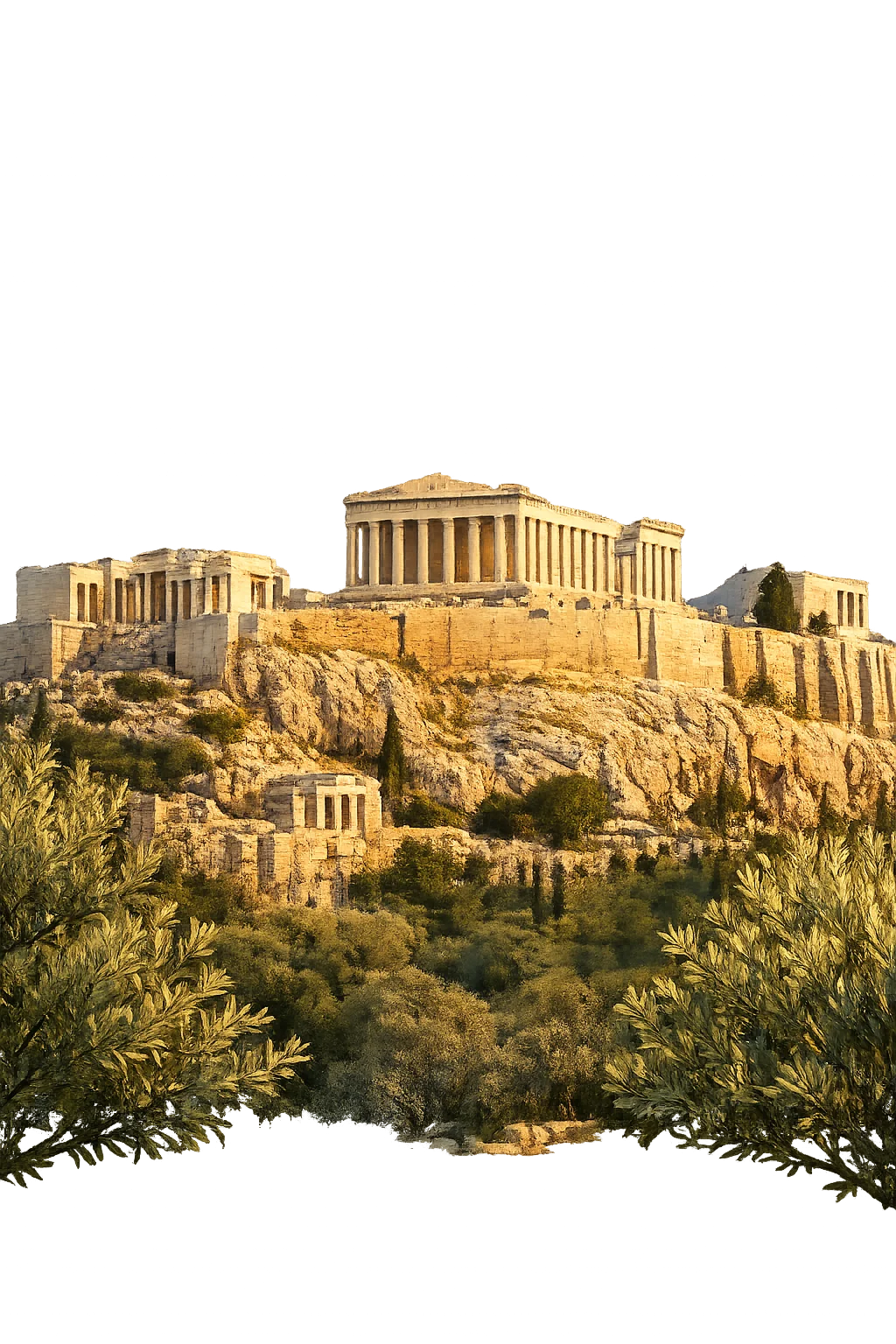
Roman visitors saw a Greek rival to be admired and plundered; the Roman forum at Athens and the Temple of Olympian Zeus testify to imperial cohabitation. Byzantine Athens shrank around the Parthenon, converted into a church to the Virgin. Under Ottoman rule the Acropolis became a mosque and a gunpowder magazine. The nineteenth-century Kingdom of Greece reclaimed the city as its capital, and modern archaeology — from Heinrich Schliemann to the ongoing Acropolis Restoration Project — has made Athēnai a global symbol of classical revival.

Modern Legacy

Few city-names carry as much ideological weight as Athēnai.

The city's invented traditions — democracy, tragedy, philosophy, rhetoric, and the ideal of the citizen — became the common property of later Europe and the Americas. Terms such as 'politics', 'acropolis', 'agora', and 'Areopagus' still derive from Athenian institutions. Yet the legacy is double-edged: Athēnai also practiced slavery, excluded women and foreigners from citizenship, and built an empire. To invoke the city today is to inherit both its aspirations and its failures.

In the Earth

The Athenian Acropolis has yielded Mycenaean palace remains, Archaic korai, and the Periclean building program documented by the Acropolis Restoration Service. The Agora excavations of the American School of Classical Studies uncovered the Stoa of Attalos, the Bouleuterion, and the Tholos. Kerameikos preserves the Dipylon Gate and Demosion Sema, while the Long Walls and Piraeus harbor installations trace the city's maritime infrastructure.

05

The Meditation

What Athēnai means — beyond the dictionary

Athēnai is the name of an experiment that never quite ended. For a few generations on a small limestone hill, the city asked whether ordinary citizens — farmers, potters, rowers — could govern themselves, judge themselves, and write plays about themselves. The Assembly on the Pnyx, the jurors watching their water-clock, the choregoi funding tragedy: these were not decorations but the machinery of the idea. The city invented the vocabulary we still live in — politics, democracy, philosophy, history, rhetoric — and then demonstrated, in the Peloponnesian War, the price of the idea in hubris. Its own myths are honest about the cost: Erechtheus gives a daughter, Theseus dissolves the villages into one body, and the Parthenon marble is a tribute list. To restore the name Athēnai with its full Greek length is to remember that 'the city of Athena' was, before it was anything else, a decision — renewed at every assembly — to try.

06

Frequently Asked Questions

Common questions about Athēnai, City of Wisdom, and Unicode restoration

01How do you pronounce Athēnai?

In reconstructed pronunciation, Athēnai is /atʰɛ́ːnai/ — approximately 'ah-THAY-nahee' — aspirate the theta like an English 't-h', and hold the long vowel of the stressed syllable.

02What does Athēnai mean?

Athēnai means Of Athena in the greek-location tradition.

03What are the symbols of Athēnai?

Athēnai is associated with Olive tree (Athena's gift to the city, the source of wood, oil, and food, and the reason she won the contest with Poseidon), Owl (Athena's nocturnal bird, minted on coins and adopted as a symbol of wisdom and the city itself), Panathenaic peplos (The woven robe presented to Athena's statue every four years during the Great Panathenaia), The salt spring (Poseidon's trident-mark in the Erechtheion floor — the rejected gift kept forever beside Athena's olive as the memory of the contest (Herodotus 8.55)), The ten tribal heroes (Eponyms of Cleisthenes' ten tribes, whose statues grouped the notices, lawsuits, and dedications of the new democracy in the Agora).

04Why restore Athēnai in Unicode?

Plain ASCII athenai strips the stress, length, and script that make the name specific. Unicode restoration returns the name to its original written dignity.

05What is the most important myth about Athēnai?

“The Contest of Athena and Poseidon” — Athēnai is not merely a city; it is a mythic body shaped by gods, kings, and heroes. Its foundation stories explain why Athena's olive tree outranked Poseidon's salt spring, why its earliest kings were said to be born from the earth itself, why one king's daughter saved the state at the cost of her life, and why the city's unification became the political myth of democracy's favorite ancestor. The full telling lives on the lore page.

07

Scholarly Sources

The philological foundations of this restoration

Every claim on this page is grounded in established scholarship. The orthographic restorations follow disciplinary convention. The etymological chain follows the best available reference works. This is not invention — it is resurrection through scholarship.

Lexicography & Philology

  • Pape, W., & Benseler, G. E. Wörterbuch der griechischen Eigennamen. Braunschweig: Vieweg, 1884.
  • Barrington

Primary Texts

  • Apollodorus, Bibliotheca 3.14–3.15
  • Euripides, Erechtheus (fragments)
  • Plutarch, Theseus 24–25

Archaeology & Art History

  • Material evidence — iconography, inscriptions, and temple archaeology — for Athēnai and related cults.

Religious Studies

  • Herodotus, Histories 8.55
  • Thucydides, Histories 2.15, 2.36
  • Lycurgus, Against Leocrates 98–101
Return

The Surface Awaits

You have traced the name from its earliest attestation to its Unicode restoration. Now return to the myth. The story is where the name lives.

Back to Lore
Athēnai mascot