
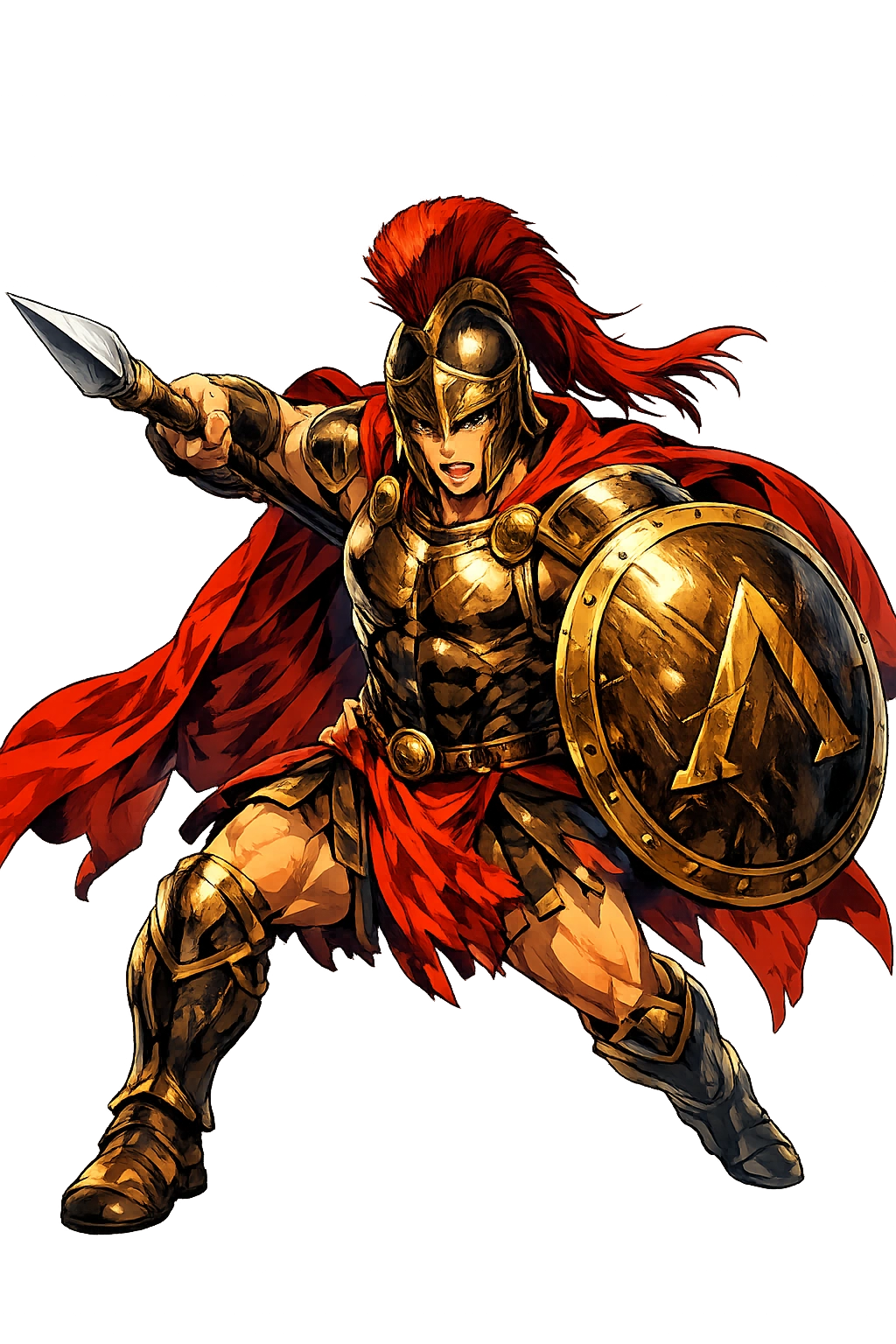
The appointments Árēs made — and who is keeping them
One myth is a story. A cycle of myths is a specification. Read Árēs's cycle in order and the industries fall out of it one by one.
At a Glance
- Temple: Árēs
- Pantheon: Greek
- Domain of influence: War, Courage, Battle Fury
- Pattern seats: 4
- Sectors touched: Commerce & Governance · Technology & Innovation · Culture & Entertainment
- Strongest seat: Defense, Military & Security
- Series: The Resonance Files, No. 48 of 546
The Cycle, Read Forward
Defense, Military & Security — through Struck by Diomedes
The Iliad gives the war god his definitive humiliation in Book 5 (855–909). Fighting for the Trojans, Árēs encounters the Greek Diomedes, into whom Athēnâ has poured strength and, most insulting, clear sight — the vision that lets a mortal look straight at gods.
The atlas states the seat in one line: War in its rawest form — battle fury, bloodlust, and the chaos of combat; the Greeks’ own name for the fight. The story above is the long version of the same sentence. That is the cycle working: story becomes duty, duty becomes trade.
Aviation & Aerospace — through Caught with Aphrodítē
In the song of Demodocus (Odyssey 8. 266–366), Hēphaistos discovers his wife Aphrodítē in bed with Árēs — because the all-seeing Hēlios tells him.
The atlas states the seat in one line: NASA's Ares launchers were built to carry crews Moonward under the war god's name. The story above is the long version of the same sentence. The trade thinks it is optimizing a process. It is re-enacting a charter.
Gaming, Fantasy & Entertainment IP — through The First Murder Trial on the Areopagus
A genuinely archaic myth makes Árēs the defendant in history’s first murder trial. Poseidôn’s son Halirrhothius raped Árēs’s daughter Alkippe; Árēs killed him on the spot and was charged by the sea-god before the assembled gods.
The atlas states the seat in one line: God of War built a franchise on his title and made him its first final boss. The story above is the long version of the same sentence. Industries do not invent their archetypes; they inherit them and call them best practice.
Legal, Justice & Compliance — through Kadmos Serves an Eternal Year
When Kadmos came seeking his sister Europa, a cow led him to a spring near what became Thebes — a spring guarded by a dragon called a son of Árēs (Apollodorus, Bibliotheca 3. 4.
The atlas states the seat in one line: The Areopagus — his hill — judged Athenian homicide for a millennium; myth makes its first defendant Árēs himself. The story above is the long version of the same sentence. The trade thinks it is optimizing a process. It is re-enacting a charter.
The Theme That Runs the Cycle
Árēs is the only major Olympian whom the other gods routinely humiliate. His myths share one thesis: war without wisdom is self-defeating. Beaten by mortals, trapped by craftsmen, and tried in a murder court, the war god survives as the Greeks' most honest portrait of violence — and even Zeús calls him hateful.
The Method, Stated Plainly
The atlas is not a horoscope. Seats are earned from the sources — argued, weighted, published — and every one of them can be challenged at the methodology page. A match that cannot survive an argument does not survive review. That is the whole trick: the patterns are claims, and claims can be tested.
For the Ones Who Work There
If you work in defense, military & security, aviation & aerospace, or any trade this temple holds a seat in, this is the honest version of what a placement means: your industry beside the story it has been re-telling all along — on the temple floor itself, before an audience that came specifically to read it. The patron tier and the advertising terms describe the mechanics; the resonance above describes the fit.
The File Continues
One of 546 Resonance Files — the series where the pantheon goes to work. Read the founding dispatch for the name, the Restoration File for the spelling, or the whole archive end to end.
Continue the series — previous: Archḗ (read it) · next: Arete (read it).
The Resonance Files are argued from the same canonical record as the pattern atlas itself: the lexicon, the lore catalog, and the cited sources. Every seat can be challenged at the methodology page — and the challenge is the point.