PuniCodex

Extended Lore

Ἄρης Árēs

Etymology · Orthography · Cult · Iconography · Reception · Sources

Tier 1 Árēs.com
Árēs — War, Courage, Battle Fury
01

Quick Facts

Essential information about Árēs, War, Courage, Battle Fury

Original ScriptἌρης
Unicode RestorationÁrēs
Reconstructed Pronunciation/á.rɛːs/
PantheonGreek
DomainWar, Courage, Battle Fury
MeaningBane, ruin (possibly from ἀρά)
ClassificationTier 1
Primary DomainÁrēs.com
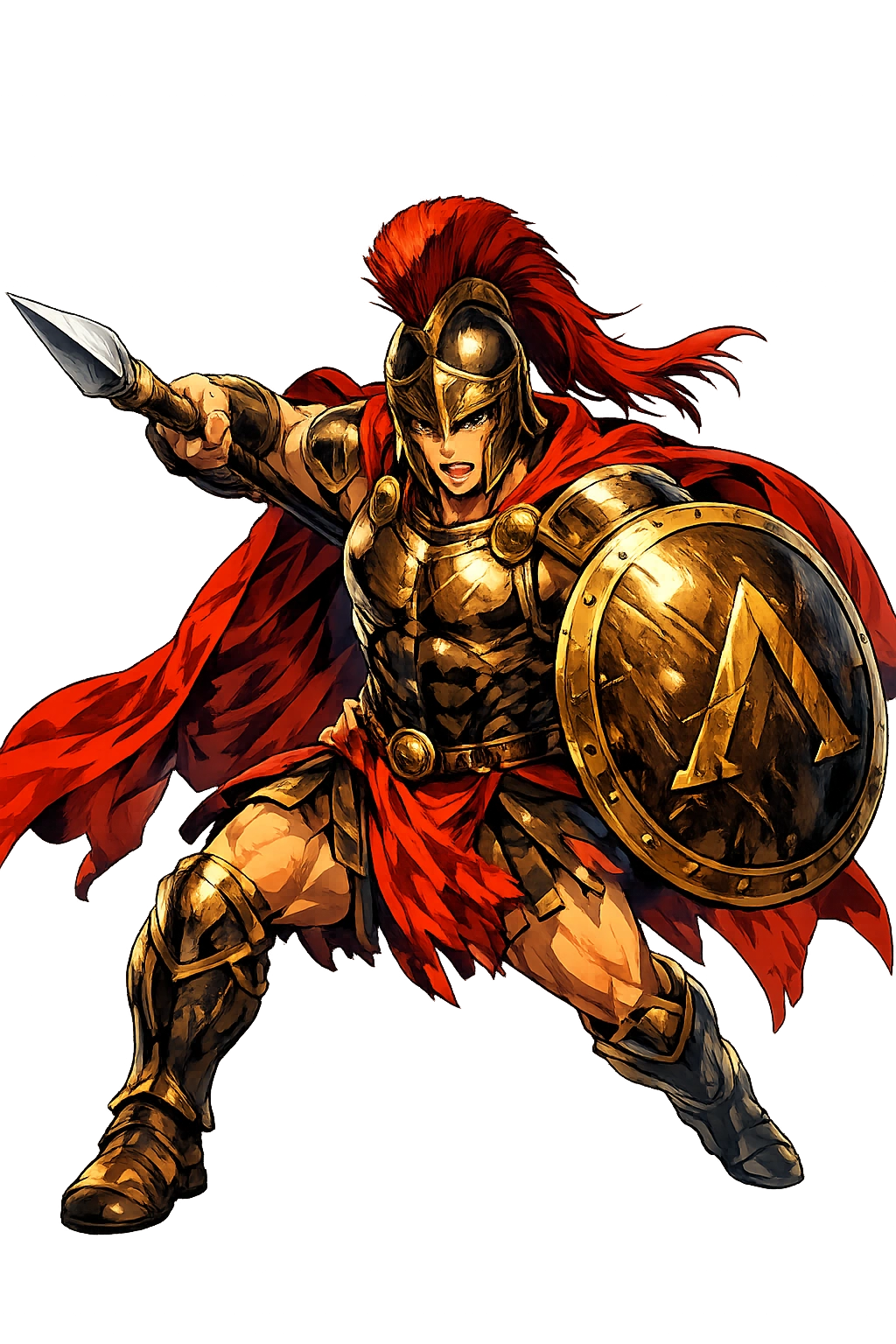
Sacred SymbolsSpear, Helmet, Shield, Vulture, Burning torch
02

Etymology & Word Family

From original script to Unicode restoration

Proto-indo-european *h₂erés- bane, ruin, curse
Original Script Ἄρης Árēs — "Bane, ruin (possibly from ἀρά)"
Unicode Restoration Árēs Restored stress, length, and script
Modern ASCII ares Plain-ASCII fallback

From Ἄρης, possibly from ἀρά "curse, prayer". Cognate with Avestan aēšma "demon of wrath".

03

Unicode Character Breakdown

Character-by-character philological analysis

CharacterUnicodeNameBlockPhonetic Role
ÁU+00C1Latin Capital Letter A with AcuteLatin-1 SupplementAcute on alpha
rU+0072Latin Small Letter RBasic LatinRho
ēU+0113Latin Small Letter E with MacronLatin Extended-AEta: long epsilon
sU+0073Latin Small Letter SBasic LatinSigma

The Tier 1 classification reflects how much of the original phonology this restoration preserves — stress and vowel length for Greek names, distinctive letters and diacritics for every other tradition.

04

Cult & Worship

How the sacred was kept — rites, sanctuaries, remains

The Cult

Ares' cult was real but thin, and the Greeks knew it. In mainland cities he rarely owned temples; Athens remembered him chiefly through the Areopagus, the hill named for his mythic murder trial. Where he flourished was the fringe. Herodotus reports that the Thracians worshipped no gods above Ares, Dionysus, and Artemis (5.7), and among the Scythians Ares was an ancient iron scimitar set on a platform of brushwood, offered yearly libations of wine and, in wartime, prisoners (4.62). The Spartans sacrificed a puppy to Enyalios — his warlike double or epithet — a rite of savage economy recorded by Pausanias (3.14.9). Theban tradition counted him among the city's ancestors through Harmonia, his daughter by Aphrodite. His cult persona matched his myths: martial potency honored at the margins of the polis, rarely at its hearth. The Homeric Hymn to Ares, a late address to the god as cosmic guardian, shows his image softening just as his cult faded.

In the Earth

The temple of Ares in the Athenian Agora, excavated by the American School, is a Roman-period reassembly of a Classical temple probably moved from Acharnae. Pausanias records sanctuaries of Ares at Geronthrae in Laconia and at Thebes. Thrace yielded weapons and horse-gear dedications to a martial deity identified with Ares. The Ares Borghese type (Louvre), once thought an Ares by Scopas, preserves his bearded, helmeted image in Roman marble.

05

Iconography

How Árēs was imaged across the ages

The Image

Ares is the easiest Olympian to recognize and the least often shown alone: the fully armed hoplite, spear in hand, bearded and crested through the Archaic and early Classical periods — one deity among the rows of gods on vase paintings and temple friezes. From the mid-fifth century art begins to unarm him. The Ludovisi Ares (Palazzo Altemps, Rome), a Roman copy of a fourth-century original, seats him at rest, one hand trailing from his shield, a child Eros playing at his feet — war softened by love generations before the moralists noticed. The Ares Borghese (Louvre) keeps helmet and shield but lounges him, weight on one leg, an athlete of slaughter off duty. Vase painters preferred him in company: netted with Aphrodite, fighting in Gigantomachy files, or striding into battle. The Greeks imaged war honestly — armored, adult, and never far from either ridicule or desire.

06

Reception & Transformation

The name after its own age — transmission, translation, survival

Afterlives

Ares travelled as a problem. Where his Roman face passed into planetary astrology, the Greek war god himself survived almost entirely in Homer's text — the god Zeus calls hateful, wounded by a mortal, laughed at in adultery — recopied through Byzantine scholia and retranslated by every generation, from Chapman's 1611 Iliad to Pope's and beyond. Roman copies of his unarming — the Ludovisi and Borghese types, collected by Grand Tourists — put the softened god back into European palaces, and Renaissance mythography puzzled over why the Greeks so despised a power Rome so honored. Modern scholarship made the contempt itself the subject: from Erwin Rohde onward, and through Walter Burkert's Greek Religion and Jean-Pierre Vernant's work on the Greek warrior, scholars have asked what civic piety it took to exile the personification of war from the city's altars. Ares survives less as an image than as a question — the point where Greek honesty about violence meets its fear.

Identifications Across Traditions

The Romans identified Árēs with Mars, but the equation was imperfect. Mars was an agricultural as well as military god, far more central to Roman state religion than Árēs ever was to Greek civic life. The Roman March (Martius) and Tuesday in Romance languages preserve his name. In later European art, Mars became one of the seven planets and a standard allegory of war. The contrast between Greek contempt for Árēs and Roman reverence for Mars reveals how differently the two cultures understood organized violence.

Modern Legacy

Árēs is the god we prefer not to invoke. Modern culture usually portrays him as a villain or a brute, while Athena gets the credit for strategic warfare. Yet his honesty is valuable: he represents war as it actually is — chaotic, bloody, and often stupid. The Spartans, who worshipped him more than other Greeks, understood that courage is a virtue even when wisdom is absent. In an age of permanent conflict, Árēs reminds us that not all wars are just, and that the god of battle is not the god of victory.

07

The Meditation

What Árēs means — beyond the dictionary

Árēs is the god of violence without justification. He does not defend cities like Athēnâ; he simply fights, and the Iliad never once praises him. The Greeks were clear-eyed about him because they understood that war is sometimes necessary but never noble in itself. A soldier needs courage; a general needs judgment. Árēs supplies only the first, and Zeús calls him hateful for it.

Modern culture prefers its war gods subtle or invisible. Árēs refuses subtlety. The restoration of his name — short, pitched, and final — declines to sanitize the ancient world’s most honest admission: that the appetite for war is divine, eternal, and very often stupid.

08

Screen & Culture

Where Árēs echoes through film, television, and games — and how

09

Frequently Asked Questions

Common questions about Árēs, War, Courage, Battle Fury, and Unicode restoration

01How do you pronounce Árēs?

In reconstructed pronunciation, Árēs is /á.rɛːs/ — approximately 'AH-rays' — the first syllable is sharp and pitched high, like a command to charge.

02What does Árēs mean?

Árēs means Bane, ruin (possibly from ἀρά) in the greek tradition.

03What are the symbols of Árēs?

Árēs is associated with Spear (His constant attribute in art and epic; with it he strides the field at Troy, and with it Diomedes wounds him in Iliad 5.), Helmet (The crested bronze casque; on the Ares Borghese (Louvre) he lounges in helmet and shield — war at rest.), Shield (The hoplite's aspis; Homer marks his status by giving him attendants to carry his war-gear.), Vulture (The battlefield scavenger; in the Iliad's vulture-similes its arrival is the war's signature sound.), Burning torch (The brand of the sack — war as fire, the element the Iliad has Árēs breathe around the field.).

04Why are there different spellings of Árēs?

Each form is a historically attested restoration rather than a mistake: Arēs is the macron-only form (LSJ convention: length only, no acute). PUNICODEX registers the full set so the tradition is preserved under every defensible spelling.

05Why restore Árēs in Unicode?

Plain ASCII ares strips the stress, length, and script that make the name specific. Unicode restoration returns the name to its original written dignity.

06What is the most important myth about Árēs?

“Struck by Diomedes” — the The Wounding story that anchors the mythology of Árēs, told in full on the lore page.

10

Scholarly Sources

The philological foundations of this restoration

Every claim on this page is grounded in established scholarship. The orthographic restorations follow disciplinary convention. The etymological chain follows the best available reference works. This is not invention — it is resurrection through scholarship.

◈

Lexicography & Philology

  • Liddell, H. G., Scott, R., & Jones, H. S. A Greek-English Lexicon. Oxford: Clarendon Press, 9th ed. 1996.
  • Pape, W., & Benseler, G. E. Wörterbuch der griechischen Eigennamen. Braunschweig: Vieweg, 1884.
  • Beekes, R. S. P. Etymological Dictionary of Greek. Leiden: Brill, 2010.
◎

Primary Texts

  • Homer, Iliad 5 and 18
  • Homer, Odyssey 8
  • Homeric Hymn to Ares
  • Apollodorus, Bibliotheca 3.4 and 3.14
◉

Archaeology & Art History

  • Material evidence — iconography, inscriptions, and temple archaeology — for Árēs and related cults.
✦

Religious Studies

  • Comparative studies of greek religion and the place of Árēs within it.
Return

The Surface Awaits

You have traced the name from its earliest attestation to its Unicode restoration. Now return to the myth. The story is where the name lives.

Back to Lore
Árēs mascot