
Stress-testing Ahriman: do the industry seats hold?
Audit: Ahriman, seat by seat. The atlas makes claims; the myths decide which ones stand. This is the record of what held.
At a Glance
- Temple: Ahriman
- Pantheon: Zoroastrian
- Domain of influence: Evil, Destruction, Lies
- Pattern seats: 3
- Sectors touched: Society & Spirit · Culture & Entertainment
- Strongest seat: Funerary & Memorial Services
- Series: The Resonance Files, No. 11 of 548
The Test
Seat 1: Funerary & Memorial Services
Claim: Primary seat: Ahriman embodies evil, destruction, lies — the core of funerary memorial. Exhibit: The Two Spirits at the First Dawn — The oldest stratum of Zoroastrian scripture is not a battle story but a choice.
Verdict: stands. Strip both to their function and the functions match.
Seat 2: Gaming, Fantasy & Entertainment IP
Claim: Resonant seat: Ahriman shares symbolic territory with gaming entertainment. Exhibit: The Assault on the Sky — The Sasanian Greater Bundahišn (ch.
Verdict: stands. Strip both to their function and the functions match.
Seat 3: Astrology, Tarot & Esoteric Services
Claim: Resonant seat: Ahriman shares symbolic territory with occult esoteric. Exhibit: Counter-Creation — Ahriman's characteristic act in the Bundahišn is not creation but counterfeiting.
Verdict: stands. Strip both to their function and the functions match.
The Control Group
Against the seats that survived, one control: the temple's own summary of its figure — Ahriman's mythology is the drama of Zoroastrian dualism: a spirit of destruction who chooses evil at creation's dawn, assaults the sky, counterfeits every good thing, and is finally bound. The seats do not drift far from it. That is the audit's cleanest result.
The Method, Stated Plainly
Skeptical? Good — the system is built for you. Every seat in this file carries its why-line and its weight, the full derivation is public at the methodology page, and the challenge process is part of the design. Falsifiable is not a posture here; it is the mechanism.
For the Ones Who Work There
For a sponsor in funerary & memorial services, the fit here is not adjacency — it is inheritance. Your trade already tells this story every working day; the temple simply holds the original. The patron tier and the advertising terms carry the mechanics; the myths above carry the reason.
The Emblems at Work
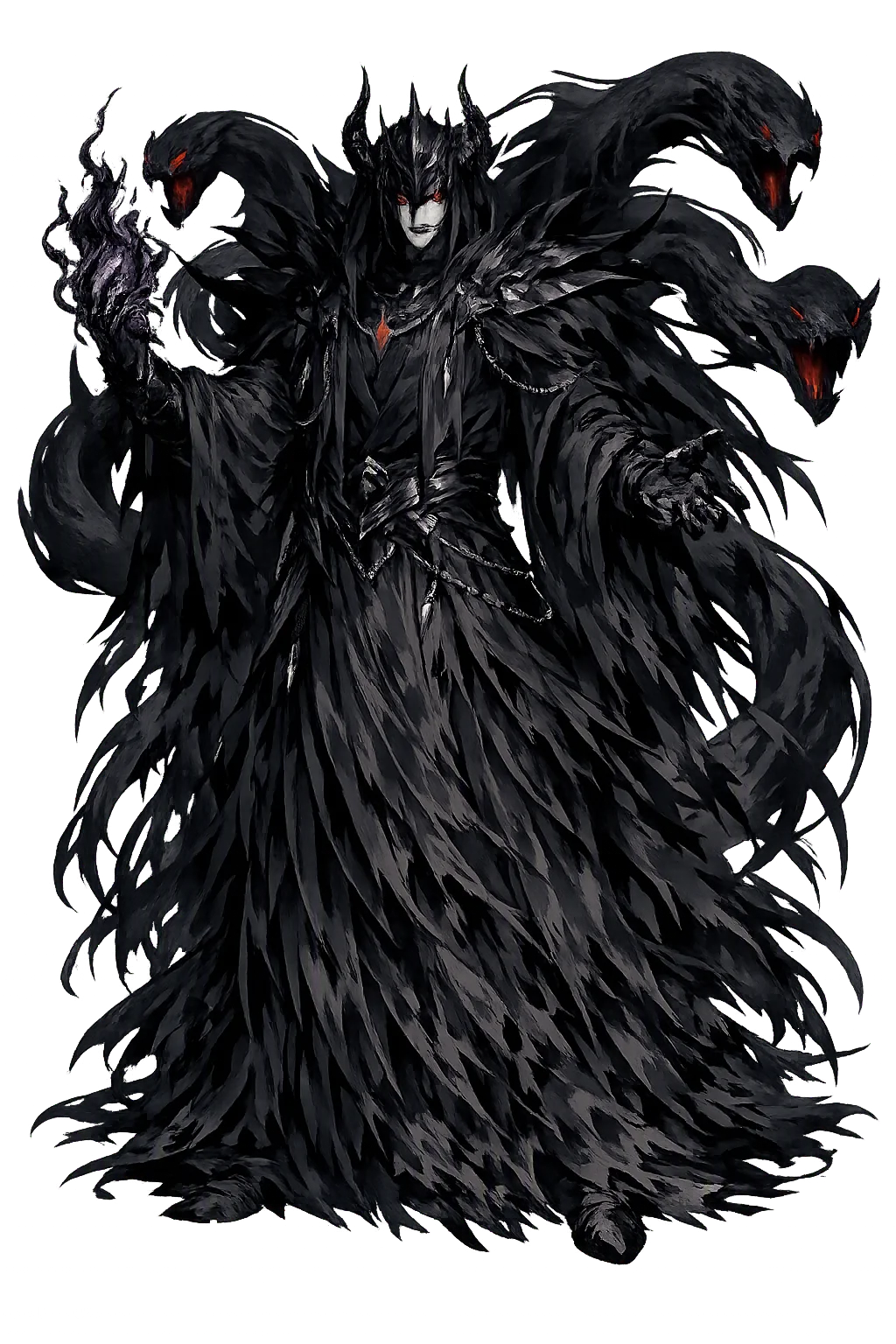
The dragon Aži Dahāka — The three-mouthed, three-headed, six-eyed dragon he loosed against creation (Yasna 9.8; Yašt 9) — winter and lie made monster; Druj, the Lie — Deception as his true weapon — the dark counterpart of Aša, the order and truth that hold the good creation together; The north — The direction of his assault on the sky: he broke in from the north, the realm of cold and darkness (Bundahišn). Watch for these emblems in the trades above; they show up in more logos than their owners realize.
The Long Employment
Ahriman never had a cult — no sane theology worships the Lie — yet his legacy is immense. In New Persian ahriman became an ordinary word for devil, and in Zoroastrian liturgy his name is ritually cursed to this day.
The Tradition Behind the Trade
Ahriman belongs to Zoroastrian, the tradition that first framed the world as a choice between truth and the lie. The pattern atlas reads that tradition's functions into the modern economy with the same discipline a critical edition would — argued, weighted, and published for challenge.
The File Continues
This is one of 548 Resonance Files — the third dispatch from every flagship temple, where the myths meet the markets. The temple's founding dispatch tells the name's story; its Restoration File tells the spelling's; the blog index holds the whole archive.
Continue the series — previous: Aganjú (read it) · next: AhuraMazdā (read it).
The Resonance Files are argued from the same canonical record as the pattern atlas itself: the lexicon, the lore catalog, and the cited sources. Every seat can be challenged at the methodology page — and the challenge is the point.