
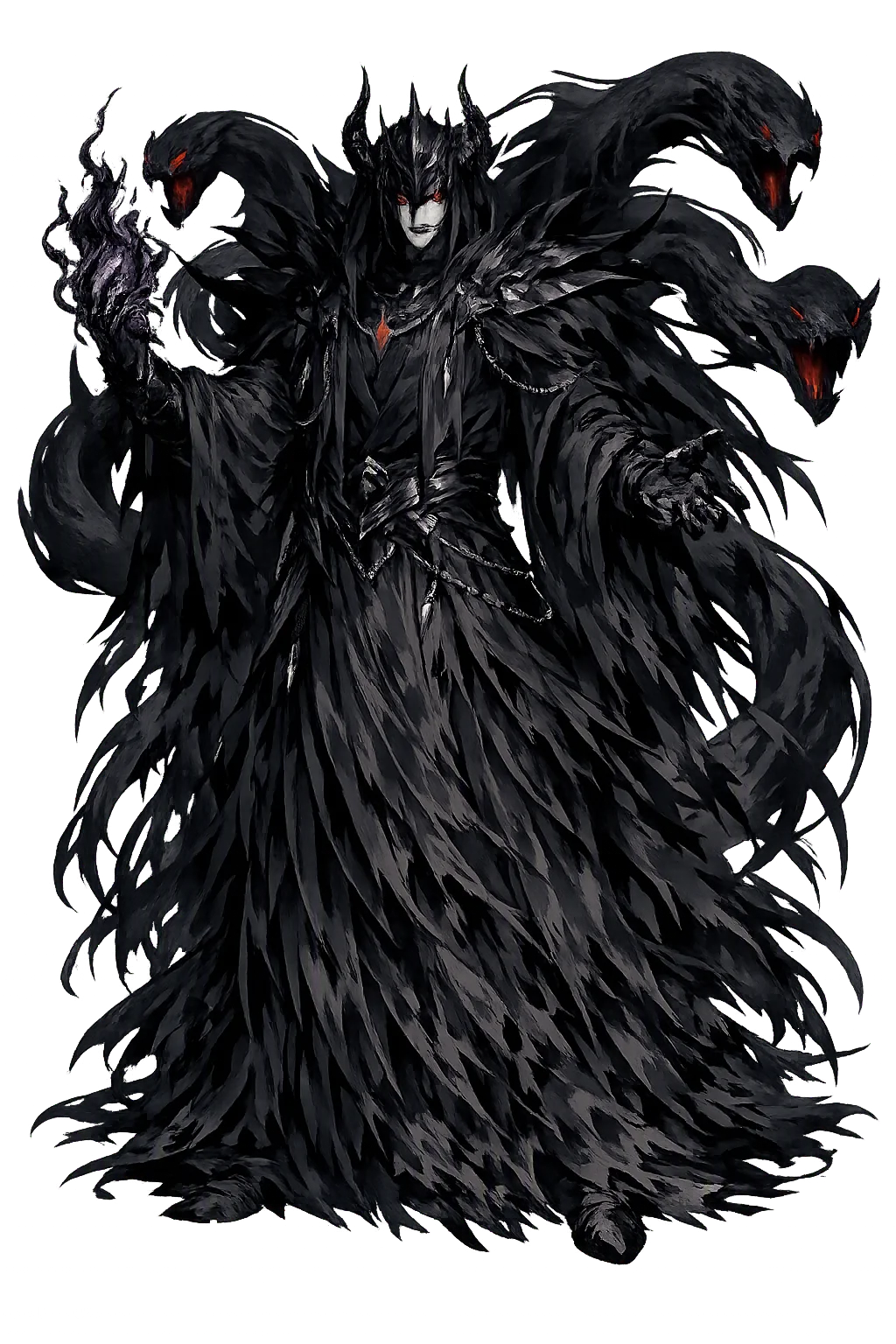
Ahriman: The Destructive Spirit and the Unicode Restoration of Zoroastrian Evil
In the architecture of ancient thought, few names carry as much explanatory weight as Ahriman. He is not merely a villain or a personification of malice; in Zoroastrian cosmology he is the structuring principle of everything that opposes creation, truth, and life. To speak the name is to invoke a philosophical problem as old as recorded religion: why does destruction exist alongside order, and why do lies seem to flourish beside the truth? For more than two millennia, Ahriman has been the answer that Zoroastrian tradition gave to that question, and in 2026 the name has acquired a new kind of relevance. As the internet becomes the primary public square for cultural memory, the spelling we use for a name determines whether its full history is visible or flattened. The ASCII string ahriman is a routing convenience; the restored form Ahriman is a scholarly and cultural act. This post traces the name from its Avestan roots through the rise and fall of empires, into the present moment where a Unicode domain can once again give the figure the dignity of his proper form.
At a Glance
- Restored name: Ahriman
- ASCII form: ahriman
- Meaning: "Evil spirit, destructive mind"
- Domain of influence: Evil, Destruction, Lies
- Pantheon: Zoroastrian
- Classification: Tier 2
- Original script: 𐬀𐬢𐬭𐬀 𐬨𐬀𐬌𐬥𐬌𐬌𐬎 (Avestan)
Overview
Ahriman belongs to the Zoroastrian tradition as the adversary of Ahura Mazda, the wise lord who creates and sustains the cosmos. Where Ahura Mazda is associated with light, truth, order, and life, Ahriman stands for darkness, falsehood, chaos, and death. This opposition is not incidental; it is the central axis around which the entire Zoroastrian worldview turns. Every moral choice made by a human being is understood to participate in a cosmic struggle between these two powers. The name Ahriman therefore does more than label a mythological character. It names a force that Zoroastrian theology locates at the root of suffering, disease, drought, predation, and every distortion of truth.
The figure is best known to scholars under his Avestan name, Angra Mainyu, which means approximately "destructive spirit" or "hostile spirit." Over the centuries, as the Old Iranian languages evolved into Middle Persian under the Parthian and Sasanian empires, Angra Mainyu became Ahriman, the form that dominated later theological texts such as the Bundahishn. The transformation of the name mirrors a broader transformation in how the figure was imagined: from a spirit who chooses destruction at the beginning of time to an almost metaphysical principle of evil whose eventual defeat is written into the structure of creation. Understanding that linguistic journey is essential for anyone who wants to understand why the restored spelling matters today.
Etymology and the Name
The Avestan form of the name, Angra Mainyu, is composed of two elements. The first, angra-, means "destructive," "hostile," or "afflicting." It is related to words in other Indo-Iranian languages that convey twisting, pressing, or strangling, and it carries a sense of something that damages by distortion. The second element, mainyu-, means "spirit," "mind," or "disposition." In Zoroastrian usage it can refer to a spiritual being of either good or evil inclination, depending on the adjective that accompanies it. Ahura Mazda himself is described as Spenta Mainyu, the holy or bounteous spirit, while Ahriman is Angra Mainyu, the destructive one. The contrast is therefore built into the grammar of the names.
By the Middle Persian period, the form had simplified to Ahriman. The initial aŋgr- lost its nasal cluster and the medial consonants settled into the smoother sequence that became familiar in later Zoroastrian literature. Pahlavi texts write the name in their distinctive script, and Islamic-era Persian sources such as the Shahnameh preserve the figure under related forms. European scholarship recovered the older Avestan name through the painstaking decipherment of the Avesta in the nineteenth century, but the traditional form Ahriman never disappeared from use. It remains the name by which the figure is known in living Zoroastrian communities and in global popular culture.
The meaning usually given for Ahriman in the PuniCodex lexicon, "Evil spirit, destructive mind," captures both the etymology and the theology. Ahriman is not simply an evil being; he is a destructive orientation of mind. His weapon is not only violence but also the lie, the corrupted word that turns creatures away from truth. This is why the name cannot be reduced to a mere label for moral badness. It points to a whole psychology and cosmology of negation.
Mythology and Domain
The mythology of Ahriman is recorded across a wide span of texts, from the Gathas, the oldest poems attributed to Zarathustra himself, to the encyclopedic Bundahishn compiled under Sasanian rule. In the earliest layers, Ahriman is one of two primordial spirits who make a choice. At the beginning of time, the two twins who are named in some passages as spirits of mind or spirit decide independently whether to embrace truth or falsehood. One chooses asha, truth and order, and becomes the creator and protector of life. The other chooses druj, the lie, and becomes the author of destruction. This choice is decisive and irreversible, and it sets the entire drama of the cosmos in motion.
In later Pahlavi literature, especially the Bundahishn, the story becomes more elaborate. Ahriman is said to dwell in the abyss of darkness below the material world. When he sees the light of Ahura Mazda's creation, he rushes upward to attack it, driven by envy and the impulse to destroy. He penetrates the cosmos and introduces death, disease, predators, drought, cold, and every form of disorder. The world as we experience it is therefore a mixture: it is fundamentally good because Ahura Mazda created it, but it is wounded because Ahriman has invaded it. Every natural evil is interpreted as a trace of that primordial assault.
Ahriman's domain is not limited to physical destruction. His most dangerous weapon is the lie. In Zoroastrian ethics, druj is the fundamental wrong, and truthfulness is the highest virtue. The figure of Ahriman thus represents everything that obscures reality, corrupts language, and turns human beings against one another. This emphasis on the lie gives Zoroastrian demonology a distinctive character. Demons are not merely frightening monsters; they are personifications of false belief, bad conscience, and social disorder. Ahriman stands at the head of this host as the arch-deceiver.
The mythology also has an eschatological dimension. At the end of time, according to Zoroastrian tradition, Ahriman will be finally defeated. The Saoshyant, the savior figure, will come, the dead will be resurrected, and the forces of truth will purify the world of evil. Ahriman and his demons will be destroyed or neutralized, and creation will be restored to its original perfection. This narrative of cosmic struggle, fall, and final restoration exercised enormous influence on the religious imagination of the ancient Near East and beyond.
Zurvanism and the Problem of Evil
One of the most fascinating chapters in the history of Ahriman is the Zurvanite interpretation. In orthodox Zoroastrian theology, Ahura Mazda and Ahriman are usually understood as independent powers, with Ahura Mazda as the uncreated creator of good and Ahriman as the independent originator of evil. This raises a difficult question: if Ahura Mazda is all-good and all-powerful, how can an independent evil power exist? Different thinkers answered this question in different ways, and one influential answer was Zurvanism.
According to the Zurvanite myth, recorded in sources that are mostly hostile to it, both Ohrmazd and Ahriman were born from a primordial deity named Zurvan, meaning "Time" or "Infinite Time." Zurvan had promised the kingdom to the firstborn twin, but Ahriman forced his way out of the womb first. Ohrmazd was born second, yet he was the rightful heir. This myth explains the origin of evil as a kind of primordial mistake or usurpation, while still preserving the ultimate sovereignty of time. Zurvanism was never the dominant form of Zoroastrianism, and orthodox priests rejected it as a heresy. But it had considerable influence in late antiquity and attracted the interest of both Christian and Manichaean writers.
The Zurvanite episode shows that Ahriman was not simply a fixed symbol of evil. He was a problem around which theologians argued. The question of his origin, his power, and his eventual defeat was inseparable from the larger question of how to understand the suffering and disorder in the world. In this respect, Ahriman functioned much like the problem of evil in later philosophical theology. He was the test case for any account of the cosmos that wanted to affirm both the goodness of the divine and the reality of evil.
Cultural Legacy
The figure of Ahriman left a deep imprint on the history of religions. The stark dualism of good and evil spirits, light and darkness, truth and lies, provided a template that influenced Jewish, Christian, and Muslim apocalyptic literature. Although direct borrowing is difficult to prove in every case, the cultural prestige of the Persian empire ensured that Zoroastrian ideas circulated widely across the ancient world. The figure of Satan in later Abrahamic traditions shares some functions with Ahriman, even if the theological details differ. Both are adversaries of the supreme deity, both are associated with deception, and both are destined for final defeat.
Manichaeism, the religion founded by the Persian prophet Mani in the third century CE, took the dualistic impulse even further. Mani explicitly drew on Zoroastrian, Christian, and Buddhist sources to construct a cosmos in which light and darkness were locked in an equally matched struggle. For Manichaeans, the human body was a prison created by the forces of darkness from particles of trapped light, and salvation meant liberating that light. This radical dualism alarmed both Christian and Zoroastrian authorities, and Manichaeism was persecuted by both. Yet it spread from the Mediterranean to China and survived for centuries, a testament to the enduring power of the Ahriman-like figure.
In the Islamic world, the figure of Ahriman survived in literature and folklore. Ferdowsi's Shahnameh, the great Persian epic, dramatizes the conflict between Iran and its enemies in terms that echo the older cosmological struggle. Later Sufi and philosophical traditions reinterpreted evil in more subtle ways, often treating it as the absence or privation of good rather than as an independent power. But the name Ahriman continued to evoke the reality of moral opposition to the divine.
Modern scholarship has also kept the name alive. Archaeologists and historians of religion study the Sasanian rock reliefs and inscriptions for evidence of how the empire understood the struggle between Ohrmazd and Ahriman. Linguists trace the name through Iranian languages. And in popular culture, Ahriman appears in fantasy literature, role-playing games, and films as a generic name for ultimate evil, sometimes with little awareness of the Zoroastrian background. The PuniCodex restoration is a small but meaningful counterweight to that flattening, insisting that the name carries a specific history.
Ahriman in Art and Iconography
The visual representation of Ahriman has varied across the centuries. In Sasanian art, the cosmic struggle between Ohrmazd and Ahriman was a favorite theme for royal monuments. The investiture reliefs at Naqsh-e Rustam and elsewhere show the king receiving authority from a divine figure, while symbolic representations of evil are trampled or defeated. These images were not merely decorative. They were political statements, asserting that the Sasanian king was the earthly agent of the divine order against the forces of chaos.
In later Persian miniature painting and manuscript illustration, demonic figures often draw on the older Ahriman imagery, even when they serve Islamic or literary narratives. The conventions of horned heads, distorted bodies, and dark colors could be applied to any adversary, but their genealogy reaches back to the Zoroastrian demonology. The figure of Ahriman thus lived a kind of double life in Iranian culture: officially rejected as a false cosmology, yet visually and imaginatively persistent.
Modern artists have also returned to Ahriman, sometimes in the service of explicitly Zoroastrian revivalism, sometimes as a symbol of existential evil. The name carries enough resonance that it can serve both purposes. Whether in a scholarly monograph, a metal album, or a fantasy novel, Ahriman continues to name the shadow side of reality.
Ahriman and the Modern Imagination
The name Ahriman continues to circulate far beyond the boundaries of academic Zoroastrian studies. In fantasy literature, role-playing games, and heavy metal music, Ahriman often appears as a shorthand for absolute evil, a dark lord whose name can be invoked without any reference to the ancient Iranian context. This popular usage is neither surprising nor entirely wrong. The figure has always been meant to evoke the shadow side of reality, and any symbol of radical evil will naturally attract artists who want to explore the limits of human experience. But the popular flattening also carries a cost. When Ahriman becomes just another villain name, the specific theological claims that make the figure interesting are lost.
Modern philosophers have also engaged with the problem that Ahriman represents. The question of why evil exists in a world created by a good deity is one of the oldest and most persistent problems in the philosophy of religion. While few philosophers today would frame the issue in Zoroastrian terms, the dualistic intuition behind Ahriman remains attractive to anyone who finds the idea of a purely private or accidental evil unsatisfying. There is something in human experience that wants to name evil as a force, not merely as an absence. Ahriman gives that impulse a classical form.
In Iran and among Zoroastrian communities, the name carries additional layers of meaning. For Iranian nationalists and cultural revivalists, the figure of Ahriman can become a symbol of everything that threatens Iranian civilization, whether foreign invasion, moral corruption, or environmental destruction. For practicing Zoroastrians, Ahriman is a real spiritual danger to be opposed through prayer, ritual, and ethical action. These modern meanings are not identical, but they all depend on the same ancient name. Restoring the spelling is one way of keeping those meanings distinct and legible.
The Unicode Restoration
The PuniCodex entry for Ahriman is classified as Tier 2 because the restored form Ahriman does not add diacritics or distinctive letters that the plain ASCII form ahriman would lose. The difference is primarily one of capitalization and scholarly convention. Yet that difference is not trivial. In the original domain-name system, only ASCII lowercase letters were permitted, so ahriman became the only registrable form. The result was that a name of immense theological and cultural importance was forced into the same anonymous lowercase mold as every other domain.
Unicode Internationalized Domain Names change that equation. They allow human-readable forms from any writing system to be encoded as domains, even though the underlying DNS still uses ASCII-compatible punycode. The restored form Ahriman therefore becomes addressable. A visitor who sees the name in the address bar sees the capitalized, culturally dignified form rather than the stripped-down ASCII compromise. This matters for search engines, for AI training corpora, and for the simple reason that human beings should encounter cultural names in forms that respect their history.
The PuniCodex temple at its temple is not merely a landing page. It is an argument that the digital infrastructure of the twenty-first century can accommodate the full range of human naming. Ahriman, the spirit who denies and destroys, ironically becomes a test case for whether the internet can preserve rather than erase. If a name so old, so theologically charged, and so culturally specific can be restored, then the promise of Unicode begins to look real.
Conclusion
Ahriman is not a safe name. He represents everything that theology, ethics, and cosmology warn against. But precisely because the name is so loaded, its restoration matters. To write Ahriman instead of ahriman is to refuse the flattening of a complex tradition into a string of lowercase characters. It is to say that evil, destruction, and the lie are serious enough to be named properly. In a digital environment where names are often treated as interchangeable tokens, the PuniCodex restoration of Ahriman is a small act of fidelity to one of the oldest and most influential religious imaginations in human history. The destructive spirit still has much to teach us, beginning with the lesson that even his name deserves to be spelled with care.
Related Names
- AhuraMazdā — Supreme Creator, Wisdom, Light
- Amərətāt — Immortality, Plants
- Anāhitā — Fertility, Water, Wisdom
- Aša — Truth, Righteousness, Cosmic Order
- Ašavahišta — Truth, Righteousness, Fire
Sources
- Mary Boyce, Zoroastrians: Their Religious Beliefs and Practices (1979).
- J. Darmesteter (trans.), The Zend-Avesta, Sacred Books of the East vols. 4 & 23 (1880–1883).
- Prods Oktor Skjærvø, The Zoroastrian Oral Tradition as Reflected in the Texts (2003).