PuniCodex

Extended Lore

Zmey Gorynych

Etymology · Orthography · Cult · Iconography · Reception · Sources

Tier 2 Zmey Gorynych
Zmey Gorynych — Three-Headed Dragon
01

Quick Facts

Essential information about Zmey Gorynych, Three-Headed Dragon

Scholarly TransliterationZmey Gorynych
Unicode RestorationZmey Gorynych
Reconstructed Pronunciation/zmʲej ɡɐˈrɨ.nɨtɕ/
PantheonSlavic
DomainThree-Headed Dragon
MeaningMountain dragon
ClassificationTier 2
Primary DomainZmey Gorynych
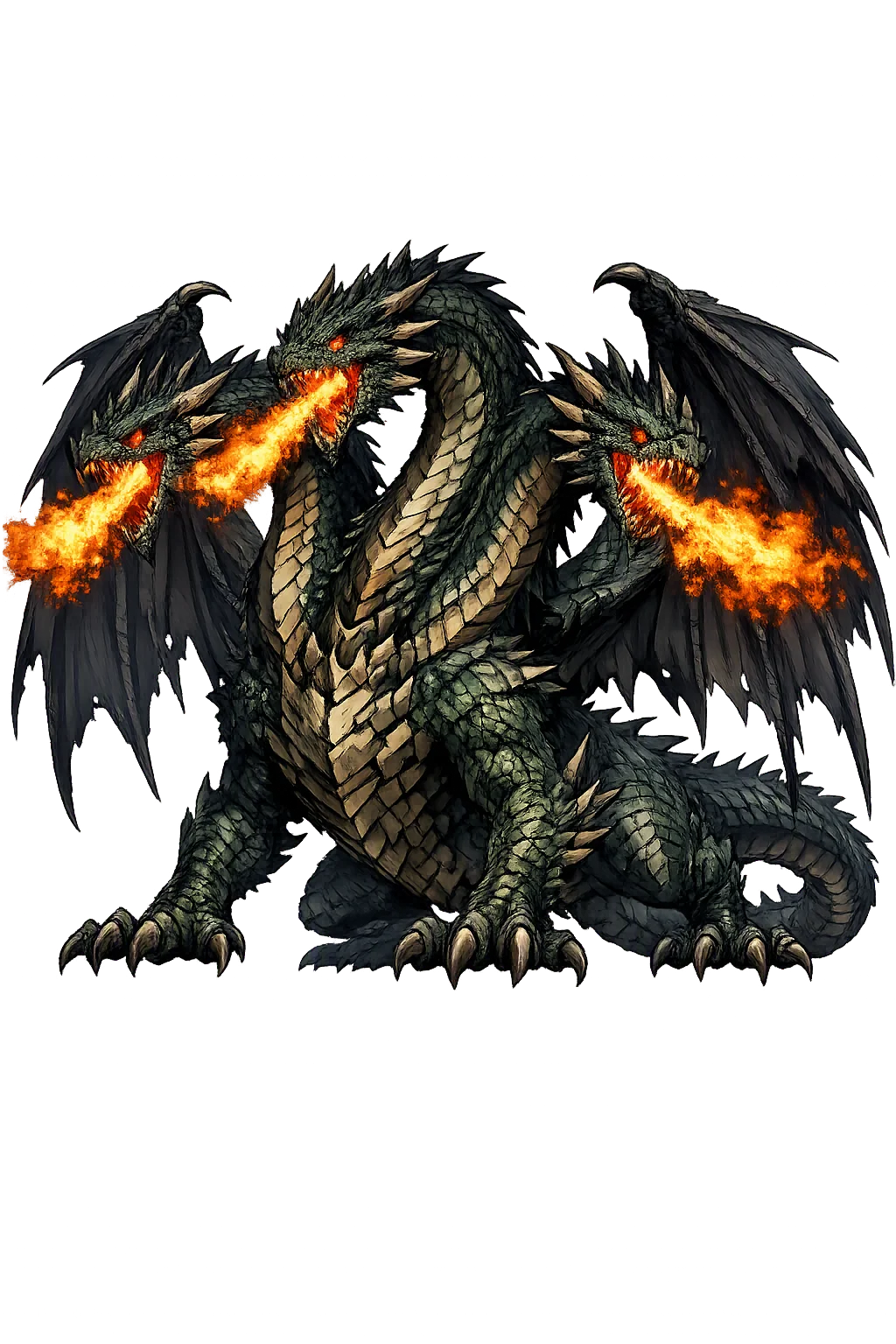
Sacred SymbolsThree fire-breathing heads, The Sorochinsky mountains, The wet women's hat (mokryi golvnik), The burnt neck-stumps, The serpent's river
02

Etymology & Word Family

From original script to Unicode restoration

Scholarly Transliteration Zmey Gorynych Zmey Gorynych — "Mountain dragon"
Unicode Restoration Zmey Gorynych Canonical scholarly spelling — ASCII-identical
Modern ASCII zmeygorynych Plain-ASCII fallback

The name Zmey Gorynych reaches the modern world through scholarly transliteration of the slavic tradition. Because the conventional spelling uses only Latin letters, its Unicode and ASCII forms coincide — the tradition it carries is in the name itself, not in diacritics.

03

Unicode Character Breakdown

Character-by-character philological analysis

CharacterUnicodeNameBlockPhonetic Role
ZU+005ALatin Capital Letter ZBasic LatinSame, capitalized
mU+006DLatin Small Letter MBasic LatinSame
eU+0065Latin Small Letter EBasic LatinSame
yU+0079Latin Small Letter YBasic LatinSame
GU+0047Latin Capital Letter GBasic LatinSame, capitalized
oU+006FLatin Small Letter OBasic LatinSame
rU+0072Latin Small Letter RBasic LatinSame
yU+0079Latin Small Letter YBasic LatinSame
nU+006ELatin Small Letter NBasic LatinSame
yU+0079Latin Small Letter YBasic LatinSame
cU+0063Latin Small Letter CBasic LatinSame
hU+0068Latin Small Letter HBasic LatinSame

The Tier 2 classification here reflects fidelity to the attested tradition, not recovered diacritics: every character of Zmey Gorynych already survives in ASCII. What the restoration preserves is the canonical spelling itself — the form scholarship standardised.

04

Cult & Worship

How the sacred was kept — rites, sanctuaries, remains

The Cult

Zmey Gorynych was never worshipped, and no sanctuary, festival, or priesthood was ever his: he is the adversary of the ritual year, not its patron. What the evidence preserves is the inverse of a cult — a calendar of precautions aimed at the dragon-class he belongs to. In Russian folk belief as documented by Ivanits and others, the zmei were storm-serpents whose battles with the thunder god were expected on Thursday, Perun's day, and whose anger came back as hail and cloudburst over the fields. The rites of the green week (Semik) and of Yuri's Day, the spring feast of St George, walked the village boundary with song and greenery to hold the serpent's wilderness outside the sown land, and the icon veneration of St George absorbed whatever protective force the old serpent-fight had carried. Where the dragon enters calendrical custom he is bound, mocked, or driven off — propitiated at most, never adored. Modern Rodnoverie ritual dramas cast the dragon as Perun's chthonic foe; that is twentieth-century reconstruction, unattested before it.

In the Earth

No monument names Zmey Gorynych; the evidence is textual and pictorial rather than excavated. The dragon lives first in manuscripts — Kirsha Danilov's mid-eighteenth-century collection, the Kireevsky recordings of the 1860s, and the later Gil'ferding expedition collections from the Russian north. He lives second in the folk image: lubok woodcuts of the dragon fight sold at fairs from the seventeenth century onward, and the iconographic type of St George and the Dragon, which popular art quietly converted into Dobrynya's battle. Medieval Russian church sculpture and manuscript margins supply the serpent of Genesis and the dragon of the Apocalypse — the visual stock from which the bylina's Gorynych was assembled. The most vivid material witness is the most recent: the towering three-headed puppet built for Aleksandr Ptushko's film Ilya Muromets (1956), still the most-seen Gorynych ever made.

05

Iconography

How Zmey Gorynych was imaged across the ages

The Image

No image of Gorynych survives from the age of living belief — he was a song long before he was a picture. The earliest pictures are popular woodcuts: seventeenth- to nineteenth-century lubok prints of the dragon fight sold at fairs, where the zmei appears as a winged, many-headed serpent with curling tongues of flame, beaten by a mounted hero in the same compositions fair artists used for St George. Folk craft carried the figure more diffusely — serpentine motifs wind across embroidered towels, carved distaffs, and the braided leather of the apotropaic whip — but these are dragon-shapes generally, not Gorynych by name. The named, three-headed, fire-breathing body was fixed in the nineteenth century, when cheap illustrated editions of Afanas'ev's tales and Ivan Bilibin's famous drawings for Ivan Tsarevich, the Firebird, and the Grey Wolf gave Russian readers their canonical dragon: wings, crowned heads, a furnace maw. Print culture froze what the texts had only sketched, and the image has scarcely moved since.

06

Reception & Transformation

The name after its own age — transmission, translation, survival

Afterlives

The dragon's afterlife is a story of rescue by writing. The byliny that carry him were sung by performers in the Russian north until Kirsha Danilov's manuscript (mid-eighteenth century, printed 1818) and the collectors of the following century pinned the epic to paper just as the singing tradition thinned: Rybnikov's songs from the Onega region (1861–67), Kireevsky's recordings published by Barsov (1860s–70s), and Gil'ferding's northern expedition of 1871. Afanas'ev's folktale corpus (1855–63) did the same service for the tribute-tale dragon. Nineteenth-century translators then carried him west — William Ralston's Russian Folk-Tales (1873) and Post Wheeler's Russian Wonder Tales (1912) gave Anglophone readers the three-headed serpent in English dress. Scholarship made him a test case: Veselovsky's historical poetics read the dragon fight as a storm myth pressed into epic, Propp's Morphology of the Folktale (1928) dissected the ATU 300 dragon-slayer tale he anchors, and Propp's Russian Heroic Epic (1958) argued the bylina duel preserves a spring-rite combat. The transmission ends where the language begins: across the twentieth century Gorynych settled into Russian as the ordinary word for any multi-headed menace — an epic character dissolved into everyday speech.

Identifications Across Traditions

Scholars read the bylina dragon through two overlays. The older stratum is pagan: the Slavic zmei descends from Proto-Slavic *zmьjь, kin to Vedic ahí and Avestan aži, the great serpents of Indo-Iranian myth, and some hear in Dobrynya's duel a faint memory of the storm god's war on the chthonic snake. The visible stratum is Christian: after the baptism of Rus the zmei absorbed the devil's portfolio — fire, the wilderness, the carrying-off of Christians — and folklorists showed how closely the duel tracks the iconography of St George and the Dragon, the saint's spring feast of Yuri's Day folded into the ritual year. In the Soviet century the dragon was nationalized into a fairy-tale villain, and Aleksandr Ptushko's 1956 film Ilya Muromets gave him his definitive pop-culture body, a towering three-headed puppet. In the internet age Gorynych became an ironic self-emblem of Russia: three heads, one fire, famously hard to kill. The layers never replaced one another; the dragon simply grew a new head each century and kept all the old ones.

Modern Legacy

The byliny are still sung — by folk ensembles in the Russian north and by animators in Moscow — and Zmey Gorynych remains their star monster. His name is the Russian byword for any three-headed menace, from political caricature to sports mascots; 'Gorynych' alone summons the whole image of fire, mountains, and tribute. The 2006 animated feature Dobrynya Nikitich and Zmey Gorynych introduced him to children three generations removed from the last village singers, and Ptushko's 1956 dragon puppet is studied as a landmark of practical-effects cinema. In the global fantasy mainstream he is now the default Slavic dragon — three heads, mountain lair, maidens' tribute — read back into novels and games by writers who never heard a bylina performed. The song outlived the singers; the dragon, characteristically, outlived the song.

07

The Meditation

What Zmey Gorynych means — beyond the dictionary

Zmey Gorynych is the dragon you negotiate with. Three heads, three fires, one appetite — and the bylina's hard wisdom is that appetite does not retire when beaten; it waits, remembers, and tests the terms. Dobrynya's first mistake is the forgivable one: he believes the dragon's promise, because honor is how heroes think, and dragons do not. The second battle is the real education — fought under a wet hat, won with preparation, and sealed by burning the stumps so nothing grows back. The dragon in the mountains is the part of the world that cannot be argued with, only out-prepared. Every community has one: the river that floods, the fire that returns, the appetite that renames itself each season. The epic's counsel is unglamorous and permanent — soak your hat, watch the stumps, and never confuse a dragon's exhaustion with its surrender. Mercy is a virtue; verified mercy is a strategy.

08

Frequently Asked Questions

Common questions about Zmey Gorynych, Three-Headed Dragon, and Unicode restoration

01How do you pronounce Zmey Gorynych?

In reconstructed pronunciation, Zmey Gorynych is /zmʲej ɡɐˈrɨ.nɨtɕ/ — approximately zm-YAY guh-RY-nich — stress on 'ry'; the final -nych is a soft, hissing 'nich', not 'nik'.

02What does Zmey Gorynych mean?

Zmey Gorynych means Mountain dragon in the slavic tradition.

03What are the symbols of Zmey Gorynych?

Zmey Gorynych is associated with Three fire-breathing heads (The bylina numbers them three, each mouth a furnace — appetite that multiplies faster than it can be cut down), The Sorochinsky mountains (The named lair of the bylina world — the untamed margin beyond the river where heroes are told not to ride), The wet women's hat (mokryi golvnik) (The soaked cap Dobrynya holds against the flame — soaked wool, not steel, defeats dragonfire), The burnt neck-stumps (A zmei's severed heads grow back unless the stumps are burned — victory must be made irreversible), The serpent's river (The boundary where Dobrynya's horse stumbled — the omen-line between the hero's world and the dragon's).

04Why restore Zmey Gorynych in Unicode?

Zmey Gorynych is written entirely in ASCII letters, so its restoration is about canonical fidelity rather than recovered diacritics: the temple fixes the name in its scholarly standard spelling, attested in the source tradition, instead of leaving it to drift.

05What is the most important myth about Zmey Gorynych?

“Dobrynya Rides to the Mountains” — the The bylina story that anchors the mythology of Zmey Gorynych, told in full on the lore page.

09

Scholarly Sources

The philological foundations of this restoration

Every claim on this page is grounded in established scholarship. The orthographic restorations follow disciplinary convention. The etymological chain follows the best available reference works. This is not invention — it is resurrection through scholarship.

◈

Lexicography & Philology

  • Byliny
  • Ivanov-Toporov
◎

Primary Texts

  • The Primary Chronicle (Povest’ vremennykh let); the Hypatian Codex; East Slavic chronicle tradition and South Slavic folk invocations.
◉

Archaeology & Art History

  • Material evidence — iconography, inscriptions, and temple archaeology — for Zmey Gorynych and related cults.
✦

Religious Studies

  • Bylina 'Dobrynya Nikitich and Zmey Gorynych', in the Kireevsky collection of byliny (recorded 1860s; ed. Barsov)
  • A. N. Afanas'ev, Narodnye russkie skazki (1855–63)
  • Kirsha Danilov, Drevnie rossiiskie stikhotvoreniia (mid-18th c. manuscript collection of byliny)
  • V. Ia. Propp, Russian Epic Studies (1958)
  • L. J. Ivanits, Russian Folk Belief (1989)
Return

The Surface Awaits

You have traced the name from its earliest attestation to its Unicode restoration. Now return to the myth. The story is where the name lives.

Back to Lore
Zmey Gorynych mascot