
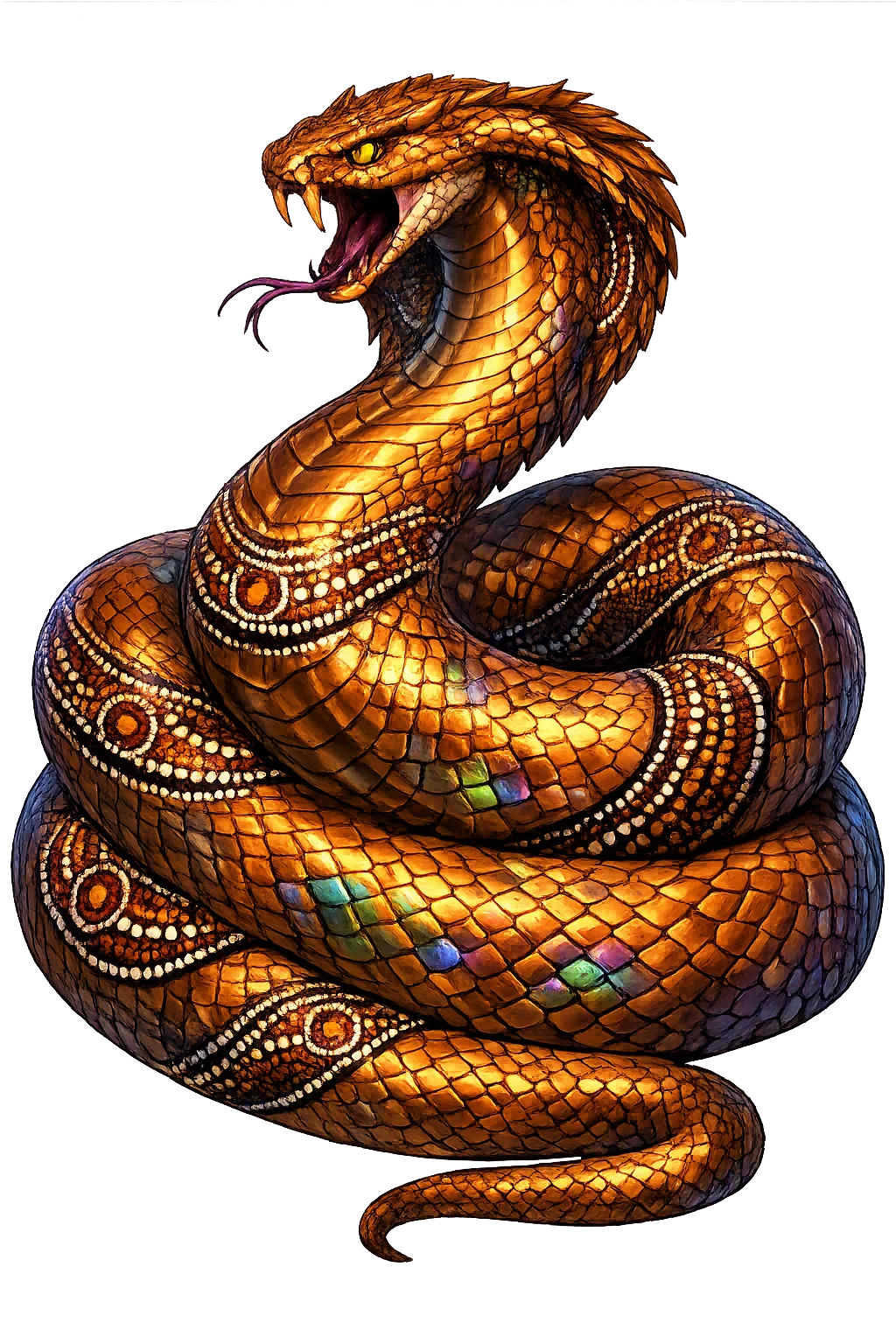
The canonical register: Yurlungur
The internet spells Yurlungur more ways than one, and only one of them is the name the sources wrote. This is the register's ruling — canonical, fallback, contested, and false, each in its proper place.
At a Glance
- Canonical form: Yurlungur
- Original script: —
- Pantheon: Aboriginal
- Convention: the tradition’s own scholarly transliteration standard
- False forms on record: 0
- Contested forms: none attested
- Series: The Canonical Register, No. 545 of 548
The Canonical Form
The tradition's record preserves this name in its romanized scholarly form: Yurlungur — no older script survives to transcribe, so the canonical content is the exactness of the spelling itself.
No diacritics are required here: the canonical form is the exactness of the spelling itself, the form the tradition’s convention demands.
Where the Flattened Form Stands
The plain form yurlungur differs from the canonical Yurlungur only by convention of display — case, not content. It is acceptable everywhere: in legacy systems, in plain-text citation, in the DNS itself. What is not acceptable is what follows in the register: respellings that change the letters, not just their case.
The Register of False Forms
No circulating form of this name currently qualifies as false under the register's standard — a rare standing. The spelling is short, sturdy, and rarely mangled.
The Contested Forms
No alternate form of this name carries documented scholarly support in the lexicon's record. The convention here — the tradition’s standard — produces exactly one defensible transliteration: Yurlungur. Forms that differ from it are not contested; they are simply wrong.
The Convention's Own History
Every tradition in this register has its own scholarly transliteration standard, built by its own specialists over decades or centuries, and the register follows each on its own terms: the tradition’s own standard. The principle that unifies them is the one the whole project stands on: a name is evidence, and evidence is not negotiable — not for keyboards, not for convenience, not for anyone.
What the Address Bar Allows
IDNA 2008 permits the letters these restorations use — macrons, acutes, underdots, thorn, ogonek, the lot — and the DNS carries them as punycode (`xn--` labels). Two honest constraints remain. First, registrar inventory: the protocol permits a character; the registrar's stock decides whether the exact domain can be bought today. Second, combined marks: forms like Apṓllōn (acute stacked on a macron) are philologically ideal yet effectively untypeable on phones and unsupported across much of the registration system.
That is why the rulebook keeps a fallback hierarchy — full restoration first, then the circumflex when the source carries one, then the macron-only academic standard, then an attested variant, and only as a last resort the plain ASCII form. Every step down the ladder is still defensible; nothing on the ladder is a wrong mark. A fallback is a choice among attested forms. A false form is not on the ladder at all.
Where the Name Stood First
The material evidence for Yurlungur is held in Yolŋu ceremonial objects, rock art, and sacred sites rather than in excavated strata. Bark paintings from northeast Arnhem Land depict the Rainbow Serpent and the initiation complex; notable collections are held by the Australian Institute of Aboriginal and Torres Strait Islander Studies (AIATSIS), the National Museum of Australia, and the Museum and Art Gallery of the Northern Territory. The waterholes identified as Yurlungur's dwelling remain active sacred sites, and access to them is governed by Yolŋu customary law. Archaeological research in the region has documented long-term Aboriginal occupation of the Arnhem Land plateau and adjacent coastal plains, providing the environmental context within which the Yurlungur narratives are embedded. The temple on the web is the newest of these addresses — the first one that fits in a pocket.
The Verdict
The register rules for Yurlungur, and the ruling is checkable: every mark sourced, every violation stated, every borderline form given its honest standing. yurlungur carries the name freely — it differs only in display, and the register says so without reservation. Anything else in circulation has its origin and its failure recorded above. That is the whole of the law on this name — and the temple at /yurlungur/ enforces it.
The docket for this ruling: no false forms on the docket; no contested forms attested; the attestation rests on 5 cited sources — Warner, W. Lloyd, A Black Civilization: A Social Study of an Australian Tribe (1937), Berndt, R. M., Kunapipi: A Study of an Australian Aboriginal Cult (1951), Berndt, R. M. and C. H. Berndt, The World of the First Australians (1964).
The Register Continues
Entry 545 of 548 in the Canonical Register. Around it: the temple's founding dispatch, the Restoration File on the marks themselves, the Resonance File on the archetype at work, and the Rulebook behind all of it.
Continue the register — previous entry: Yùhuáng (read it) · next entry: Zéphyros (read it).
The Canonical Register is written from the same canonical record as the lexicon itself. If a false form is missing from this page, it is because the evidence does not support calling it false — or because we have not seen it yet. Show us, with a citation, and the register will answer.