
The Cult
The daily liṅga-pūjā is its liturgy — the pouring, the catching, the feeding of the ground. The menstruation-temples of the goddess-traditions (Kāmākhyā above all) keep its most esoteric calendar.
Extended Lore
Etymology · Orthography · Cult · Iconography · Reception · Sources
From original script to Unicode restoration
The name Yoni reaches the modern world through scholarly transliteration of the sanskrit tradition. Because the conventional spelling uses only Latin letters, its Unicode and ASCII forms coincide — the tradition it carries is in the name itself, not in diacritics.
Character-by-character philological analysis
| Character | Unicode | Name | Block | Phonetic Role |
|---|---|---|---|---|
| Y | U+0059 | Latin Capital Letter Y | Basic Latin | Same, capitalized |
| o | U+006F | Latin Small Letter O | Basic Latin | Same |
| n | U+006E | Latin Small Letter N | Basic Latin | Same |
| i | U+0069 | Latin Small Letter I | Basic Latin | Same |
This restoration reflects fidelity to the attested tradition, not recovered diacritics: every character of Yoni already survives in ASCII. What the restoration preserves is the canonical spelling itself — the form scholarship standardised.
How the sacred was kept — rites, sanctuaries, remains
The daily liṅga-pūjā is its liturgy — the pouring, the catching, the feeding of the ground. The menstruation-temples of the goddess-traditions (Kāmākhyā above all) keep its most esoteric calendar.
The yoni’s monuments are the oldest Śaiva remains: the Gupta liṅgas with their carved bases, the Gudimallam ithyphallic Śiva, and the aniconic aniconism of every village shrine’s stone pair. The pīṭha-stones of Kāmākhyā are its most charged site.
How Yoni was imaged across the ages
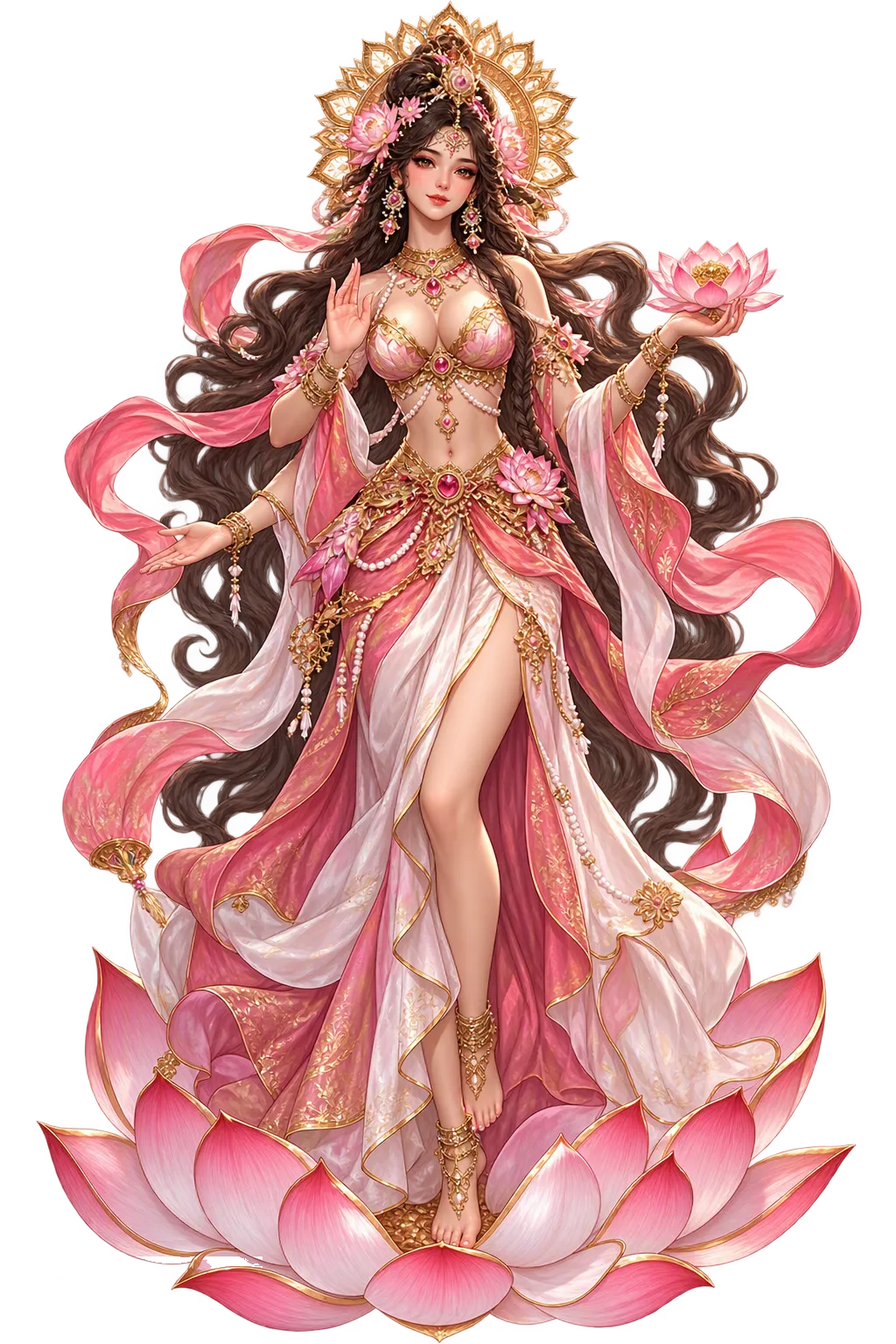
The liṅga rising from the yoni-basin, the channel of the libation cut into the base; or the goddess’s body as the seat. Its icon is the union: never the one without the other.
The name after its own age — transmission, translation, survival
Religious studies treats the pair as the classic case of aniconic representation carrying full theology; and the modern West’s reception — oscillating between snigger and reverence — is itself a chapter in the study of how cultures misread what they have no grammar for.
The yoni-liṅga pair absorbed every Indian polarity — puruṣa and prakṛti, god and goddess, stillness and flow — into a single aniconic form. The tantric traditions made it explicit worship; the Puranic made it respectable; and the modern world received it as scandal and symbol at once, usually without the theology.
The liṅga-yoni is Hinduism’s most reproduced and least understood image — the tourist’s puzzle and the theologian’s précis. ‘Yoni’ entered English in the nineteenth century as a learned word; and the goddess’s-seats (śakti-pīṭhas) remain the subcontinent’s most charged pilgrimage geography.
What Yoni means — beyond the dictionary
Yoni: the source-word, restored in plain letters that offer no euphemism and need none. The lexicon holds it as the tradition does — beside the liṅga, as the ground holds the standing thing. Two syllables, the world’s first fact.
Common questions about Yoni, Source, Womb, Shakti, and Unicode restoration
In reconstructed pronunciation, Yoni is /ˈjoʊni/ — approximately “YOH-nee”.
Yoni means 'Womb, source' — the feminine principle, the origin from which all creation flows in the sanskrit tradition.
Yoni is associated with The Liṅga-Yoni (The Śaiva aniconic pair: the standing mark in the flowing base — creation and its ground, united.), The Material Cause (In Sāṃkhya-Yoga, prakṛti the yoni is the womb of the world — all effects pre-exist in their cause.), The Goddess’s Body (In the Śākta traditions the yoni is the goddess herself — the pīṭha, the sacred seat of power.), The Ritual Base (Every Śaiva altar’s foundation is the yoni-shaped basin, catching the libation that feeds the god.).
Yoni is written entirely in ASCII letters, so its restoration is about canonical fidelity rather than recovered diacritics: the temple fixes the name in its scholarly standard spelling, attested in the source tradition, instead of leaving it to drift.
“The Endless Pillar and Its Base” — the Liṅga Purāṇa story that anchors the mythology of Yoni, told in full on the lore page.
The philological foundations of this restoration
Every claim on this page is grounded in established scholarship. The orthographic restorations follow disciplinary convention. The etymological chain follows the best available reference works. This is not invention — it is resurrection through scholarship.
You have traced the name from its earliest attestation to its Unicode restoration. Now return to the myth. The story is where the name lives.
Back to Lore