PuniCodex

Extended Lore

용왕 (龍王) Yongwang

Etymology · Phonology · Orthography · Cultural Legacy · Primary Sources

Tier 2 Yongwang
Yongwang — Dragon King, Sea
01

Quick Facts

Essential information about Yongwang, Dragon King, Sea

Original Script용왕 (龍王)
Unicode RestorationYongwang
Reconstructed Pronunciation/joŋ.waŋ/
PantheonKorean
DomainDragon King, Sea
MeaningDragon king
ClassificationTier 2
Primary DomainYongwang
Sacred SymbolsDragon, Waves, Pearl, Turtle
02

Etymology & Word Family

From original script to Unicode restoration

Original Script 용왕 (龍王) Yongwang — "Dragon king"
Unicode Restoration Yongwang Restored stress, length, and script
Modern ASCII yongwang Plain-ASCII fallback

Both syllables end in velar nasals. The name is the Sino-Korean title for the dragon king, ruler of the seas.

03

Unicode Character Breakdown

Character-by-character philological analysis

CharacterUnicodeNameBlockPhonetic Role
YU+0059Latin Capital Letter YBasic LatinSame, capitalized
oU+006FLatin Small Letter OBasic LatinSame
nU+006ELatin Small Letter NBasic LatinSame
gU+0067Latin Small Letter GBasic LatinSame
wU+0077Latin Small Letter WBasic LatinSame
aU+0061Latin Small Letter ABasic LatinSame
nU+006ELatin Small Letter NBasic LatinSame
gU+0067Latin Small Letter GBasic LatinSame

The Tier 2 classification reflects how much of the original phonology this restoration preserves — stress and vowel length for Greek names, distinctive letters and diacritics for every other tradition.

04

Cultural Significance

From ancient cult to modern Unicode

Ancient Domain

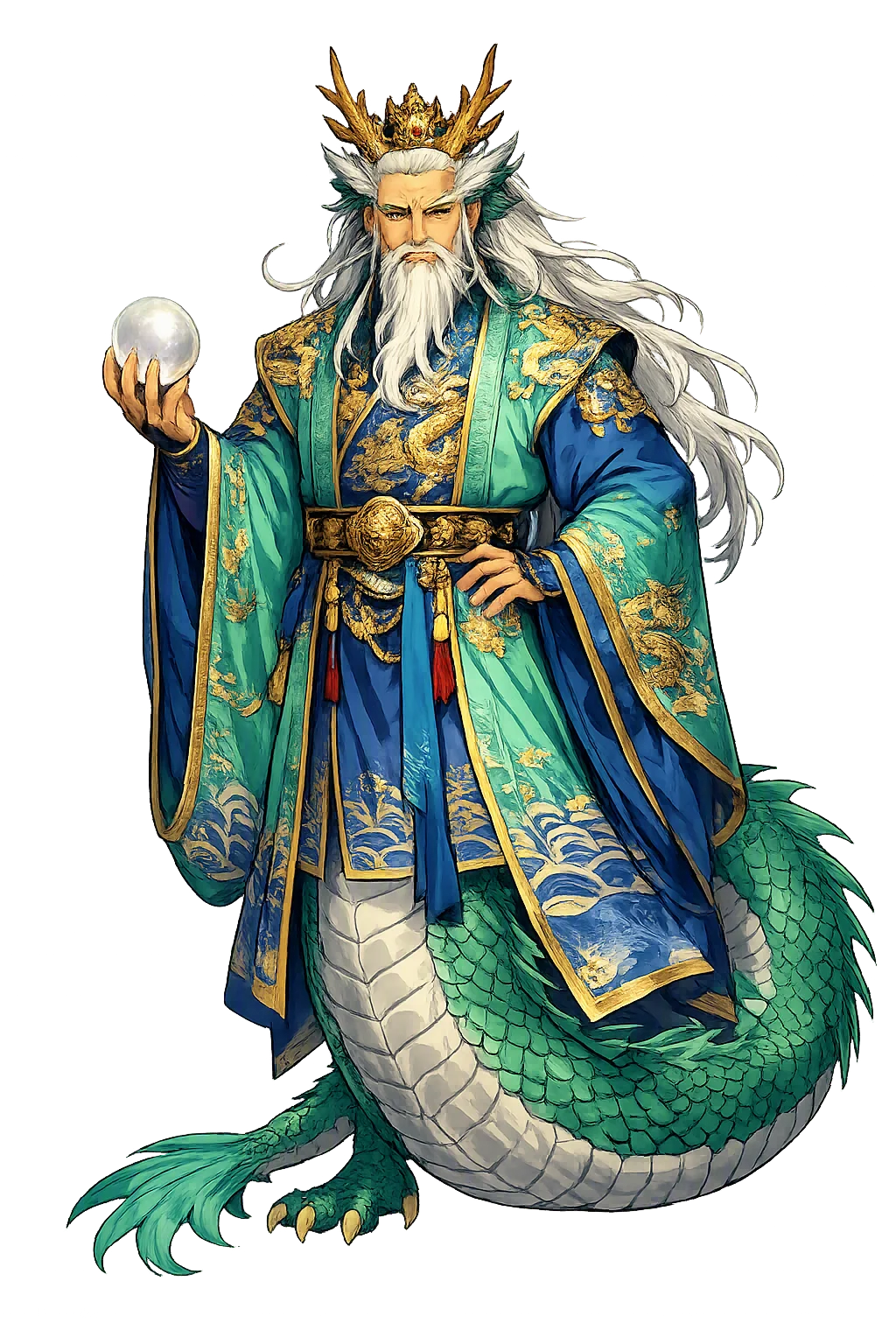
Yongwang is the dragon king, ruler of the seas and controller of rain, storms, and the waters upon which human life depends in Korean tradition. The name means "Dragon king" and belongs to the domain "Dragon King, Sea." Yongwang is the dragon king, a powerful deity of the sea who controls storms, rain, and the abundance of fish. He is worshipped especially in coastal fishing communities, where rituals ask for safe voyages and plentiful catches.

Yongwang in Later Traditions

Yongwang is part of a broader East Asian dragon-king tradition, with close parallels in Chinese, Japanese, and Vietnamese religion. In Korea the figure was absorbed into both Buddhism and shamanism, appearing as a donor or protector in Buddhist temples and as a sovereign spirit in gut rituals. Daoist cosmology supplied iconography and ritual methods for invoking rain. Despite these borrowings, the Korean Yongwang has a distinctive local colouring tied to fishing villages, coastal geography, and the hazards of the Korea Strait.

Modern Legacy

Yongwang remains a vivid figure in Korean coastal culture, appearing in temple art, village rituals, seafood markets, and popular media. Dragon king imagery decorates boats, restaurants, and festivals, and prayers for safe fishing continue in many communities. The figure also influences Korean environmental thought, serving as a symbol of the sea's power and the need for respectful relations with marine ecosystems. In games and animation, Yongwang often appears as a majestic dragon lord.

Unicode Restoration as Cultural Act

Restoring Yongwang in a domain name is more than orthographic accuracy. It is a statement that the internet should recognize the full range of human writing — not only the ASCII keyboard.

05

Frequently Asked Questions

Common questions about Yongwang, Dragon King, Sea, and Unicode restoration

01How do you pronounce Yongwang?

In reconstructed pronunciation, Yongwang is /joŋ.waŋ/ — approximately 'YOHNG-wahng' — Both syllables end in velar nasals. The name is the Sino-Korean title for the dragon king, ruler of the seas..

02What does Yongwang mean?

Yongwang means Dragon king in the korean tradition.

03What are the symbols of Yongwang?

Yongwang is associated with Dragon (The serpentine sovereign of water and weather.), Waves (The visible form of Yongwang's domain and power.), Pearl (The luminous treasure of the underwater palace, symbolising wisdom and bounty.), Turtle (A messenger and attendant of the dragon king who connects land and sea.).

04Why restore Yongwang in Unicode?

Plain ASCII yongwang strips the stress, length, and script that make the name specific. Unicode restoration returns the name to its original written dignity.

05What is the most important myth about Yongwang?

Yongwang is believed to live in a magnificent palace beneath the sea, where he keeps treasures, controls the tides, and commands armies of fish, turtles, and dragons. Fishermen who offended Yongwang risked storms and empty nets.

06

Scholarly Sources

The philological foundations of this restoration

Every claim on this page is grounded in established scholarship. The orthographic restorations follow disciplinary convention. The etymological chain follows the best available reference works. This is not invention — it is resurrection through scholarship.

Lexicography & Philology

  • Korean folklore
  • Shamanic texts

Primary Texts

  • Primary sources in the korean tradition for Yongwang.

Archaeology & Art History

  • Material evidence — iconography, inscriptions, and temple archaeology — for Yongwang and related cults.

Religious Studies

  • Grayson, James H., Korea: A Religious and Cultural History (Routledge, 2002).
  • Lee, Peter H., ed., Sourcebook of Korean Civilization, vol. 1 (Columbia University Press, 1993).
  • National Folk Museum of Korea, Encyclopedia of Korean Folk Beliefs (2015).
Return

The Surface Awaits

You have traced the name from its earliest attestation to its Unicode restoration. Now return to the myth. The story is where the name lives.

Back to Lore
Yongwang mascot