
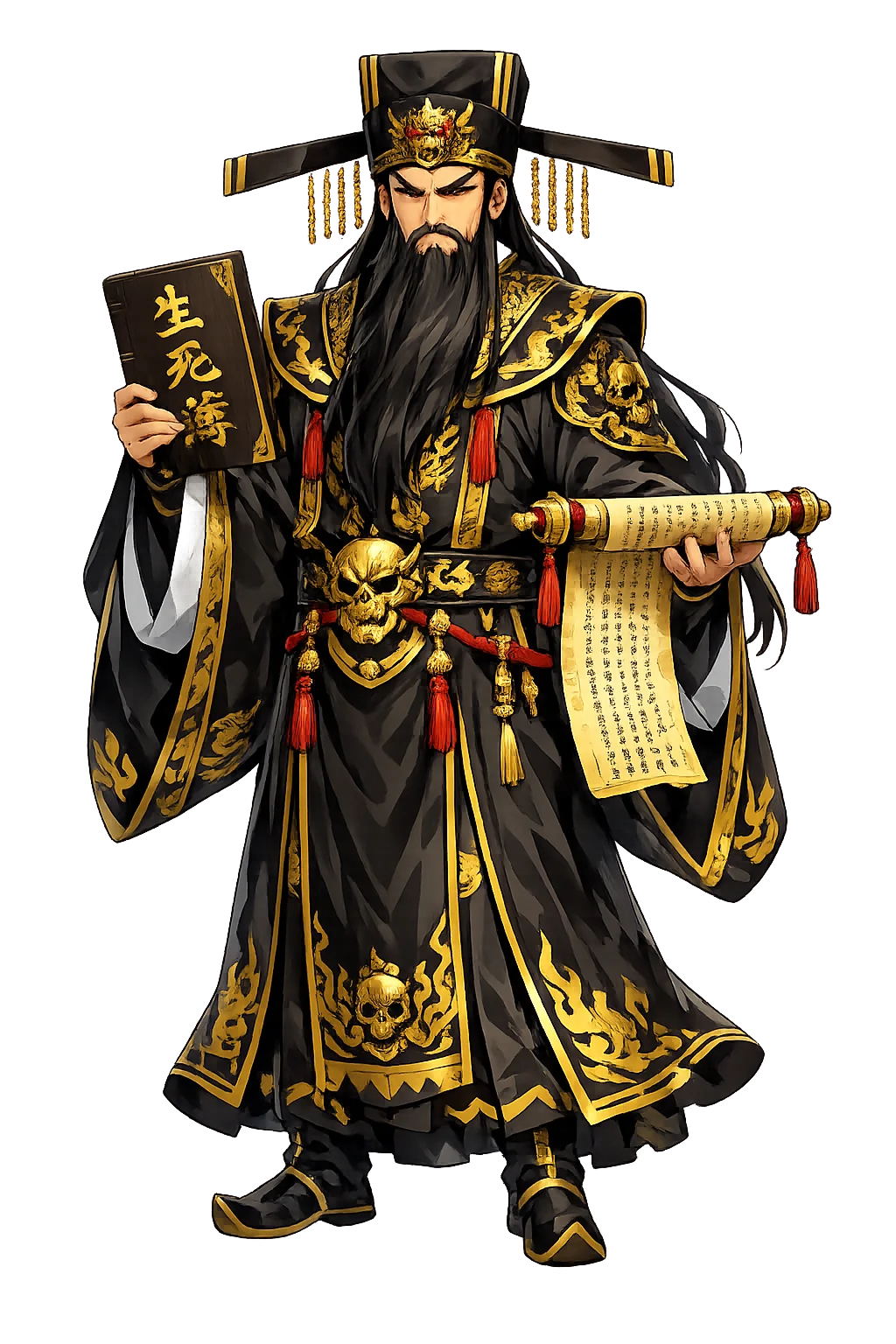
The Cult
Yánluó's cult is the calendar of the dead. Its rites are among the oldest in East Asia: the Ghost Festival of the fifteenth day of the seventh month, founded on the Yù-lán-p'en sūtra, when families set out food for the hungry ghosts and the temples stage the Mulian opera; the 'seven sevens,' services every seventh day after a death, timed to the soul's progress through the courts he heads; and the copying of the Ten Kings scripture — tens of thousands of Dunhuang manuscripts made as merit for the dead. His temples are the underworld made walkable: the Dōngyuè temples, above all the great Yuan foundation in Beijing with its seventy-six department-statues, the bureaucracy staffed in clay; and Fēngdū's temple mountain on the Yangtze, the 'ghost capital' where the living rehearse the judgment. Offerings before his image follow the dossier logic of his myth: written prayers, record books, the candid confession. The cult is Buddhist in charter, Daoist in staffing, and thoroughly Chinese in paperwork — the most successful administrative religion ever imported.