PuniCodex

Extended Lore

Xōlōtl

Etymology · Orthography · Cult · Iconography · Reception · Sources

Tier 1 Xōlōtl.com
Xōlōtl — Evening Star, Death, Twins
01

Quick Facts

Essential information about Xōlōtl, Evening Star, Death, Twins

Scholarly TransliterationXōlōtl
Unicode RestorationXōlōtl
Reconstructed Pronunciation/ˈʃoː.loːtɬ/
PantheonNahuatl
DomainEvening Star, Death, Twins
MeaningThe double, the monster
ClassificationTier 1
Primary DomainXōlōtl.com
Sacred SymbolsThe dog ears, The conch and crossbones, The maize stalk
02

Etymology & Word Family

From original script to Unicode restoration

Scholarly Transliteration Xōlōtl Xōlōtl — "The double, the monster"
Unicode Restoration Xōlōtl Restored stress, length, and script
Modern ASCII xolotl Plain-ASCII fallback

The name Xōlōtl carries the orthographic signature of the nahuatl tradition. Unicode restoration recovers what ASCII flattens.

03

Unicode Character Breakdown

Character-by-character philological analysis

CharacterUnicodeNameBlockPhonetic Role
XU+0058Latin Capital Letter XBasic LatinSame, capitalized
ōU+014DLatin Small Letter O with MacronLatin Extended-ALong vowel
lU+006CLatin Small Letter LBasic LatinSame
ōU+014DLatin Small Letter O with MacronLatin Extended-ALong vowel
tU+0074Latin Small Letter TBasic LatinSame
lU+006CLatin Small Letter LBasic LatinSame

The Tier 1 classification reflects how much of the original phonology this restoration preserves — stress and vowel length for Greek names, distinctive letters and diacritics for every other tradition.

04

Cult & Worship

How the sacred was kept — rites, sanctuaries, remains

The Cult

Xōlōtl's cult was centered on the dog as psychopomp. Aztec funerary practice included a dog — sometimes a living animal, sometimes a ceramic effigy — to guide the dead through the nine deserts of Mictlān to their rest. The Florentine Codex records that a reddish-yellow dog was cremated or buried with the deceased, and dog effigy vessels are common in central Mexican archaeology. His association with the evening star and with fire's transformation also placed him in rites of renewal, particularly at Xochimilco and in agricultural ceremonies where his transformations into maize and water-creatures were dramatized. Modern Nahua communities and neo-Mesoamerican practitioners still honor the dog as guardian of the dead.

In the Earth

Colima's ceramic dogs — plump, tumored, dancing, two thousand years old — are the west-Mexican ancestors of his cult, buried in shaft tombs to guide their masters. Aztec dog-effigy vessels and the Florentine Codex's account of the funeral dog detail the central-Mexican rite. Xochimilco's chinampa system — the floating gardens where the last wild axolotls hold on — is a UNESCO World Heritage site, the god's water-form's last stronghold, guarded by canals older than the Aztec state.

05

Iconography

How Xōlōtl was imaged across the ages

The Image

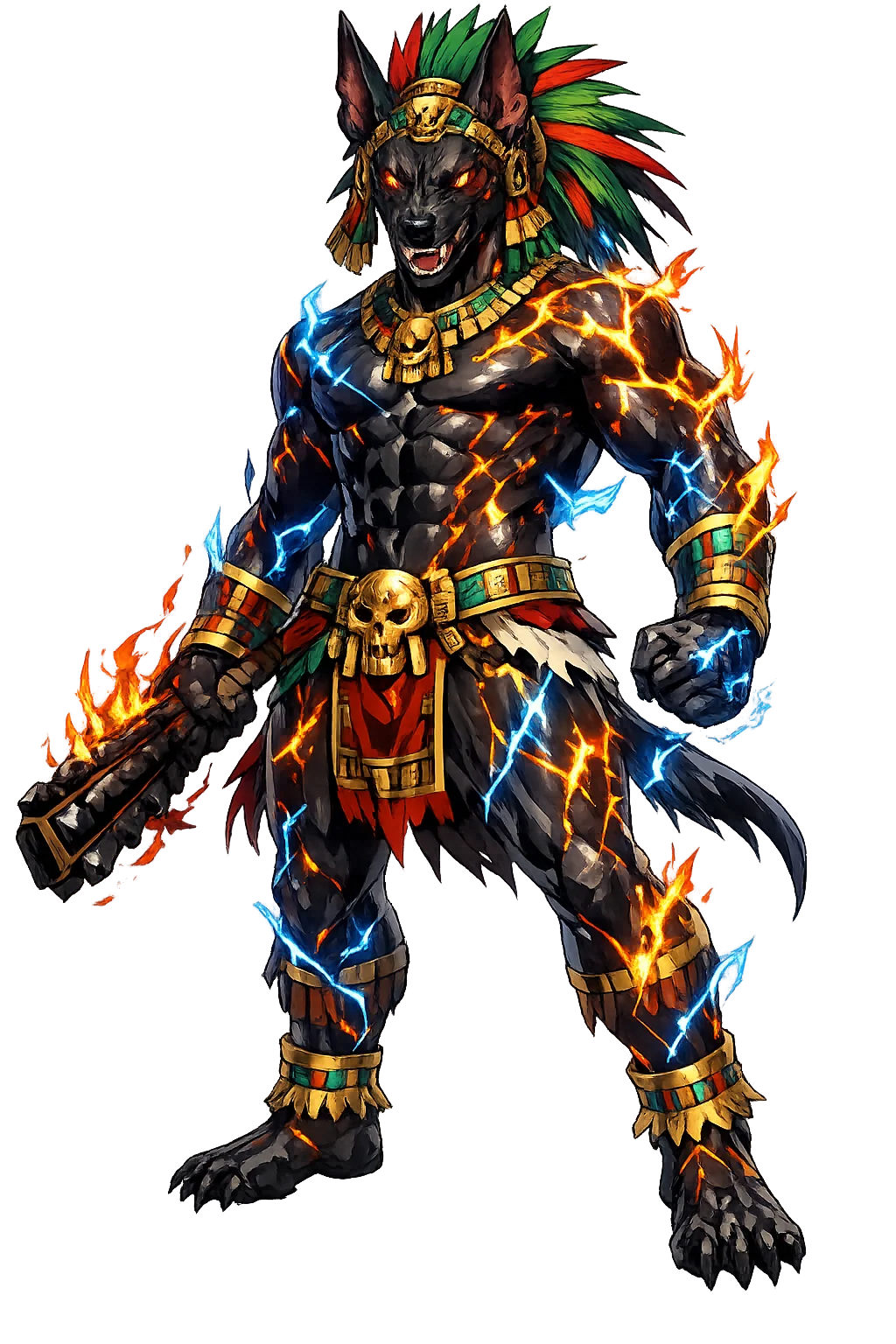
Xōlōtl is the deformed dog-headed twin: a humanoid with a canine snout, reversed or splayed feet, and sometimes a monstrous, hunched body. In manuscripts he appears beside the sun's descent, as the evening aspect of Venus, or caught mid-transformation into maize and the axolotl. The dog is his essential emblem, linking him to the xōlōtl water monster, the axolotl, and the funeral dog. The early ceramic dogs of Colima — plump, tumor-marked, sometimes paired — are ancestral to his later Aztec image. His iconography is one of becoming rather than being: every image shows him in the act of change.

06

Reception & Transformation

The name after its own age — transmission, translation, survival

Afterlives

After the Spanish conquest, Xōlōtl survived chiefly in the Florentine Codex and in oral tradition preserved by Nahua communities under colonial pressure. Nineteenth-century Mexican nationalism rediscovered Aztec religion, and the dog-guide became a recognizable figure in Romantic and nationalist art. In the twentieth century his name migrated into biology: the axolotl, Ambystoma mexicanum, takes its Nahuatl name from his water-monster transformation, and the hairless Xoloitzcuintli dog preserves the animal companion of the dead. Contemporary popular culture has made him a frequent guide to the Mesoamerican underworld, a transformation from colonial obscurity into a symbol of Mexican identity and ancestral memory.

Identifications Across Traditions

The friars identified him with the devil's lesser angels, but the people kept him closer to a saint of the road: the dog that guards the grave and guides the traveller survived in Mexican folk custom, and the hairless xoloitzcuintli — the national dog, named from his name — was never exorcised. Scholars pair him with every underworld canine from Cerberus to Anubis, and the Maya twins' underworld journey in the Popol Vuh runs on his same road. The axolotl, his water-form, became Mexico's ambassador-species: the smiling face of conservation itself.

Modern Legacy

The axolotl — Ambystoma mexicanum, the salamander that never grows up, regenerating limbs and heart — took his name into every biology classroom on earth; its survival in Xochimilco's canals is now a national project. The xoloitzcuintli dog is Mexico's national breed, and Dante's Divine Comedy has, in the Mexican imagination, a local answer: the Xolo that carries you across. Frida Kahlo painted her xolos; the 2018 animated films gave him to the world's children.

07

The Meditation

What Xōlōtl means — beyond the dictionary

Xōlōtl is the god of the way through. He did not want the job — he wept, hid, and transformed to escape it — and he does it still: the sun into the dark, the dead across the river, the lost back home. He asks the guide's question, which is also the mourner's: who walks with you into the night — and whom, in your turn, will you guide?

The axolotl's refusal to grow up — keeping its gills, its larval smile, its power to regrow a heart — has made it the scientist's darling and the city's emblem, and it is the god's final joke: the deity who begged not to die survives as the animal that regenerates everything. Xōlōtl's question is the guide's own: transformation is not escape — but sometimes, in the last lake, it is enough.

08

Frequently Asked Questions

Common questions about Xōlōtl, Evening Star, Death, Twins, and Unicode restoration

01How do you pronounce Xōlōtl?

In reconstructed pronunciation, Xōlōtl is /ˈʃoː.loːtɬ/ — approximately SHOH-lotl, long ō on both syllables.

02What does Xōlōtl mean?

Xōlōtl means The double, the monster in the nahuatl tradition.

03What are the symbols of Xōlōtl?

Xōlōtl is associated with The dog ears (His constant feature in every codex — the faithful guide's mark), The conch and crossbones (His lordship of death's roads, shared with Mictlāntēcutli), The maize stalk (His first transformation — the god hiding in the staff of life).

04Why restore Xōlōtl in Unicode?

Plain ASCII xolotl strips the stress, length, and script that make the name specific. Unicode restoration returns the name to its original written dignity.

05What is the most important myth about Xōlōtl?

“Across the Nine Waters” — the The Guide story that anchors the mythology of Xōlōtl, told in full on the lore page.

09

Scholarly Sources

The philological foundations of this restoration

Every claim on this page is grounded in established scholarship. The orthographic restorations follow disciplinary convention. The etymological chain follows the best available reference works. This is not invention — it is resurrection through scholarship.

◈

Lexicography & Philology

  • Florentine Codex
  • Sahagún
◎

Primary Texts

  • The Florentine Codex (Sahagún); the Anales de Cuauhtitlan; colonial Nahuatl testimonies and pictorial manuscripts.
◉

Archaeology & Art History

  • Material evidence — iconography, inscriptions, and temple archaeology — for Xōlōtl and related cults.
✦

Religious Studies

  • Sahagún, Florentine Codex: General History of the Things of New Spain, trans. J.O. Anderson & C.E. Dibble — the funeral rites of the dead's journey; Book 7, the star cycles
  • Leyenda de los Soles (Codex Chimalpopoca), trans. John Bierhorst — the Teotihuacan sacrifice, Xōlōtl's transformations, and the quest for the bones
  • Histoyre du Mechique, ed. E. de Jonghe (1905) — the Mictlān cycle
  • Karttunen, Frances, An Analytical Dictionary of Nahuatl, s.v. xōlōtl
  • Popol Vuh (Maya parallel: the twins' underworld road)
  • Brundage, Burr Cartwright, The Fifth Sun: Aztec Gods, Aztec World (1980)
Return

The Surface Awaits

You have traced the name from its earliest attestation to its Unicode restoration. Now return to the myth. The story is where the name lives.

Back to Lore
Xōlōtl mascot