PuniCodex

Extended Lore

Wawalag

Etymology · Phonology · Orthography · Cultural Legacy · Primary Sources

Tier 2 Wawalag
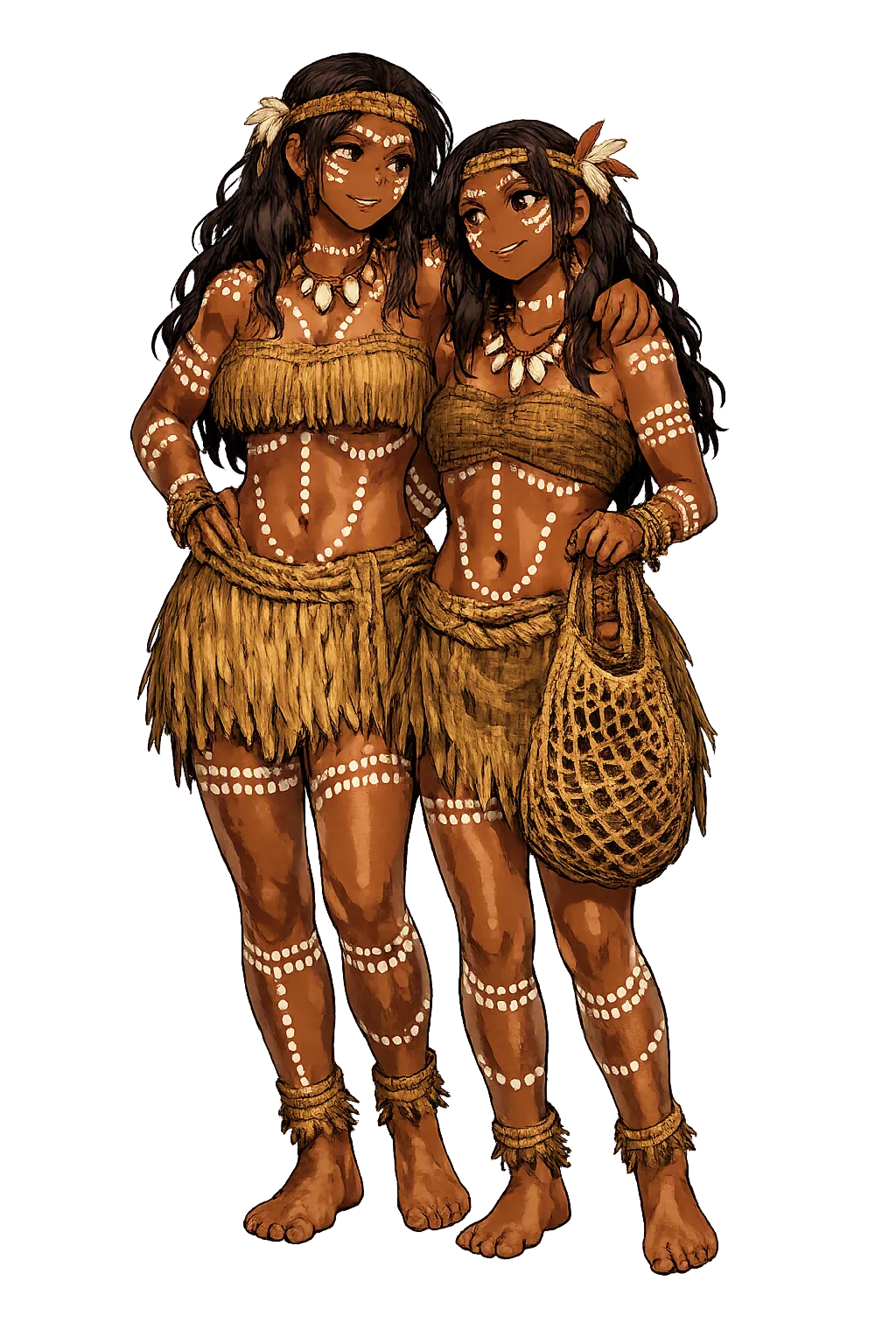
Wawalag — Two Sisters, Creators
01

Quick Facts

Essential information about Wawalag, Two Sisters, Creators

Scholarly TransliterationWawalag
Unicode RestorationWawalag
Reconstructed Pronunciation/ˈwawalag/
PantheonAboriginal
DomainTwo Sisters, Creators
MeaningThe two sisters
ClassificationTier 2
Primary DomainWawalag
Sacred SymbolsWaterhole, Rainbow Serpent (Yurlunggur / Ngalyod), Blood and menstruation, Camp sites and journey tracks, The child
02

Etymology & Word Family

From original script to Unicode restoration

Scholarly Transliteration Wawalag Wawalag — "The two sisters"
Unicode Restoration Wawalag Restored stress, length, and script
Modern ASCII wawalag Plain-ASCII fallback

The name is not Greek or Indo-European; the ASCII form 'wawalag' already encodes the same consonants and vowels used in scholarly romanization. Because no distinctive diacritic or special letter is required to recover the spoken name, the restoration 'Wawalag' is Tier 2: a conventional capitalized citation form rather than a phonetic restoration of lost information.

03

Unicode Character Breakdown

Character-by-character philological analysis

CharacterUnicodeNameBlockPhonetic Role
WU+0057Latin Capital Letter WBasic LatinSame, capitalized
aU+0061Latin Small Letter ABasic LatinSame
wU+0077Latin Small Letter WBasic LatinSame
aU+0061Latin Small Letter ABasic LatinSame
lU+006CLatin Small Letter LBasic LatinSame
aU+0061Latin Small Letter ABasic LatinSame
gU+0067Latin Small Letter GBasic LatinSame

The Tier 2 classification reflects how much of the original phonology this restoration preserves — stress and vowel length for Greek names, distinctive letters and diacritics for every other tradition.

04

Cultural Significance

From ancient cult to modern Unicode

Ancient Domain

Wawalag are the two ancestral sisters of north-eastern Arnhem Land. In Yolŋu and related traditions they are at once travellers, mothers, law-givers, and the agents through whom the Rainbow Serpent reshapes the country. Their journey establishes clan territories, marriage classes, and the rituals that still renew the monsoon. They are not domesticated heroines: they carry sacred power in their bodies, and the land responds to that power with flood, fire, and transformation.

Wawalag in Later Traditions

The Wawalag sisters are specific to the Aboriginal traditions of Arnhem Land, especially the Yolŋu peoples, and are not simply interchangeable with other creator figures. Their story is connected, however, to the wider Australian theme of the Rainbow Serpent as a transformer of land and law. Comparisons with other Aboriginal sister-pairs must be made cautiously, because each belongs to a particular estate, language group, and ritual complex. In academic discourse the names Wawalag, Wauwalak, and Wawilak refer to the same ancestral pair across different transcriptions and clan versions.

Modern Legacy

The Wawalag sisters remain central to Arnhem Land ceremony, art, and land tenure. Their song cycles are performed in initiation and public ritual; their images appear in bark paintings, sculptures, and contemporary Aboriginal art produced under community-controlled protocols. The story is also cited in land-rights and native-title evidence, where it demonstrates the continuity of spiritual ownership. Scholarly studies by Berndt and Berndt, Warner, Elkin, and AIATSIS have made the Wawalag cycle one of the best-documented Aboriginal creation narratives, while always noting that the deepest meanings belong to initiated custodians.

Unicode Restoration as Cultural Act

Restoring Wawalag in a domain name is more than orthographic accuracy. It is a statement that the internet should recognize the full range of human writing — not only the ASCII keyboard.

05

Frequently Asked Questions

Common questions about Wawalag, Two Sisters, Creators, and Unicode restoration

01How do you pronounce Wawalag?

In reconstructed pronunciation, Wawalag is /ˈwawalag/ — approximately 'WAH-wah-lag' — three even syllables, with the first syllable slightly stronger; keep the vowels open like 'father', not diphthongal like English 'way'..

02What does Wawalag mean?

Wawalag means The two sisters in the aboriginal tradition.

03What are the symbols of Wawalag?

Wawalag is associated with Waterhole (The sacred well where the sisters' blood awakens Yurlunggur and where the rainbow serpent dwells), Rainbow Serpent (Yurlunggur / Ngalyod) (The transformer who swallows the sisters and, in releasing them, establishes clan order and the monsoon), Blood and menstruation (The sisters' blood is not impure; it is a potent sacred substance that moves the ancestral power of the land), Camp sites and journey tracks (Each stopping place on the sisters' walk becomes a named site tied to clan identity and ritual responsibility), The child (The infant born on the journey links the sisters to future generations and to the transmission of law).

04Why restore Wawalag in Unicode?

Plain ASCII wawalag strips the stress, length, and script that make the name specific. Unicode restoration returns the name to its original written dignity.

05What is the most important myth about Wawalag?

The two sisters set out from the interior, carrying their mother and a child. At each camp they name the country, gather food, and perform the actions that will later be repeated in ritual. The younger sister gives birth, and the blood from childbirth enters a waterhole — an event that is at once ordinary and cosmically charged, because the Rainbow Serpent Yurlunggur smells it and rises.

06

Scholarly Sources

The philological foundations of this restoration

Every claim on this page is grounded in established scholarship. The orthographic restorations follow disciplinary convention. The etymological chain follows the best available reference works. This is not invention — it is resurrection through scholarship.

Lexicography & Philology

  • AIATSIS
  • Berndt

Primary Texts

  • Primary sources in the aboriginal tradition for Wawalag.

Archaeology & Art History

  • Material evidence — iconography, inscriptions, and temple archaeology — for Wawalag and related cults.
  • The Wawalag cycle is anchored in the physical landscape of Arnhem Land: waterholes, rock shelters, and seasonal wetlands named in the travelling songs. Rock art panels depicting ancestral figures, serpents, and journey tracks are known from the region, though identifying a specific 'Wawalag' image requires community permission and cultural knowledge. Archaeological evidence for human occupation of Arnhem Land extends back at least 65,000 years, providing the deep time frame within which the Wawalag narrative has been transmitted.

Religious Studies

  • Berndt, Ronald M. and Catherine H. Berndt, The Speaking Land: Myth and Story in Aboriginal Australia, Penguin, 1989
  • Warner, W. Lloyd, A Black Civilization: A Social Study of an Australian Tribe, Harper & Brothers, 1937 (revised 1958)
  • Elkin, A. P., Aboriginal Men of High Degree, Angus & Robertson, 1945 (reprinted 1977)
  • Australian Institute of Aboriginal and Torres Strait Islander Studies (AIATSIS), subject guides and catalogue entries on Yolŋu religion and the Wawalag/Wauwalak sisters
  • Morphy, Howard, Ancestral Connections: Art and an Aboriginal System of Knowledge, University of Chicago Press, 1991
Return

The Surface Awaits

You have traced the name from its earliest attestation to its Unicode restoration. Now return to the myth. The story is where the name lives.

Back to Lore
Wawalag mascot