
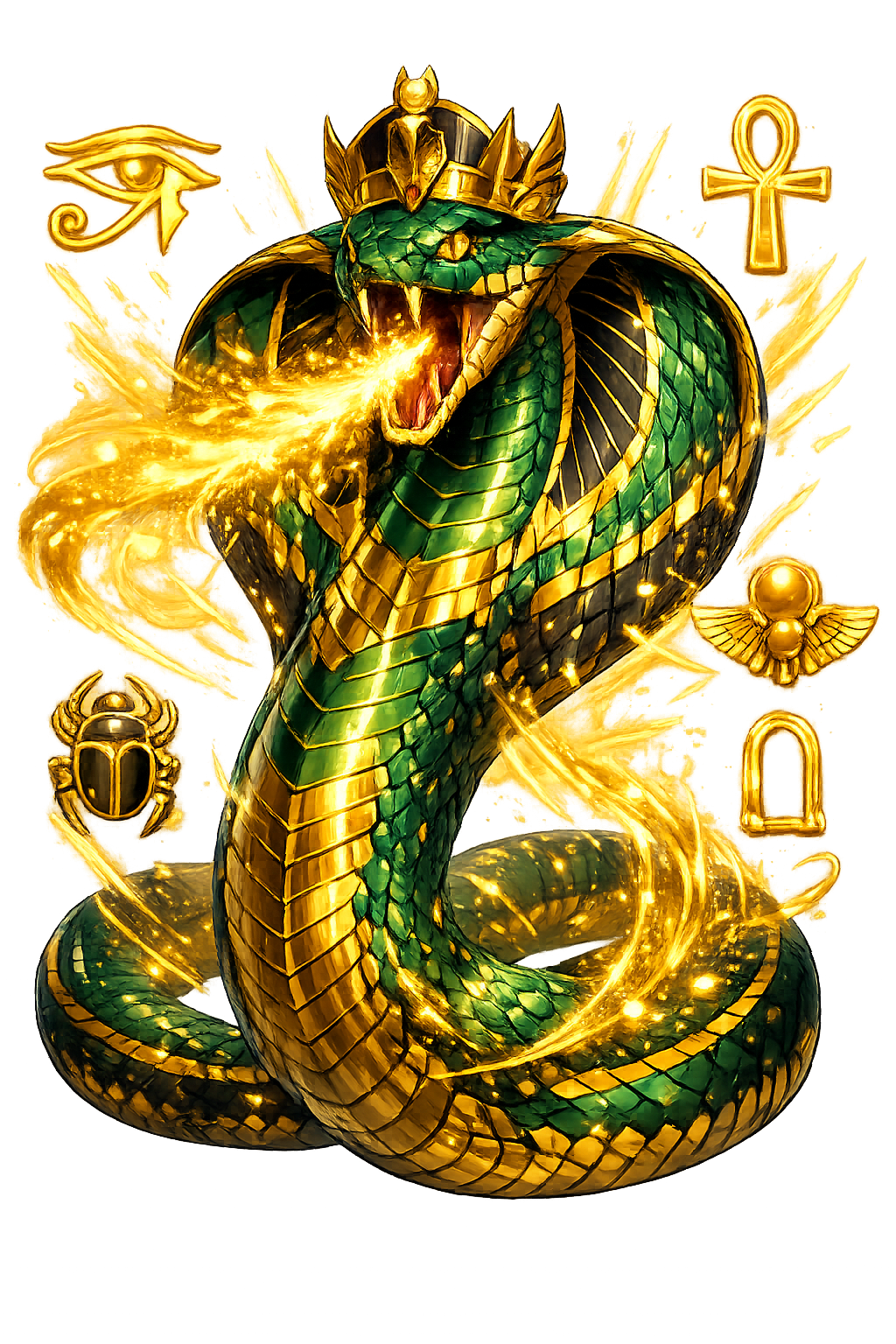
The Cult
Wadjet's chief sanctuary lay at Pe-Dep — the twin Delta towns Greek visitors called Buto — where her temple served as one of Egypt's great oracles: Herodotus counts it among the shrines where Egyptians most trusted divine answers, and describes its sanctuary with the respect he reserves for the old and uncanny. Excavations at Tell el-Fara'in since the 1960s have uncovered Late Period and Ptolemaic temple remains above occupation layers reaching back into prehistory, confirming a cult of extraordinary depth. But her true temple was the royal brow: as one of the Two Ladies she stood witness to every coronation oath for three thousand years, and the daily drama of kingship — crowns donned, enemies smitten, offerings made — ran under her protection. The votive evidence is everywhere and nowhere: no single altar to Wadjet dominates a museum case, yet uraei in gold, faience, and stone guard statues, coffins, and cartouches by the thousand. Her cult was the monarchy itself, worn on the forehead.