Stories of VohuManah
Vohu Manah's mythology runs through the Gāthās' deepest scenes: the complaint of the bull, the choice of the two spirits, the vision on the river Dāitya, and the dark roster of demons set against each Immortal. He is less a hero than the condition of heroism — the good mind without which no right choice is made.
The Gāthās' strangest litigant is cattle. 'The soul of the bull came to you, O Wise One, lamenting' — the lament asks for whom the herds were shaped and who will protect them from violence and ill care (Yasna 29.1, 9). Against the raider and the careless master, the soul of the ox — emblem of every creature that feeds and works for us — demands an advocate, and the divine council deliberates with the Good Mind, promising a prophet who will teach protection through Vohu Manah (Yasna 29.7–10). Later tradition assigns him the guardianship of cattle explicitly, and the bull becomes his living emblem. The lawsuit never closes: the herd's welfare remains the standing test of every settlement. Zoroastrian ethics begins with the weakest plaintiff — a voiceless animal — and its first commandment is husbandry: the good mind is the mind that keeps the herd alive.
'Now the two spirits, in the beginning the twins, renowned to be in conflict' (Yasna 30.3). One, the Bounteous, chose truth as the wise masters do; but the other refused, and through the fury of violence the worst mind, akəm manō, rushed upon mortals (Yasna 30.4–6). Thus Aka Manah — Bad Mind — is born as Vohu Manah's twin and shadow, and every human skull becomes the battlefield where the two contend for attention. The myth reads like psychology before the word existed: the origin of evil is located not in matter, not in fate, but in mentality — a choice of orientation made at the beginning and repeated in every waking hour. Evil is not an invading army but a way of thinking, and goodness likewise — moral life begins as a mental choice repeated daily.
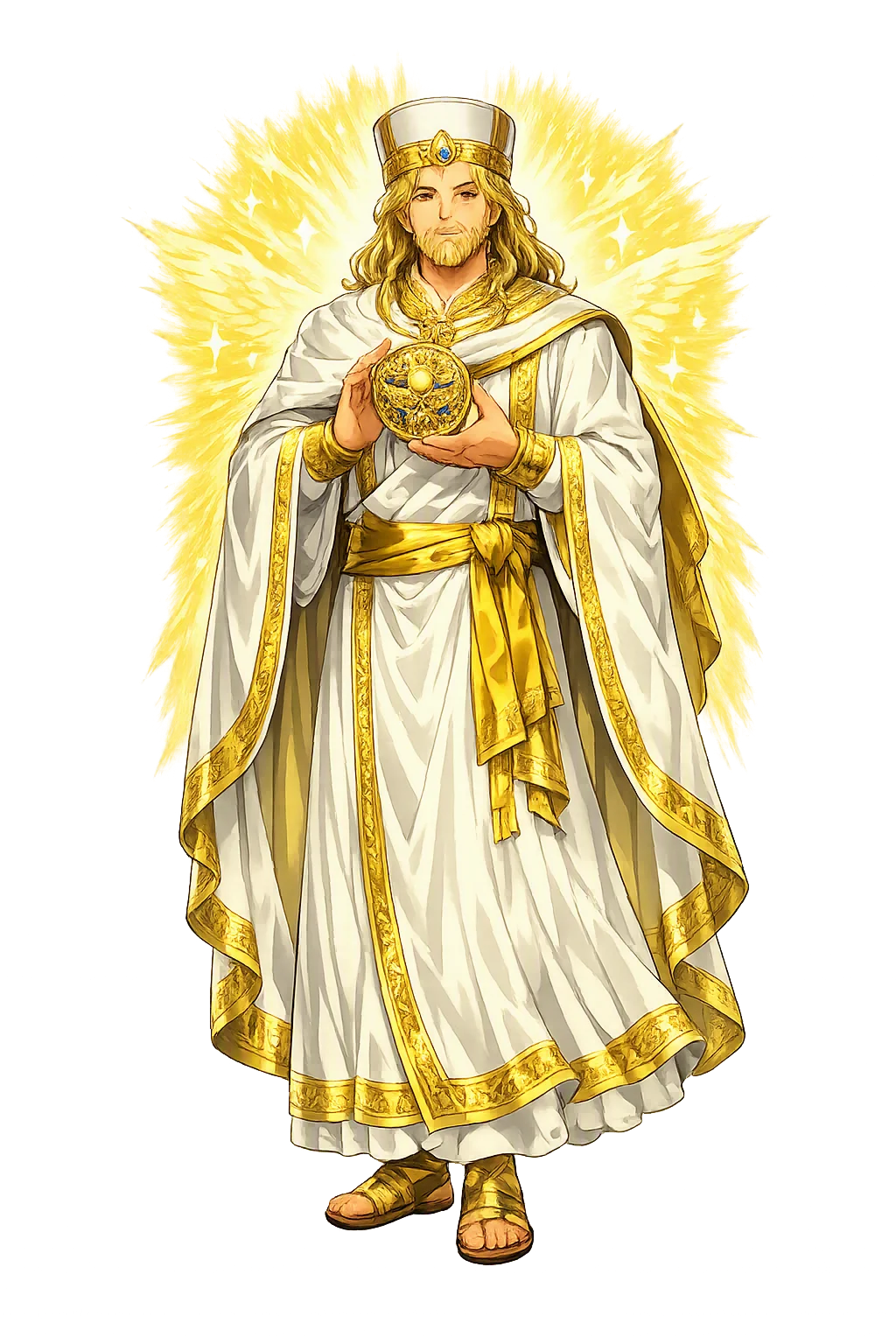
The Pahlavi Dēnkard (Book 7) preserves the great theophany. Zarathuštra, mocked by the sacrificial guilds, withdraws to the ford of the river Dāitya — and there Vohu Manah appears to him in a form of light, come to open the way: bring your questions before the Creator, he says, and the dialogue that becomes the Gāthās begins. The vision sets the pattern of Zoroastrian revelation: the Good Mind is the doorkeeper of wisdom; prayer must be intelligent before it is fervent, and the seeker's disposition is part of the revelation's equipment. Later tradition made Vahman the first of the four Amahraspands set around Ohrmazd and the guardian of the first watch of day. The pattern became doctrine: in the daily round, Vahman's hour is the first watch of morning, and prayer begins where he appeared. Before any angel appears, the seeker must be mentally prepared — theophany rewards the disciplined mind.
The pairing of the minds is a war with fronts. In the demonology of the younger Avesta each Holy Immortal has an appointed destroyer, and the lists are consistent: against Vohu Manah stands Aka Manah; against Ašavahišta the daevas Indra and Saurva; against Haurvatāt and Amərətāt the she-demons Taurvi and Zairi (Vendidad 10.9; Yašt 1). The tradition warns that when Aka Manah advances, herds sicken and counsels divide; when Vohu Manah holds, the herd thrives and deliberation converges. Household, kingdom, and character all run the same circuit: thought first, then word, then the shape of the world. Priests memorized the roster in training; it doubles as a diagnostic chart of social ills. The ruin of households and kingdoms is traced upstream to a corrupted mind — moral infrastructure is mental infrastructure.
Good Mind
VohuManah — Good Mind, Good Purpose — is the first of the six Amesha Spentas, the Holy Immortals who surround Ahura Mazdā. He is the thought that chooses truth before word and deed, the guardian of cattle and patient prosperity, and the divine visitor who appeared to Zarathuštra on the river Dāitya to open the way to revelation.
First of the Amesha Spentas invoked in every Yasna — the thought that chooses Aša before word and deed (Yasna 1.12).
Charged with the soul of the bull and the herds — the slow, patient goods of a well-kept world (Yasna 29).
Opposed at creation by Aka Manah, Bad Mind — the twin and shadow he has fought ever since (Yasna 30.4–6).
His Middle Persian name Vahman lives in the calendar: the month Bahman, its day dedications, and the feast Bahmanagān.
From the original script to the living URL
𐬬𐬊𐬵𐬎 𐬨𐬀𐬥𐬀𐬵
The name in its original Zoroastrian form. VohuManah (𐬬𐬊𐬵𐬎 𐬨𐬀𐬥𐬀𐬵) is attested in the source tradition — “Good thought”. Its original diacritics and script distinctions carry the full phonetic and orthographic weight of the source tradition.
vohumanah
The plain vohumanah form is identical to the Unicode restoration. Because this name is already written in Latin letters, no diacritics, stress, or script information were lost — only capitalization differs.
VohuManah
The Unicode restoration does not need to recover lost marks for VohuManah. Its value is canonical spelling and consistent cataloguing, not the reconstruction of erased orthography. The domain is readable as-is to both DNS and humanity.
VohuManah.com
This restoration is written entirely in ASCII letters — no Punycode encoding stands between VohuManah and the DNS. The domain reads identically to machines and to human eyes.
Owned, ideal, and ASCII forms of VohuManah
VohuManah
Restores 𐬬𐬊𐬵𐬎 𐬨𐬀𐬥𐬀𐬵. The full Unicode restoration. vohumanah.com is not in the PuniCodex collection — it is watched for release; if it drops, this temple upgrades to an owned flagship.
How VohuManah was spoken
How VohuManah travels from ancient script to the modern URL
The lore you have read is the living myth. Extended Lore opens the scholarly vault beneath it: the cult and its material remains, a history of the image, the name after antiquity, a meditation on what the name still means, and the full scholarly apparatus — etymology, orthography, sources.
Enter Extended Lore