PuniCodex

Extended Lore

𐬬𐬊𐬵𐬎 𐬨𐬀𐬥𐬀𐬵 VohuManah

Etymology · Orthography · Cult · Iconography · Reception · Sources

Tier 2 VohuManah
VohuManah — Good Mind, Cattle
01

Quick Facts

Essential information about VohuManah, Good Mind, Cattle

Original Script𐬬𐬊𐬵𐬎 𐬨𐬀𐬥𐬀𐬵
Unicode RestorationVohuManah
Reconstructed Pronunciation/ˌvohu ˈmanah/
PantheonZoroastrian
DomainGood Mind, Cattle
MeaningGood thought
ClassificationTier 2
Primary DomainVohuManah
Sacred SymbolsThe bull, The good word, The garment of light, Bahman, the eleventh month
02

Etymology & Word Family

From original script to Unicode restoration

Original Script 𐬬𐬊𐬵𐬎 𐬨𐬀𐬥𐬀𐬵 VohuManah — "Good thought"
Unicode Restoration VohuManah Canonical scholarly spelling — ASCII-identical
Modern ASCII vohumanah Plain-ASCII fallback

The name VohuManah reaches the modern world through scholarly transliteration of the zoroastrian tradition. Because the conventional spelling uses only Latin letters, its Unicode and ASCII forms coincide — the tradition it carries is in the name itself, not in diacritics.

03

Unicode Character Breakdown

Character-by-character philological analysis

CharacterUnicodeNameBlockPhonetic Role
VU+0056Latin Capital Letter VBasic LatinSame, capitalized
oU+006FLatin Small Letter OBasic LatinSame
hU+0068Latin Small Letter HBasic LatinSame
uU+0075Latin Small Letter UBasic LatinSame
MU+004DLatin Capital Letter MBasic LatinSame, capitalized
aU+0061Latin Small Letter ABasic LatinSame
nU+006ELatin Small Letter NBasic LatinSame
aU+0061Latin Small Letter ABasic LatinSame
hU+0068Latin Small Letter HBasic LatinSame

The Tier 2 classification here reflects fidelity to the attested tradition, not recovered diacritics: every character of VohuManah already survives in ASCII. What the restoration preserves is the canonical spelling itself — the form scholarship standardised.

04

Cult & Worship

How the sacred was kept — rites, sanctuaries, remains

The Cult

Vohu Manah is worshipped the way thoughts are kept — hourly, invisibly, in the liturgy. Every Yasna opens with his invocation as first of the Amesha Spentas after Ahura Mazdā, so every Zoroastrian act of worship is his office before it is anyone else's; the priesthood serves him as it serves all the Immortals, with no order or shrine of his own. His fixed cult is the calendar: the eleventh month, Bahman, and the second day of every month bear his name, and the name-day feast — Bahmanagān, Bahman of Bahman — is recorded by al-Bīrūnī among the festivals of the Iranian year and remembered still in Zoroastrian communities of Iran and India. His material cult is the herd: the care of cattle assigned to him in tradition (Yasna 29) made husbandry itself a devotion — feeding the flock is the worship the laity keeps. No fire temple is his; no image stands. The cult of the Good Mind is a daily disposition wearing a calendar for its vestments.

In the Earth

An abstract Immortal leaves few images: Vohu Manah's 'archaeology' is calendrical and liturgical rather than sculptural. The Sasanian and later Zoroastrian calendars preserve his dedications — the month Bahman and the second day of every month — in colophons, ephemerides, and festival lists transmitted from Iran to India. Avestan manuscripts carrying the twenty-ninth Yasna and the invocation lists of Yasna 1 document his cult in continuous use, and the modern celebration of Bahmanagān in Iran and the diaspora is the dedication's living form.

05

Iconography

How VohuManah was imaged across the ages

The Image

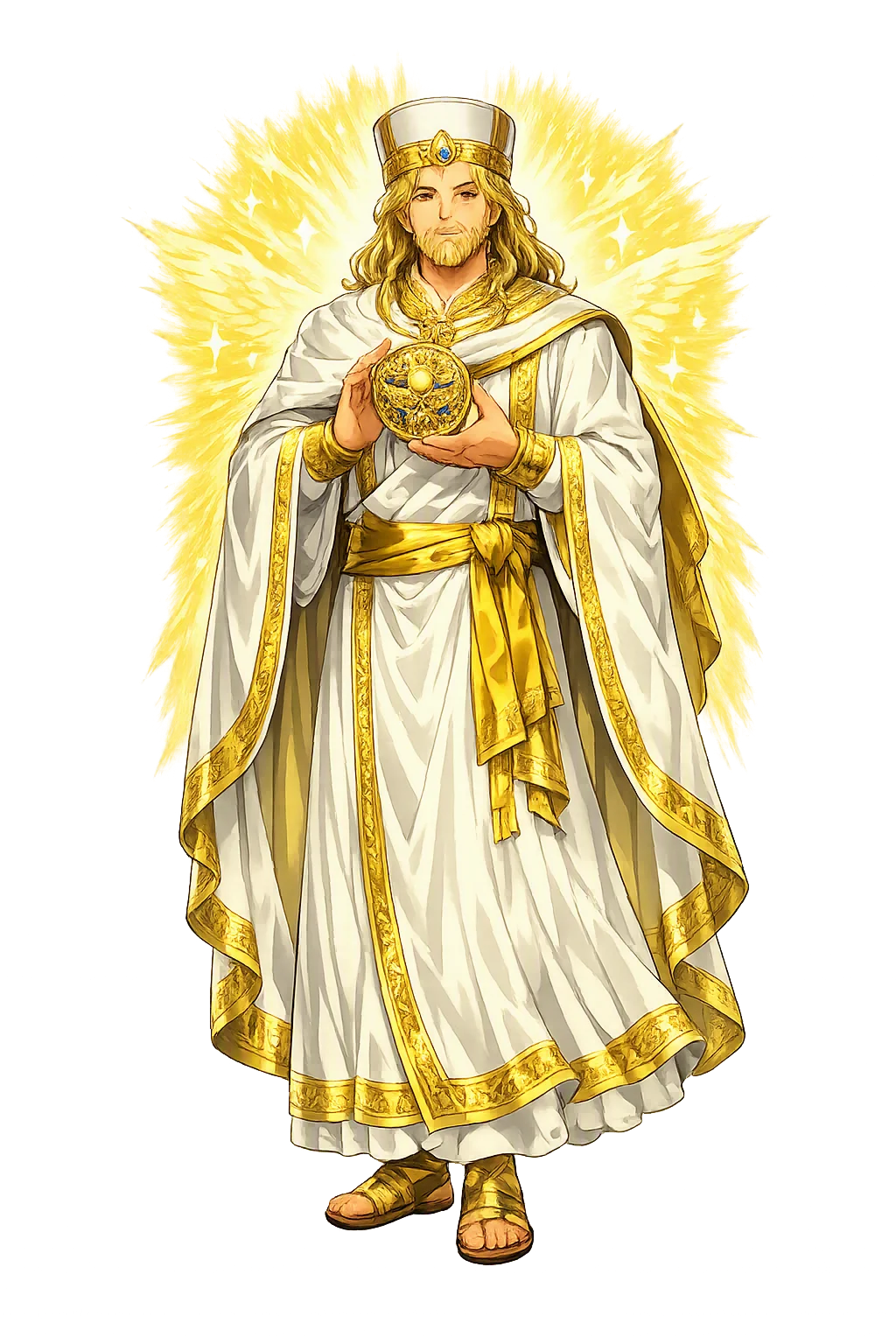
Vohu Manah has no face, and that is doctrine rather than accident: the Zoroastrian tradition did not image the Amesha Spentas, and neither Sasanian art nor the fire temples left a single identified figure of him. What the texts give instead are attributes of almost painful abstraction: the 'garment of light' in which he appeared to Zarathuštra at the ford of the Dāitya; the bull whose soul pleads in the second Gāthā and whose keeping is his charge; the first watch of morning assigned to him in the Pahlavi books. Later centuries kept the aniconism: Pahlavi theology ranks him first among the seven Amahraspands around Ohrmazd without ever describing a body, and the manuscript tradition — Avestan codices, Persian festival tables — decorates everything with his name and nothing with his likeness. Modern Zoroastrian devotional art, when it dares, shows a radiant youth with the white bull beside him; the image is new, the attributes old. He remains what he was in the vision: light that can be addressed but not depicted.

06

Reception & Transformation

The name after its own age — transmission, translation, survival

Afterlives

Vohu Manah's transmission is the biography of a sound. The Sasanian church fixed his liturgy in the compiled Avesta — the sixth-century redaction that gave the Gāthās and their guardians canonical shape — but the oldest surviving Avestan manuscripts are thirteenth-century, so for a thousand years the Good Mind crossed the generations by breath and memory before he reached paper. Islam's centuries made him a citizen of Persian culture: in Middle Persian he became Vahman, first among the Amahraspands of the Bundahišn; al-Bīrūnī, writing around 1000, still listed his feast and his month among the furniture of the Iranian year. The calendar proved the great conservator: even where theology was argued away, every date that read 'Bahman' kept the dedication audible, and the name itself became one of the commonest male names in Iran — a god preserved as a birthday present. Europe met him late: Anquetil du Perron carried the Avesta back from India in the 1760s and printed it in 1771, scandal and all; the nineteenth century — Westergaard's edition of 1852–54, Geldner's of the following decades — built the philology that lets the two-minds doctrine be read again in its own words. Modern scholarship reads him as the tradition's own psychology: moral life beginning upstream, in attention. A thought made immortal by repetition — the reception is the idea.

Identifications Across Traditions

Vohu Manah passed into Middle Persian as Vahman — and into every Iranian calendar as Bahman, the eleventh month, with its second day also his; Bahmanagān, his autumn feast, is still kept. In the Shahnameh, Bahman is the very name of Esfandiyār's son — epic memory of the old divine name in royal flesh. Pahlavi theology ranked him first among the Amahraspands set around Ohrmazd, and in medieval Zoroastrian speculation Vahman became the guardian of the first watch of day and the patron of the good disposition. His adversary Aka Manah, by contrast, survives only as a concept — Bad Mind — proof that in this tradition the better twin writes the history.

Modern Legacy

The good thought is the first bead of Zoroastrianism's triad — good thoughts, good words, good deeds — and Vohu Manah is that bead incarnate. His name is a calendar name (Bahman), a feast (Bahmanagān), and one of the most common male names in Iran. In Zoroastrian ethics the sequence matters: the deed is downstream of the word, the word downstream of the thought, so the tradition locates moral reform exactly where modern psychology does — upstream, in attention and habit. Few gods survive so usefully: a monthly reminder that the mind is the first battlefield and the first garden.

07

The Meditation

What VohuManah means — beyond the dictionary

Cattle are the clue. Vohu Manah's charge is not intellect but the slow, warm, patient goods: herds, harvests, the long prosperity of a well-kept household. The Good Mind is the mindset of the good shepherd — unhurried, watchful, kind to what feeds us. Against it stands Aka Manah, the mind that is clever, quick, and ruinous. The pair maps uncomfortably well onto our own economy of attention: the feed engineered to be bad for us is a cattle-drive run by Aka Manah. Zarathuštra's question — whose mind are you thinking with? — is four millennia old and still the diagnostic question of a life.

08

Frequently Asked Questions

Common questions about VohuManah, Good Mind, Cattle, and Unicode restoration

01How do you pronounce VohuManah?

In reconstructed pronunciation, VohuManah is /ˌvohu ˈmanah/ — approximately voh-HOO MAH-nah — stress on the second word; the final h is a breath, barely heard.

02What does VohuManah mean?

VohuManah means Good thought in the zoroastrian tradition.

03What are the symbols of VohuManah?

VohuManah is associated with The bull (The soul of the ox whose complaint opens the Gāthās' ethics; cattle are his charge (Yasna 29)), The good word (Thought made speech: the middle term of the triad good thought, good word, good deed), The garment of light (In Zarathuštra's vision Vahman appears as a figure of light on the river Dāitya (Dēnkard, Book 7)), Bahman, the eleventh month (His Middle Persian name as a living calendar dedication and the feast Bahmanagān).

04Why restore VohuManah in Unicode?

VohuManah is written entirely in ASCII letters, so its restoration is about canonical fidelity rather than recovered diacritics: the temple fixes the name in its scholarly standard spelling, attested in the source tradition, instead of leaving it to drift.

05What is the most important myth about VohuManah?

“The Soul of the Bull” — the Yasna 29 story that anchors the mythology of VohuManah, told in full on the lore page.

09

Scholarly Sources

The philological foundations of this restoration

Every claim on this page is grounded in established scholarship. The orthographic restorations follow disciplinary convention. The etymological chain follows the best available reference works. This is not invention — it is resurrection through scholarship.

◈

Lexicography & Philology

  • AirWb
  • Bartholomae
◎

Primary Texts

  • Avesta, Yasna 29 (the soul of the bull)
  • Avesta, Yasna 30 (the two spirits)
  • Avesta, Yašt 1; Vendidad 10.9 (the opposing daevas)
◉

Archaeology & Art History

  • Material evidence — iconography, inscriptions, and temple archaeology — for VohuManah and related cults.
✦

Religious Studies

  • Dēnkard, Book 7 (Zarathuštra's vision by the Dāitya)
  • Ferdowsi, Shahnameh (Bahman, the Middle Persian form of the name)
  • Boyce, Zoroastrians: Their Religious Beliefs and Practices
  • Skjærvø, The Spirit of Zoroastrianism
Return

The Surface Awaits

You have traced the name from its earliest attestation to its Unicode restoration. Now return to the myth. The story is where the name lives.

Back to Lore
VohuManah mascot