
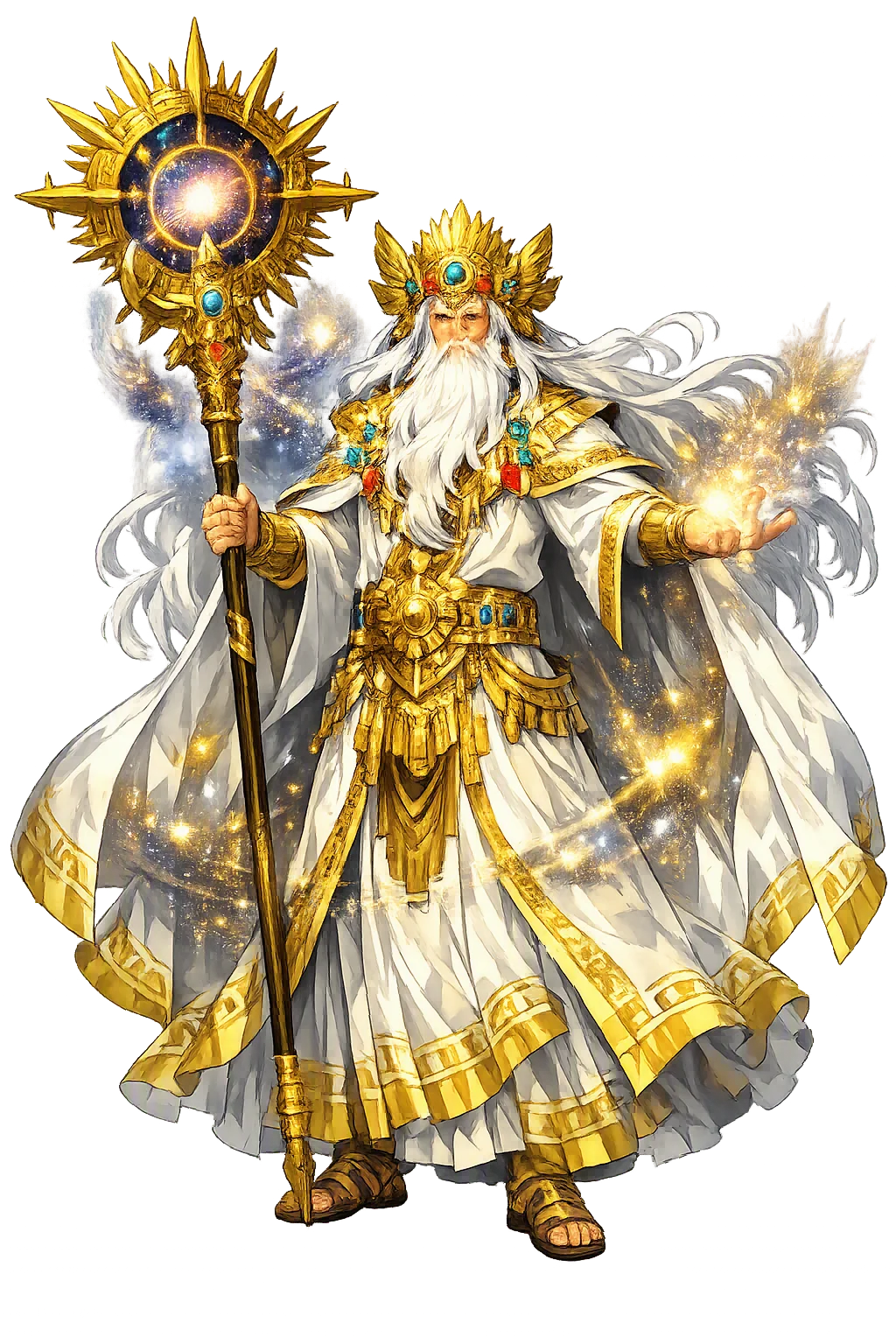
The Cult
Wiraqucha was worshipped at the places where the world was made. The great temple at Cacha (Raqchi), south of Cusco — the largest roofed structure in the Inca world, whose central adobe mass still stands — was his, housing a colossal statue the chroniclers describe as jeweled and gilded; tradition made it the very shrine where the weeping god appeared at the springs. In Cusco the Coricancha kept a solid-gold image of the creator, described by Cobo and Murúa and melted within years of 1532. And the geography itself served as his cult calendar: the sacred rock on the Island of the Sun, where the new humanity was called from the flood, drew state processions and ordinary pilgrims alike, and Betanzos describes shrine-keeping around the lake. No festival in his name survives in the record — his were the rites of state pilgrimage rather than a fixed feast — and no priesthood of the creator is separately attested. The architecture tells the theology: the biggest temple in the empire for the god who made it, then withdrew.