
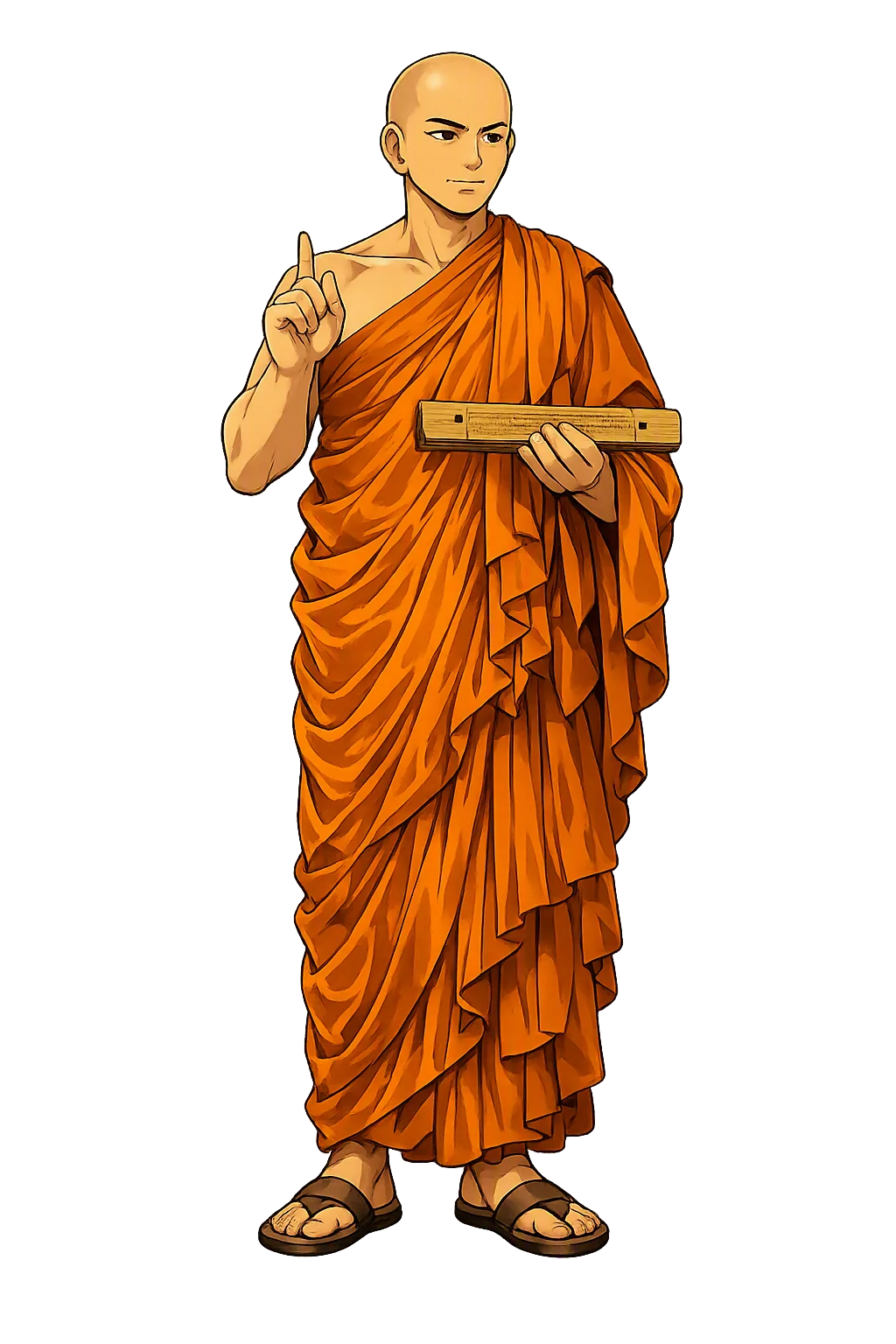
The Cult
Vasubandhu is not worshipped; he is venerated — and the distinction is the cult. Buddhist communities honor him as a patriarch: in East Asia his image stands in the lineages of the Yogācāra transmission, and in Japan's Hossō school the devotion became concrete at Kōfukuji in Nara, where Kamakura-period masters of the Kei school carved the great patriarchs of the sect — among them Vasubandhu — as standing monks in formal robes, images now counted among the treasures of Japanese Buddhist sculpture. In Tibet he is invoked by name: the scholastic curriculum opens with his verses, and colophons and opening prayers hail the lord Vasubandhu (dbyig gnyen) before the debate begins. Tradition makes him a son of Gandhāra, the monastery country around Puruṣapura (Peshawar), and sends his passing toward the Pure Land of Amitābha. No shrine dedicated solely to him survives; his living cult is the daily recitation of the Kośa — fifteen centuries of monks memorizing a book the way other traditions light lamps.