PuniCodex

Extended Lore

ᚢᛅᚱ Vár

Etymology · Orthography · Cult · Iconography · Reception · Sources

Tier 1 Vár.com
Vár — Oaths, Marriage Agreements
01

Quick Facts

Essential information about Vár, Oaths, Marriage Agreements

Original Scriptᚢᛅᚱ
Unicode RestorationVár
Reconstructed Pronunciation/vaːr/
PantheonNorse
DomainOaths, Marriage Agreements
MeaningAgreement, vow
ClassificationTier 1
Primary DomainVár.com
Sacred SymbolsThe ring or handshake, The written or spoken contract, The hearth, Joined hands
02

Etymology & Word Family

From original script to Unicode restoration

Original Script ᚢᛅᚱ Vár — "Agreement, vow"
Unicode Restoration Vár Restored stress, length, and script
Modern ASCII var Plain-ASCII fallback

Old Norse Vár, goddess who hears oaths and contracts; her name means "agreement, vow".

03

Unicode Character Breakdown

Character-by-character philological analysis

CharacterUnicodeNameBlockPhonetic Role
VU+0056Latin Capital Letter VBasic LatinSame, capitalized
áU+00E1Latin Small Letter A with AcuteLatin-1 SupplementAcute on a
rU+0072Latin Small Letter RBasic LatinSame

The Tier 1 classification reflects how much of the original phonology this restoration preserves — stress and vowel length for Greek names, distinctive letters and diacritics for every other tradition.

04

Cult & Worship

How the sacred was kept — rites, sanctuaries, remains

The Cult

Vár was never worshipped in a place; she was worshipped in a sentence. Her cult was the sworn oath itself — the vár, the pledge spoken aloud before witnesses — and the sources never name a temple, festival, or priesthood of hers. The evidence is philological and poetic: her name is the common Old Norse noun for a vow or betrothal, and the eddic poets use the plural várar of sacred compacts whose breach invites ruin — the broken oaths Guðrún hurls at the bound Gunnarr in Atlakviða, the pledge Dagr swears and betrays in Helgakviða Hundingsbana II. Snorri's entry, one sentence long in Gylfaginning 35, says she punishes those who break promises and perjure themselves. The assembly field where hands were joined was her sanctuary in everything but name. Modern Heathen weddings sometimes call on her as witness — a deliberate, documented revival rather than a surviving rite.

In the Earth

Vár is a purely textual figure. No runestone, image, or place-name is securely hers. Her presence is in the legal vocabulary of Old Norse and in the manuscript tradition of Snorri's Prose Edda.

05

Iconography

How Vár was imaged across the ages

The Image

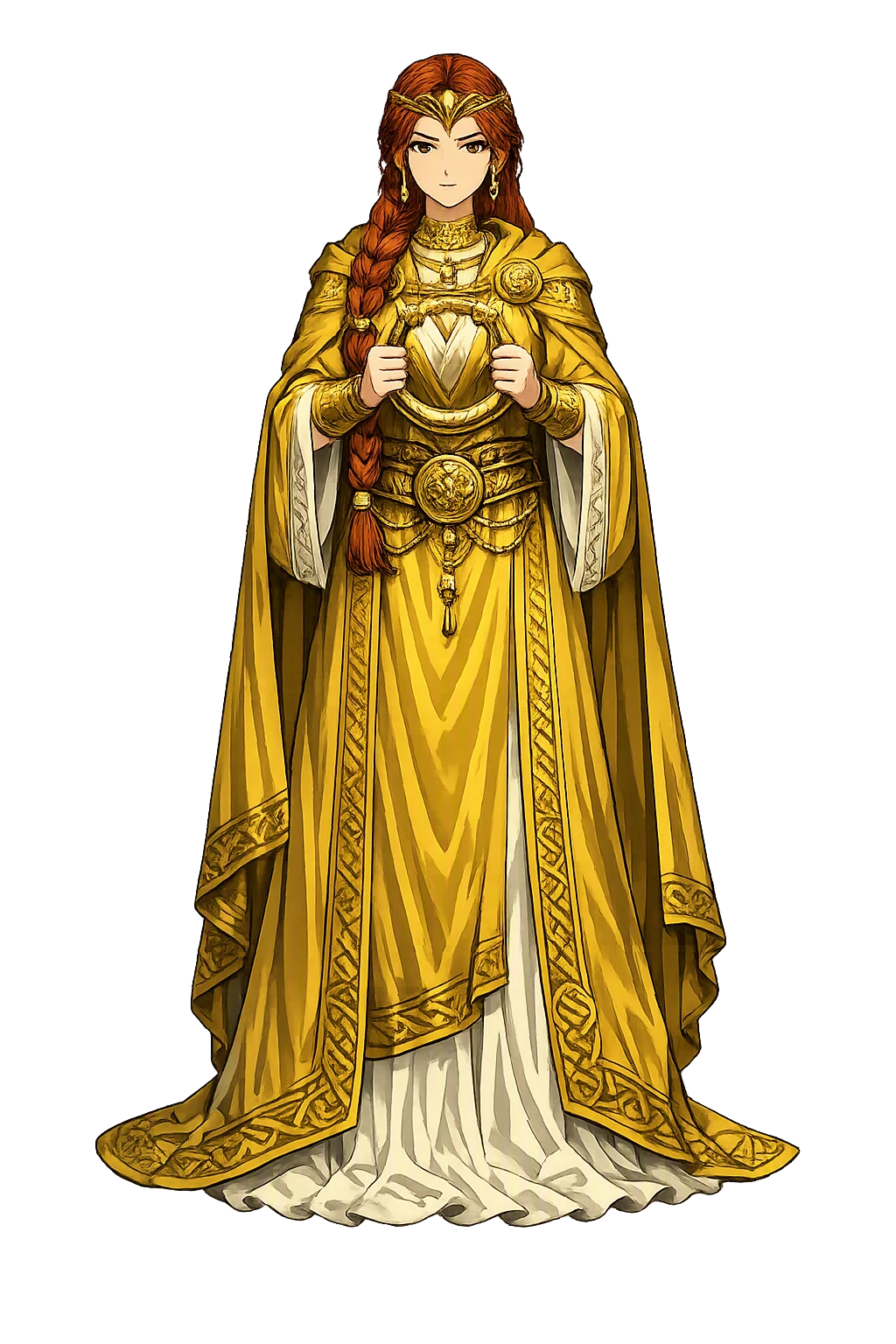
No depiction of Vár survives, and the medieval art of Scandinavia never gave her a form. What she 'looks like' in the sources is a gesture: the joined hands of the betrothal, the spoken pledge — Snorri defines her entirely by what she hears and punishes. Archaeology has produced rings and arm-rings used in oath-swearing across the Germanic world, but none names her. The ring, the clasped hands, and the hearth that modern illustrations set beside her are extrapolations from her office, not attributes from any image tradition. She remains one of the ásynjur who exist only as words — a goddess whose portrait is a contract.

06

Reception & Transformation

The name after its own age — transmission, translation, survival

Afterlives

Vár passed out of the Middle Ages the way the whole Edda did: in parchment, then in print. Her single sentence in Gylfaginning rides in the great codices — the Codex Regius of about 1300, the Codex Upsaliensis, the Codex Wormianus with its þulur — and reached the wider world with Resen's 1665 edition, the first printed Edda. Romantic scholarship made her legible to Europe: Grimm's Deutsche Mythologie (1835) counted the vow-goddess among the moral personifications of the North, and the great Icelandic dictionaries — Cleasby–Vigfusson (1874), Zoëga (1910) — preserved the noun vár with its legal flavor for philologists. Nineteenth-century legal historians read her as a fossil of Germanic oath-law, the divine sanction behind the thing's sworn compacts. English readers met her through Brodeur's 1916 translation and Faulkes's 1987 Edda; modern Iceland still gives girls the name Vár, keeping the word alive as a name exactly as the myth kept the name as a word.

Identifications Across Traditions

Vár is the Norse counterpart to several oath- and marriage-goddesses. The Greek Hera presides over lawful marriage; the Roman Juno is invoked in weddings as Juno Pronuba; the Germanic Tīw gives his name to Tuesday and to the thing, the assembly where oaths were sworn. Within Norse tradition, Vár is distinct from Frigg (the queenly wife) and Freyja (the goddess of desire): she is the contract itself, the spoken promise that makes marriage a matter of public honor rather than private passion.

Modern Legacy

Vár survives in the Scandinavian and Germanic legal vocabulary of vows and in modern Heathen wedding ceremonies, where she is sometimes invoked as witness. Her name is less common in popular retellings than those of Freyja or Frigg, but her function remains central: every wedding is, in some sense, made before Vár. Restoring Vár preserves the long vowel and acute accent that mark the name as the Old Norse word for the pledge itself.

07

The Meditation

What Vár means — beyond the dictionary

Vár is the goddess who takes words seriously. In a world where oaths were binding not because of a court but because of honor, she was the divine reminder that speech creates obligation. A vow spoken in her name could not be casually broken; to do so was to insult the goddess and the community that trusted her.

Her meditation is the meditation of integrity. She asks: what have you promised, and have you kept your word? Not all vows should be kept — some are extracted by force or made in ignorance — but the habit of keeping one's word is the foundation of trust. Vár is the goddess of that foundation.

08

Frequently Asked Questions

Common questions about Vár, Oaths, Marriage Agreements, and Unicode restoration

01How do you pronounce Vár?

In reconstructed pronunciation, Vár is /vaːr/ — approximately 'VAHR' — one long syllable, the vowel held like the 'a' in 'father' and ending with a light rolled 'r'.

02What does Vár mean?

Vár means Agreement, vow in the norse tradition.

03What are the symbols of Vár?

Vár is associated with The ring or handshake (The outward sign of the vow she witnesses), The written or spoken contract (The words that bind, recorded in memory and law), The hearth (The household founded upon the marriage agreement), Joined hands (The gesture of betrothal made in her sight).

04Why restore Vár in Unicode?

Plain ASCII var strips the stress, length, and script that make the name specific. Unicode restoration returns the name to its original written dignity.

05What is the most important myth about Vár?

“Goddess of Betrothal” — the Gylfaginning 35 story that anchors the mythology of Vár, told in full on the lore page.

09

Scholarly Sources

The philological foundations of this restoration

Every claim on this page is grounded in established scholarship. The orthographic restorations follow disciplinary convention. The etymological chain follows the best available reference works. This is not invention — it is resurrection through scholarship.

◈

Lexicography & Philology

  • Cleasby-Vigfusson
◎

Primary Texts

  • Prose Edda
  • Snorri Sturluson, Prose Edda: Gylfaginning 35 (Vár as goddess of vows and betrothals)
  • Prose Edda, þulur (Vár in the goddess name-lists)
◉

Archaeology & Art History

  • Material evidence — iconography, inscriptions, and temple archaeology — for Vár and related cults.
✦

Religious Studies

  • Cleasby–Vigfusson, An Icelandic-English Dictionary, s.v. Vár, vár
  • Zoëga, A Concise Dictionary of Old Icelandic, s.v. Vár
  • Simek, Dictionary of Northern Mythology, s.v. Vár
  • Lindow, Norse Mythology: A Guide, s.v. Vár
Return

The Surface Awaits

You have traced the name from its earliest attestation to its Unicode restoration. Now return to the myth. The story is where the name lives.

Back to Lore
Vár mascot