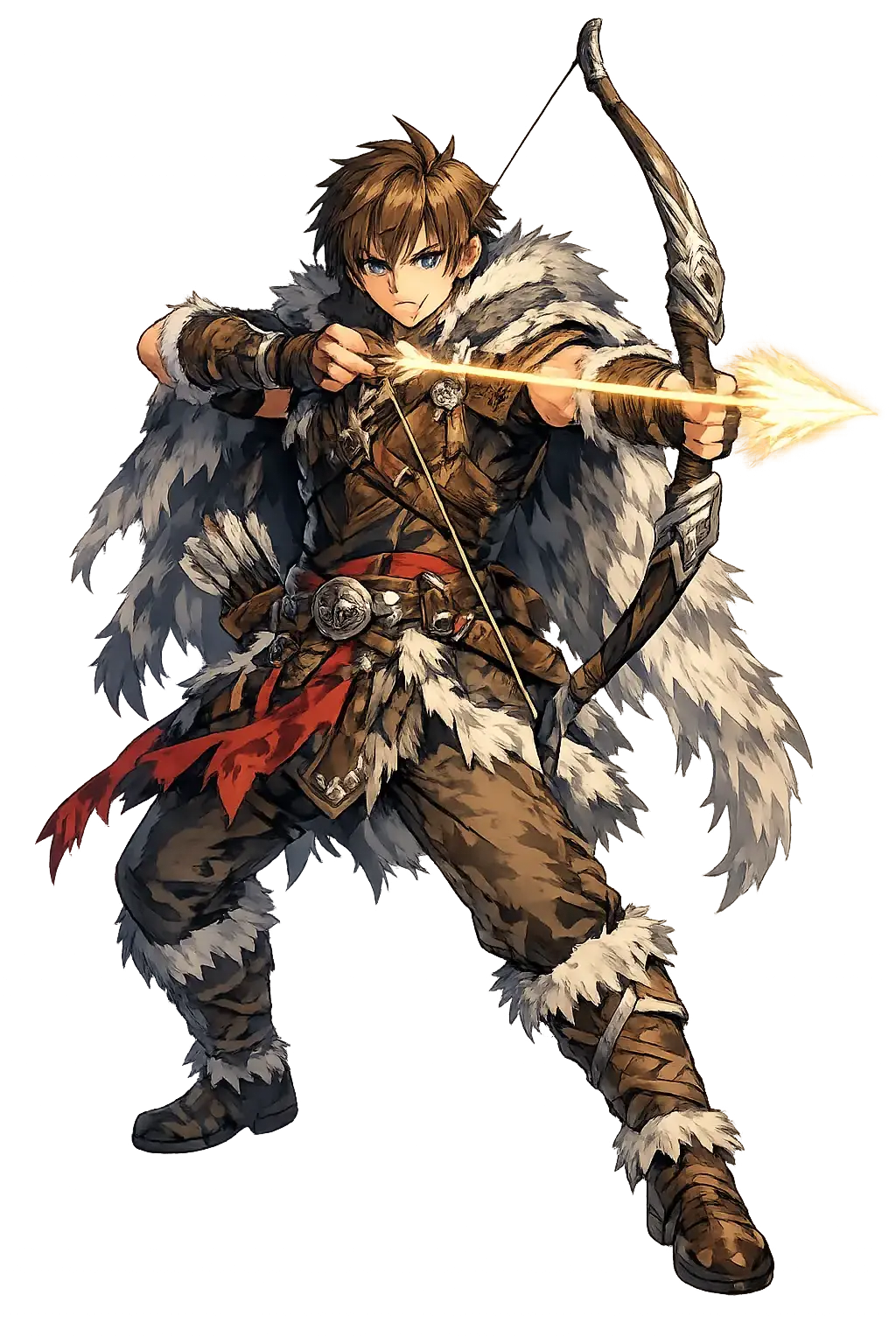
Stories of Váli
Váli appears briefly but decisively in the Norse corpus. His myths are episodes in the larger tragedy of Baldr and the doom of the gods — a prophecy, a one-day life, a namesake's horror, and a quiet seat in the world after the end.
The tragedy begins before Váli is conceived. After Baldr's dreams forebode his death, Óðinn saddles Sleipnir and rides to the eastern gate of Hel's hall, where he wakes a dead seeress with the songs of the dead (Baldrs draumar). She tells him Baldr's slayer will be his own blind brother Höðr, and reveals the sequel: 'Rindr will bear Váli in the western halls — Óðinn's son, one night old — and that boy will not wash his hands nor comb his hair before he bears Baldr's adversary to the pyre.' The same prophecy stands in Vafþrúðnismál 51. Before Baldr is even dead, the avenger is already named. The myth means that in this cosmos vengeance is not a reaction but a fate — scheduled at the origin of the crime, awaiting only its executor's birth.
Snorri's Gylfaginning (49) tells the deed. When the ransom of Baldr fails — thwarted by Loki, who took the shape of a giantess in Hel — vengeance becomes the remaining duty. Óðinn goes to the giantess Rindr, woos her against her will (Saxo retells the courtship as a full saga of deception), and begets a son. Váli is born in a single night; by the next morning he is fully grown, armed, and sworn, and he shoots Höðr in the holy place at Óðinn's command. One day elapses between cradle and killing. The gods accept this compressed life without comment — no one asks what Váli wants, because he exists only as the answer to Baldr's death. The myth means that retributive justice in the Eddic world is a machine: it runs on a child, consumes him in a day, and calls the result order.
The figure who actually set Baldr's death in motion must also be answered. Loki flees, hides as a salmon beneath Franangr's falls, is taken by the gods with his own net, and is carried to a stony cavern. Snorri is careful with the names: the gods take Loki's sons, Váli and Nari (elsewhere Narfi), and turn Váli into a wolf, in which shape he tears his brother to pieces. From Nari's entrails the gods fashion unbreakable bonds, fasten Loki to three stones across three cliffs, and set Skaði to hang a snake above his face so that its venom drips until Ragnarǫk. Sigyn, his faithful wife, stands holding a bowl to catch the poison; when she turns to empty it, the drops strike him, and his writhing shakes the earth — 'that is what men call earthquakes.' This wolf-Váli is Loki's son, a namesake of Óðinn's avenger, and the confusion of the two is as old as the manuscripts. The myth means the house of Loki answers for Baldr with its own children's bodies: vengeance here is not surgical but hereditary.
Váli's epilogue is quiet. The Völuspá promises that after the twilight the land will rise green again from the sea, and Snorri's Gylfaginning (53) takes attendance among the survivors: Víðarr and Váli, and Baldr and Höðr returning from Hel — the avenger and the avenged sitting down together in the new world. Nothing further is told of him; he has no stories after the ending, because a one-day life has no room for aftermath. That he is listed at all matters: of all Óðinn's sons, it is the weaponized child — the god who never chose anything — who inherits the renewed earth. The myth suggests that what survives Ragnarǫk is not the great powers but the functions they served: the avenging hand still open in a world that has nothing left to avenge.
Vengeance, Inevitability, and the Binding of Loki
Váli is the son of Óðinn by the giantess Rindr, born to avenge Baldr's death. He grows to adulthood in a single day, kills the blind Höðr, and survives Ragnarök to inherit the new world. His life is compressed into a single mythic function: the necessary violence that follows an unforgivable killing.
Born, armed, and grown to manhood in a single day to fulfil vengeance.
He kills the blind god who, tricked by Loki, shot the mistletoe at Baldr.
Loki's son Váli, not Óðinn's, is turned into a wolf in the binding of Loki; the namesake confusion is as old as the manuscripts.
Unlike most gods, Váli lives through the twilight to inhabit the renewed earth.
From the original script to the living URL
ᚢᛅᛚᛁ
The name in its original Norse form. Váli (ᚢᛅᛚᛁ) is attested in the source tradition — “The chosen”. Its acute stress marks carry the full phonetic and orthographic weight of the source tradition.
vali
Reduced to plain vali, the name loses everything that made it specific: acute stress marks. What remains is an ASCII string that machines can parse but that no longer speaks with its original voice.
Váli
The Unicode restoration recovers what ASCII flattened. Váli restores acute stress marks, returning the name to its original written dignity. The domain encodes to Punycode, but the browser displays the truth.
Váli.com → xn--vli-ela.com
The non-ASCII characters in Váli are encoded while the ASCII remains visible. To the DNS, it is Punycode. To humanity, it is Váli.
Owned, ideal, and ASCII forms of Váli
Váli
Restores ᚢᛅᛚᛁ. The live temple domain — váli.com.
vali
Flattens ᚢᛅᛚᛁ. The plain ASCII fallback — what DNS and legacy systems see.
How Váli was spoken
How Váli travels from ancient script to the modern URL
The lore you have read is the living myth. Extended Lore opens the scholarly vault beneath it: the cult and its material remains, a history of the image, the name after antiquity, a meditation on what the name still means, and the full scholarly apparatus — etymology, orthography, sources.
Enter Extended Lore