PuniCodex

Extended Lore

Urcaguary

Etymology · Orthography · Cult · Iconography · Reception · Sources

Tier 2 Urcaguary
Urcaguary — Underworld Jewels
01

Quick Facts

Essential information about Urcaguary, Underworld Jewels

Scholarly TransliterationUrcaguary
Unicode RestorationUrcaguary
Reconstructed Pronunciation/ˈur.ka.wa.ɾi/
PantheonIncan
DomainUnderworld Jewels
MeaningHe of the underground
ClassificationTier 2
Primary DomainUrcaguary
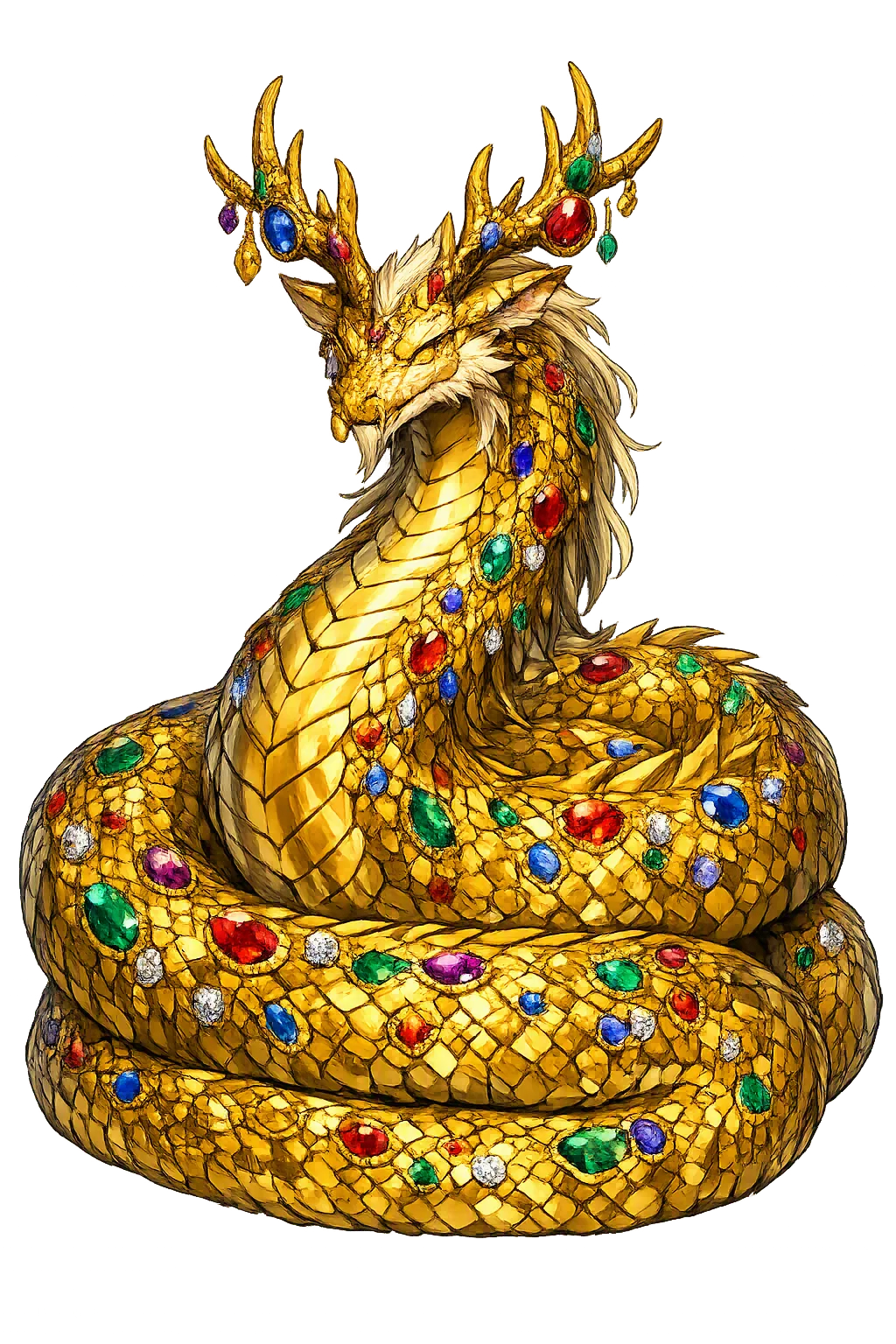
Sacred SymbolsGold chains, Emeralds and precious stones, The taruka (Andean deer) head, The serpent body, The mountain vault
02

Etymology & Word Family

From original script to Unicode restoration

Scholarly Transliteration Urcaguary Urcaguary — "He of the underground"
Unicode Restoration Urcaguary Canonical scholarly spelling — ASCII-identical
Modern ASCII urcaguary Plain-ASCII fallback

The name Urcaguary reaches the modern world through scholarly transliteration of the incan tradition. Because the conventional spelling uses only Latin letters, its Unicode and ASCII forms coincide — the tradition it carries is in the name itself, not in diacritics.

03

Unicode Character Breakdown

Character-by-character philological analysis

CharacterUnicodeNameBlockPhonetic Role
UU+0055Latin Capital Letter UBasic LatinSame, capitalized
rU+0072Latin Small Letter RBasic LatinSame
cU+0063Latin Small Letter CBasic LatinSame
aU+0061Latin Small Letter ABasic LatinSame
gU+0067Latin Small Letter GBasic LatinSame
uU+0075Latin Small Letter UBasic LatinSame
aU+0061Latin Small Letter ABasic LatinSame
rU+0072Latin Small Letter RBasic LatinSame
yU+0079Latin Small Letter YBasic LatinSame

The Tier 2 classification here reflects fidelity to the attested tradition, not recovered diacritics: every character of Urcaguary already survives in ASCII. What the restoration preserves is the canonical spelling itself — the form scholarship standardised.

04

Cult & Worship

How the sacred was kept — rites, sanctuaries, remains

The Cult

No temple, altar, or priesthood of Urcaguary is recorded, and no pre-Columbian rite can be securely assigned to him: the god of hidden treasure kept his own cult hidden. What exists is the chroniclers' notice — Murúa and Cobo name him as the deity of the metals and gems sealed in the earth and describe mining shrines where ore-rich mountains received offerings — and the living etiquette those shrines explain. From Potosí to the central Andes, miners have for centuries poured chicha, laid coca, and burned cigarettes for the powers of the mine before the first charge is set, a courtesy paid to the mountain lord and to the Tío of the deep workings; ethnographers have documented the rite continuously since the early twentieth century. Urcaguary stands behind it as its theology: the underground wealth belongs first to the guardian, and gifts earn a share. Modern folklore collections that dress him as a European dragon on a hoard describe no attested cult. The real one is the ch'alla at the mine face, still spoken in Quechua.

In the Earth

No temple, cult statue or offering securely attributable to Urcaguary survives; the figure's archaeology is textual. The chronicles describe the golden effigies and huancas of the Coricancha and of provincial shrines — works seized and melted between 1533 and the 1570s, known today only through Cobo, Murúa and Cieza de León. Mining archaeology supplies the milieu: pre-Hispanic workings at Potosí's Cerro Rico and across the central Andes, stone hammers, ore-processing floors and shaft burials that kept the mountain's dead close to its metal. Andean art gives the iconography of his form without the name — serpents and deer crowd Moche and Inca metalwork and rock art — but no piece can be assigned to this deity with confidence.

05

Iconography

How Urcaguary was imaged across the ages

The Image

No image of Urcaguary survives — or rather, none can be named: Andean serpents and deer crowd Moche and Inca metalwork and rock art, but not one piece can be assigned to this deity with confidence. The figure's body is a product of later tradition, and the record should say so plainly: a great serpent wearing the head of the taruka, the Andean deer, gold chains and precious stones linked along the tail. It is a precise zoology of guarding — the serpent that coils through the ore veins, the deer that watches and cannot be caught — and in the same layer of folklore the guardian serpent of the depths, Hurkaway, is identified with Urcaguary, which is how the guardian acquired his winding form. What the chroniclers themselves saw was not an image but an absence: the melted huancas of the shrines, described at length by Cobo and Murúa, known today only as ingots in a Spanish ledger. The image evidence is lacking; the attributes come from texts, and the texts are late.

06

Reception & Transformation

The name after its own age — transmission, translation, survival

Afterlives

Urcaguary's afterlife is the afterlife of a manuscript. The chronicles that preserve him — Murúa's Historia general del Piru, written in 1616 and printed only in 1922–25, and Cobo's Historia del Nuevo Mundo, whose manuscript waited for Jiménez de la Espada's edition of 1890–93 — reached the learned world centuries after they were written, so the god of the underground treasury was 'discovered' by modernity in the age of positivism, not of conquistadors. Nineteenth-century antiquarianism read him through European categories — a genie of the mines, a dragon on a hoard — and Andean folklore compilations then gave the serpent-deer his circulating modern form. Twentieth-century anthropology returned him to his proper register: the ethnography of mining, from the central Andes to Potosí, documented the living ch'alla and the Tío of the workings, letting scholars read the chronicle notices against an unbroken practice. Modern Inca studies — D'Altroy's synthesis, Urton's work on myth — place him in the theology of the uku pacha rather than the fairy-tale of treasure, and Quechua language scholarship keeps his name a pronounceable sentence: urqu, the mountain; quri, gold. The guardian crossed five centuries as text, and only recently reacquired a people.

Identifications Across Traditions

Urcaguary's afterlife is a history of translations. Colonial missionaries folded the spirits of the uku pacha into Christian demonology — Supay, lord of the inner world, became the very word for devil in Quechua — while the miners kept the old courtesies under new names. The serpent body invited comparison with the amaru, the sacred Andean serpent of water, earth and the underworld, and in regional folklore the two guardians of the deep merge and separate: sometimes the amaru carries the treasure, sometimes Urcaguary carries the amaru's shape. Nineteenth- and twentieth-century compilations detached the figure from cult context entirely, presenting it as a ‘god of treasure’ in the European fairy-hoard sense, and modern summaries go further still, calling the gender ambiguous — a flattening the chronicles, which say little either way, cannot support. Read through all three layers, Urcaguary is best understood as the Inca theology of subterranean wealth caught mid-translation into European categories.

Modern Legacy

The etiquette Urcaguary presides over is alive: Andean miners still offer coca, alcohol and smoke to the mountain and to the Tío of the workings before blasting, a rite documented ethnographically from Potosí across Bolivia and Peru for over a century. In folklore collections the name circulates as the guardian of hidden treasure — the tesoros ocultos whose gold turns to leaves in the hands of the unworthy, a pan-Andean motif his serpent keeps. In the museums of Cuzco and Lima the legacy is an absence: the gold and silver he hypothetically guarded, described at length by Cobo and Murúa, was melted into ingots within decades of the conquest, and his treasury survives only as chronicle. For Quechua language revival the name's elements remain living words — urqu, the mountain, and quri, gold — so the god's title is still pronounceable as a sentence of modern Quechua.

07

The Meditation

What Urcaguary means — beyond the dictionary

What does it mean that a civilization gave its wealth a god? The Greeks gave Hermes to commerce and the Romans gave Juno Moneta to the mint; the Inca gave Urcaguary to gold that was still in the earth. That choice contains a complete economics. Gold's natural place, the figure says, is inside the mountain, where it is sacred; extraction is not sin but negotiation, and the negotiation never ends, because ownership never begins. The serpent with the deer's head is posted at a boundary the modern world refuses to see — the line between the surface we live on and the interior we dig into. Every blast re-asks his question in dynamite grammar: did you ask, or did you only take? A civilization that must give its minerals a guardian has admitted something the ledger never records.

08

Frequently Asked Questions

Common questions about Urcaguary, Underworld Jewels, and Unicode restoration

01How do you pronounce Urcaguary?

In reconstructed pronunciation, Urcaguary is /ˈur.ka.wa.ɾi/ — approximately 'OOR-kah-wah-ree' — four light syllables; the 'g' is only the glide w and the final y a short 'ee'. Stress placement is not recorded: the initial stress follows modern Quechua habit and is a convention, not a fact.

02What does Urcaguary mean?

Urcaguary means He of the underground in the incan tradition.

03What are the symbols of Urcaguary?

Urcaguary is associated with Gold chains (Hung from the serpent's tail in the chroniclers' descriptions — wealth worn as the guardian's own ornament), Emeralds and precious stones (The green gems of the Andes stored in the subterranean house the serpent keeps), The taruka (Andean deer) head (The alert head he wears: the deer of the high puna, watchful and unreachable), The serpent body (The winding form that coils through the veins of ore inside the mountains), The mountain vault (Every sealed vein and hidden pocket of ore is a door of his treasury).

04Why restore Urcaguary in Unicode?

Urcaguary is written entirely in ASCII letters, so its restoration is about canonical fidelity rather than recovered diacritics: the temple fixes the name in its scholarly standard spelling, attested in the source tradition, instead of leaving it to drift.

05What is the most important myth about Urcaguary?

“A God Seen Through Colonial Eyes” — the The Chronicles story that anchors the mythology of Urcaguary, told in full on the lore page.

09

Scholarly Sources

The philological foundations of this restoration

Every claim on this page is grounded in established scholarship. The orthographic restorations follow disciplinary convention. The etymological chain follows the best available reference works. This is not invention — it is resurrection through scholarship.

◈

Lexicography & Philology

  • D'Altroy
  • Bauer
◎

Primary Texts

  • Primary sources in the incan tradition for Urcaguary.
◉

Archaeology & Art History

  • Material evidence — iconography, inscriptions, and temple archaeology — for Urcaguary and related cults.
✦

Religious Studies

  • Martín de Murúa, Historia general del Piru (1616) — the colonial catalogue of Andean gods
  • Bernabé Cobo, Historia del Nuevo Mundo (1653) — the fullest orderly account of the Inca huacas
  • Gary Urton, Inca Myths (1999)
  • Terence N. D'Altroy, The Incas (2002)
  • Bruce Mannheim, The Language of the Inka since the European Invasion (1991) — the Quechua elements urqu and quri
Return

The Surface Awaits

You have traced the name from its earliest attestation to its Unicode restoration. Now return to the myth. The story is where the name lives.

Back to Lore
Urcaguary mascot