PuniCodex

Extended Lore

ᛏᚢᚱ Týr

Etymology · Orthography · Cultural Legacy · Reception · Primary Sources

Tier 1 Týr.com
Týr — War, Law, Oaths
01

Quick Facts

Essential information about Týr, War, Law, Oaths

Original Scriptᛏᚢᚱ
Unicode RestorationTýr
Reconstructed Pronunciation/tyːr/
PantheonNorse
DomainWar, Law, Oaths
MeaningGod (cognate with Greek Zeus, Latin Jove)
ClassificationTier 1
Primary DomainTýr.com
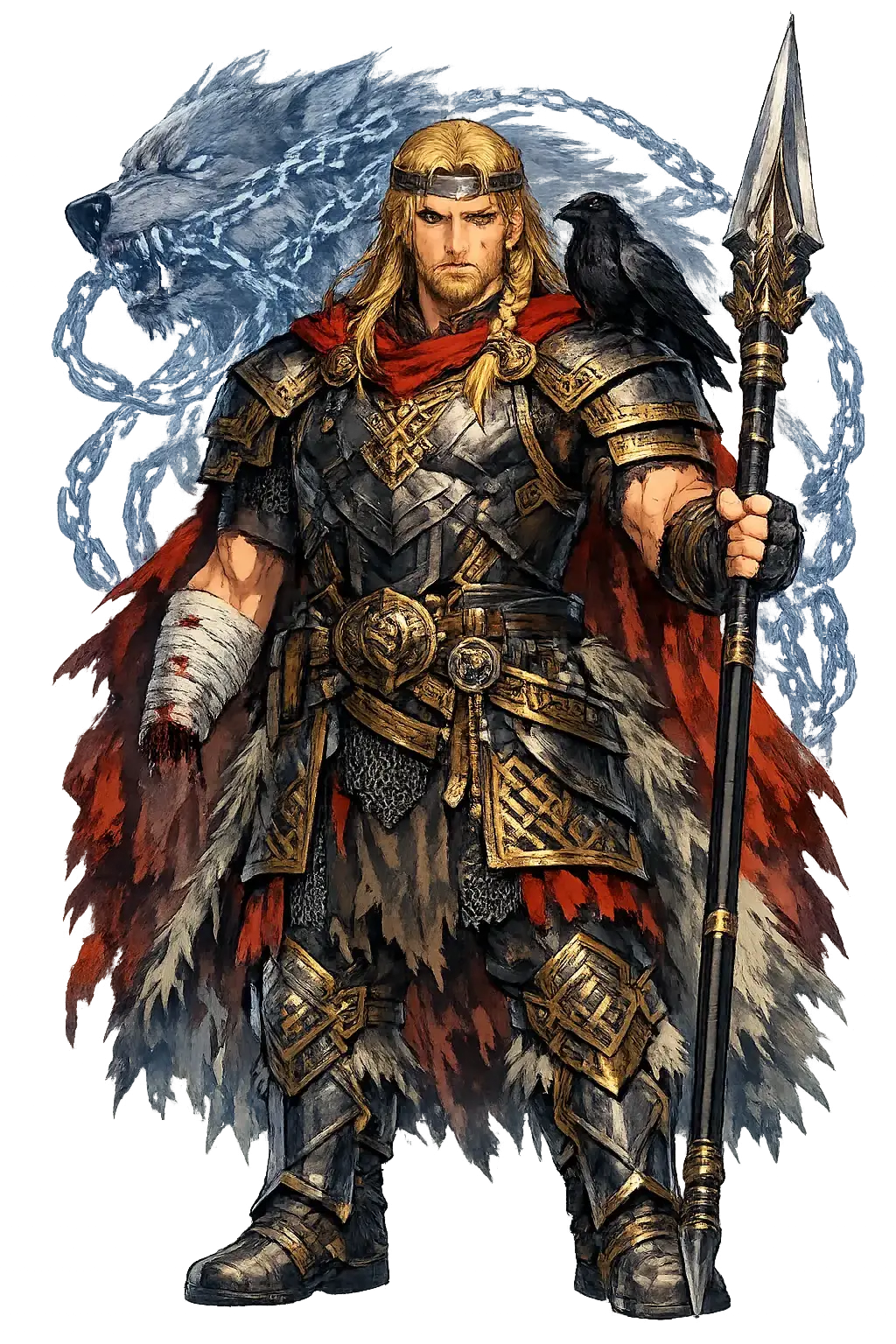
Sacred SymbolsSword, Missing right hand, Wolf, Spear
02

Etymology & Word Family

From original script to Unicode restoration

Original Script ᛏᚢᚱ Týr — "God (cognate with Greek Zeus, Latin Jove)"
Unicode Restoration Týr Restored stress, length, and script
Modern ASCII tyr Plain-ASCII fallback

God (cognate with Greek Zeus, Latin Jove)

03

Unicode Character Breakdown

Character-by-character philological analysis

CharacterUnicodeNameBlockPhonetic Role
TU+0054Latin Capital Letter TBasic LatinSame
ýU+00FDLatin Small Letter Y with AcuteLatin-1 SupplementAcute on y
rU+0072Latin Small Letter RBasic LatinSame

The Tier 1 classification reflects how much of the original phonology this restoration preserves — stress and vowel length for Greek names, distinctive letters and diacritics for every other tradition.

04

Cultural Significance

From ancient cult to modern memory

Týr in Later Traditions

Roman writers equated the Germanic war god with Mars, especially as Mars Thingsus, the patron of the thing assembly. The Romano-Germanic altar at Housesteads on Hadrian's Wall invokes 'Mars Thincsus' alongside the Alaisiagae, a pair of Germanic goddesses. In the interpretatio romana of Tacitus, the highest Germanic god was Mercury (Óðinn), but Mars remained the god of war and the assembly. The Anglo-Saxon name Tīw and the day-name Tuesday preserve Týr's memory in English. His name — cognate with Zeús, Iuppiter, and Sanskrit Dyáuṣ — is the old Indo-European word for the sky god, and some scholars argue that *Tīwaz, not Óðinn, was the original chief god of early Germanic religion, later eclipsed in the literary record. If so, the one-handed god of the Edda is the last, diminished portrait of a deity who once stood at the head of the pantheon.

Modern Legacy

Týr survives most visibly in the English word Tuesday ('Tīw's day'), a faint echo of a once-major deity. In modern Heathenry and Norse-inspired fantasy, he is honored as the god of law, honor, and self-sacrifice — the deity who keeps oaths even at terrible cost. His one-handed image has become a symbol of integrity, and the binding of Fenrir remains one of the most retold scenes in the entire Norse corpus. For military ethicists and legal historians, Týr represents the idea that law requires sacrifice and that the guarantor of order must sometimes pay the price personally.

In the Earth

The name Týr is attested in runic inscriptions, including the early Viking-Age Ribe skull fragment. The Romano-Germanic altar at Housesteads (Vercovicium) on Hadrian's Wall names Mars Thincsus, the interpretatio romana of Týr as god of the thing. Place-names such as Týrsbergi in Sweden and the widespread Scandinavian Tis-/Tir- names suggest a cultic footprint broader than the literary record implies.

05

The Meditation

What Týr means — beyond the dictionary

Týr is the god of the kept word. In a world of shifting alliances and clever speech, he stands for the promise that cannot be broken without breaking the promiser. His hand is not lost in battle; it is lost in diplomacy, in the necessary lie that binds a monster for the good of all.

There is something austere about Týr. He does not joke like Loki, scheme like Óðinn, or thunder like Þórr. He simply does what must be done and accepts the cost. In an age of broken contracts and disposable commitments, his mutilated hand is a quiet rebuke: the law is only as strong as those willing to suffer for it.

06

Screen & Culture

Where Týr echoes through film, television, and games — and how

07

Frequently Asked Questions

Common questions about Týr, War, Law, Oaths, and Unicode restoration

01How do you pronounce Týr?

In reconstructed pronunciation, Týr is /tyːr/ — approximately 'TEWR' — start with a crisp 't', say the rounded 'ew' of 'few' while pursing the lips, hold it long, and finish with a light trilled r.

02What does Týr mean?

Týr means God (cognate with Greek Zeus, Latin Jove) in the norse tradition.

03What are the symbols of Týr?

Týr is associated with Sword (The weapon of the warrior and the symbol of lawful violence; Týr is called 'sword-god' in kennings.), Missing right hand (The visible cost of the pledge given to Fenrir; integrity made flesh.), Wolf (Fenrir, the bound beast whose capture defines Týr's myth.), Spear (The divine weapon shared with Óðinn, marking his older role as a war god.).

04Why restore Týr in Unicode?

Plain ASCII tyr strips the stress, length, and script that make the name specific. Unicode restoration returns the name to its original written dignity.

05What is the most important myth about Týr?

“The Binding of Fenrir” — Týr's mythology is narrower than that of Óðinn or Þórr, but it turns on a single, unforgettable scene: a god who pays for the common good with his own body. His stories are stories of pledges kept, monsters bound, and the law that outlasts the hand that swore it. The full telling lives on the lore page.

08

Scholarly Sources

The philological foundations of this restoration

Every claim on this page is grounded in established scholarship. The orthographic restorations follow disciplinary convention. The etymological chain follows the best available reference works. This is not invention — it is resurrection through scholarship.

Lexicography & Philology

  • Cleasby-Vigfusson
  • Zoëga

Primary Texts

Archaeology & Art History

  • Material evidence — iconography, inscriptions, and temple archaeology — for Týr and related cults.

Religious Studies

  • Tacitus, Germania (interpretatio romana of Germanic gods)
  • Cleasby & Vigfusson, An Icelandic-English Dictionary (1874), s.v. Týr
  • de Vries, Jan, Altgermanische Religionsgeschichte
  • Simek, Rudolf, Dictionary of Northern Mythology
  • Lindow, John, Norse Mythology: A Guide to the Gods, Heroes, Rituals, and Beliefs
Return

The Surface Awaits

You have traced the name from its earliest attestation to its Unicode restoration. Now return to the myth. The story is where the name lives.

Back to Lore
Týr mascot