PuniCodex

Extended Lore

Τυφῶν Typhōn

Etymology · Orthography · Cult · Iconography · Reception · Sources

Tier 1 Typhōn.com
Typhōn — Monster, Father of Monsters, Storms
01

Quick Facts

Essential information about Typhōn, Monster, Father of Monsters, Storms

Original ScriptΤυφῶν
Unicode RestorationTyphōn
Reconstructed Pronunciation/tyˈpʰɔːn/
PantheonGreek
DomainMonster, Father of Monsters, Storms
MeaningWhirlwind, smoke
ClassificationTier 1
Primary DomainTyphōn.com
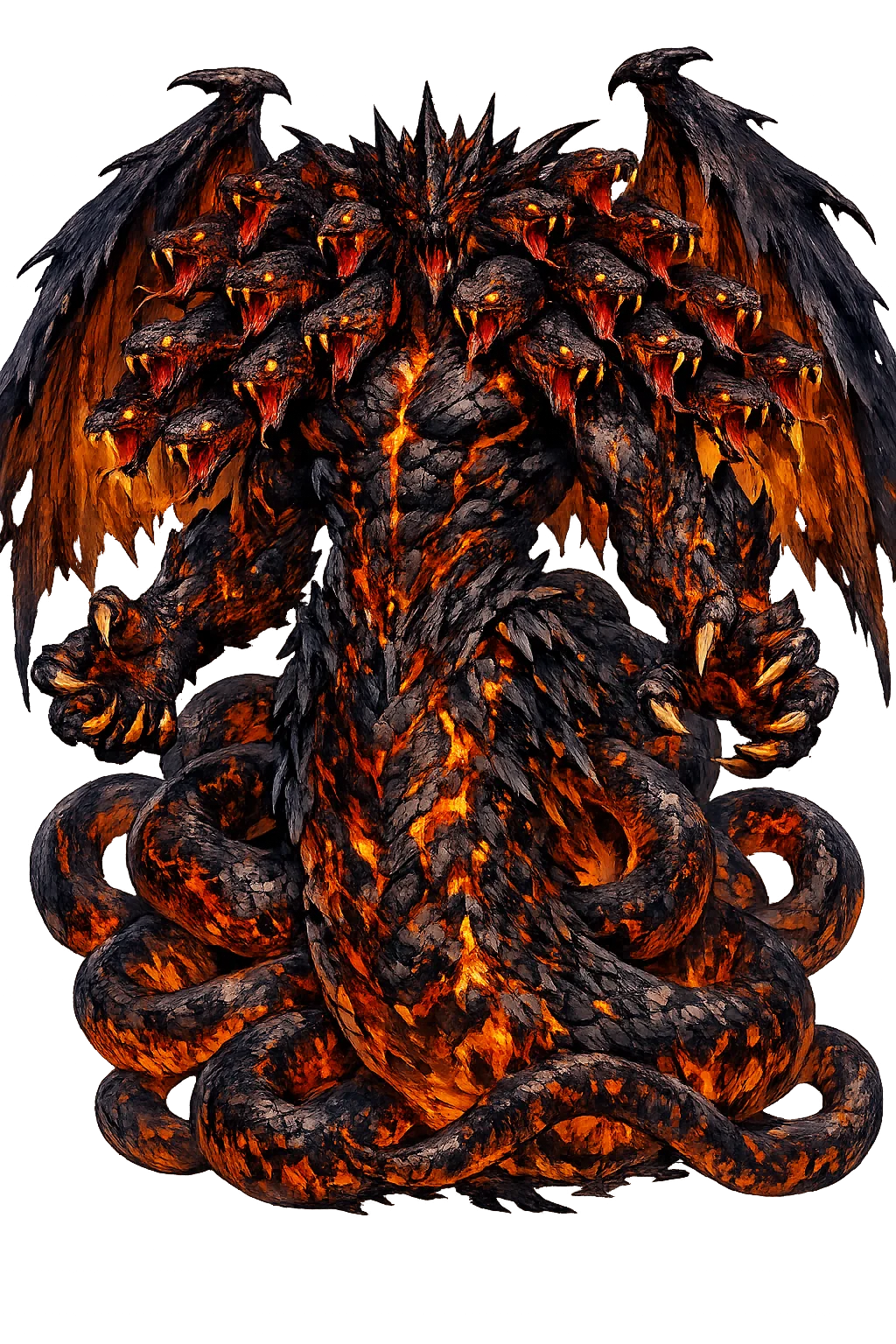
Sacred SymbolsHundred serpent heads, Wings, Fire-breathing mouths, Coiled serpent legs, Mount Etna
02

Etymology & Word Family

From original script to Unicode restoration

Unknown τῦφος smoke, vapor, whirlwind
Original Script Τυφῶν Typhōn — "Whirlwind, smoke"
Unicode Restoration Typhōn Restored stress, length, and script
Modern ASCII typhon Plain-ASCII fallback

From Greek τῦφος ("smoke, vapor") or τυφώς ("whirlwind"), fitting the smoke-and-flame monster born from Tartaros

03

Unicode Character Breakdown

Character-by-character philological analysis

CharacterUnicodeNameBlockPhonetic Role
TU+0054Latin Capital Letter TBasic LatinSame
yU+0079Latin Small Letter YBasic LatinSame
pU+0070Latin Small Letter PBasic LatinSame
hU+0068Latin Small Letter HBasic LatinSame
ōU+014DLatin Small Letter O with MacronLatin Extended-AMacron: long omega
nU+006ELatin Small Letter NBasic LatinSame

The Tier 1 classification reflects how much of the original phonology this restoration preserves — stress and vowel length for Greek names, distinctive letters and diacritics for every other tradition.

04

Cult & Worship

How the sacred was kept — rites, sanctuaries, remains

The Cult

Typhōn had no regular cult in the Greek or Roman world. He was a figure of myth and spectacle, not a recipient of sacrifices or temples. Sicilians localized his prison beneath Mount Etna and the caves near Catania, treating the volcano’s eruptions as his writhing; these beliefs generated folktales and wonder-lore rather than an organized priesthood. Some curse tablets and magical papyri invoke Typhon’s name for terrifying power, but this is aggressive sorcery, not civic religion. Pindar’s victory ode and later Latin poets kept the Etna story alive as a literary topos. Modern visitors to Etna sometimes re-enact the ancient wonder-seeking, yet no continuous cult exists.

In the Earth

Typhon is best attested in mythic art rather than cult. The sixth-century BCE Chalcidian hydria in the Louvre shows Zeus battling Typhon. The Pergamon Altar's Gigantomachy includes snaky-legged opponents evoking the monster. Sicily's volcanic Mount Etna and the caves near Catania were identified as Typhon's prison. Apulian and South Italian vases depict the defeated Typhon beneath Etna or in the underworld.

05

Iconography

How Typhōn was imaged across the ages

The Image

Typhōn was pictured as a cosmic monster of serpentine multiplication. The sixth-century BCE Chalcidian hydria in the Louvre shows Zeus striding over a snaky-limbed Typhon, while the Great Altar of Pergamon folds him into the Gigantomachy as a writhing, many-headed opponent. Apulian and South Italian vases place the defeated giant beneath Mount Etna, his body becoming part of the volcanic landscape. Vase painters gave him wings, a beard, and sometimes human or leonine heads rising from serpent coils. There was no cult statue; his image belonged entirely to mythological narrative and monumental battle scenes. Modern fantasy illustration keeps the multi-headed dragon or giant form, often with storm and fire attributes.

06

Reception & Transformation

The name after its own age — transmission, translation, survival

Afterlives

Typhōn’s story traveled from Hesiod and Pindar through Apollodorus to Ovid, becoming a standard example of defeated rebellion in Greco-Roman literature and rhetoric. Hellenistic and Roman readers identified him with the Egyptian god Set, merging two monster traditions and giving Typhon a durable place in cross-cultural demonology; early Christian writers then used him as a type of chaotic force subdued by divine order. Medieval bestiaries and Renaissance mythographies passed the many-headed giant to European readers, while eighteenth- and nineteenth-century travelers to Sicily reinterpreted Etna’s eruptions through the Romantic sublime. The name “Typhon” was later borrowed for tropical cyclones in East Asia, a meteorological afterlife detached from myth. Today Typhōn survives in fantasy games, comics, and science-fiction monsters, and in classical scholarship on Gigantomachy iconography, where his serpentine body and volcanic prison remain instantly recognizable tropes.

Identifications Across Traditions

From the fifth century BCE onward, Greeks identified Typhōn with the Egyptian god Set, the red-haired storm deity who murdered Osiris — an equation already active in Herodotus (Histories 2) that may have shaped Typhōn's later iconography of wings, desert wind, and serpent legs. Near Eastern storm-gods — Hittite Taru, Canaanite Baal in his conflict with the sea — may lie behind the Greek figure's oldest layer, though the borrowing is debated. The Romans kept the name Typhon and used it for whirlwinds and eruptions, especially in Sicily. In Egypt the equation hardened into theology: Set-Typhon became the archetype of the impious rebel, and the name 'Typhon' passed into Greek magical papyri and gnostic texts as a title for the forces of chaos.

Modern Legacy

Typhōn gave his name to the typhoon, one of the most feared words in meteorology — though the route may run through Arabic ṭūfān and Chinese taifeng as well as Greek, and scholars still argue the etymology. In fantasy, 'Typhon' names ancient dragons, sea monsters, and final bosses; Dungeons & Dragons, video games, and anime have made him a staple of world-ending antagonists. Geologically, Mount Etna's eruptions were long explained as Typhōn's breath or struggles, and the volcano keeps his name in the guidebooks of Sicily. The monster remains the archetype of the rebellion that almost succeeded — the figure every subsequent cosmic villain, from Milton's Satan to the kaiju of modern film, is descended from.

07

The Meditation

What Typhōn means — beyond the dictionary

Typhōn is what the ordered world keeps under the mountain. He is the hundred-headed argument against hierarchy, the storm that rises when the earth decides the gods have gone too far. Every pantheon needs such a figure: not a villain with a motive, but a force so large it can threaten heaven itself.

The Greeks did not kill Typhōn; they buried him alive. That is the most honest thing they could have done. To destroy him would be to pretend chaos can be eliminated; to imprison him is to admit it must be continuously held down. The smoke of Etna is the reminder: the monster is still breathing.

08

Frequently Asked Questions

Common questions about Typhōn, Monster, Father of Monsters, Storms, and Unicode restoration

01How do you pronounce Typhōn?

In reconstructed pronunciation, Typhōn is /tyˈpʰɔːn/ — approximately "tee-FOHN" — but the first vowel is like French "tu," and the second is long and breathy, like a storm that does not end quickly.

02What does Typhōn mean?

Typhōn means Whirlwind, smoke in the greek tradition.

03What are the symbols of Typhōn?

Typhōn is associated with Hundred serpent heads (Chaos of voices and the many faces of destruction), Wings (The speed of storm and the reach of rebellion), Fire-breathing mouths (Volcanic and destructive force), Coiled serpent legs (Earthbound chthonic power), Mount Etna (His prison and his continuing presence in the world).

04Why are there different spellings of Typhōn?

Each form is a historically attested restoration rather than a mistake: typhōn is the owned form (Owned lowercase Unicode domain label). PUNICODEX registers the full set so the tradition is preserved under every defensible spelling.

05Why restore Typhōn in Unicode?

Plain ASCII typhon strips the stress, length, and script that make the name specific. Unicode restoration returns the name to its original written dignity.

06What is the most important myth about Typhōn?

“Son of Earth and Abyss” — the The Birth story that anchors the mythology of Typhōn, told in full on the lore page.

09

Scholarly Sources

The philological foundations of this restoration

Every claim on this page is grounded in established scholarship. The orthographic restorations follow disciplinary convention. The etymological chain follows the best available reference works. This is not invention — it is resurrection through scholarship.

◈

Lexicography & Philology

  • Liddell, H. G., Scott, R., & Jones, H. S. A Greek-English Lexicon. Oxford: Clarendon Press, 9th ed. 1996.
  • Pape, W., & Benseler, G. E. Wörterbuch der griechischen Eigennamen. Braunschweig: Vieweg, 1884.
  • Beekes, R. S. P. Etymological Dictionary of Greek. Leiden: Brill, 2010.
◎

Primary Texts

  • Hesiod, Theogony 306–319, 820–868
  • Apollodorus, Library 1.6.3; 2.3.1; 3.5.8
  • Pindar, Pythian Ode 1.15–28 (Typhon under Etna)
  • Ovid, Metamorphoses 5.319–331
  • Homeric Hymn to Apollo 300–374
◉

Archaeology & Art History

  • Material evidence — iconography, inscriptions, and temple archaeology — for Typhōn and related cults.
✦

Religious Studies

  • Nonnus, Dionysiaca 1.481–2.620
  • Herodotus, Histories 2 (Set-Typhon)
Return

The Surface Awaits

You have traced the name from its earliest attestation to its Unicode restoration. Now return to the myth. The story is where the name lives.

Back to Lore
Typhōn mascot