PuniCodex

Extended Lore

Tjinimin

Etymology · Phonology · Orthography · Cultural Legacy · Primary Sources

Tier 2 Tjinimin
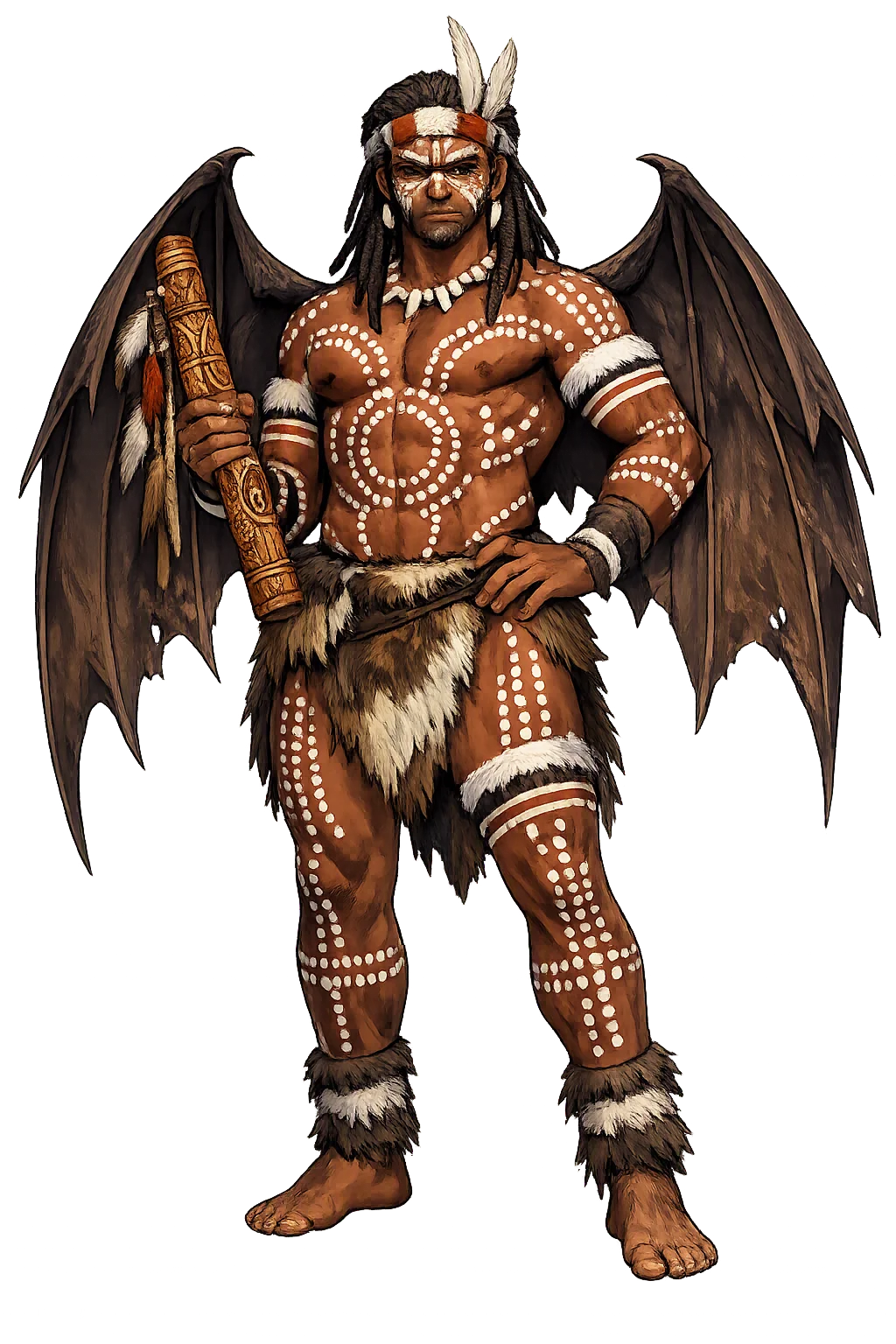
Tjinimin — Trickster, Moth Man
01

Quick Facts

Essential information about Tjinimin, Trickster, Moth Man

Scholarly TransliterationTjinimin
Unicode RestorationTjinimin
Reconstructed Pronunciation/tʃɪnɪmɪn/
PantheonAboriginal
DomainTrickster, Moth Man
MeaningThe moth man
ClassificationTier 2
Primary DomainTjinimin
Sacred SymbolsBat or flying fox, Rainbow Serpent (Kunmanggur), The upside-down tree, Stars
02

Etymology & Word Family

From original script to Unicode restoration

Scholarly Transliteration Tjinimin Tjinimin — "The moth man"
Unicode Restoration Tjinimin Restored stress, length, and script
Modern ASCII tjinimin Plain-ASCII fallback

The PuniCodex lexicon classifies Tjinimin as 'Trickster, Moth Man', but the published Murrinh-Patha sources associate the figure with the bat (flying fox) and the Rainbow Serpent Kunmanggur. The 'moth' label is not attested in the scholarly record and should be treated as provisional. Because the name is already written in basic Latin letters, the Unicode restoration capitalizes the initial letter only; no diacritic or original-script mark is recovered. The entry is therefore Tier 2.

03

Unicode Character Breakdown

Character-by-character philological analysis

CharacterUnicodeNameBlockPhonetic Role
TU+0054Latin Capital Letter TBasic LatinSame, capitalized
jU+006ALatin Small Letter JBasic LatinSame
iU+0069Latin Small Letter IBasic LatinSame
nU+006ELatin Small Letter NBasic LatinSame
iU+0069Latin Small Letter IBasic LatinSame
mU+006DLatin Small Letter MBasic LatinSame
iU+0069Latin Small Letter IBasic LatinSame
nU+006ELatin Small Letter NBasic LatinSame

The Tier 2 classification reflects how much of the original phonology this restoration preserves — stress and vowel length for Greek names, distinctive letters and diacritics for every other tradition.

04

Cultural Significance

From ancient cult to modern Unicode

Ancient Domain

Tjinimin is an ancestral being in the mythology of the Murrinh-Patha peoples of the Daly River region, Northern Territory. He is remembered as an ancestor of the Australian peoples, closely associated with the bat or flying fox and with Kunmanggur, the great Rainbow Serpent. His story turns on a quarrel, a vow, and the origin of the bat's short nose — a narrative that encodes law, social restraint, and the place of humans within the Dreaming.

Tjinimin in Later Traditions

Tjinimin belongs specifically to Murrinh-Patha tradition rather than to the wider cross-cultural networks of the Kimberley Wandjina or Arnhem Land Rainbow Serpent complexes. Within Murrinh-Patha cosmology he is grouped with the ancestor-figures whose stories encode law, kinship, and the origins of animal species. Comparative scholarship sometimes links him to the broader Australian theme of the Moon-Man or to nocturnal transformation myths, but these connections remain speculative; the primary attested context is the Daly River region.

Modern Legacy

Tjinimin survives in Murrinh-Patha oral tradition, initiation teaching, and the ethnographic record compiled by W. E. H. Stanner and later scholars. The story is used in initiation contexts to instruct young men in ancestral law, social restraint, and the consequences of transgression. Unlike the widely commercialised Wandjina imagery of the Kimberley, Murrinh-Patha sacred narratives such as that of Tjinimin are generally restricted to initiated custodians and are not reproduced as open visual art.

Unicode Restoration as Cultural Act

Restoring Tjinimin in a domain name is more than orthographic accuracy. It is a statement that the internet should recognize the full range of human writing — not only the ASCII keyboard.

05

Frequently Asked Questions

Common questions about Tjinimin, Trickster, Moth Man, and Unicode restoration

01How do you pronounce Tjinimin?

In reconstructed pronunciation, Tjinimin is /tʃɪnɪmɪn/ — approximately 'CHIN-ih-min' — stress the first syllable, keep the vowels short and clear, and pronounce the initial 'tj' as English 'ch'..

02What does Tjinimin mean?

Tjinimin means The moth man in the aboriginal tradition.

03What are the symbols of Tjinimin?

Tjinimin is associated with Bat or flying fox (The animal form and kinship emblem linked to Tjinimin; the myth of the short nose explains the bat's distinctive face.), Rainbow Serpent (Kunmanggur) (The great water-spirit and law-giver whose authority Tjinimin challenges; the serpent marks the boundary between acceptable and forbidden desire.), The upside-down tree (The place where Tjinimin hung after his defeat, looking at the stars and making his vow of abstinence.), Stars (The night sky that Tjinimin contemplated while suspended; a symbol of reflection, withdrawal, and transformation.).

04Why restore Tjinimin in Unicode?

Plain ASCII tjinimin strips the stress, length, and script that make the name specific. Unicode restoration returns the name to its original written dignity.

05What is the most important myth about Tjinimin?

Tjinimin quarrelled with Kunmanggur, the great Rainbow Serpent. He desired Kunmanggur's consorts, the Green Parrot-Girls, and sought to take them for himself. The dispute set the ancestral being against the authority of the Rainbow Serpent, testing the limits of proper relationship and social order.

06

Scholarly Sources

The philological foundations of this restoration

Every claim on this page is grounded in established scholarship. The orthographic restorations follow disciplinary convention. The etymological chain follows the best available reference works. This is not invention — it is resurrection through scholarship.

Lexicography & Philology

  • AIATSIS
  • Berndt

Primary Texts

  • Primary sources in the aboriginal tradition for Tjinimin.

Archaeology & Art History

  • Material evidence — iconography, inscriptions, and temple archaeology — for Tjinimin and related cults.
  • No fixed archaeological site is publicly identified with Tjinimin. Murrinh-Patha sacred geography is held by custodians and is not published in open scholarly form. The primary 'site' of the narrative is the Daly River country of the Northern Territory, where the story is maintained through initiation, ceremony, and oral transmission.

Religious Studies

  • Stanner, W. E. H., On Aboriginal Religion (Sydney University Press, 1964), 98–104
  • Berndt, Ronald M. and Catherine H. Berndt, The World of the First Australians (Aboriginal Studies Press, 1964)
  • Australian Institute of Aboriginal and Torres Strait Islander Studies (AIATSIS), authority files and cultural-resources collection
Return

The Surface Awaits

You have traced the name from its earliest attestation to its Unicode restoration. Now return to the myth. The story is where the name lives.

Back to Lore
Tjinimin mascot