PuniCodex

Extended Lore

Θεία Theía

Etymology · Orthography · Cult · Iconography · Reception · Sources

Tier 1 Theía.com
Theía — Titaness of Sight
01

Quick Facts

Essential information about Theía, Titaness of Sight

Original ScriptΘεία
Unicode RestorationTheía
Reconstructed Pronunciation/tʰeː.ía/
PantheonGreek
DomainTitaness of Sight
MeaningGoddess, divine
ClassificationTier 1
Primary DomainTheía.com
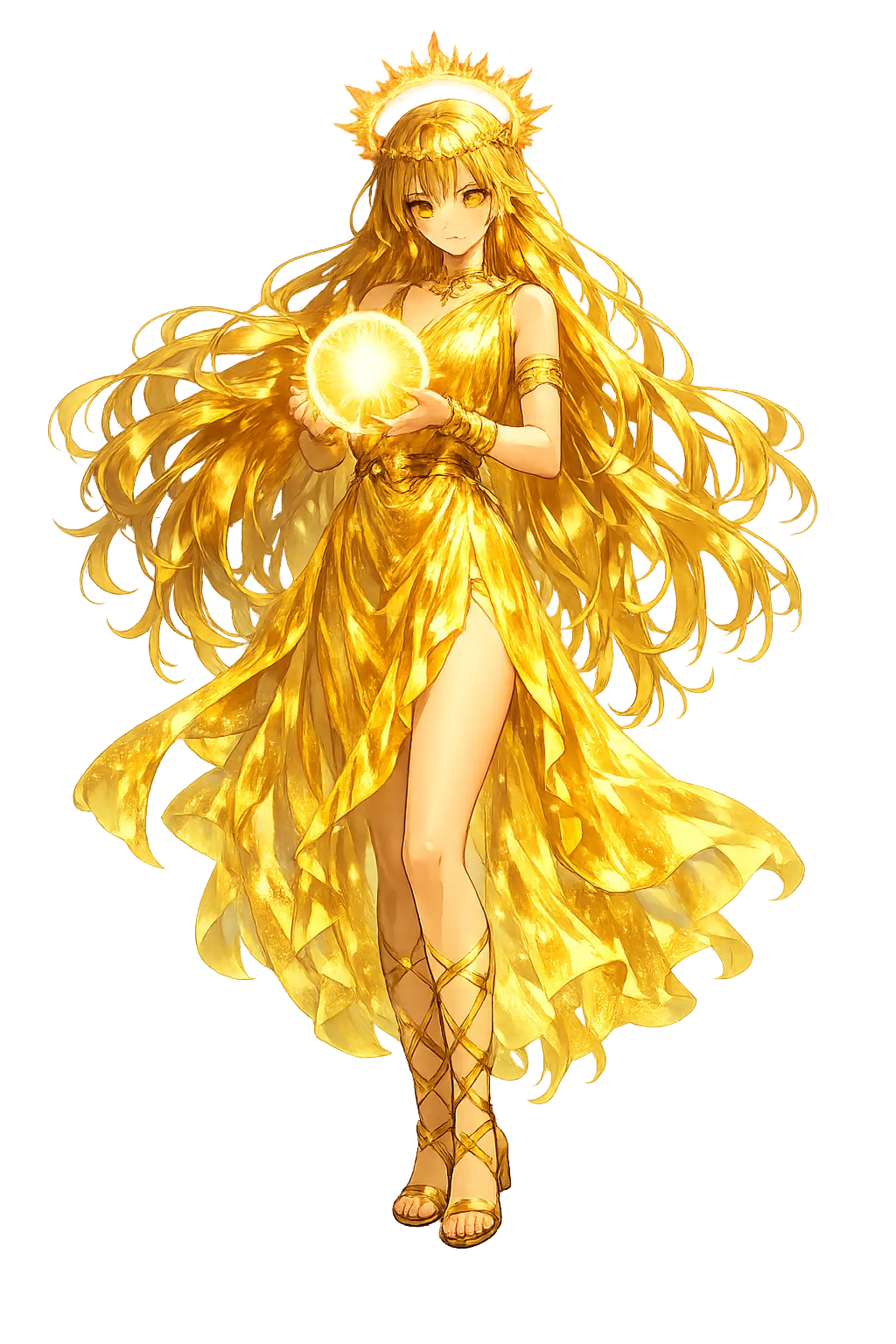
Sacred SymbolsThe gold crown, Radiant eyes, Sun, moon, and dawn, The bright ether, Flash on gold and water
02

Etymology & Word Family

From original script to Unicode restoration

Original Script Θεία Theía — "Goddess, divine"
Unicode Restoration Theía Restored stress, length, and script
Modern ASCII theia Plain-ASCII fallback

The name Theía carries the orthographic signature of the greek tradition: Θεία. Unicode restoration recovers what ASCII flattens.

03

Unicode Character Breakdown

Character-by-character philological analysis

CharacterUnicodeNameBlockPhonetic Role
TU+0054Latin Capital Letter TBasic LatinT uppercase
hU+0068Latin Small Letter HBasic Latinh same
eU+0065Latin Small Letter EBasic Latine same
íU+00EDLatin Small Letter I with AcuteLatin-1 SupplementAcute on í — in Θεία the accent falls on the second element of the diphthong ει
aU+0061Latin Small Letter ABasic Latina same

The Tier 1 classification reflects how much of the original phonology this restoration preserves — stress and vowel length for Greek names, distinctive letters and diacritics for every other tradition.

04

Cult & Worship

How the sacred was kept — rites, sanctuaries, remains

The Cult

Theia had no cult in any ordinary sense: no sanctuary, altar, priesthood, or festival is attested, and Pausanias, who walked hundreds of shrines, gives her not one. Her worship, if the word applies, was the worship of what she embodied — the shining ether through which every sight reaches the eye — honored implicitly wherever light itself was adored. The Greeks who named her left the rest to imagination: a goddess crowned with gold, mother of sun and moon and dawn, with no recorded sacrifice because none was needed. The evidence is thin, but not silent: her priesthood was the poets, and her temple the visible sky.

In the Earth

No sanctuary of Theía is securely attested — Pausanias, who tours hundreds of shrines across Greece, offers her not one — and no independent image of her survives. She is visible only indirectly: in the countless representations of her children, Hēlios rising in his chariot, Selḗnē with billowing veil, Ēōs ascending in saffron, whose very ubiquity is her monument. Her name is fixed for us instead by the earliest Greek poetry — the two lines of Hesiod and the opening of Pindar's fifth Isthmian — a reminder that some gods are monuments of language rather than stone.

05

Iconography

How Theía was imaged across the ages

The Image

No image of Theia survives, and scholarship lists none. What the texts give is an attribute set — the gold crown Hesiod mentions, the radiance that makes gold and water flash in Pindar's fifth Isthmian, the eyes through which all seeing happens — but no artist, so far as the record runs, ever fixed her face. Her true portraits are her children: every Archaic and Classical representation of Helios climbing into his chariot, of Selene veiled, of Eos rising, is Theia indirectly, the mother shown by her luminous offspring. Later centuries never invented a canonical statue of her, and modern illustration, when it attempts one, is inventing freely. The honest statement is that Theia is a goddess of language and genealogy, imaged only in the light her name names.

06

Reception & Transformation

The name after its own age — transmission, translation, survival

Afterlives

Theia's transmission is a story of tiny cargoes carried far. Hesiod's Theogony survived the ancient world in Byzantine manuscripts, was set in type by the first Greek presses, and entered the West's reference shelf; Apollodorus's Library and Hyginus's preface kept her genealogical slot — Titaness, wife of Hyperion, mother of the luminaries — through every Renaissance mythography from Boccaccio's Genealogia onward. Modern philology gave her a second life: nineteenth-century lexicography and etymology debated her very name — is it the sight-word théa, or simply theá, 'goddess'? — and M. L. West's 1966 edition of the Theogony fixed her two lines for contemporary readers. Her children, not she, kept her visible; her name, not her image, kept her alive.

Identifications Across Traditions

Rome produced no Theía — Latin mythographers list her among the Titans (Hyginus, Fabulae praefatio), but no Roman cult developed and no Roman equivalent was invented; her name crossed into Latin only as a learned genealogy. In later antique thought her province was absorbed by the radiance-cults around Sol and by Neoplatonic meditations on light as the first emanation. Her most striking reception is modern: planetary scientists named the Mars-sized protoplanet of the giant-impact hypothesis — the body whose collision with the infant Earth threw up the debris that became the Moon — 'Theia'. It is a strangely perfect tribute: the Titaness of shining, invoked at the birth of the very moon her mythology first explained.

Modern Legacy

Theía's afterlife is linguistic and scientific rather than cultic. From her root-family come theory, theater, and theorem — the Greek conviction that to see is to know, and that the highest knowing is a kind of beholding. Her children gave her a permanent gallery: every classical depiction of Hēlios rising, Selḗnē veiled, or Ēōs in her saffron robe is, indirectly, her portrait. In the twenty-first century her name passed permanently into the scientific lexicon through the Theia impact hypothesis — one of the few Titanesses whose name now appears in planetary-science textbooks. Restoring Theía restores the name of the brightness that makes brightness possible: the light before the lamp.

07

The Meditation

What Theía means — beyond the dictionary

Theía is the unseen source of all that is seen. She has no myths because her power is too basic for narrative: it is the condition under which any story can be witnessed. To honor her is to recognize that light is not merely physical but epistemic — we know by seeing, and we are known by being seen.

Her restoration in Unicode is fitting. The very act of reading a restored Greek name on a screen depends on light, on sight, on luminous technology that her children prefigured. Theía reminds us that behind every visible marvel there is an older, quieter power: the brightness that makes brightness possible. The Greeks rarely prayed to her; they simply saw everything by her — which may be the purest form of worship there is.

08

Frequently Asked Questions

Common questions about Theía, Titaness of Sight, and Unicode restoration

01How do you pronounce Theía?

In reconstructed pronunciation, Theía is /tʰeː.ía/ — approximately 'thay-EE-ah' — the first syllable is long and level, the second pitched high and bright.

02What does Theía mean?

Theía means Goddess, divine in the greek tradition.

03What are the symbols of Theía?

Theía is associated with The gold crown (Her Hesiodic attribute — 'Theía, crowned with gold' (Theogony 135) — radiance worn as royalty.), Radiant eyes (The organs of sight, her namesake province; she is the light by which seeing happens.), Sun, moon, and dawn (Her three children — the visible proof of her marriage to Hyperion, and her true portrait.), The bright ether (The luminous upper air she personifies, through which every ray descends to the world.), Flash on gold and water (Pindar's image (Isthmian 5): her radiance glimpsed on metal and on the sea — the sun's distant gleam that sailors read.).

04Why restore Theía in Unicode?

Plain ASCII theia strips the stress, length, and script that make the name specific. Unicode restoration returns the name to its original written dignity.

05What is the most important myth about Theía?

“Birth of the Luminaries” — the Genealogy story that anchors the mythology of Theía, told in full on the lore page.

09

Scholarly Sources

The philological foundations of this restoration

Every claim on this page is grounded in established scholarship. The orthographic restorations follow disciplinary convention. The etymological chain follows the best available reference works. This is not invention — it is resurrection through scholarship.

◈

Lexicography & Philology

  • Liddell, H. G., Scott, R., & Jones, H. S. A Greek-English Lexicon. Oxford: Clarendon Press, 9th ed. 1996.
◎

Primary Texts

  • Hesiod
  • Hesiod, Theogony 135, 371–374
  • Pindar, Isthmian 5
◉

Archaeology & Art History

  • Material evidence — iconography, inscriptions, and temple archaeology — for Theía and related cults.
✦

Religious Studies

  • Beekes, Etymological Dictionary of Greek
  • Hyginus, Fabulae praefatio
  • Orphic Fragments
Return

The Surface Awaits

You have traced the name from its earliest attestation to its Unicode restoration. Now return to the myth. The story is where the name lives.

Back to Lore
Theía mascot